What a treat to discover that random carvings on a piece of folk art offered insight into the artist’s background.
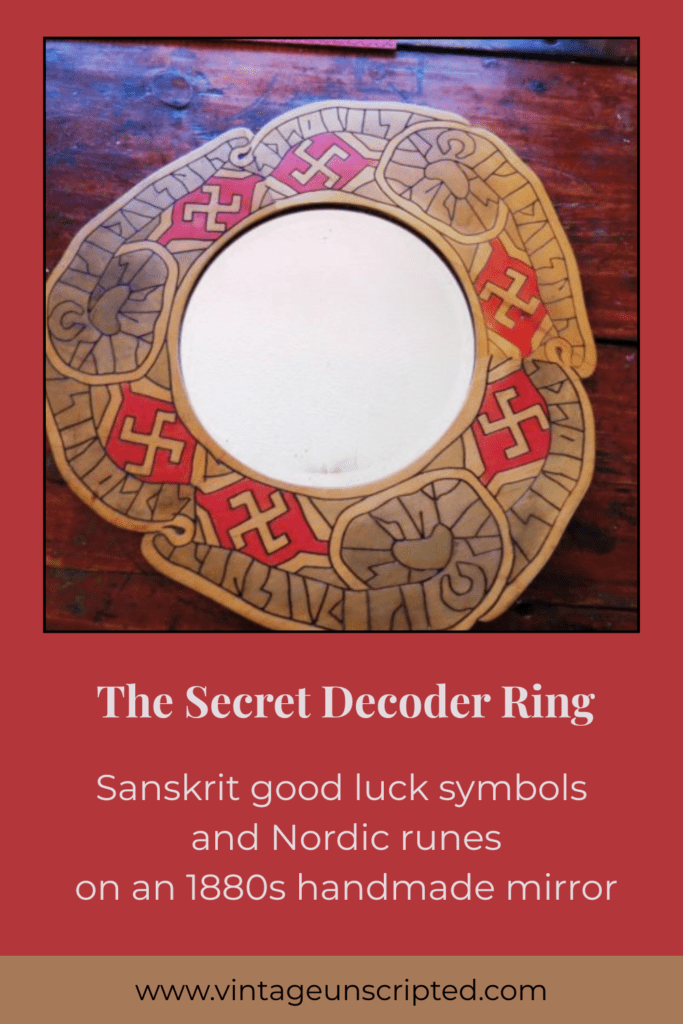
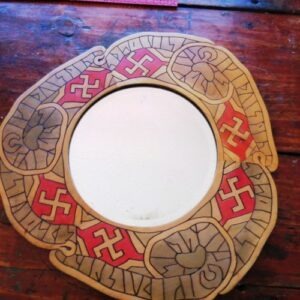 We bought this hand-carved mirror at a farm auction in South Dakota in the late 1970s. According to the auctioneer, the original homesteader made it in the 1880s as a housewarming gift for his new bride.
At the time, we recognized the figure framed in red as an ancient Sanskrit symbol, regarded as a sign of good luck. The fact that Hitler had misused it for his political ends explained why we were among the few bidders on this one-of-a-kind piece.
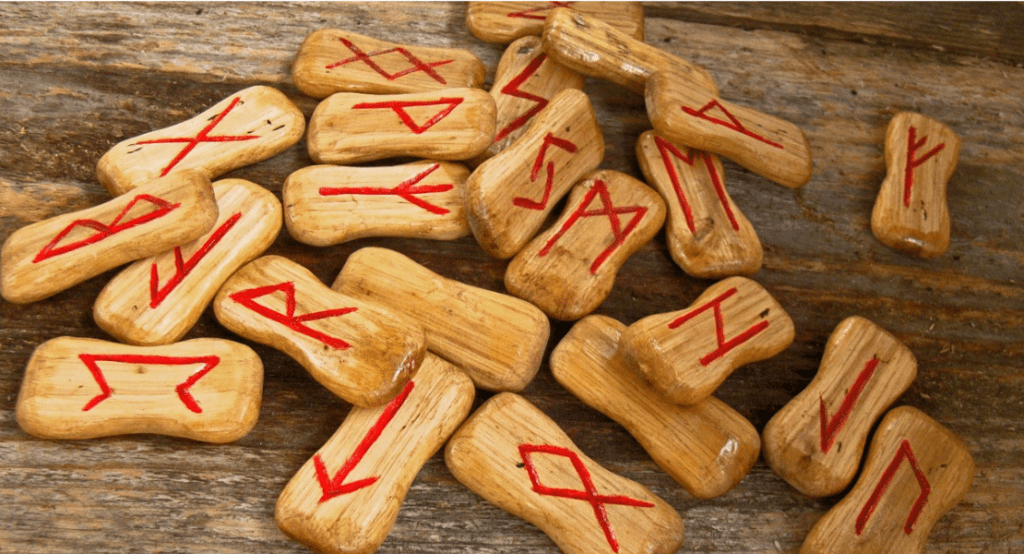
Recently, I posted the mirror on Instagram and wrote a short blurb specifically about the “swastika” figures. A fellow poster reached out to me with information about the other symbols on the mirror. It turns out they are an artistic interpretation of the “Nordic runes,” a pictographic writing system developed by the Norse and Germanic peoples beginning around 150 AD.
She explained she taught a crafts class for the “Sons of Norway” summer camps in the same area of South Dakota, where she taught young campers to print their names in runes.
After examining my photo of the mirror, she told me that three of the symbols she circled were fanciful designs by the artist. However, she was happy to say that the other shapes were Norse and Etruscan runes!
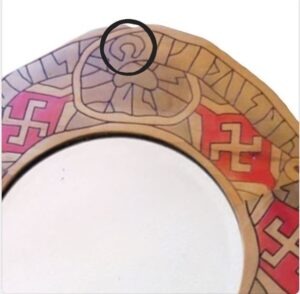
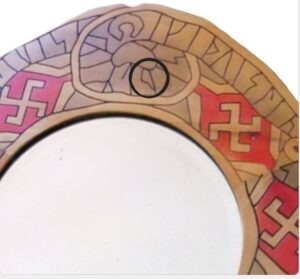
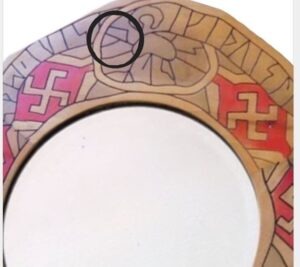
According to my online acquaintance, these are not just words; they are traditional symbols of good luck, prosperity, and creativity. Since many homesteaders in the area during the late 19th century were of Norwegian descent, it is reasonable to believe her interpretation of the symbols is correct.