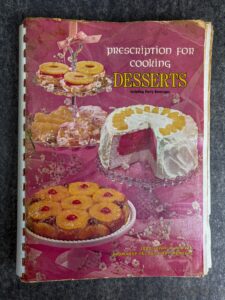
 Are community cookbooks treasure chests or time capsules? My theory is that no one contributed a bad recipe because the cookbook was being sold in their community and their name was right on it. So that makes them treasure chests. But a lot of the contributed recipes are also very of the era, so that makes them time capsules. That’s why coming into possession of Prescription for Cooking: Desserts was so exciting. It’s a community cookbook on a grand scale, both in terms of size and reach. Compiled in 1967 by the Montgomery Baptist Hospital Auxiliary of Montgomery, Alabama, it includes hospital auxiliary member recipes from across the US. It’s a 382 page dessert gold mine, treasure chest and time capsule that includes some vintage homemade candy recipes.
Candy making at home is entirely worth it. Fresh candy tastes so sublime that it makes store bought candy slink away in shame. But making it is not a cakewalk. Some candies are very technique dependent and not very forgiving. If you mess up, you will get crystallization, a grainy texture that doesn’t make it inedible, but it makes it suboptimal. (Trust me, I’ve failed the Marshmallow Fluff Never Fail Fudge recipe, but we still ate it.)
The most likely suspects to crystalize are the fudges and pralines, where fine crystals are desired and honking big ones are not. Caramels and toffees can also be finicky. Two tricks can help reduce crystals in those last two: using a wet pastry brush to wipe sugar off the sides of the pan and and not scraping the crystalized sugar off the sides of the pan. Using a clean and accurate candy thermometer is also helpful.
But don’t be daunted. Look! The chapter on candy in the cookbook has two pages of helpful tips.
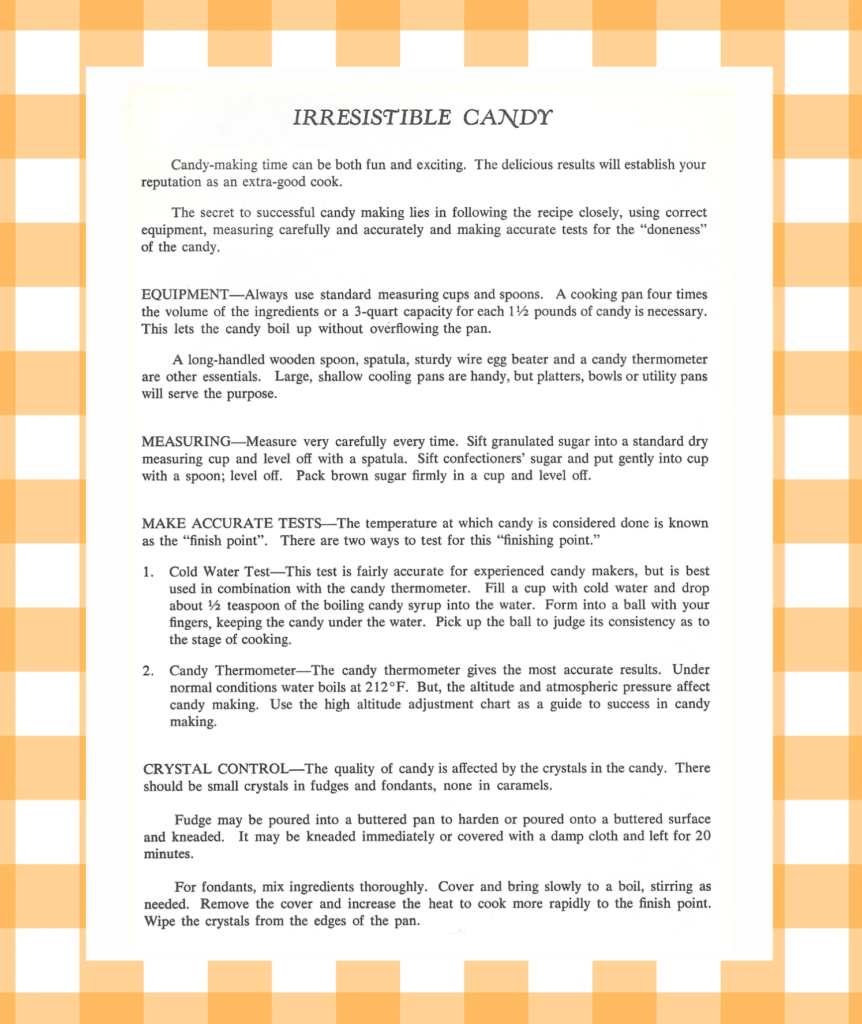
Knead fudge? It sounds like a mess, but licking your gloves after would be tasty. In most homemade fudge situations, beating it with your wooden spoon takes care of it. But intentional kneading does happen because it makes the crystals very small. Professional candy houses may pour the fudge onto a buttered marble slab and work it with paddles. If your home fudge gets too thick to stir as it cools, you can always try kneading it.
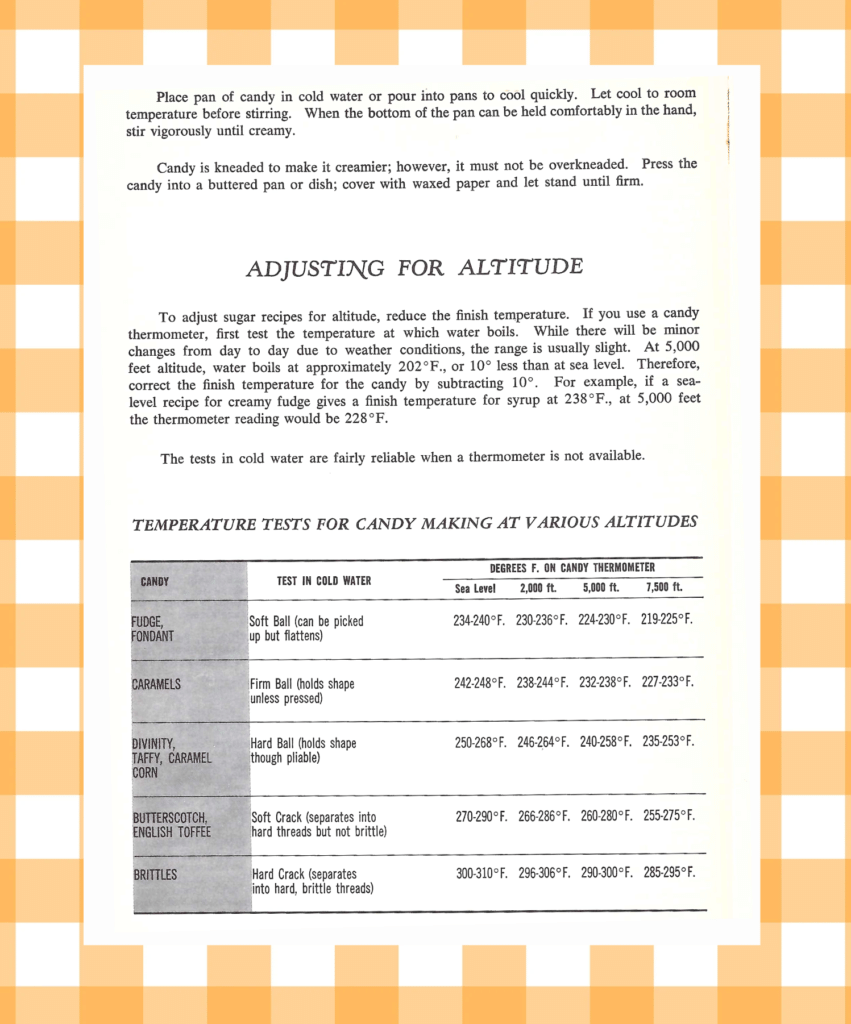
Don’t be put off the the soft ball, hard ball, soft crack, hard crack stages. A candy thermometer helps with that and it’s definitely obvious which stage you’re at when you drop a bit into cold water.
There were dozens of candy recipes in the book. Winnowing it down to the final few was exhausting. There were three toffee recipes and four caramel recipes and a zillion fudge variations. The ones that made the cut were either classics, easy to make or curiosities. This is a long post for a blog, especially one that is not a food blog. It includes way too many recipes. Or does it? Is too many vintage homemade candy recipes really a problem?
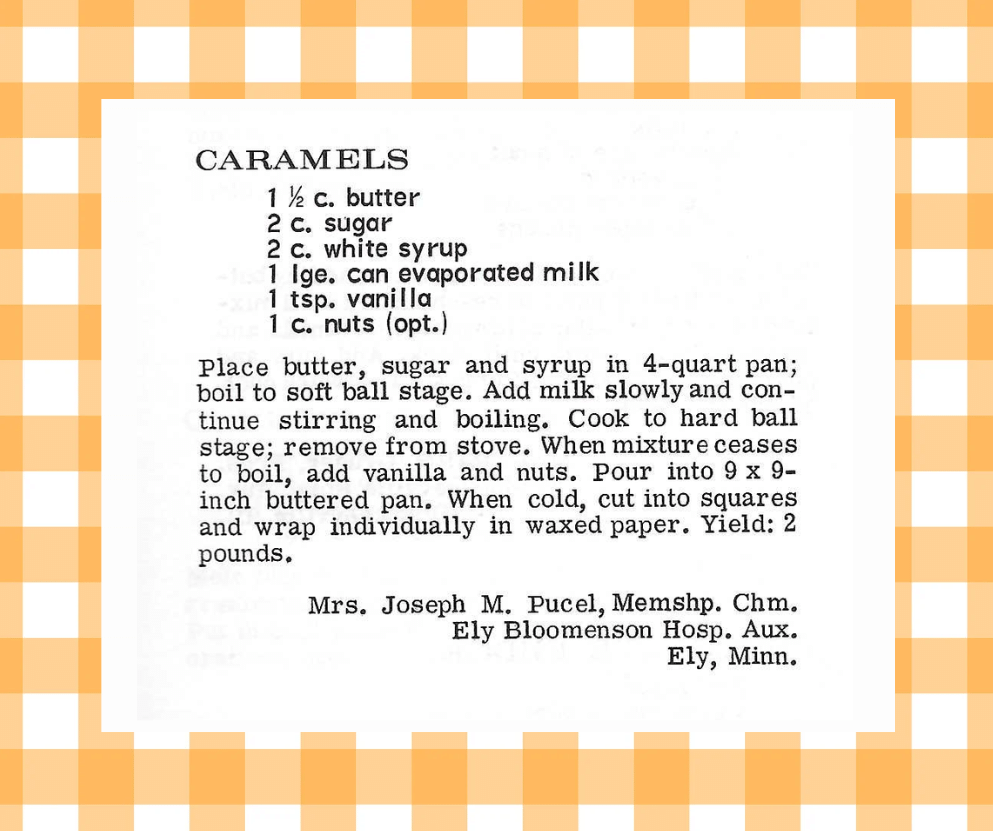
Caramels are first because caramels should always be first. This recipe has one of the challenges you run into with vintage community cookbooks. Mrs. Pucel, whose first name was certainly not Joseph M., knew she used one large can of evaporated milk, which was fine in 1967. But what is a large can in modern terms? That’s where an internet query is your friend. According to Google, a large or tall can of evaporated milk would have been about 14.5 oz, or 1 2/3 cups.
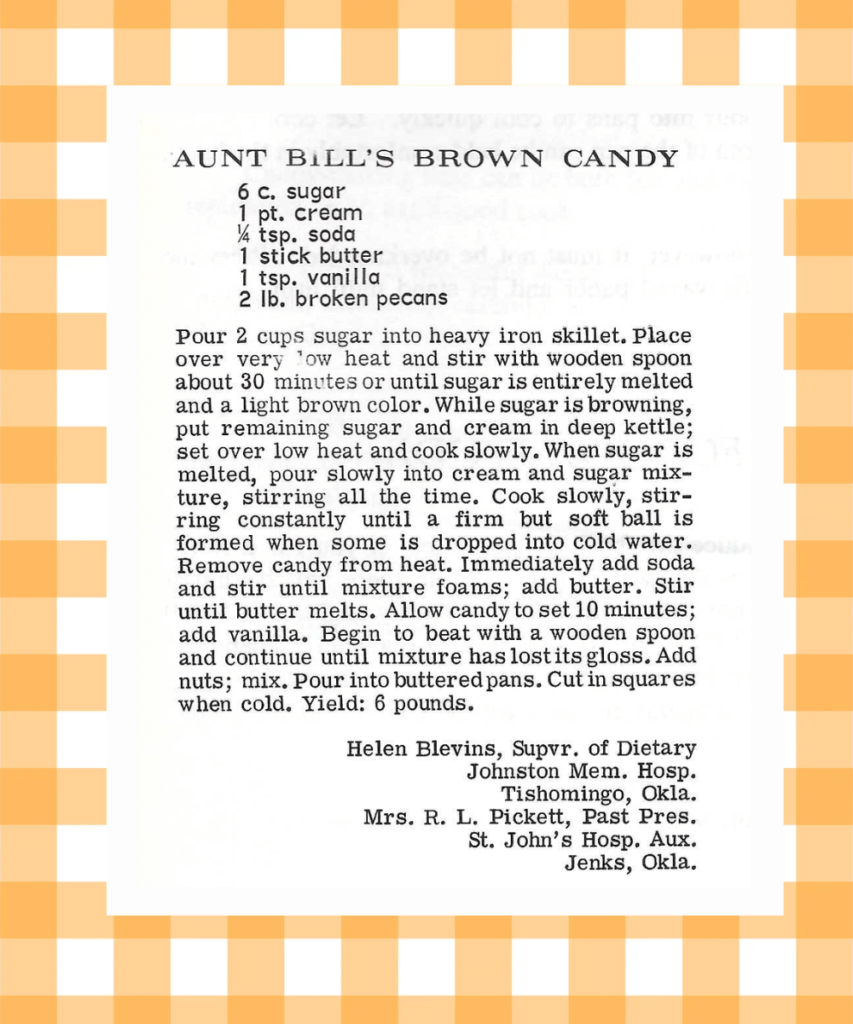
Next, a traditional Oklahoma specialty. The Aunt Bill’s Brown Candy recipe makes a huge quantity, but it looks like it would be a ton of fun to make even if it is time consuming…melting sugar in an iron skillet over low heat for about 30 minutes is not instant gratification. The finished candy is full of pecans and has a deep creamy caramel flavor.
The original recipe was printed in The Daily Oklahoman (Oklahoma City) newspaper in December, 1928, as a recipe in the “Aunt Susan” cooking column. It was so popular, it was reprinted every December for 15 years.
Not that it matters one fig for the recipe, but “Aunt Susan” was the pseudonym of a prestigious food journalist and radio host, Edna Vance Owens Muller. She took over the “Aunt Susan” job from the first Susan, Susan Abercrombie, in 1928. In 1943, she moved to New York, writing under the name “Susan Adams.” Among her gigs were food editor for McCall’s magazine and working on the General Mills Betty Crocker Magazine of the Air.
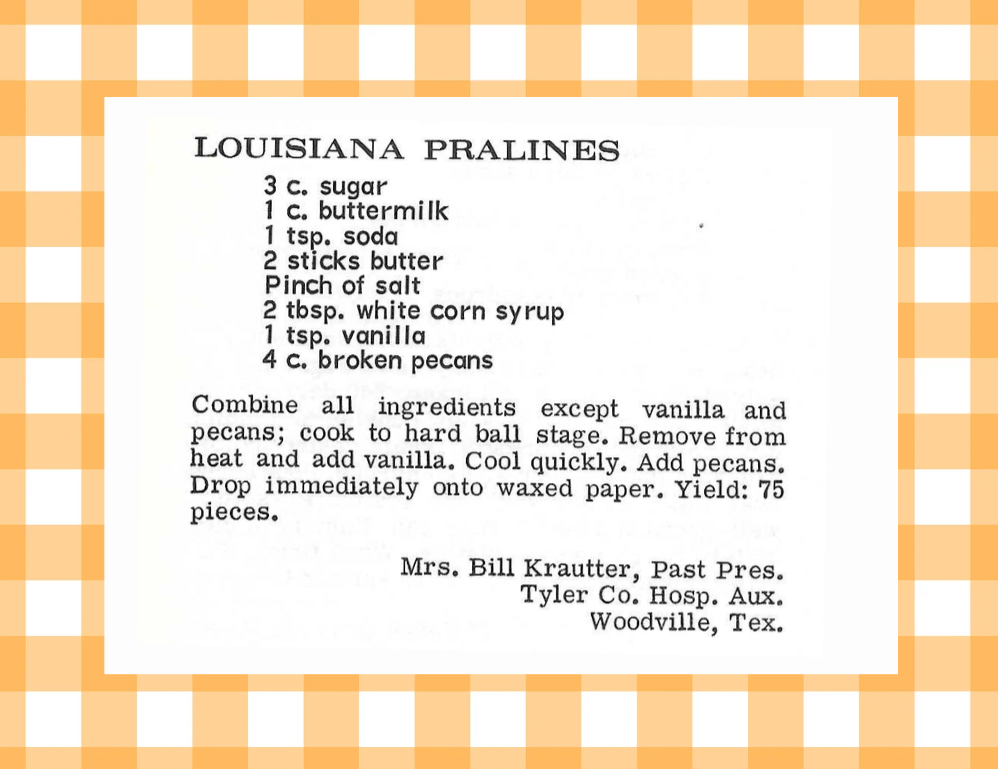
Sticking with pecan candy, pralines were a tradition in my home growing up after my family fell in love with G.C. Lawson’s Pralines and Cream ice cream. I don’t have the recipe my mom used, regrettably, but I know for sure it didn’t include buttermilk because I cannot remember ever seeing a carton of buttermilk in our house. I do remember there were some very crystalized pralines until she mastered the technique. None of us ever complained, our mouths were too full of pralines.
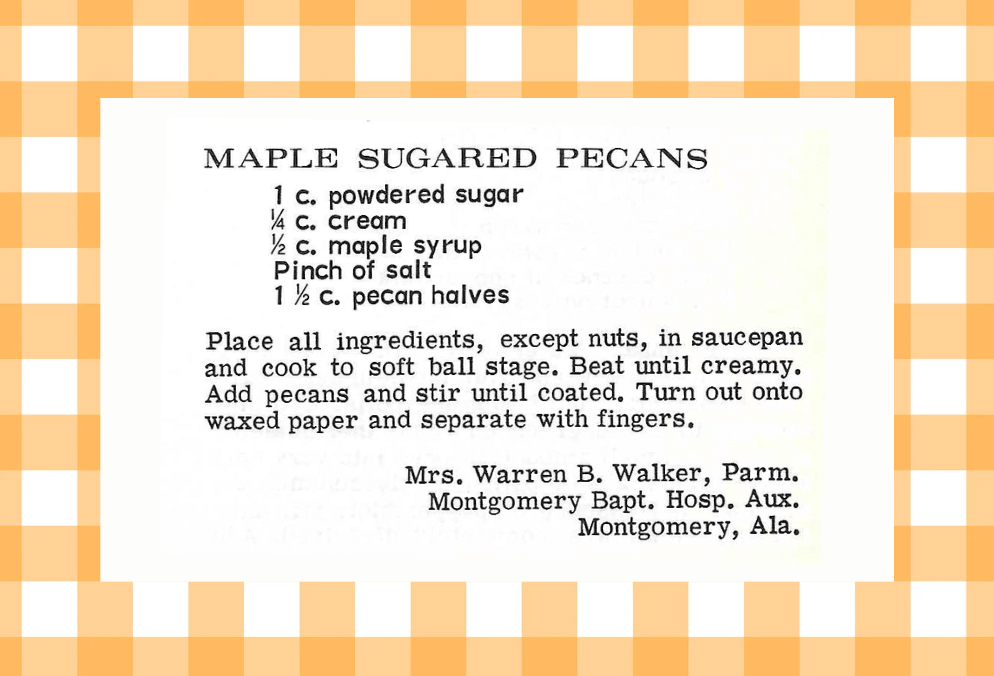
Again pecans, this time Maple Sugared Pecans. Buddy the Elf is 100% accurate on maple syrup. It is one of the four basic food groups. It should be poured on everything. It is also a refreshing drink. With this recipe’s sugar, cream and pecan halves stirred in, it sounds like breakfast to me.
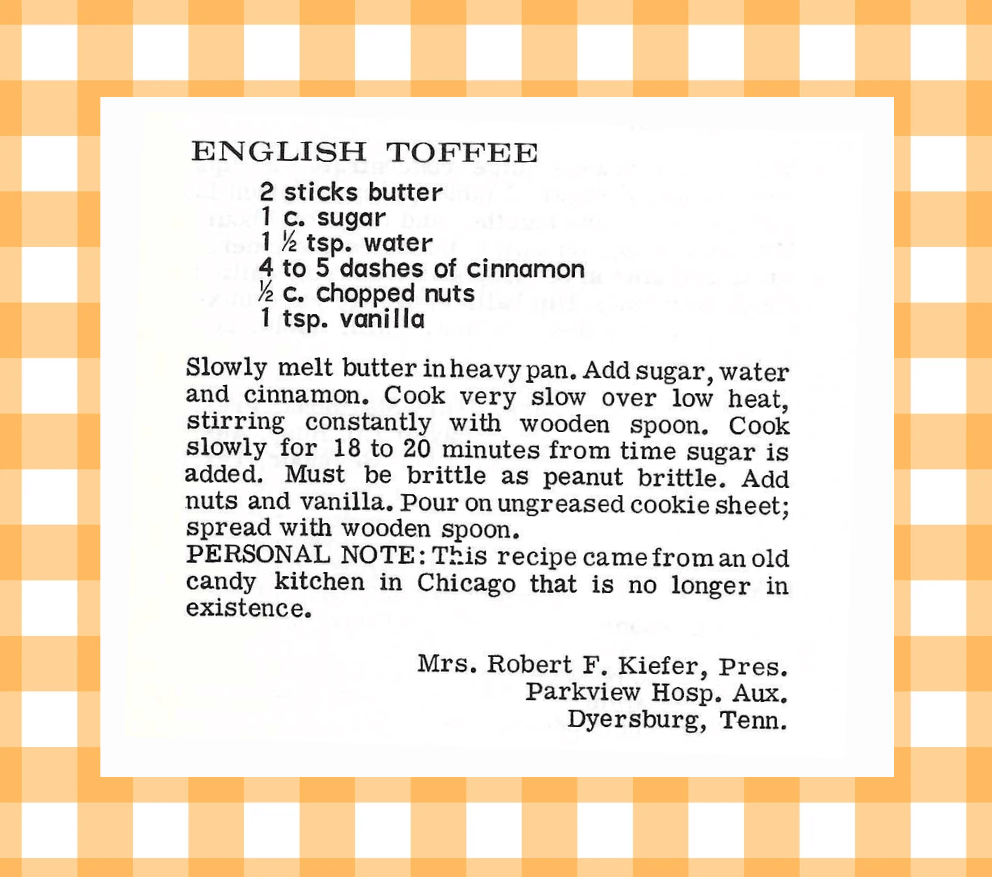
Toffee time! Traditional English Toffee is a hard crack candy like peanut brittle. After it’s cooked and hardened, it’s broken into shards. When I eventually make this, and I will, I’m going to put parchment on that baking sheet before I pour. Some people scatter chocolate chips on the top after it’s poured, spreading them after they melt. I’m not one to turn up my snoot at a candy bar, but after eating this, it would be very difficult to take a Heath bar seriously (unless it’s crushed on vanilla ice cream).
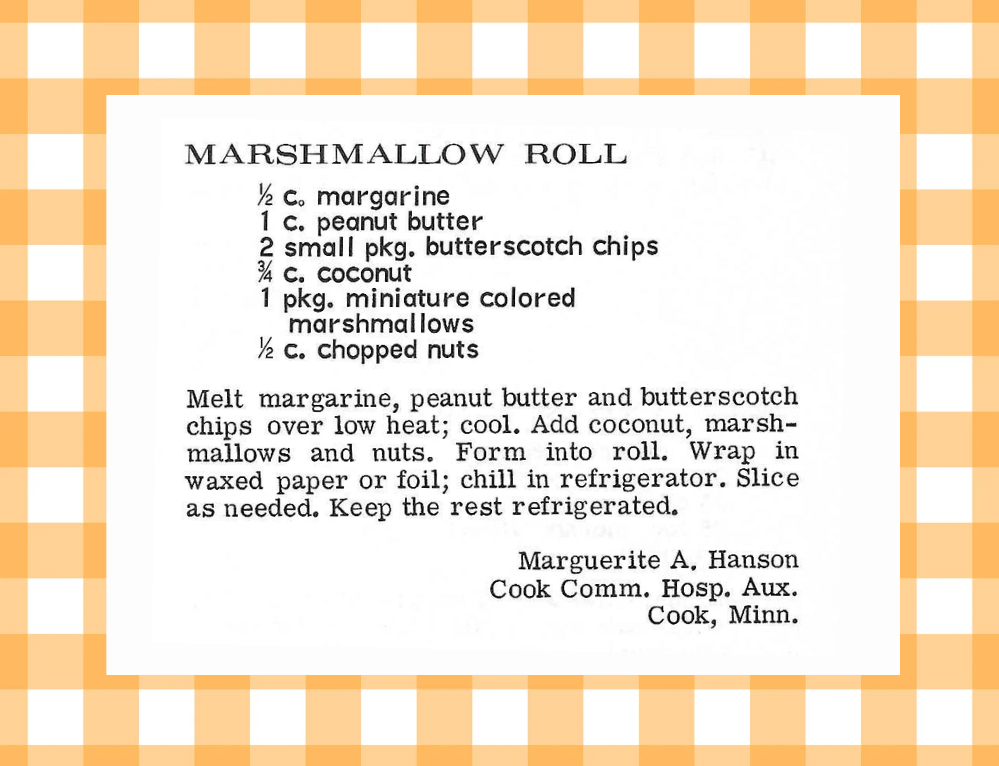
It is illegal to write a post with vintage homemade candy recipes and not include something shaped like a roll. Meet Marshmallow Roll, starring miniature colored marshmallows. A small bag of butterscotch chips in 1967 would have been 6 ounces, unless Google is lying. This looks to be a fun recipe to make with kids.
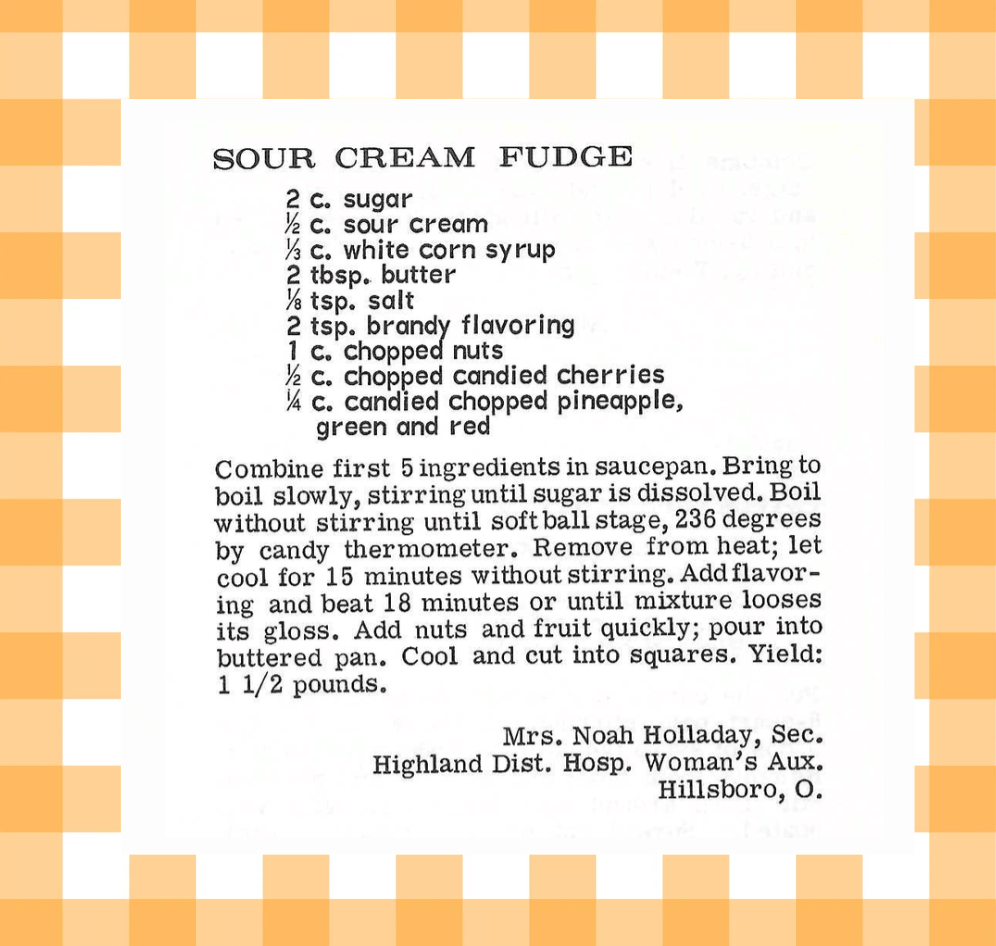
Although I am a known failure at fudge, I will be giving Sour Cream Fudge a try. A white fudge with candied cherries and colorful candied pineapple would be pretty to look at and delicious. Since the recipe makes 1 1/2 lbs., it’s just the right size to make when everyone is out of the house, then hide it in a plastic container inside an empty shoe box in your closet so you don’t have to share.
Were any of these recipes old friends for you? Are you now or have you ever been a candy maker in the kitchen? Did you grow up with any of these treats in your house? Let us know in the comments.
Also, we’re not done with Prescriptions for Cooking: Desserts. A thick book of contributed dessert recipes demands a second post on interesting desserts. There’s one titled “Green Dessert” that simply must be shared.