The cottagecore aesthetic has been around since 2017. It started as a tag used on Tumblr by people who enjoyed things that felt pastoral like baking, gardening, handcrafting, prairie dresses and other things you might associate with a romanticized rural simplicity. Cottagecore crept onto Pinterest and Instagram and eventually onto TikTok, but when it really exploded in popularity was during the pandemic when nesting in was self care. Having a sourdough starter on the counter, flowers in a milk glass vase, a slower simpler life and cozy comforting clothing all felt like a salve for uncertain times.
Cottagecore is still enormously popular, but so are similar but different aesthetics including grandmacore, fairycore, goblincore, Grandmillenial, witchcore and dark cottagecore. These aesthetics all have different looks, but also common threads including an embrace of nature, layered decor (anything but minimalism), a sense of nostalgia, slower living, a nod to things having a story, and most importantly to a vintage blog, an inclination towards handmade, vintage and secondhand everything.
The big box stores are attuned to all this and will gladly sell you mass produced items inspired by cottagecore and its descendants, but most people who embrace the aesthetic would much rather have something real with a history like the painted pitcher with the delicate ruffled rim and reeded handle below.
If cottagecore is not your thing, perhaps something else from this week’s fresh to market vintage will appeal to you…
Tourmaline Chip Necklace
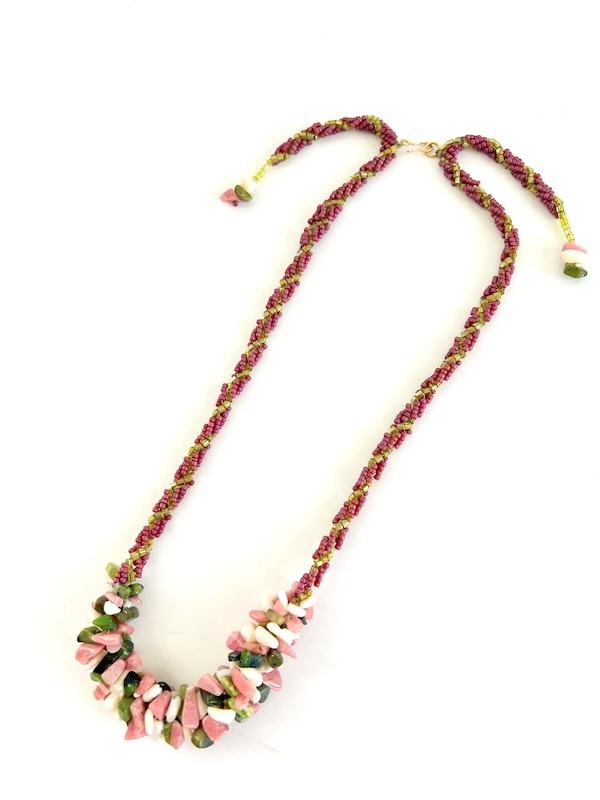
This is a most unusual style of necklace. It doesn’t have a clasp at the end, but leaves two dangling bits at the back of the neck instead. The clasp is a few inched from the ends. A very different design, making me wonder about its origin. Made of pink and green Tourmaline and Mother of pearl chips strung on a twisted beaded necklace. This piece reminds me of the fancy eyeglass holders worn by librarians when I was young, only in reverse. If you have thoughts about this piece and why it’s made in such an odd way, please chime in.
Pink and Green Chip Necklace, $36.95
Pam, Vintage Renude
Antique Hand Painted Glass Pitcher c 1900
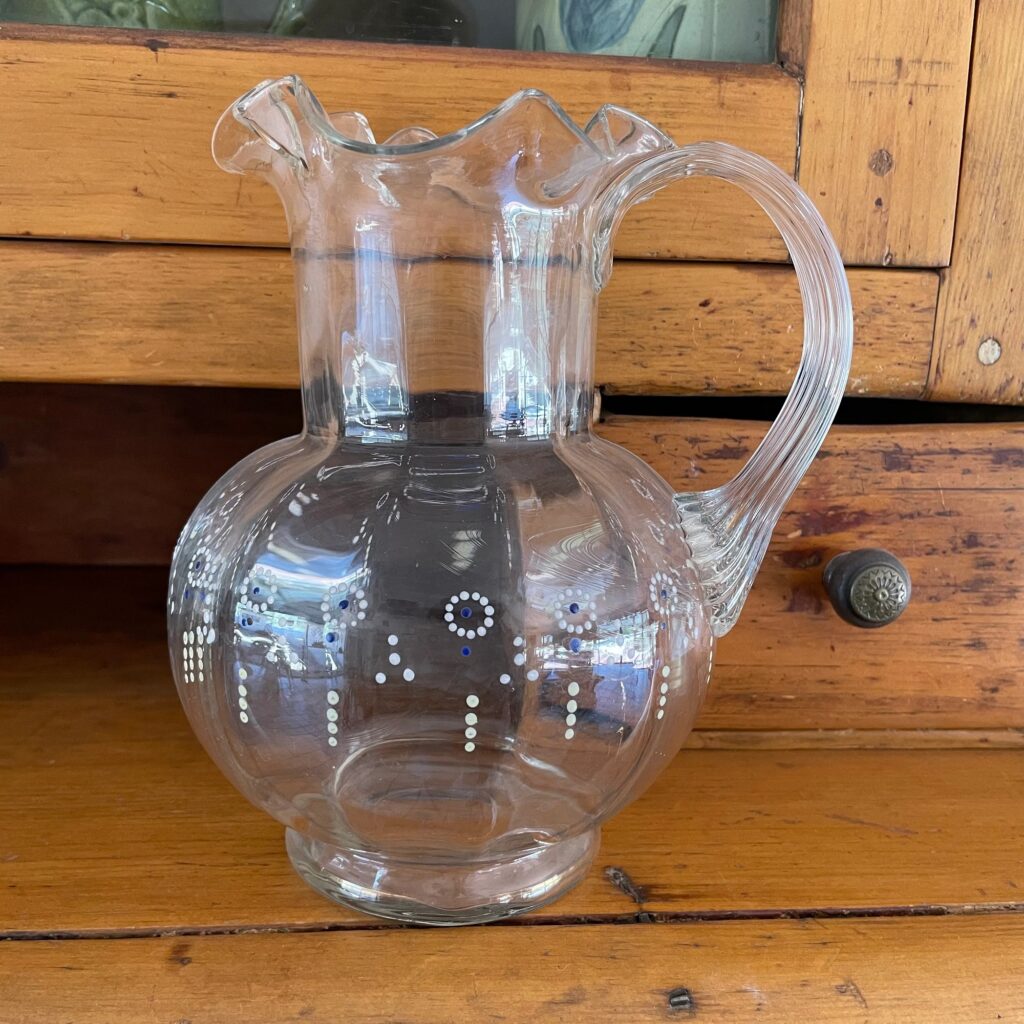
Vintage is the perfect way to add a touch of the cottagecore aesthetic to your decor even if you make your home in a high-rise in the city. And a vintage hand-painted pitcher that doesn’t need a bouquet to amplify its beauty is an easy way to embrace the idea of cozy living.
Fluted Lip Glass Pitcher, $85
Linda, Selective Salvage
Antique Cyclist Cabinet Card Photograph
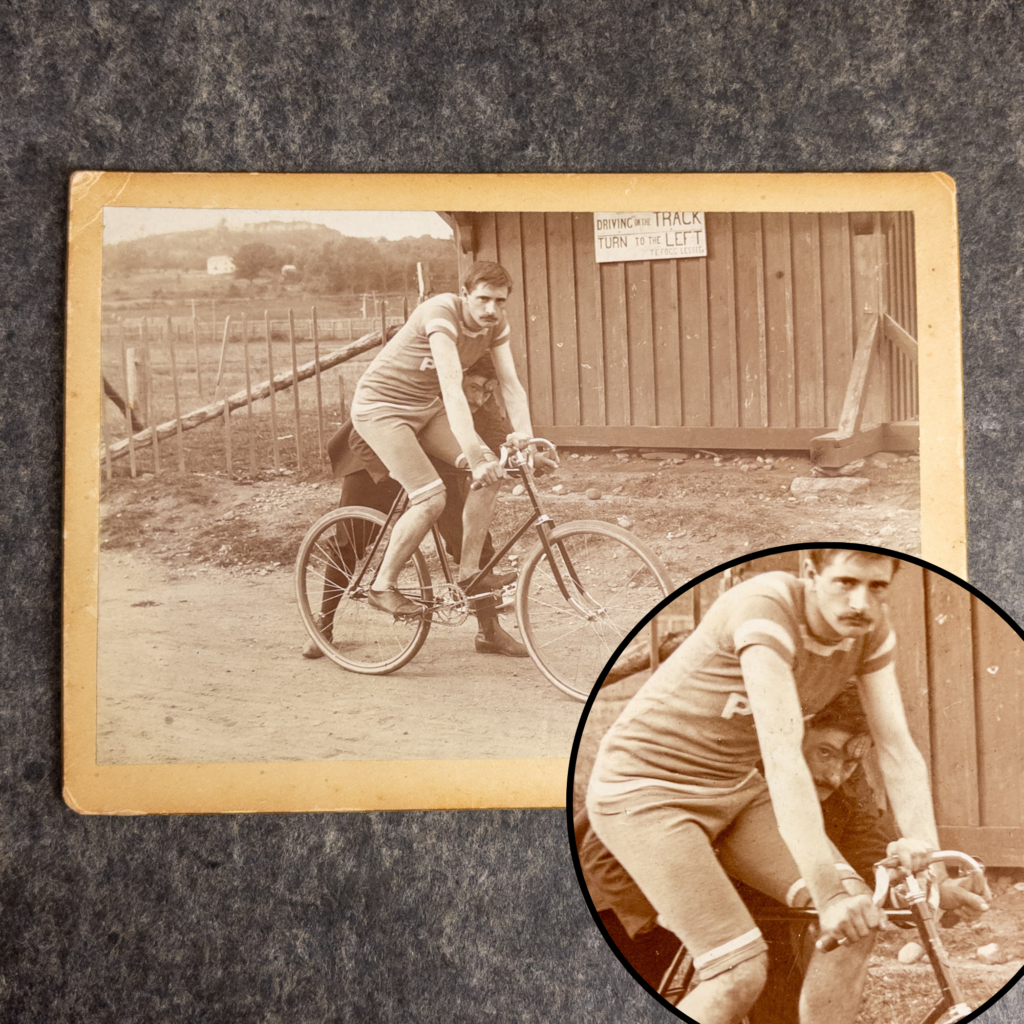
This circa 1890s photograph of a bicycle racer on his bike has more info than you might imagine to help identify the subjects and place. If it was a traditional cabinet card, it would have the name of the photographer, so at least the general location could be pinpointed. There is a small sign in the background, which reads “Driving on the Track Turn to the Left–T.E. Fogg, Lessee.” The rider’s jersey has a word that starts with P that would likely identify the cycling club he belonged to. On the back, written in pencil is “Lewis R Holden or Charles D Holden on bike,” with the number “352.”
Cycling races were a craze in the late 1800s, so much so that cycling clubs rented trotter horse racing tracks for their well attended events. A Palmer, MA newspaper from the time identifies T.E. Fogg of Springfield, MA as the purchaser of a trotter horse. Another source says he was the manager and operator of Hampden Park in Springfield, where high profile trotting and bicycle races were held in the 1890s. The photo is clearly not fancy Hampden Park, but might be a local driving park also potentially managed by Fogg, possibly the one in nearby Palmer, MA, which would tie in to the P on the rider’s jersey.
Nosing about on Ancestry.com produced the info that there were two brothers named Lewis R. and Charles D. Holden living in Palmer at the time the photo was taken. Is this proof positive? No, but it’s proof highly suggestive.
None of this is necessary to enjoy the photo. It’s an awesome piece of cycling history that would make a perfect decor addition for a dedicated cyclist. The possible info about the photo is interesting and all, but the best part of this photo is the second man, hidden in the background, holding up the bike and rider, peeking out from under the riders arm so that he too was included in the photo. We’re not saying the two men look alike like brothers might, but they don’t look unalike either. What do you think?
Antique 1890s Cycling Racer Photograph, $45.
Laurie, NextStage Vintage
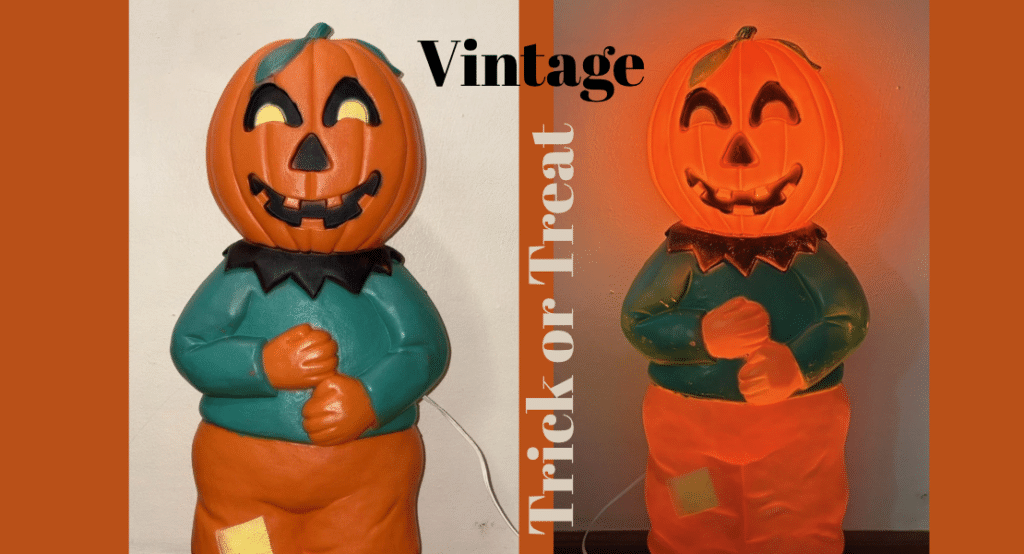
1995 Union Products Pumpkin Boy Blow Mold
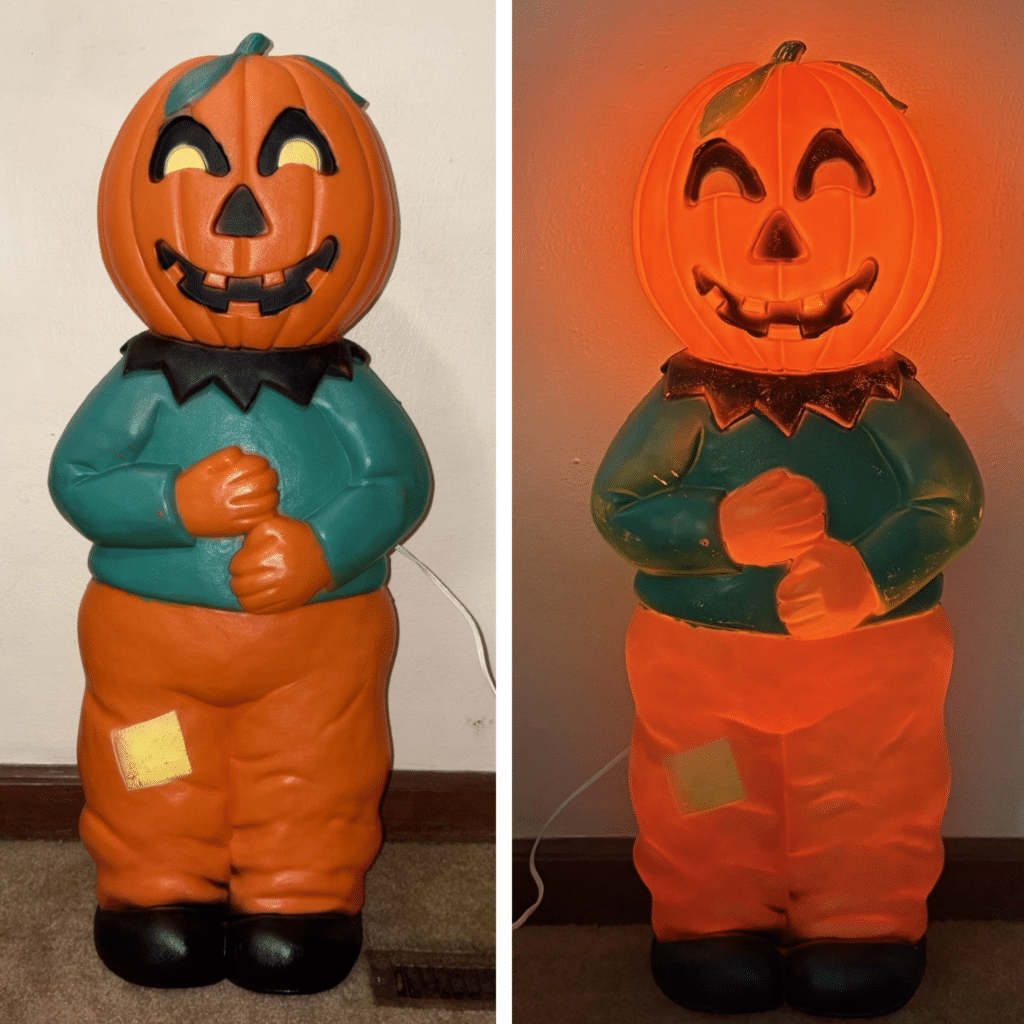
The blow mold manufacturing process was used to make bottles, milk jugs and unlit yard ornaments like pink flamingos starting in the 1940s. It wasn’t until the early 1960s that illuminated holiday blow molds appeared on the market. Beco is generally credited with being first with their Santa and reindeer set, which was sold through Sears and JC Penney.
The 1995 Pumpkin Boy blow mold from Union Products was designed by the man, the legend Don Featherstone, designer of pink flamingos and 750 other blow molds. This guy originally held a plastic sign on a stick between his hands. Unsurprisingly, the signs have mostly disappeared, but the Pumpkin Boy lives on, greeting trick or treaters on front porches.
1995 Union Products Pumpkin Boy Illuminated Blow Mold, $124.99
Available from this week’s guest, melissasmermaids
There’s something about a blow mold that brings out the child in everyone. What is it about sticking a lightbulb in a molded plastic shape that is so charming and irresistible? Here at Vintage Unscripted, we think about hard hitting questions like that every week. And that’s why subscribing to our weekly email newsletter is such a good idea. You get one email every Sunday with links to all our posts from the previous week. And you can be sure your info is safe with us. We would rather eat a caramel apple that has been dropped into a leaf pile than every share your info.