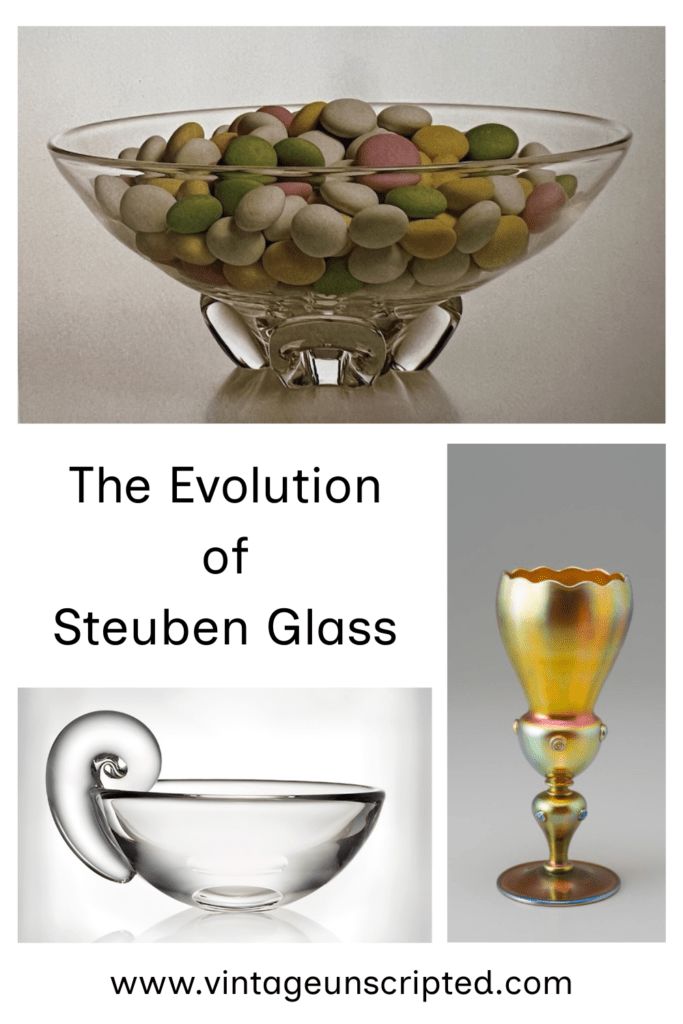
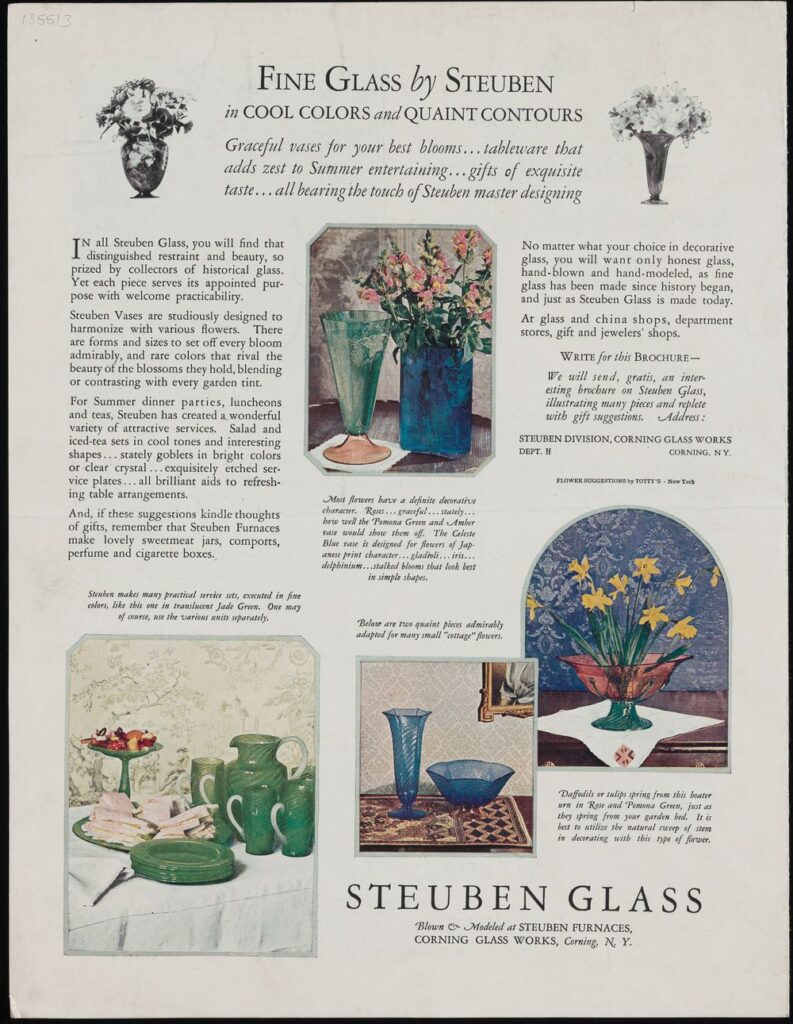
Since 1903, Steuben Glass has been one of the highest quality glass makers in the United States. Known now for its crystal clear artistic designs, the company began by using purchased glass blanks which were then colored and engraved in the Art Nouveau manner typical of the turn of the century.
Thomas G. Hawkes, who owned the engraving company, wanted to work from his own blanks so he invited glassmaker Frederick Carder to partner with him. Carder had been working for Stevens & Williams, a British glass company. He had been designing glass for many years and was passed up for a promotion at the company, prompting him to take up Hawkes’ offer. Hawkes’ company was based in Corning, New York, in Steuben County giving the new partnership its name, Steuben Glass Works.
Changes
In 1918, Steuben Glass was purchased by Corning Glass Works. Steuben became a division of Corning and Frederick Carder remained on board as managing director of Steuben. By 1932, Steuben had developed a type of glass that was much stronger than most and gave off a rainbow effect that was pleasing to buyers. The glass was also softer to the touch making a highly tactile product. The colored glass items made by the company until this point were phased out and this new form of glass was molded and cut in new exciting shapes.
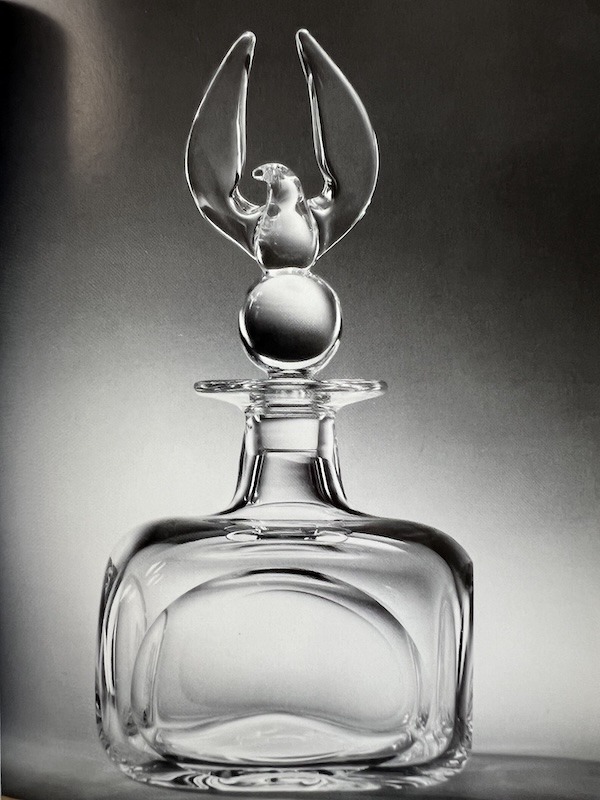
By 1933, Carder was out and Arthur Houghton was brought in to run Steuben. Arthur was the grandson of Amory Houghton Sr., the founder of Corning Glass. Arthur brought architect John M. Gates and sculptor Sidney Waugh on board, enlisting them to change the direction of the company. No longer was Steuben making colored etched glassware. The newly found process of crystal clear cut glass with rainbow effects had become the company’s signature. Products included stemware, candlesticks, bowls, drinkware, and urns, each one designed to show off this new form of glass.
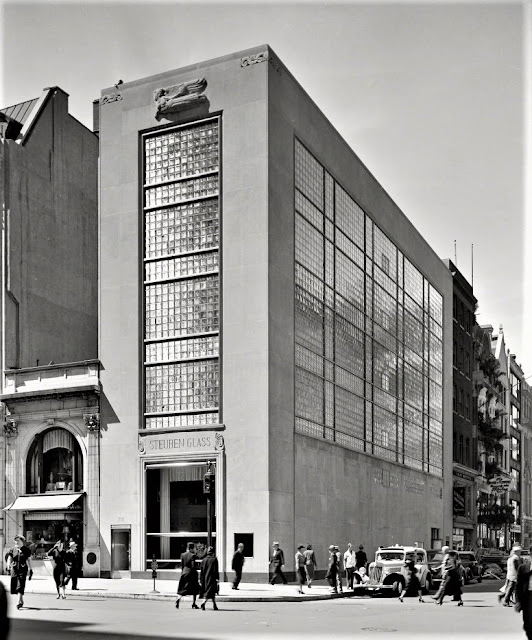
The new designs took off, allowing the company to grow and open their first storefront in New York City. The building at 718 Fifth Avenue was iconic because it flipped the traditional construction proportions and was built with four times as much glass (Pyrex glass blocks) as limestone and was designed inside as a gallery that sold fine glass rather than a store.
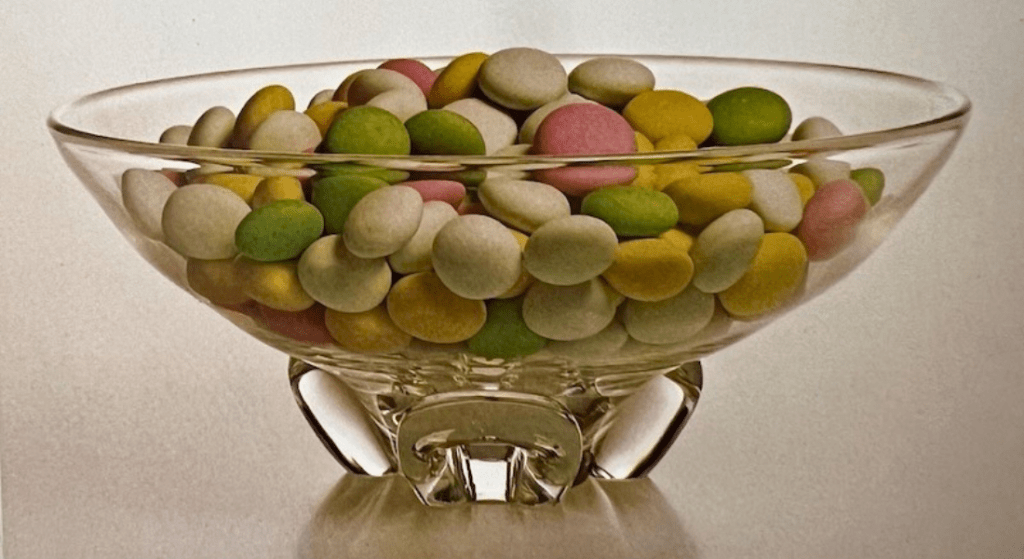
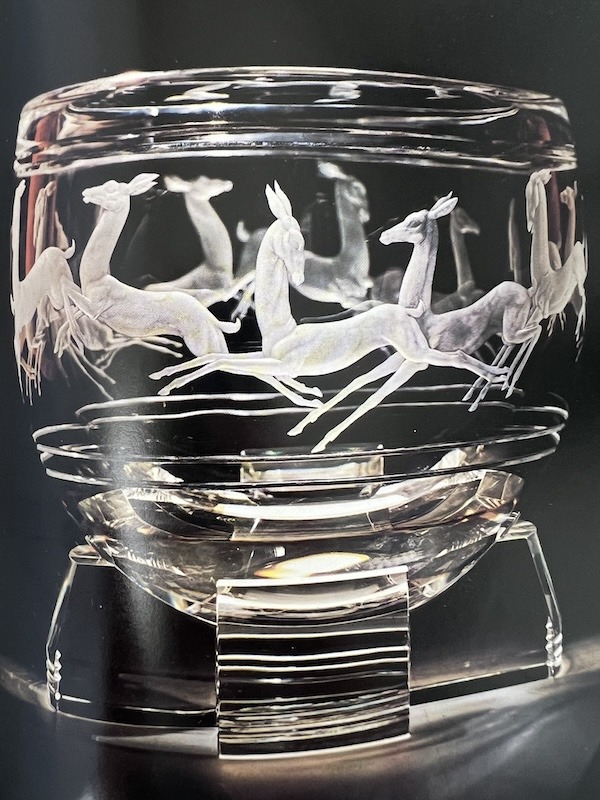
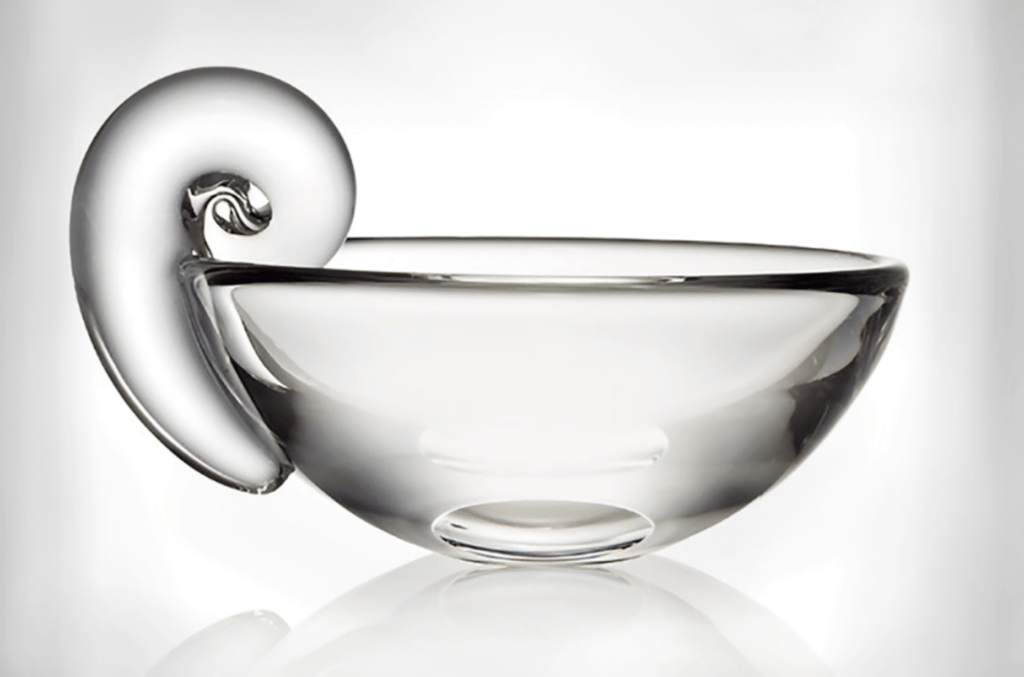
The iconic Gazelle Bowl, designed by Sidney Waugh, along with three other items were added to the Metropolitan Museum of Art’s permanent collection in 1938. At the 1939 World’s Fair, Steuben displayed pieces in a modernist pavilion inside the Glass Center Building, giving them a chance to show the world what it could do. Several of the items, including the Olive Bowl, remain best sellers.
The 1940 exhibition at the New York flagship, 27 Artists in Crystal, was a sensation. Participating artists, including Georgia O’Keefe, Salvador Dali, Henri Mattise and Isamu Noguchi, were asked to submit drawings which were copper etched into glass pieces. The two month exhibit was so mobbed the staff had to lock the doors at times to prevent overcrowding.
Since 1947, Steuben has been gifted by American Presidents to foreign leaders, starting with the Merry Go Round bowl gifted to Queen Elizabeth.
Open to the Public
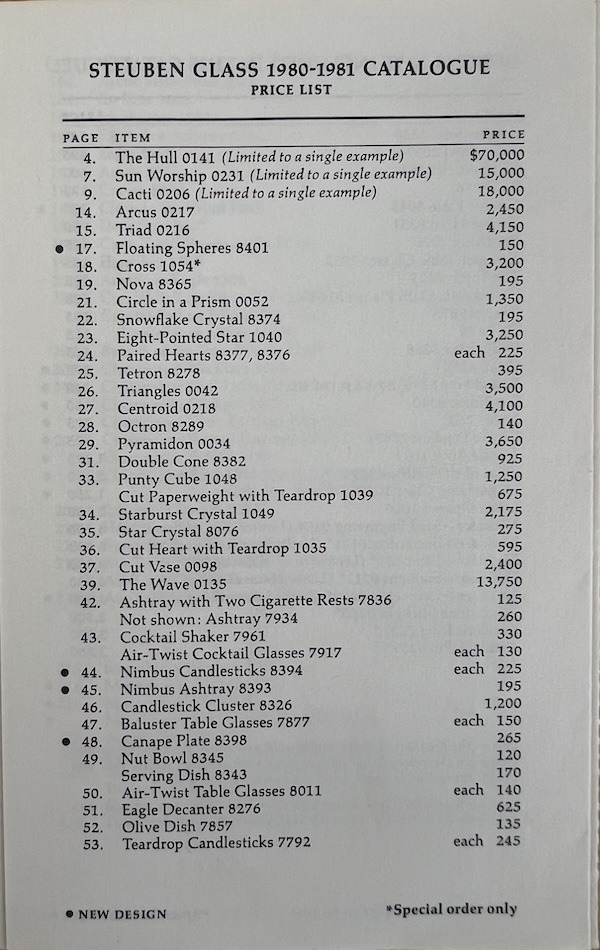
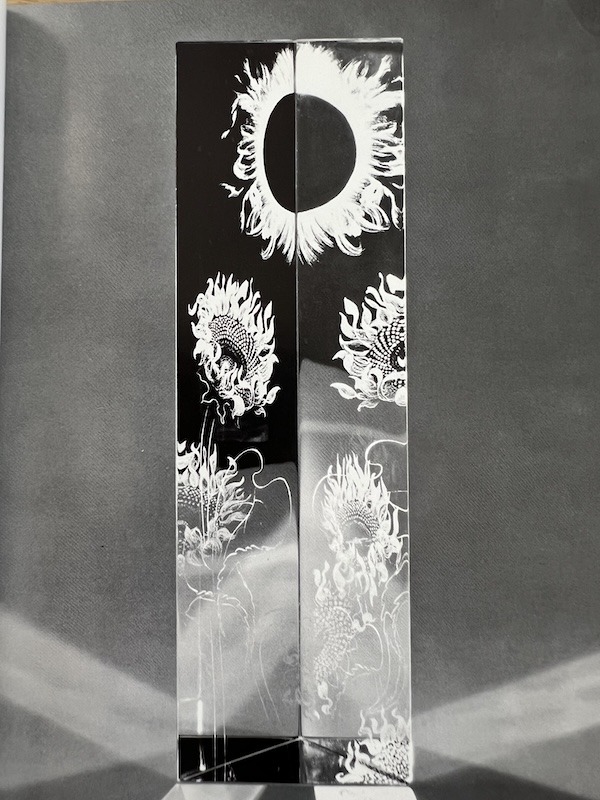
The 1950s brought the Corning Glass company into the public eye again with the opening of the Corning Museum of Glass. The building was incorporated into a part of the Steuben factory, allowing the public to view parts of the factory and craftsmen making their products. By 1955, the company had embarked on a new product line of purely decorative sculpture alongside their functional pieces.
Corning is Back
In 2008, Steuben was sold to the Schottenstein Stores Corp. Schottenstein is a holding company that owns a variety of retail brands from clothing to groceries, discount stores to luxury. In 2011, Corning repurchased Steuben Glass and it remains as a division of Corning to this day.
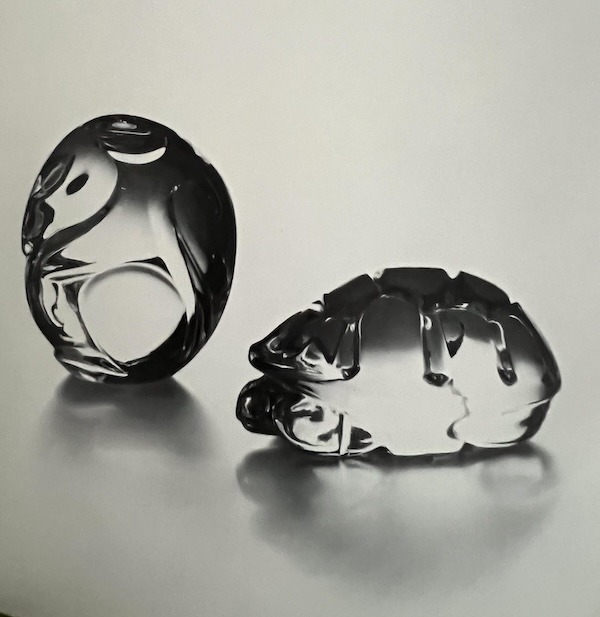
One of the most interesting lines of products for me are the “Hand Coolers.” These items are a throwback to the Victorian era when young women would keep a small egg shaped item often made of porcelain or marble in their hands in order to keep their palms from being warm and sweaty. The idea was that young ladies’ handshakes were meant to be cool and dry, as it was considered to be gauche to have damp warm palms. Steuben Glass still features a line of small beautifully sculptured hand coolers.
With twists and turns, changes in both management as well as designers, the Steuben Glass has persevered and thrived through it all.
Read more:
For a timeline of Steuben Glass click here.
The Corning Museum of Glass has an amazing website, click here.
From the Corning Museum website, images of Steuben glass in their collection, get a cup of coffee and click here.
If you would like more information on vintage glass, we have written several posts on vintage glassware. you can find those here.