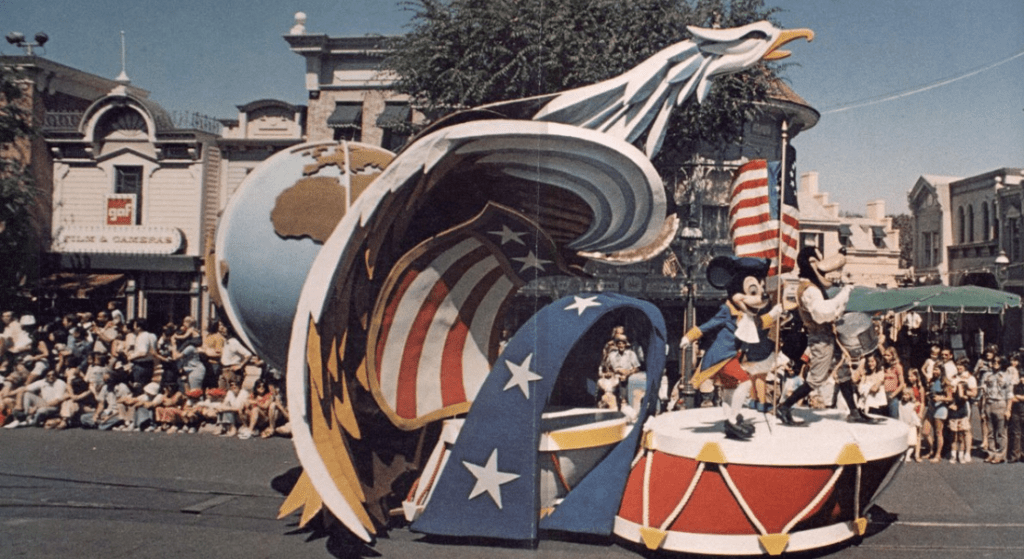
With the 250th birthday of the United States coming up, we’re reviewing previous landmark birthdays, Vintage Unscripted style. Here’s a recap of what was going on and how we celebrated the American Bicentennial in 1976, as well as some souvenirs from that somewhat celebratory year.
What was going on in the country?
The mood in America in 1976, was uneasy, cynical, mistrustful of government and worn down.
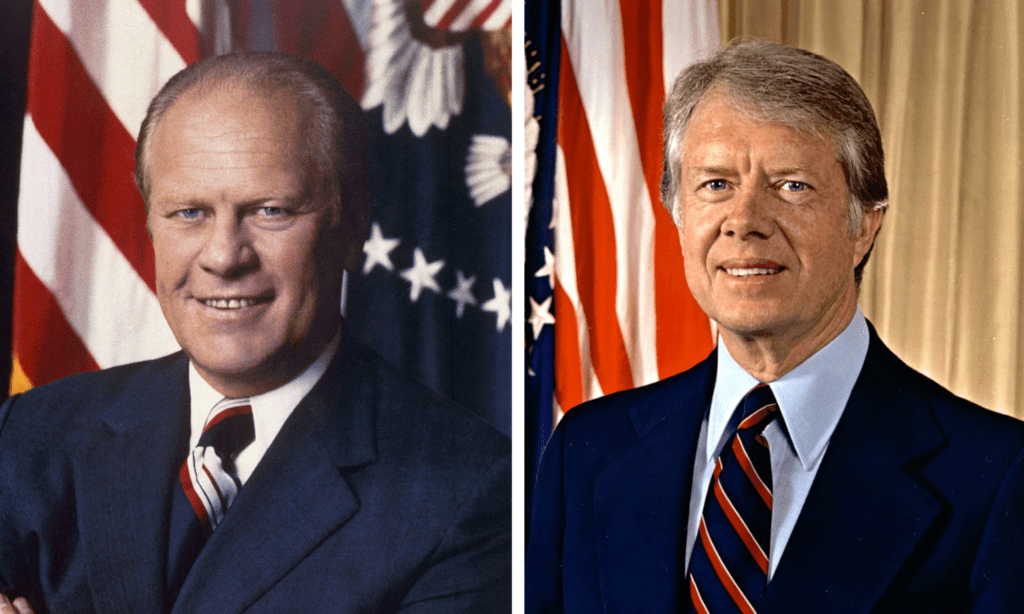
The country was still damaged by President Nixon’s resignation as a result of Watergate and the devastating end of the Vietnam War two years previously, both of which eroded trust in government. President Ford, the only person who served as both vice president and president without ever being elected, was running for election against Georgia Governor Jimmy Carter, who branded himself as a Washington outsider for obvious reasons. (At the Republican convention, Ford gained the nomination by a whisker over the actor/California Governor Ronald Reagan, but that is another story for another time.)
Inflation had been building slowly since the mid 1960s and everyone was feeling the pain. Combined with stagnant economic growth, the country was suffering from “stagflation.” We were in a detente with the USSR, but the specter of the Cold War still loomed. Cities were decaying for innumerable economic and social reasons. Things were a mess.
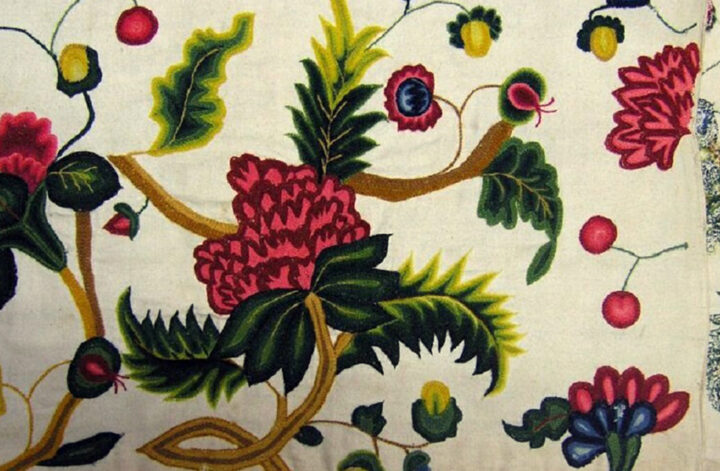
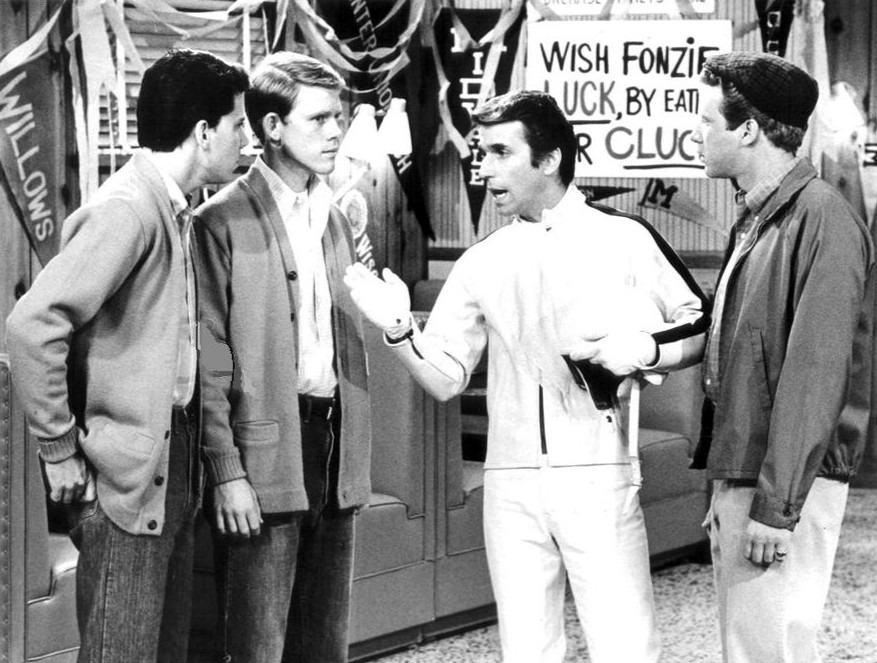
That may have been why popular culture was a mix of nostalgia for the past and a desire to move ahead. The years leading up to 1976 were steeped in a passion for throwback Americana. People were engrossed in everything from quilting to folk art to country music to faux early American furniture and true antiques (and yes, there were a lot of fakes). Network TV was dominant and Happy Days, a show set in 1950s Milwaukee, rode the top of the ratings.
Looking back with rose colored glasses was one way to escape. But so was going forward, and embracing new ideas and music. What is now called yacht rock filled the radio airwaves, and underground clubs like CBGBs were drawing crowds for emerging bands including the Talking Heads, the Ramones and Patti Smith. Disco was beginning its rise, because nothing feels better than boogie-oogie-oogieing til you just can’t boogie no more.
Saturday Night Live debuted in the fall of 1975, and the Not Ready for Primetime Players quickly became a countercultural force. The movies of ’76 were gritty, including Rocky, Network, Taxi Driver and All the President’s Men. Alex Haley’s Roots was published and became a phenomenon, propelled by Black Americans, who were finding their heritage and identity, and white Americans, who were reexamining the country’s history.
So with American morale bottoming out, the economy tanking and a malaise overcoming the country, how exactly did we throw a giant birthday party for America.
How we celebrated
Let it not be said America waited until the last minute to make plans. The American Revolution Bicentennial Commission was established by Congress in 1966. Their first idea was to throw a world’s fair type of exhibition in Philadelphia or Boston, a concept readers of the previous post about the Sesquicentennial celebration will find hilarious. The idea was discussed for 6.5 years, then dropped and the commission was disbanded.
Congress then created the American Revolution Bicentennial Administration, which funded lots of small celebration projects nationwide. They backed historic preservation and restoration projects, giving the National Park Service the latitude to make improvements. Thousands of Bicentennial projects were supported in cities and states, including educational programs, festivals, local Bicentennial committees, parades, fireworks and more.
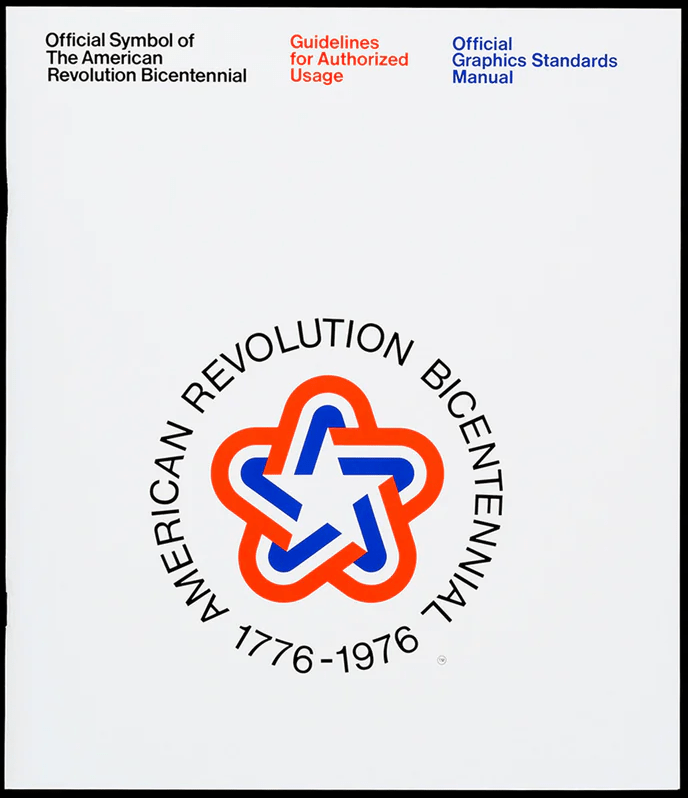
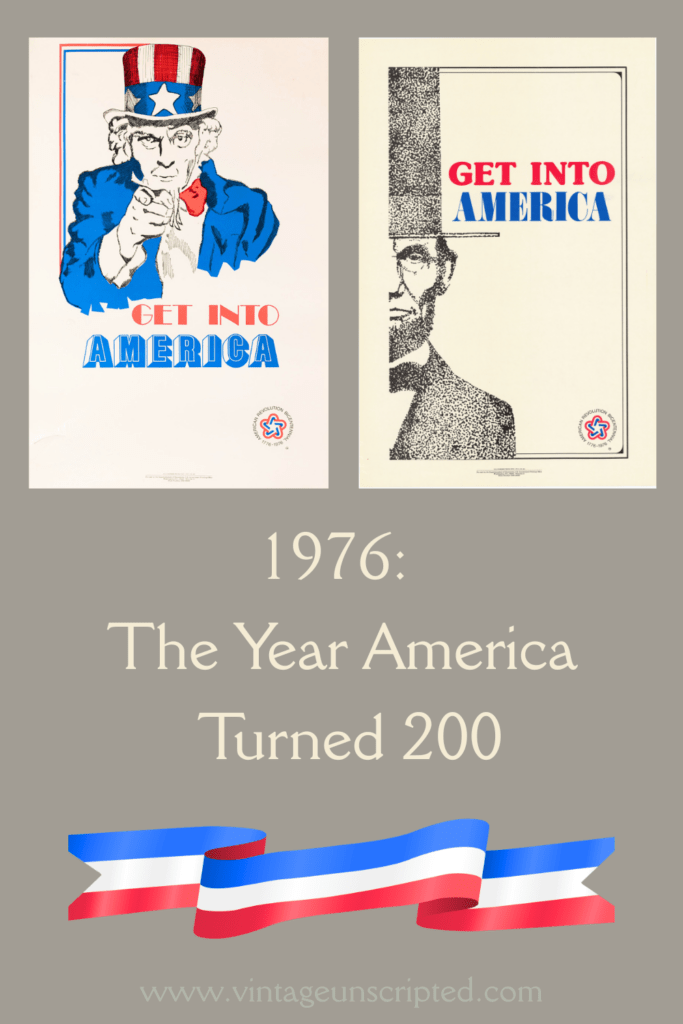
The official logo for the Bicentennial was designed by Bruce Blackburn, and it was everywhere on everything.
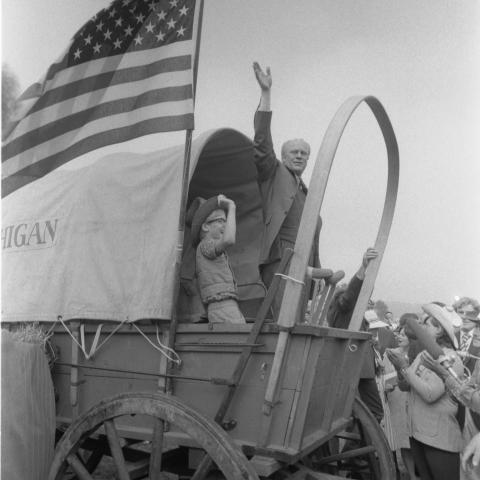
Celebrations actually started in 1975. The American Freedom Train, made its way through all 48 contiguous states. Three locomotives pulled 10 cars loaded with iconic American treasures including the original Louisiana Purchase document, Judy Garland’s dress from the Wizard of Oz, a moon rock and Martin Luther King’s pulpit and robes. And the Bicentennial Wagon Train Pilgrimage started in Washington state and traveled along original covered wagon routes all the way to Valley Forge, PA, arriving on July 4, 1976.
With no sense of irony, England’s Queen Elizabeth II and Prince Phillip visited to US on their most royal yacht, spending time with President and Mrs. Ford and visiting six cities on the east coast.
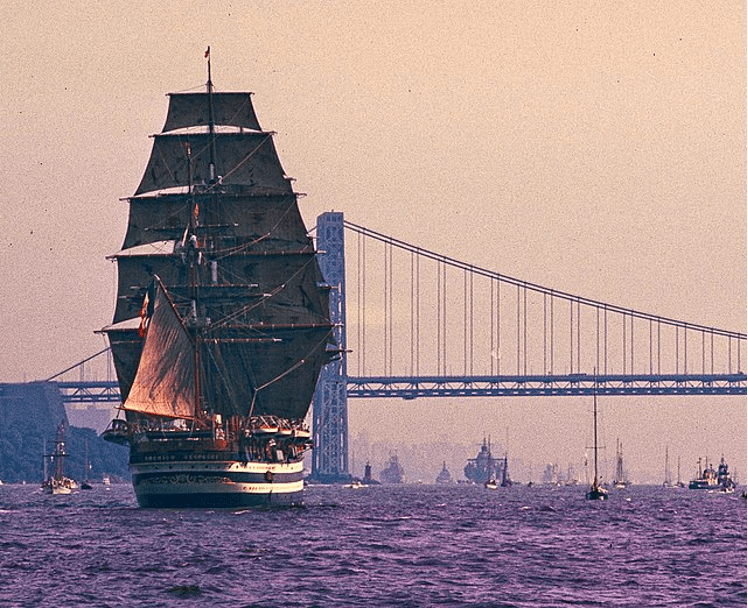
The most memorable event wasn’t part of the Bicentennial, it was Operation Sail, an independently organized flotilla of tall ships, which visited New York City on July 4th, then traveled to Boston.
It’s a testament to American’s love of country that despite all the things weighing the country down–an unelected president who pardoned his criminal predecessor, the fall of Saigon, cities including New York on the edge of bankruptcy, crushing inflation and an overall malaise and distrust of institutions–the 1976 Bicentennial was a memorable true national celebration.
What kind of commemoratives were there?
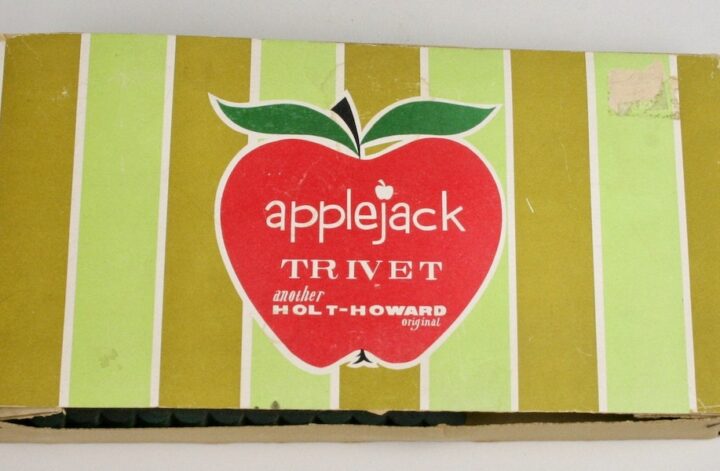
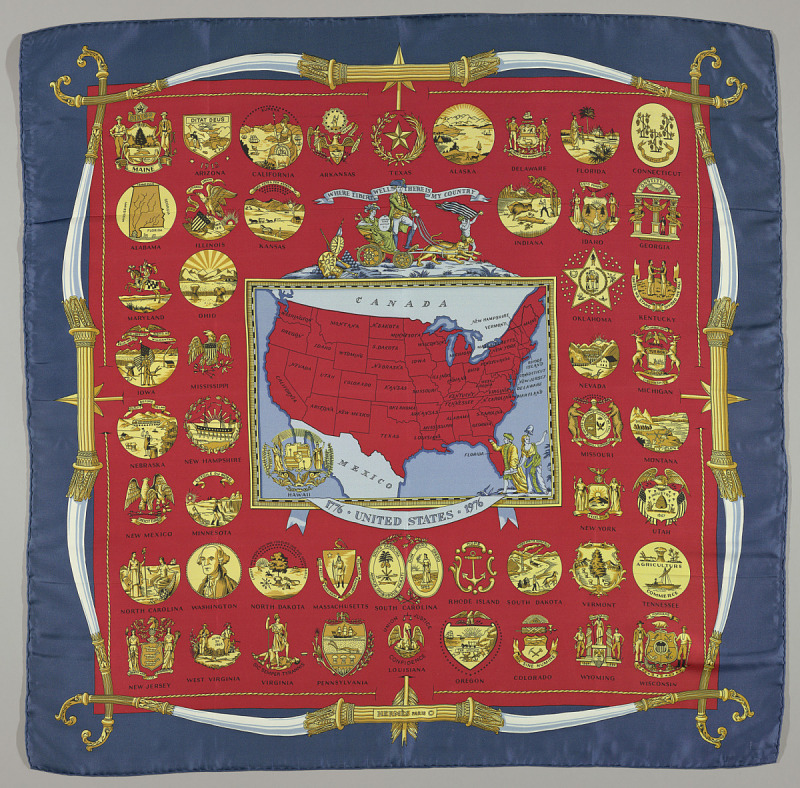
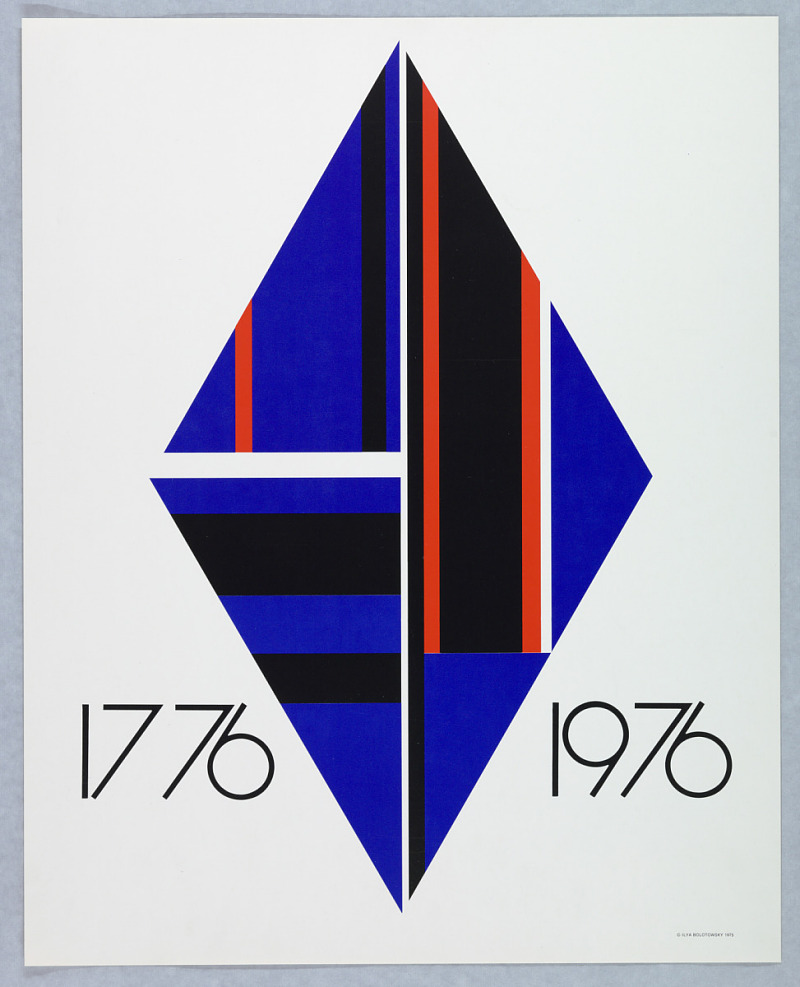
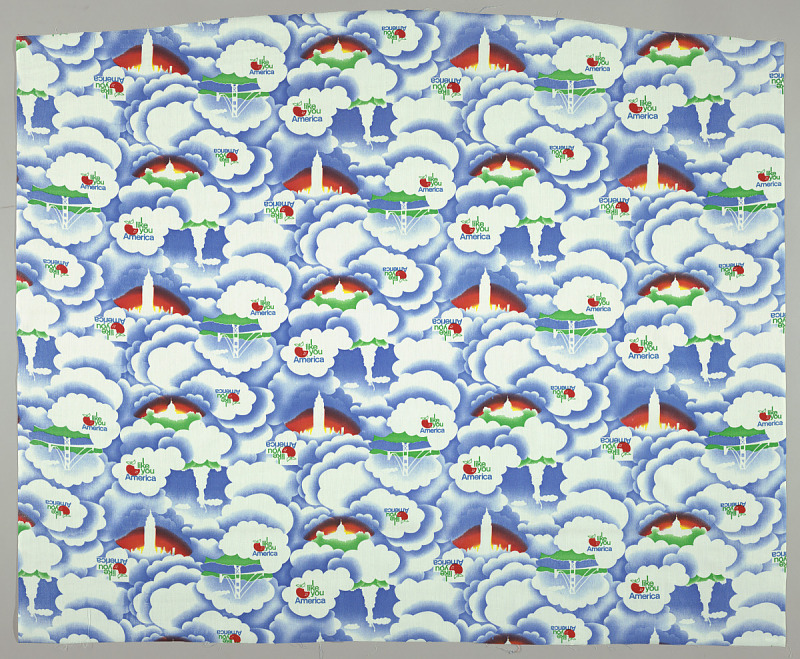
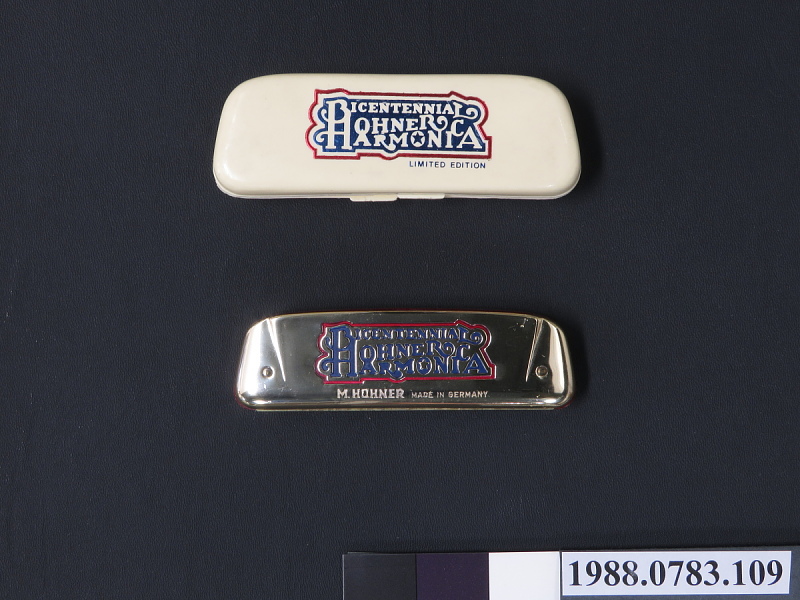
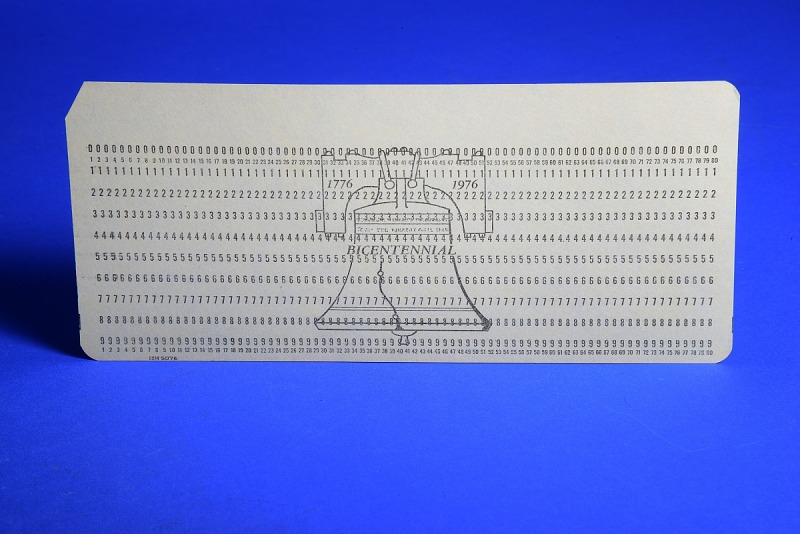
The Bicentennial had an abundance of souvenirs. The logo was on everything. Every manufacturer wanted in. Collectibles ran from the sublime to the tacky. Here’s a selection:
Read more about the Bicentennial:
1976 Bicentennial of American Independence, Smithsonian
U.S. Bicentennial 1976, the Inclusive Historian’s Handbook
Bicentennial (1976), the Encyclopedia of Greater Philadelphia
Radio Address About the American Revolution Bicentennial, The American Presidency Project, UC Santa Barbara
Operation Sail 1976: How New York City Came Together in a Time of Crisis, The Gotham Center for New York History
The official bipartisan congressional website of America 250 is america250.org.