With the 250th birthday of the United States coming up, we’re taking a retrospective spin into previous landmark birthdays, Vintage Unscripted style. Here’s a recap of what was going on and how we celebrated in America in 1926, as well as some souvenirs from that somewhat landmark year.
What was going on in the country?
America was in a much better place in 1926 than it was at the Centennial in 1876, when the fallout from the Civil War, a disputed presidential election and political corruption rocked the country so hard the founding fathers needed seat belts in their graves. 1926 was the Roaring Twenties, with jazz, flappers and Art Deco everything. Americans were feeling prosperous, and it felt like the prosperity would last forever. (Spoiler alert: it didn’t.)
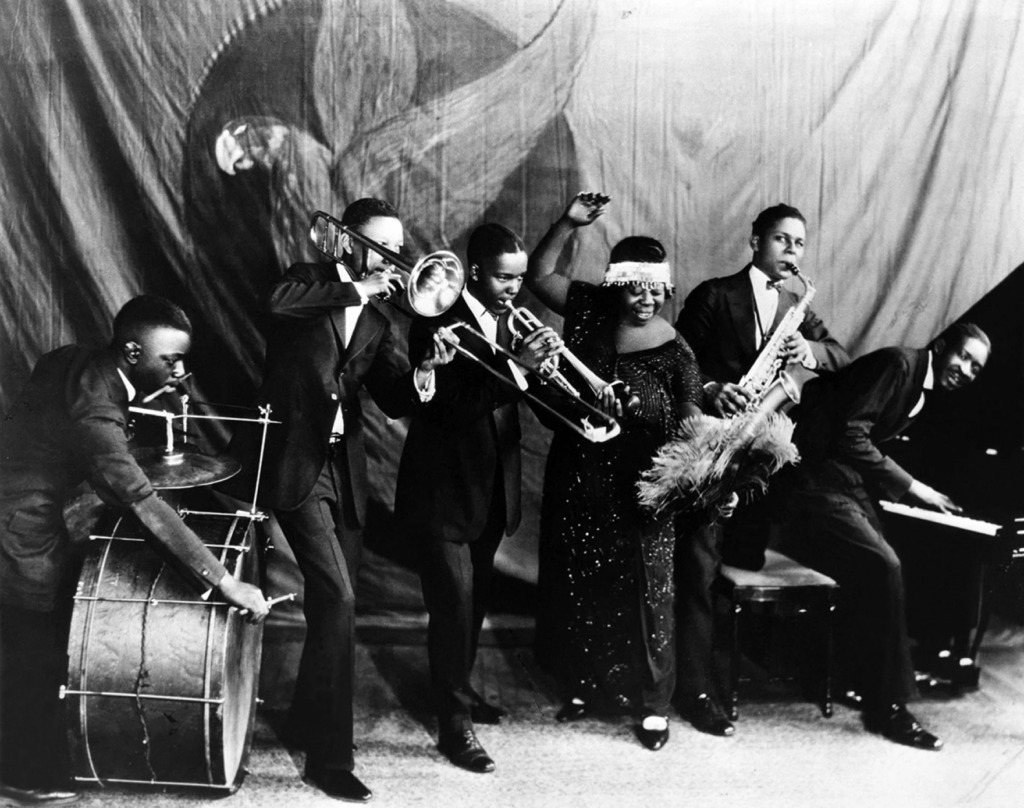
There were so many ways to amuse yourself. There were automobiles, glossy magazines, radio shows to follow and motion pictures. Some of the fancy folk had electric appliances like washers, stoves, sewing machines, vacuums, toasters, irons and refrigerators. Of course, only half the homes in the US had electricity, and those were mostly in cities, but still…
Congress passed the Air Commerce Act that licensed pilots and planes. Warner Brothers rolled out the Vitaphone system, a large step towards talking movies. The first college SAT test was given. (Not everything was roses, I guess.)
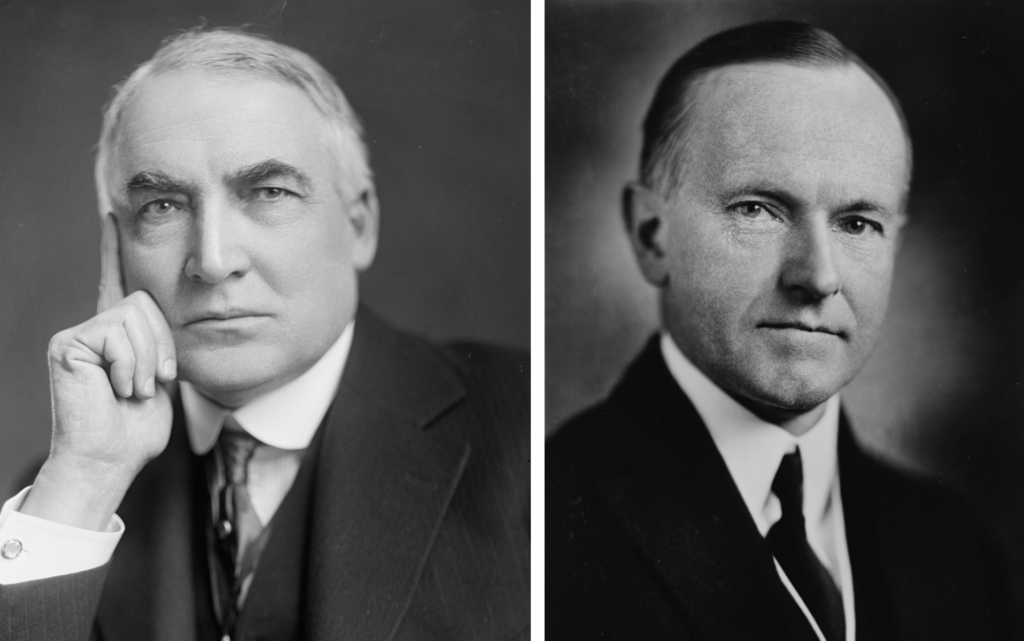
Calvin Coolidge was president and his Republican party controlled both houses of Congress. The prosperity of the time helped people forget the scandals of the Warren Harding administration, but the smell of the corruption was still in the air as the trials of the grifters were still happening. Coolidge was 100% pro business, and that seemed mostly fine because everyone was doing pretty well, except for farmers.
The farmers were on the precipice. This was one start of the gathering darkness that contributed to the Great Depression. During WWI, American farmers fed the world, benefitting from high prices and high demand. Many farmers, hoping to capitalize, took on debt to buy more land and more equipment. After the war when European farmers recovered, the demand and prices both fell, and American farmers were stuck with expensive land and loans. They did what they had to do, produce more to cover those debts, which led to an oversupply situation.
This precarious financial position was compounded by tariffs. The Coolidge administration put high tariffs on imported goods, which benefitted American businesses. But the European nations responded with their own tariffs, meaning farmers while were having a hard time selling their oversupply to overseas markets, they were also paying more for essential imported goods. Rural banks failed, which led to farm foreclosures, which led to young people from rural areas migrating to the urban areas. Essentially, rural Americans were getting a preview of the great Depression ahead of the rest of the country.
Another darkness in the prosperity of 1926 was the ascendancy of the Klu Klux Klan, which had expanded into the north and had millions of members. Their political power had peaked and decline was starting because of scandals, but the political positions they pushed had devastating effects. They restricted immigration, causing a less robust economy. They stifled Black economic development, meaning Black Americans had no cushion to fall back on when the Depression hit. They controlled state governments and let corruption become the order of business. And they were fervently anti-Union.
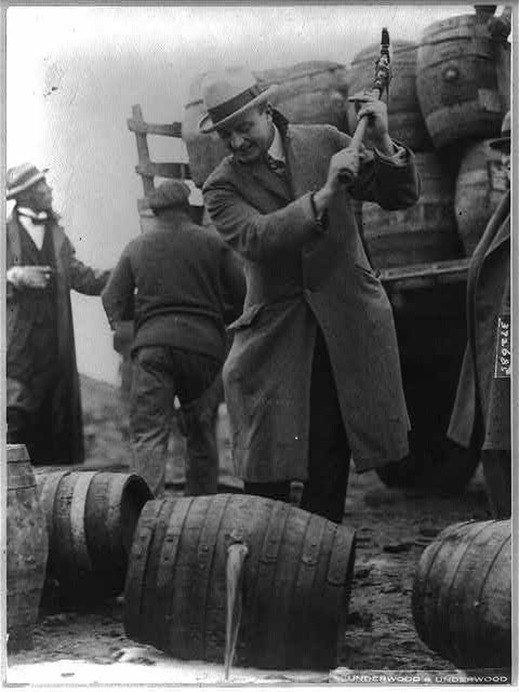
Prohibition was another darkness. It was national law, but it was ignored by the gangsters who took over illegal liquor distribution. Organized crime grew like dandelions in a lawn. The body charged with enforcing Prohibition, the Prohibition Bureau, was filled with patronage appointments and corruption, and enforced the law in a highly selective way based on who was rich and who was working class. The corruption extended well beyond that because the gangster bootleggers corrupted everyone in government who had any impact on their operation by paying them off. The entire legal distillery business had been shut down, which meant lost tax revenue, and it had been replaced by a mob-driven corrupt illegal but overt business.
So while for many Americans, everything felt like it was roses and bonbons, dance marathons and flagpole sitting, there were corrosive darknesses bubbling under the surface.
How Americans Celebrated the Sesquicentennial
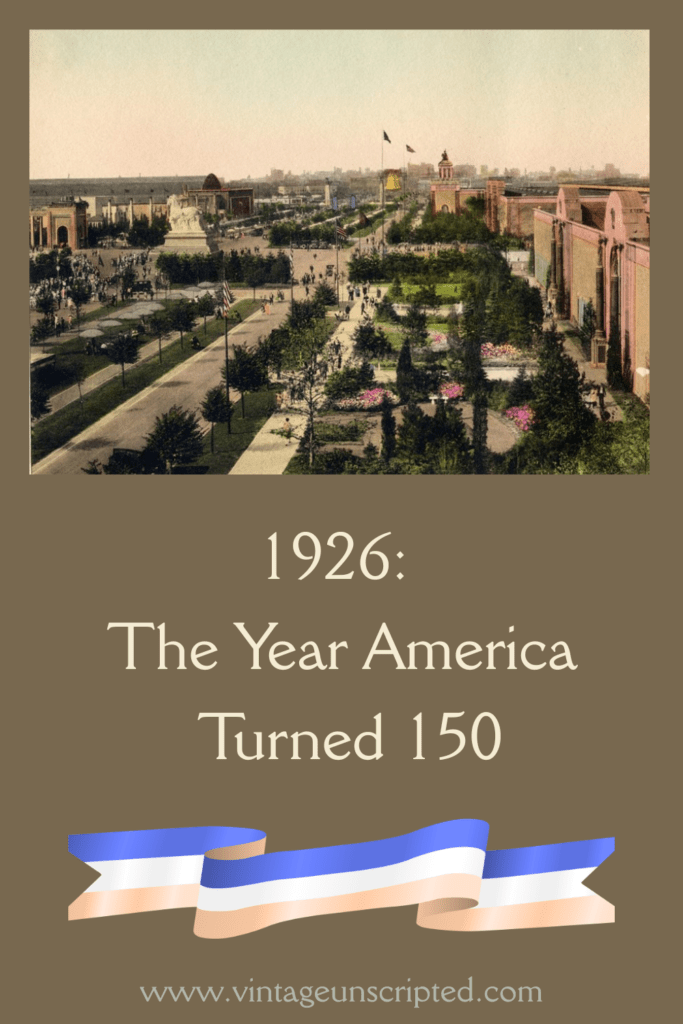
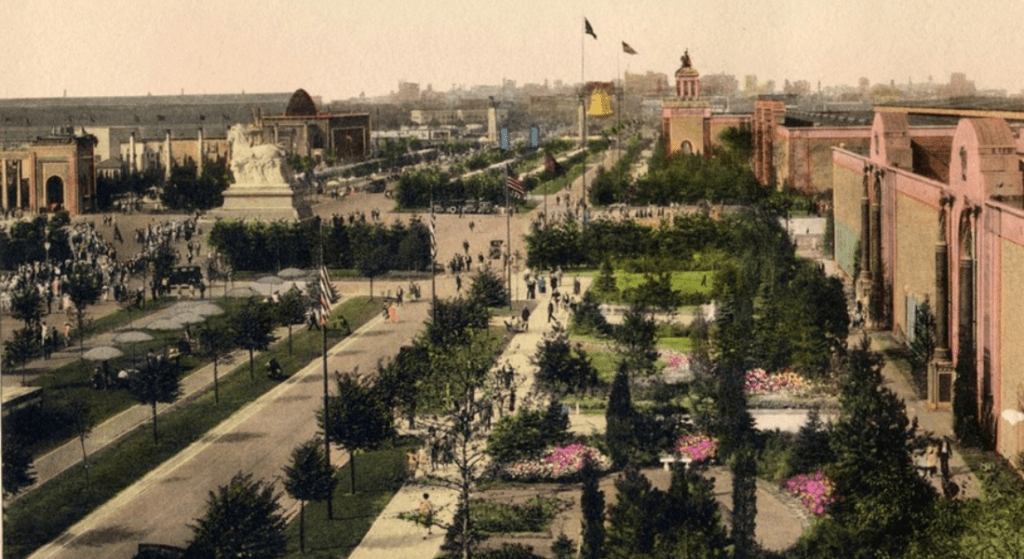
The Centennial Exhibition of 1876 in Philadelphia had been such a success that it was decided to try and catch that lightning in the bottle again. Congress allocated $1 million to be used for four essential exhibition buildings. Another $250,000 was granted for War Department displays. The city of Philadelphia confidently sold nearly $10M in bonds to fund mostly South Philly infrastructure projects like draining the swampy areas and building Municipal Stadium.
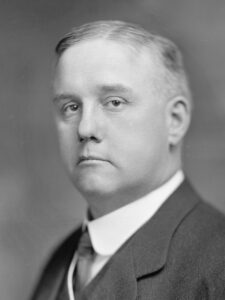
The Centennial Exhibition had been built in bucolic Fairmount Park and the original intent was to use it again. And then the corruption started. William S. Vare, a congressman and ringleader of a political machine, happened to own some swampy land in South Philly, and the mayor saw fit to move the fair to that. The task of draining and filling the swamp fell to Vare-related businesses and in a shocking development, costs ballooned so much that the fair was under water (ironically) before it even opened.
There was opposition to the whole thing, an Anti-Sesquicentennial League was formed. Residents wanted more housing and better city infrastructure, not an exhibition. Labor groups were afraid all the visitors coming to the fair would drive up prices. Businesses feared losing workers to the fair.
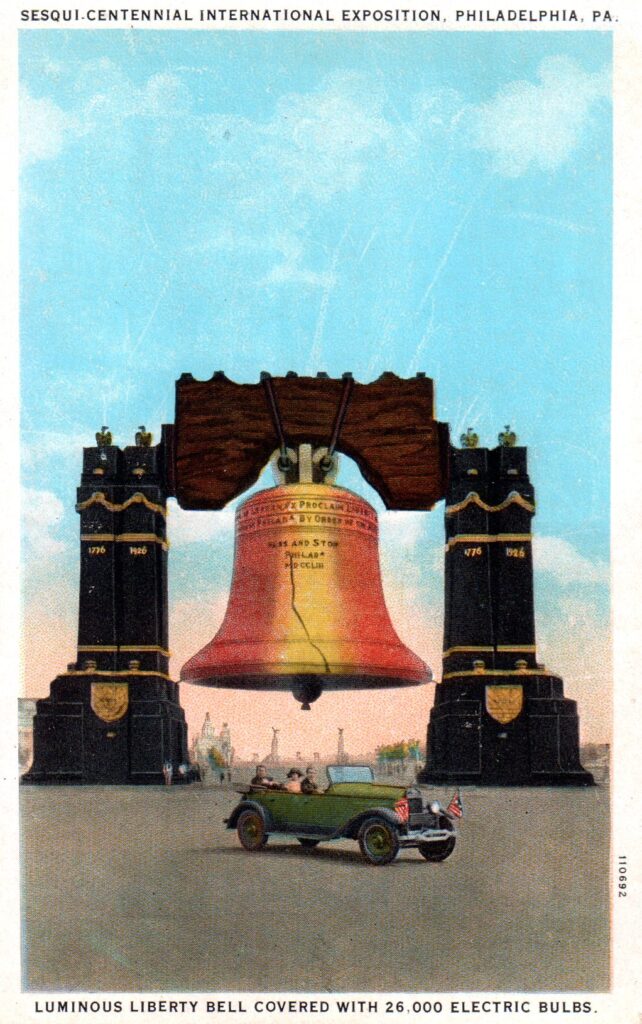
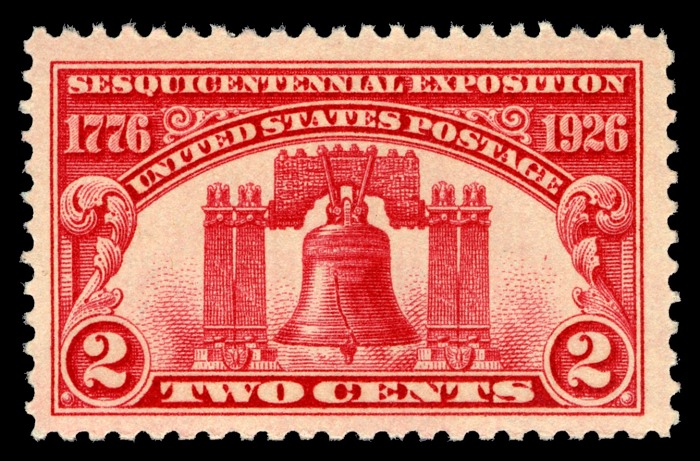
But in the end, it was built and opened on May 31. A giant Liberty Bell, lit up by 26,000 light bulbs was erected to welcome visitors. There was a 300 acre military encampment to show off our fine fighting forces. There were displays of innovations, exhibits devoted to American freedom, rides and of course speeches.
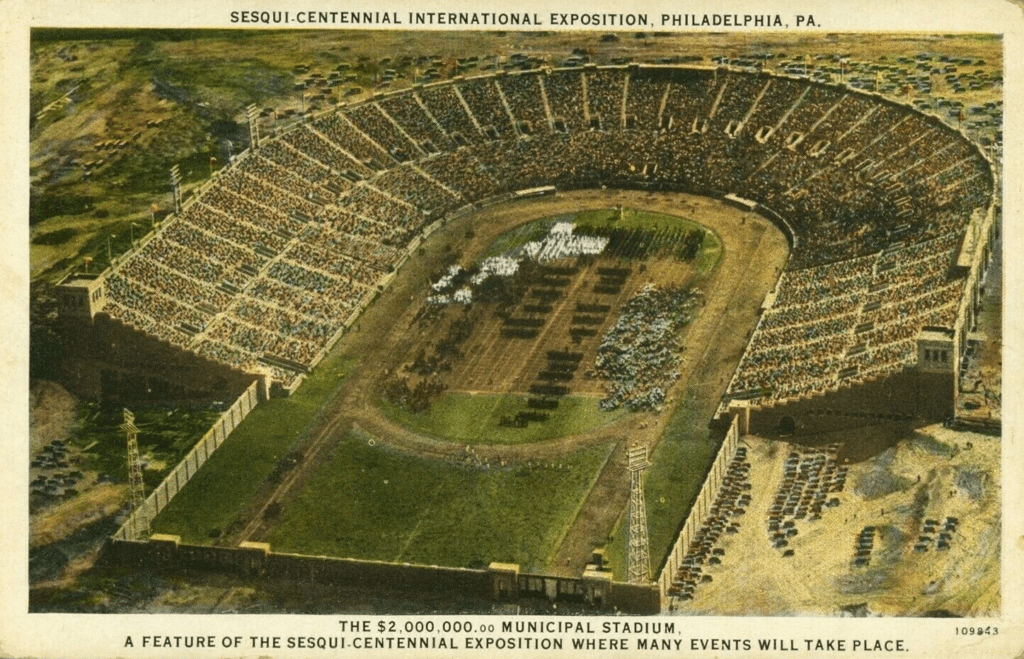
Sesquicentennial Stadium, which was renamed Philadelphia Municipal Stadium after the fair, hosted the prize fight (in pouring rain) between World Champ Jack Dempsey and challenger Gene Tunney. A lavish pageant called “Freedom” was performed there on an ongoing basis. (Municipal Stadium became JFK Stadium, which was condemned in 1989 and torn down in 1992. It is now the site of the Well Fargo Center where the 76ers and Flyers play.)
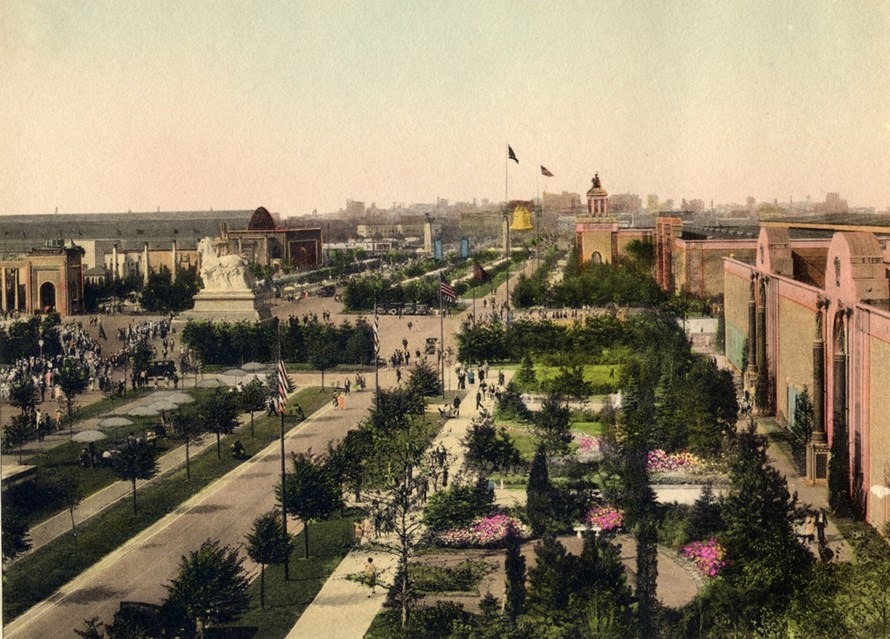
The Sesquicentennial International Exhibition was a stupendous and legendary disaster overall. It was expected to draw 50 million visitors. In the end, it was a mere 5 million. It rained half the days the fair was open. The KKK planned a march at the Exhibition, keeping more visitors away. And the financial burden from the corruption had the whole enterprise staggering before it even opened.
After the fair closed, the city of Philadelphia had to cough up an additional $5 million to pay outstanding bills. Buildings were sold for a fraction of their value. The city was already under financial strain and it was paying off bills until May 1929…mere months before the stock market crash.
On the national level, celebrations were small and local. Towns and cities organized parades and speeches, but there was no national governmental effort to coordinate anything. All the federal eggs had been put in the Philadelphia basket. But that didn’t really matter because there’s nothing better than a hometown parade and celebration, especially if cake is served.
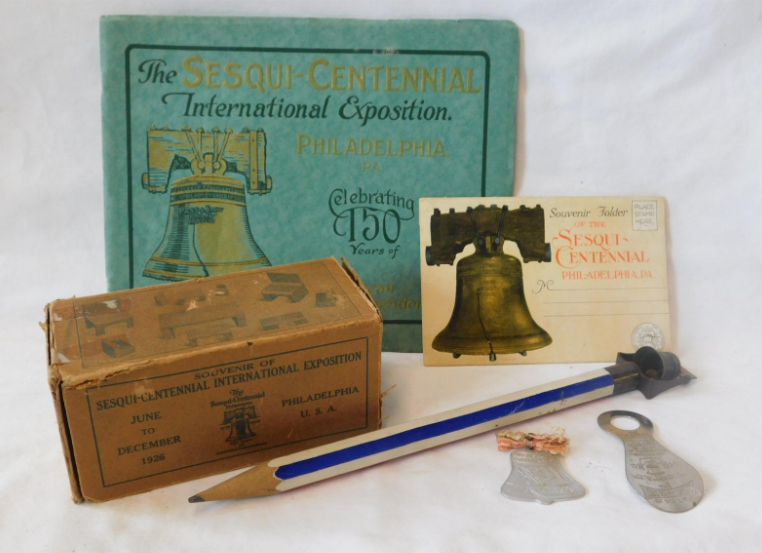
What kind of commemoratives were there?
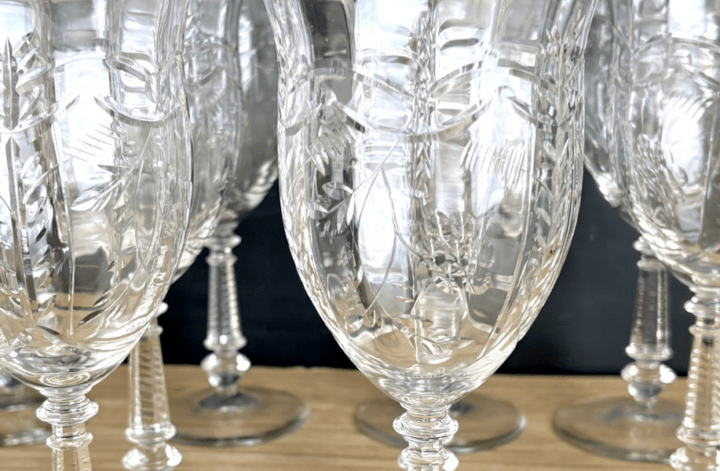
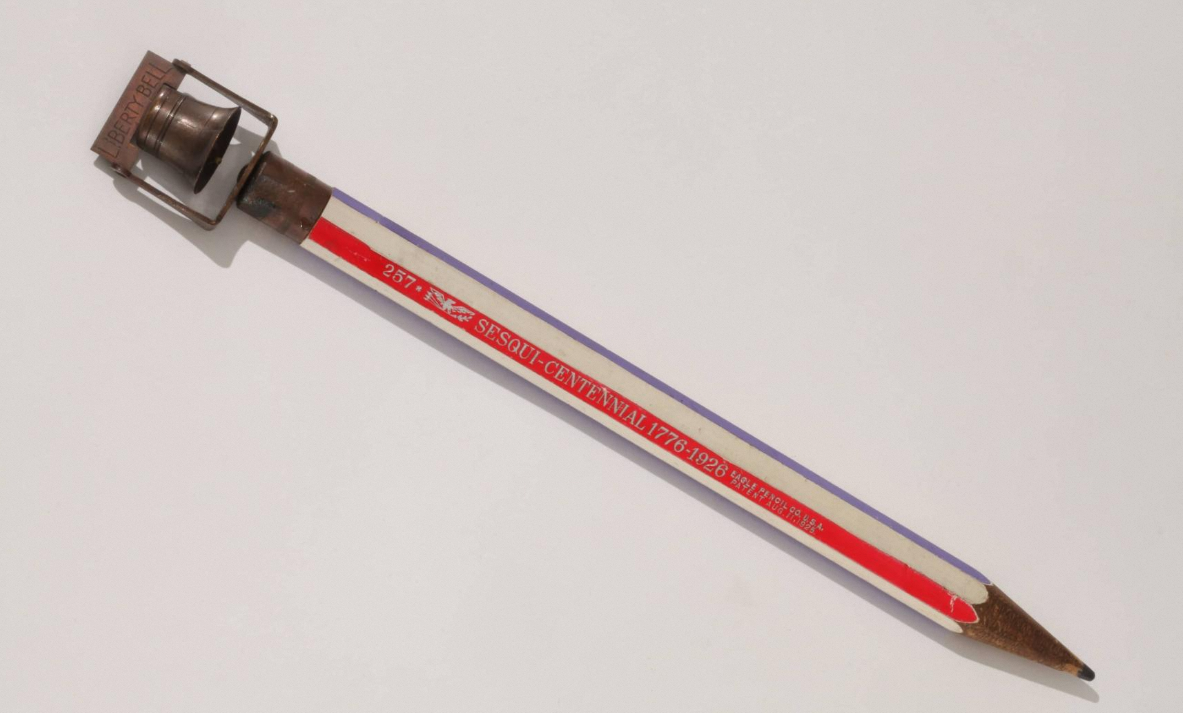
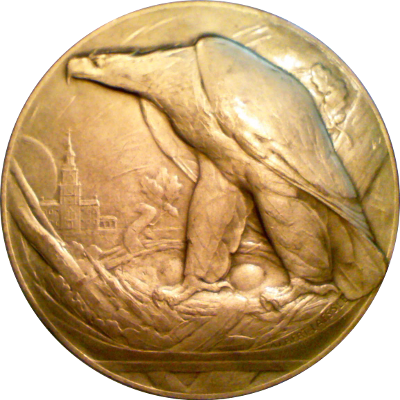
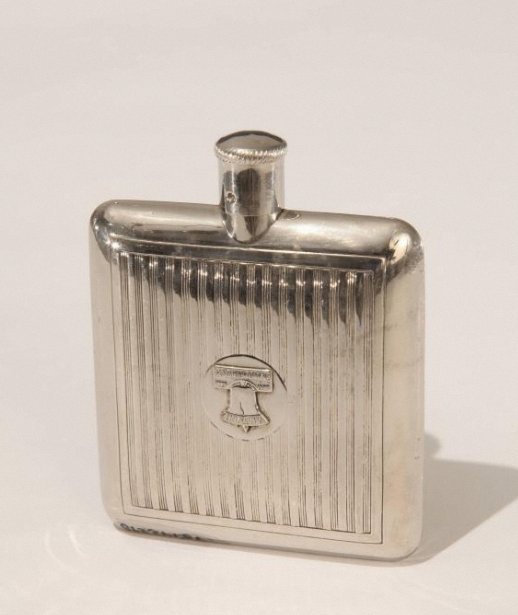
Souvenir makers did their work, creating commemoratives of America 150. Here’s a few of the finds:
Read more about America at 150:
The Sesquicentennial International Exhibition, Encyclopedia of Greater Philadelphia
Sesqui-Centennial International Exposition, Wikipedia
America’s 150th Birthday Celebration Was Deemed the Nation’s ‘Greatest Flop.’ What Went Wrong With the Sesquicentennial?, Smithsonian magazine
The official bipartisan congressional website of America 250 is america250.org.