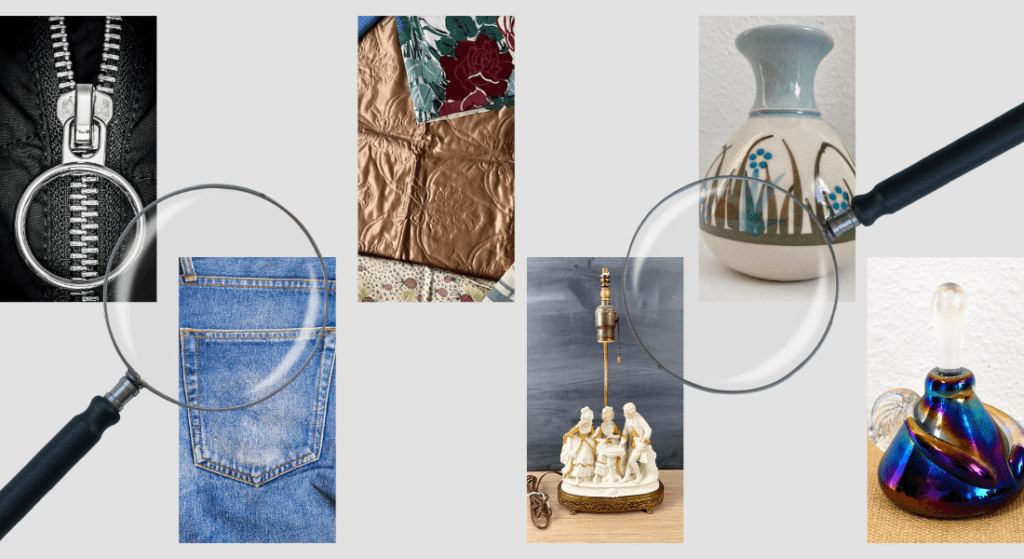
If you have ever bought or inherited anything vintage or antique, one of the first questions to arise is usually how old is it. To determine the age of these items, we thought we would give you some pointers to help out. Here are a few innovations and inventions you can use to help date your vintage.
The Zipper
The original patent for a Improvement for Fastening Garments was filed by Elias Howe in 1851. He was also the inventor of the modern day lockstitch sewing machine. By the 1920s, zippers were being used in boots and galoshes. The name came from the sound they made when used. A history of zippers with pictures and detailed information can be found from FIT NYC.
Fabrics
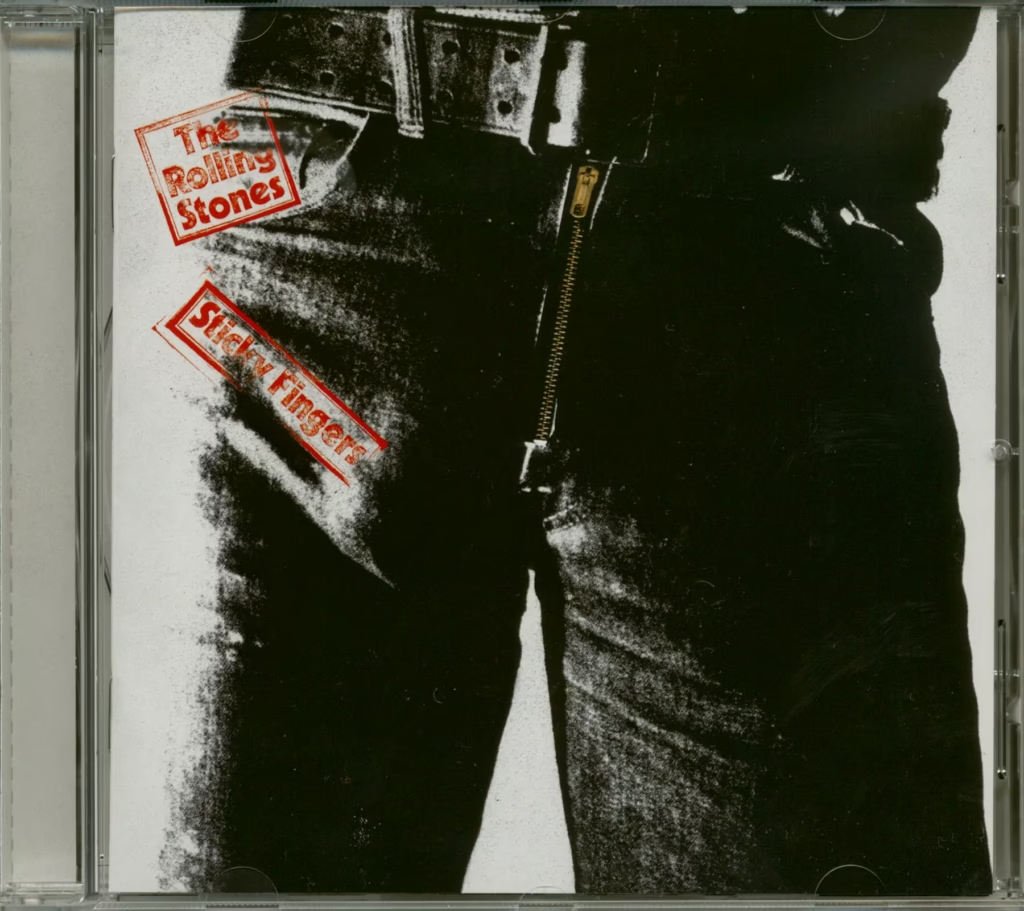
For centuries fabrics were made of natural materials, cotton, flax, wool, and silk. With the industrial revolution came the ability to manufacture materials from man made or synthetic materials. When looking at vintage or antique textiles, the type of fabric can help determine the age of the item.
For context, synthetic fibers’ earliest creation was a version of silk that was highly flammable. It evolved into rayon in the late 1800s. It was not a purely synthetic fiber as it was made from naturally found ingredients, mainly wood fibers.
The first fully synthetic fabric was nylon, invented by Wallace Carothers and developed by DuPont in 1927. 1928 brought us polyester, originally patented in Britain.
Knowing the type of fabric you have can aid in dating clothing, linens, and other textiles. Learning to identify fabric types is a tactile skill. The best way to know what you’re looking at is by touch.
Jeans
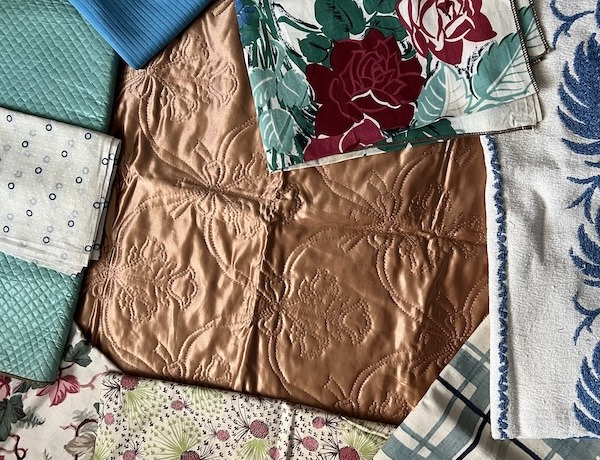
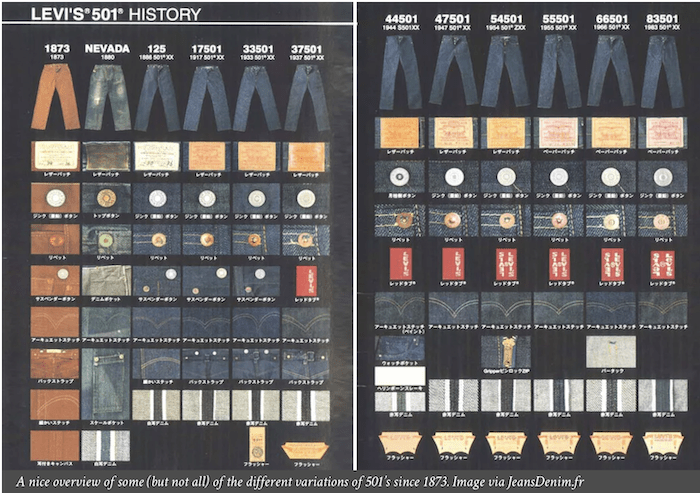
Along with other textiles, jeans evolved over time. Different fabric weaves invented around the world were produced mainly to be used for workwear. The name “jean” used to describe fabric goes back to Genoa, Italy in the sixteenth century. The fabric made in Genoa was known as a fustian fabric. It was a form of heavy woven cotton. Used by the Navy of the day it became known as “jean” which was the French word for Genoa. By the seventeenth century, Nimes, France had created a similar fabric known as twill. It was coarser and heavier than the Genoan fabric.
The term “Dungaree” was in reference to a similar fabric produced in India during the early 1600s. Produced in either blue or bleached white, it was yet another workwear textile created in a Bombay village named Dongri. The fabric was called Dungri in Hindi. As it was exported to England it became known as “Dungaree,” which was eventually replaced with “denim” by the Levi Strauss company around 1873. There are several websites which chronicle the history of Levi Strauss denim jeans over the years. Other companies soon followed suit, including Lee, and Wrangler.
Lighting
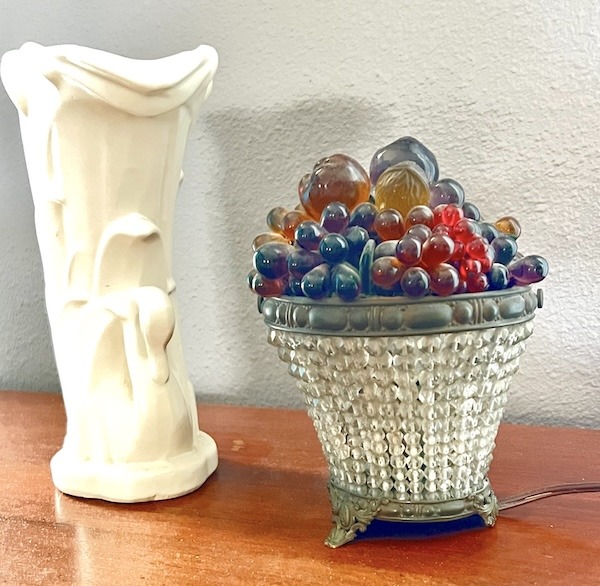
Vintage lighting is an easy way to decorate your home with a period flair. While we learned in school that Thomas Edison invented the light bulb, that isn’t actually true. The first lightbulb was invented in 1878 by Sir Joseph Swan, who was British. One year later Thomas Edison filed for a patent for a carbon filament bulb. By 1880, the two men had formed a partnership creating a company named Ediswan, which lasted until the 1930s.
So while Edison did not invent the lightbulb, lighting styles can be traced back through history based on their design. Signs to look for might start with wiring. Up until the Swan and Edison bulbs, lighting was done with kerosene, animal fat, coal, or oil. If your lamp appears to have been modified for electricity, it was most likely produced before the 1880s. Light bulbs have changed over the years as well as wiring and plugs. Does your light have cloth wrapped wire? Or a large round plug with two prongs. Does it feature a UL label? Is the label paper or foil? Foil labels came into use in the 1990s. UL labeling on lighting began in 1904 so your lamp may be older than you think.
Pottery and Glass
We could dive into pottery and glass for days. Glass and pottery have been made for thousands of years. Much of it was and still is unmarked. Markings help to identify many higher end makers, as the factories or designers often signed their work. Changes in those markings and signatures can help to date your items as well.
Many collectors have written books over the years chronicling specific designers, themes, styles, eras, and all manner of collections from buttons to zoological items. There are loads of guides discussing many brands and their multitudes of markings to help with determining age, manufacture locations and patterns. That alone could make up several blog posts. But we will point you in the right direction to begin. A good place to start is by looking for Collectors Guide books pertaining to the items you are researching. While searching online will give you basic information, guides tend to contain more detail along with photos for reference. Be aware however that many collectors guides feature pricing which unfortunately can be out of date as soon as the book is published. Often these books can be found at thrift or antique stores. Used book stores are also a good resource for Collectors Guide books as are websites such as Abe Books and Thrift Books. Bookshop.org is a collection of independent bookstores that also carries Collectors Guide books. Schiffer Publishing also carries a wide selection of antique and collectible guide books.
Links to help research your vintage items:
Vintage Fashion Guild: Fabric Resource Guide
Thrift AI: Lamp Label Clues
Schiffer Publishing: Antiques & Collectibles
Fit NYC: A History of Zippers, and a Visual Guide to Dating Garments using Zippers
Heddels: Vintage Levi’s 501 Jeans – The Ultimate Collectors Guide
Vintage Unscripted has more hacks for dating vintage here.