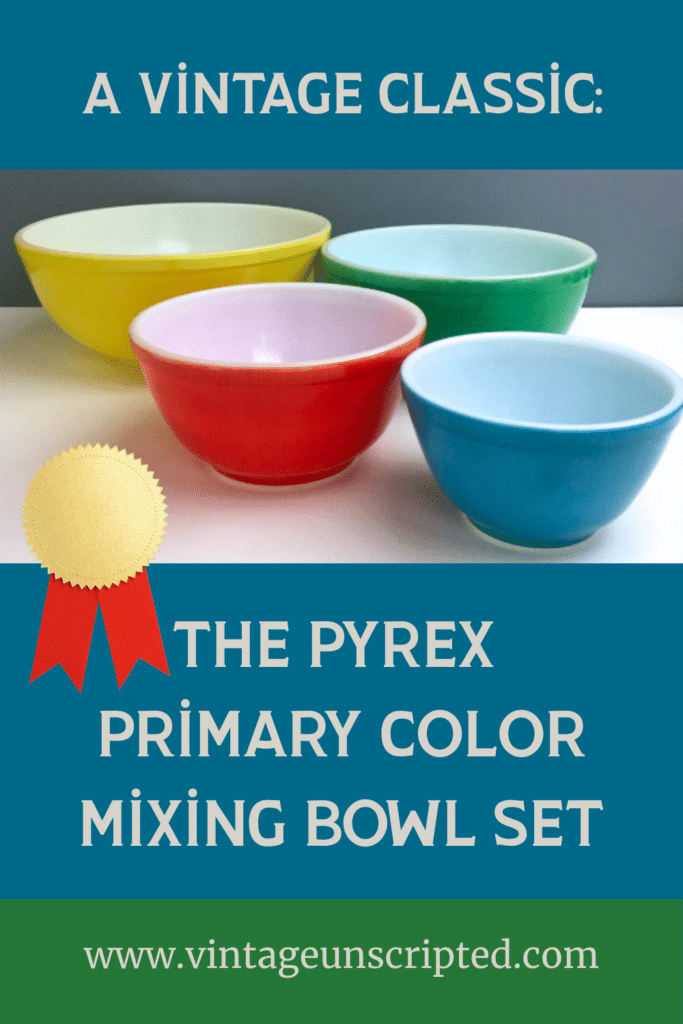
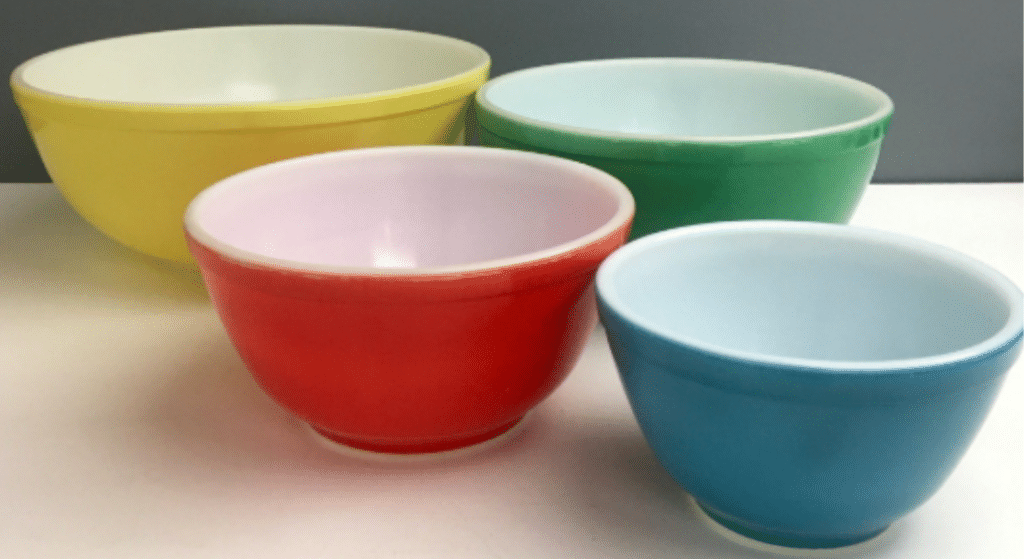
Owning a Pyrex primary color mixing bowl set is like owning a first edition of Stuart Little. Both are the most rarified of American classics and both came out in 1945. Finding a Pyrex nesting set in the wild that hasn’t been subjected to the destructive forces of the dishwasher is a pinch-yourself-and-buy-a-lottery-ticket kind of event. The Pyrex patterned bowl sets are fabulous, some more so than others, but the primary nesting set of red, yellow, green and blue represents the origin story.
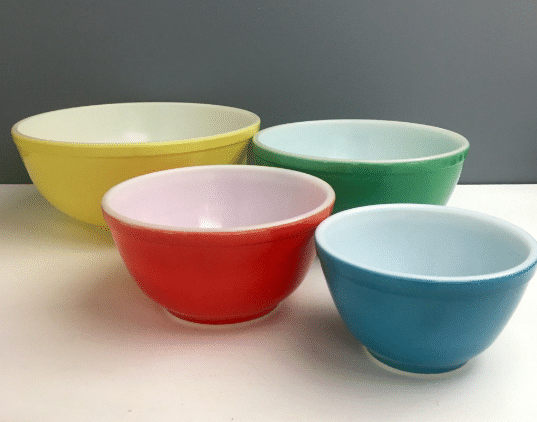
Why the Pyrex primary color mixing bowl set is a classic
Before 1945, Pyrex bakeware was clear borosilicate glass. The clear bowls were sturdy and heatproof, but kind of a snooze in terms of kitchen charisma. The primary color set was the first commercial use of opal ware, the opaque white glass we know and love. Corning developed opal ware in coordination with the US government, who needed messware that could take the banging and temperature changes that mess dining pieces were subjected to. Corning experimented and developed the opal white soda lime tempered glass that was strong, lightweight and less easy to break as conventional glass.
Kitchenware up until the 1940s involved a lot of cast iron, tin and pottery, all of which soaked in odors and grease over time. Pyrex opal ware and the Pyrex clear borosilicate glass that preceded it did not. Opal ware had some advantages over the earlier clear glass. Is was stronger and more likely to resist breaking. The clear glass had the edge in thermal shock–it could handle hot to cold and vice versa better. But more importantly, for purposes of this post, opal ware’s snowy white finish was better for applying the fired on color finish that make Pyrex pieces so beloved.
How the color is applied to opal ware
It starts with a blend of powdered glass (called “frit”), metal oxides to add color and some kind of medium to make it spreadable. The medium is either water or oil based. The color is applied to the bowls on an assembly lines. If a pattern is going on the bowl, it’s applied via a curved silkscreen, with enamel being squeegeed onto the bowl through the screen.
Once the opal wear is painted and printed with a pattern if that’s the plan, it is cooked in an industrial kiln that melts the frit but does not damage the bowl. The medium that held the enamel together burns off and the frit is fused to the bowl. The fired on finish is durable and glossy.
Pyrex with a fired on finish has only one mortal enemy, the dishwasher. Dishwashers were uncommon when the process was developed. The fired on finish is no match for repeated high temp wash cycles with dishwasher detergent. When you find a bowl with most of the color worn off, you can be 99% sure it had repeated contact with its arch nemesis.
History of the primary color bowl set
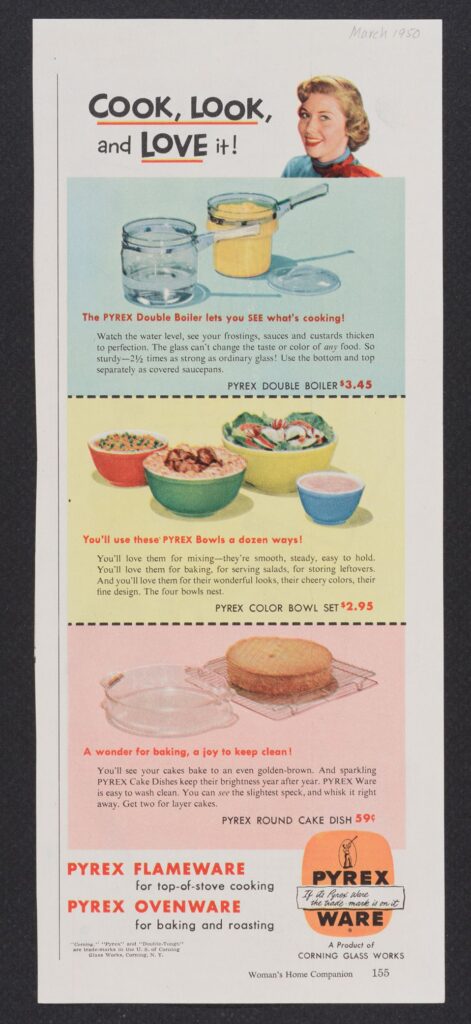
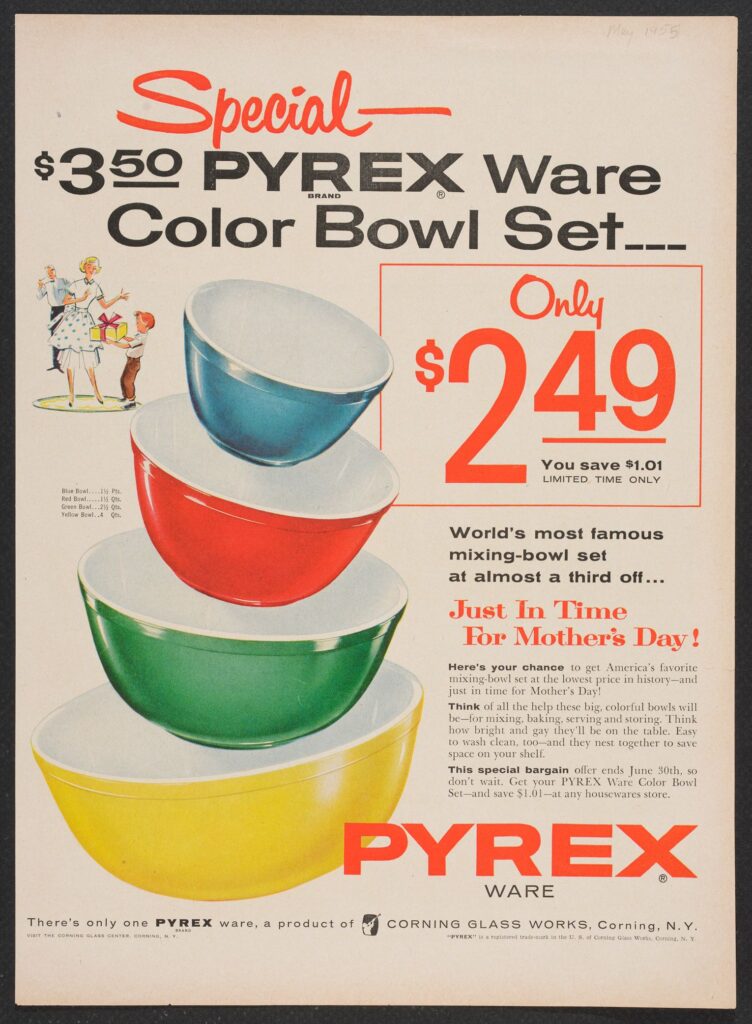
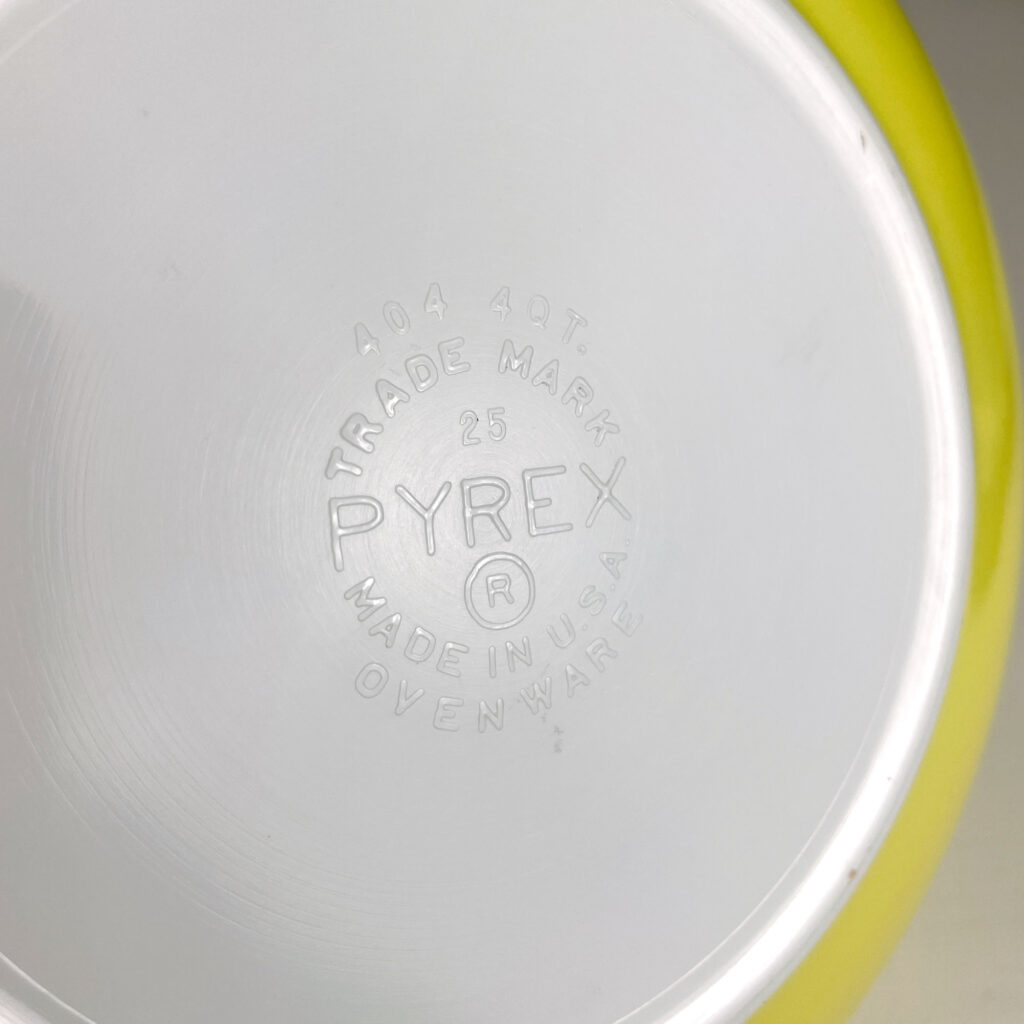
The original Pyrex primary color mixing bowl set was made from 1945-1949. They’re scarcer, but can be identified because they have a more pronounced rim foot on the bottom of the bowl and no pattern numbers. The rarity makes them more expensive on the vintage market.
The 400 series numbered bowls, made in the 1950s and 1960s, are more common because there are more of them. Numbered 401, 402, 403 and 404 depending on size, they are more likely to be spotted on a thriftventure. You might happen a complete set if your timing is impeccable and another thrift shark has not grabbed it first, but most often you will see single survivors.
The Pyrex primary color mixing bowl set today
Among the four colors, the little #401 blue bowl and the third largest #403 green bowl are the most likely to be found in good order. Why? The #402 red bowl got a lot of use because of its convenient size. Also, the red enamel was also not as durable as the other colors. The #404 yellow bowl was the biggest and most frequently used bowl, so it’s harder to find without chips or cracks.
Complete sets of the original 1945-49 bowls sell for anywhere from $100-$200+ depending on condition. Individual bowls from the same era run anywhere from $20 for bowls that have been dishwasher damaged to $60+ for a yellow bowl that’s still pristine.
Sets with marked pattern numbers, made from 1950-1968, can run from $75-$150 depending on condition.
There have been “reproductions” made of the set, but not by Pyrex. FYI, Pyrex stopped making opal ware pieces in 1986.
For more information about the Pyrex Primary Color Mixing Bowl Set:
Pyrex Pattern: Primary Colors, from Pyrex Potluck, the Corning Museum of Glass.
A Spectrum of Color, from the Pyrex Collector
What does it take to be vintage classic? It has to be something that, at the time it was designed, was an instant favorite, maybe even a trend, because of its design and/or function. It has to be something that all these years later, is still loved and appreciated. Leave us a comment to nominate your favorite vintage classic for a profile.
Check out some of the other vintage classics we’ve posted about here.