Millefiori is Italian for “a thousand flowers,” which makes perfect sense when you look at the millefiori necklace and earrings in this week’s fresh to market vintage. Making millefiori starts with making glass canes. Glassmakers build up layers of colored glass using a furnace, which is then pulled out to form a thin rod. Slices of that rod, called “murrine,” are used in different ways. If they’re picked up as part of a molten gather, they can become paperweights. They can be fused or melted in a kiln to make shapes. And they can be lampworked with a torch, to create beads. If you look at the jewelry below, you can see all the different murrines that were worked together to make the individual beads. It’s hard to comprehend the artistry and work that went into making something so small and beautiful.
If you’re looking for something to decorate your home instead of yourself, we’ve got antique seed packets and an antique plate that can do that. And if you’re looking to decorate your mind, have we got a book for you. All waiting to be discovered in this week’s fresh to market vintage.
Unused Galloway Vegetable Seed Packets c 1918
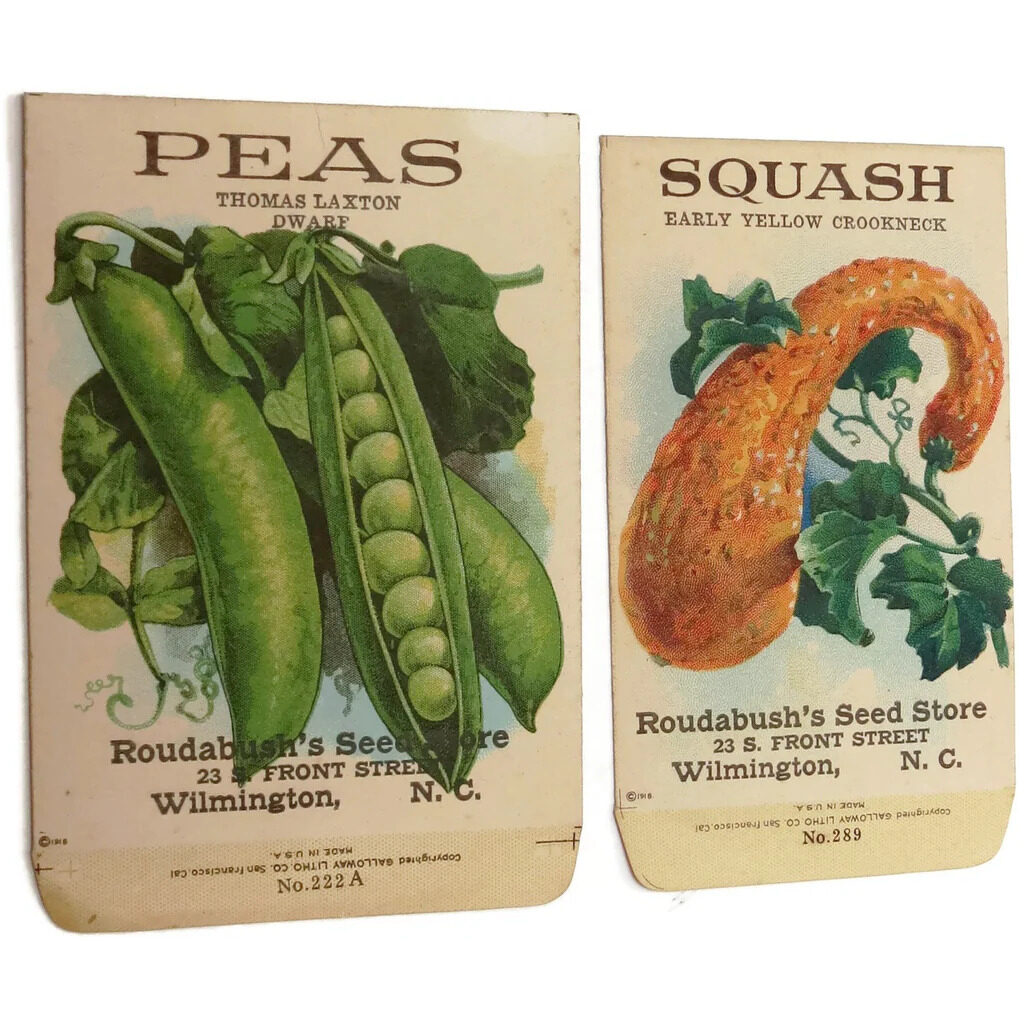 If you’re thinking about starting up a new collection, vintage ephemera is one to consider. Defined as “collectible memorabilia designed to be used for a short amount of time,” ephemera is relatively inexpensive, lightweight to ship and easy to store. I like ephemera because creating a theme for a collection is not difficult. In this case, these unused seed packets would be interesting additions to a collection of country store items or Wilmington, N.C. memorabilia. They’d also make a thoughtful gift for your favorite vegetarian if framed as kitchen decor.
Antique Peas and Squash Seed Packets, $30
Linda, Selective Salvage
Antique 1912 Advertising Calendar Plate
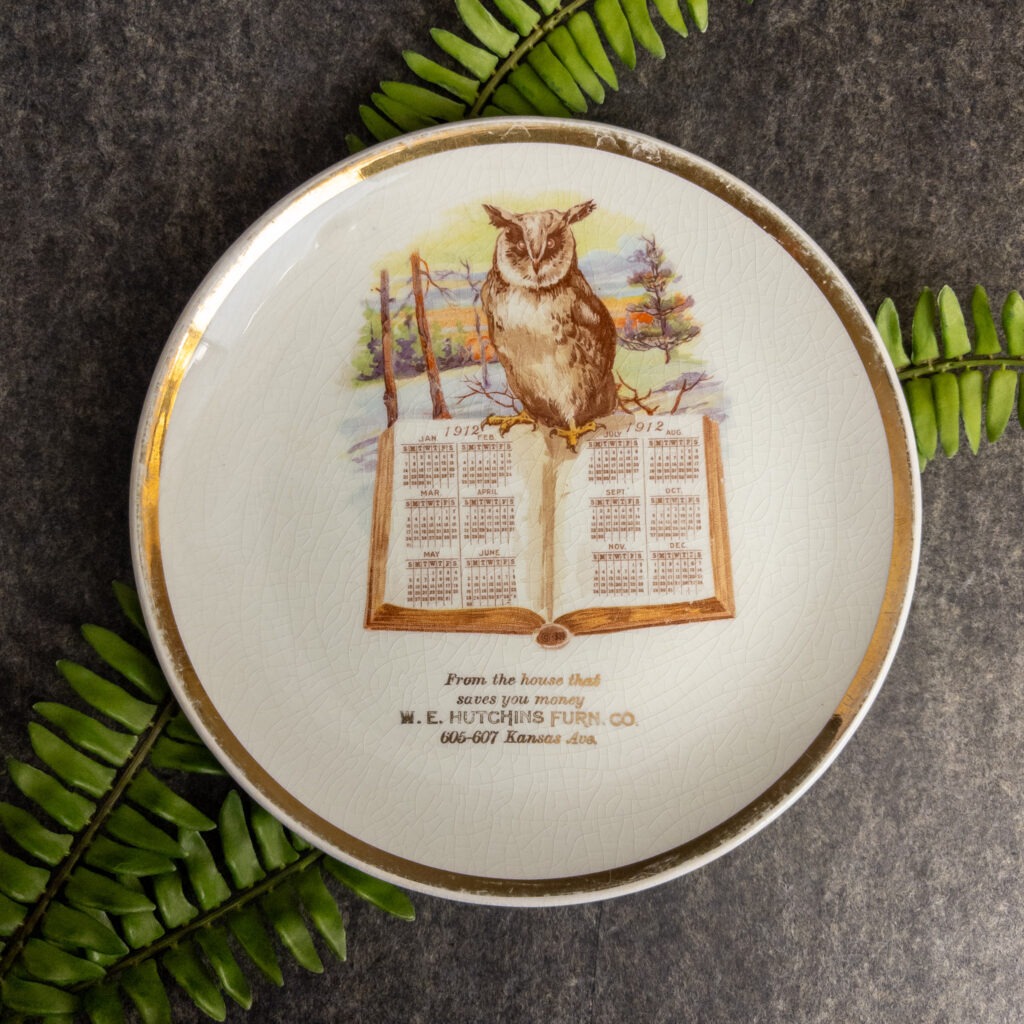
Calendar plates were popular advertising give aways in the early 20th century. Because they were both decorative and practical, customers were delighted to get them and businesses were delighted to have their advertisement hung in the house as art. For the merchant, they were inexpensive and could be purchased in bulk. Most of the designs were decals that could be customized like the one above. By the 1930s, printed paper calendars took over as merchant premiums because they were less expensive and easier to store and hand out.
Who is the target customer for this antique plate? People who like owls. People who like novelty antique plates. People who like Kansas artifacts. People who like Topeka, Kansas artifacts.
1912 W. E. Hutchins Advertising Calendar Plate, $ 32.
Laurie, NextStage Vintage
Venetian Glass Necklace & Earrings Set
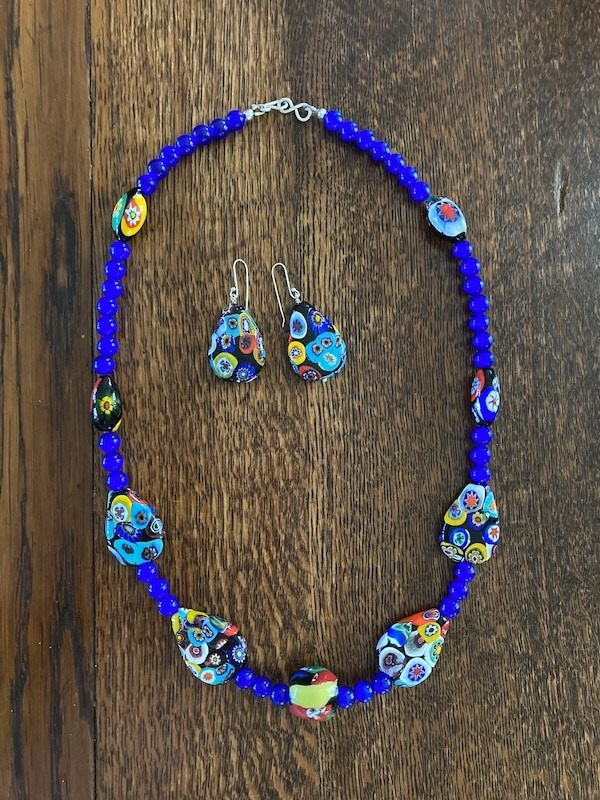
This stunning jewelry set of necklace and earrings is made with vintage handmade glass beads. The Venetian glass colorful beads are known as Millefiori, sometimes called Murano glass. The beautiful cobalt blue glass beads are also handmade as is the silver clasp and ear wires. A fabulous artist jewelry set sure to draw attention and a wonderful compliment to finish off a fabulous outfit.
Custom Made Venetian Glass Jewelry Set, $ 110.00
Pam, Vintage Renude
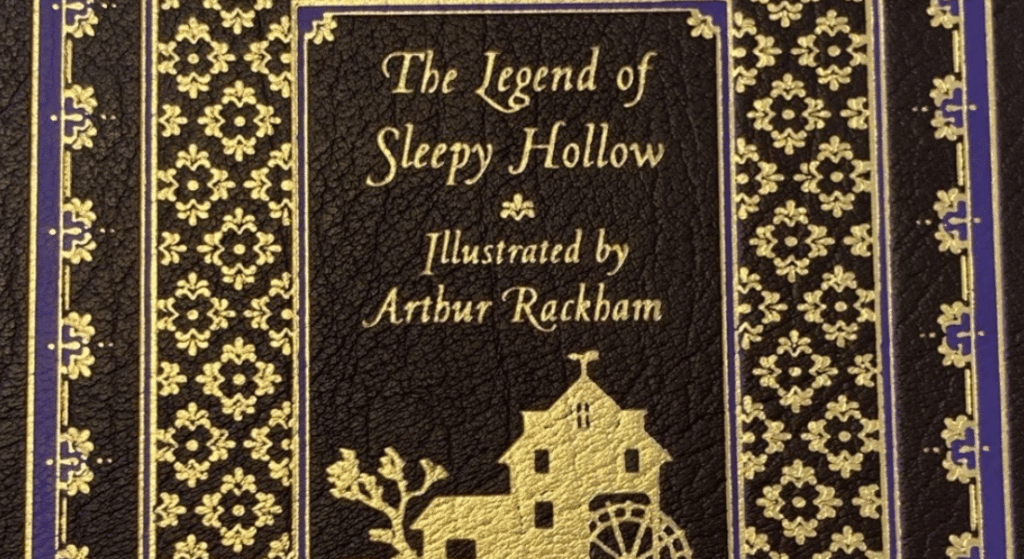
1996 Easton Press The Legend of Sleepy Hollow
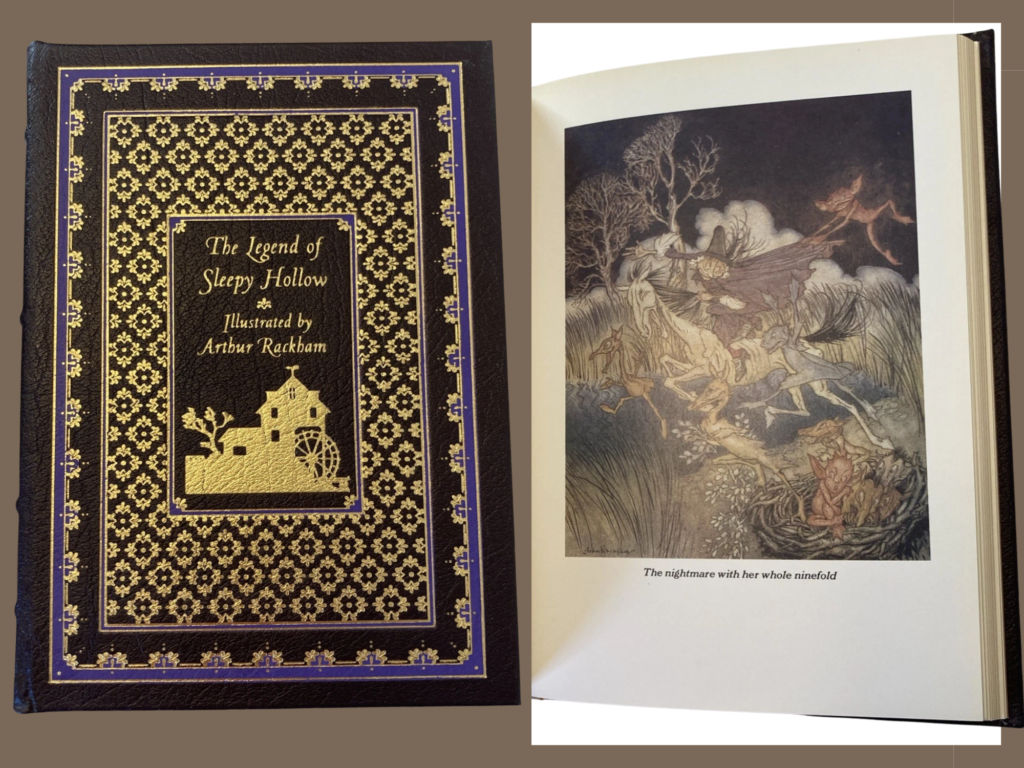
An American gothic classic, The Legend of Sleepy Hollow originally appeared as one of the short stories in Washington Irving’s The Sketch Book of Geoffrey Crayon, Gent., published in 1820. It’s set in 1790, in the Dutch-settled area of the Hudson Valley up the river from New York City in the sleepy village of Tarry Town. (You may know Tarrytown as the location of one end of the Tappan Zee bridge.)
The Legend of Sleepy Hollow is one of the most enduring pieces of American fiction. Although it’s been transmogrified into a horror legend, the book itself is written with comedy and satire and is not nearly as frightening as movie adaptations would have you think. The language is of the ornate variety popular at the time, with a meandering leisurely plot, long looping sentences and extended painterly descriptions. (There is zero chance a literary agent would read past the first page today before dumping it unceremoniously on their slush pile.) The terror comes not from the supernatural as much as from Ichabod Crane’s imagination.
The illustrations for this edition are by Arthur Rackham, who drew them originally for a 1928 edition. Rackham, a British illustrator, was known for his pen and ink illustrations with soft watercolor washes. His signature style was to make all his work seem slightly haunted with gnarled trees and mystical creatures that look whimsical and menacing at the same time. Rackham also illustrated a version of Irving’s Rip Van Winkle.
This edition is particularly lovely because it comes from the Easton Press. The cover is leather, embossed with gold. The paper is fine and acid free. The end papers are elegant. The printing is excellent. Easton Press books are/were sold through a subscription series, often invested in by people who wanted luxe library decor. It’s not unusual to find Easton Press books that have never been read, like this 1996 one, which is a shame. A book this beautiful should be gently read and cherished.
1996 Easton Press Collector’s Edition of The Legend of Sleepy Hollow, $119.95.
Available from this week’s guest, upcyclemedia
People are often surprised to find out that Sleepy Hollow is an actual place that you can actually visit if you find yourself in Westchester County, New York. The Sleepy Hollow Cemetery offers guided walking tours seasonally, including evening lantern tours. Tours are ticketed events, so you have to plan in advance.
Here at Vintage Unscripted, it’s not unusual to find surprising information. We know this because, as we dig ourselves down rabbit holes chasing details about different topics, we are often surprised ourselves. That’s why many of our readers enjoy having a subscription to our email newsletter. They can open that email on Sunday and follow the links to all our potentially surprising posts from the previous week. And rest assured, we would rather walk through Wiley’s Swamp at midnight with a broken flashlight and a twitchy imagination than ever share your info.


1 comment
Arthur Rackham also illustrated Alice in Wonderland. One of my favorites.