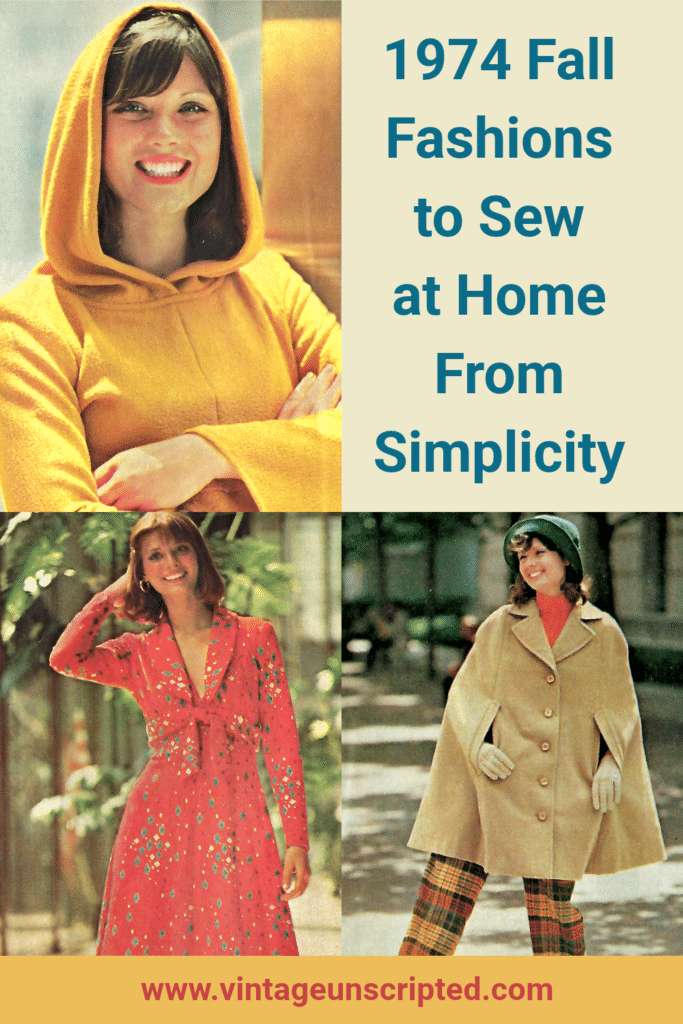
In the 1970s, home sewists had four major brands of sewing patterns to choose from: Simplicity, Butterick, McCalls and Vogue. Vogue was high fashion and top designers. Butterick was young designers and versatile looks. McCalls was trendy and ran deep in specialty patterns. Simplicity was budget friendly and truly mass market. To supplement the massive catalogs available for browsing only at fabric stores, exach of pattern companies produced small take home catalogs seasonally to show their newest and most tempting styles. We present, for your entertainment the 1974 fall fashions to sew at home from Simplicity.
The front page garments are made from a very trendy fabric, Ultrasuede, or a knock off of it. Ultrasuede was a synthetic made from polyester and polyurethane, designed in Japan and famously worn by designer Issey Miyake in 1971. Halston introduced his iconic Ultrasuede shirt dress in 1972, making a splash in the American market. It’s unlikely a home sewist would be using genuine Ultrasuede for a project since it retailed for as much as $40/yard. That’s $200/yard in today money.
But of course there were copycats. True Ultrasuede is a non-woven fabric. The copycats have a knit or woven backing. They also had a more palatable price.
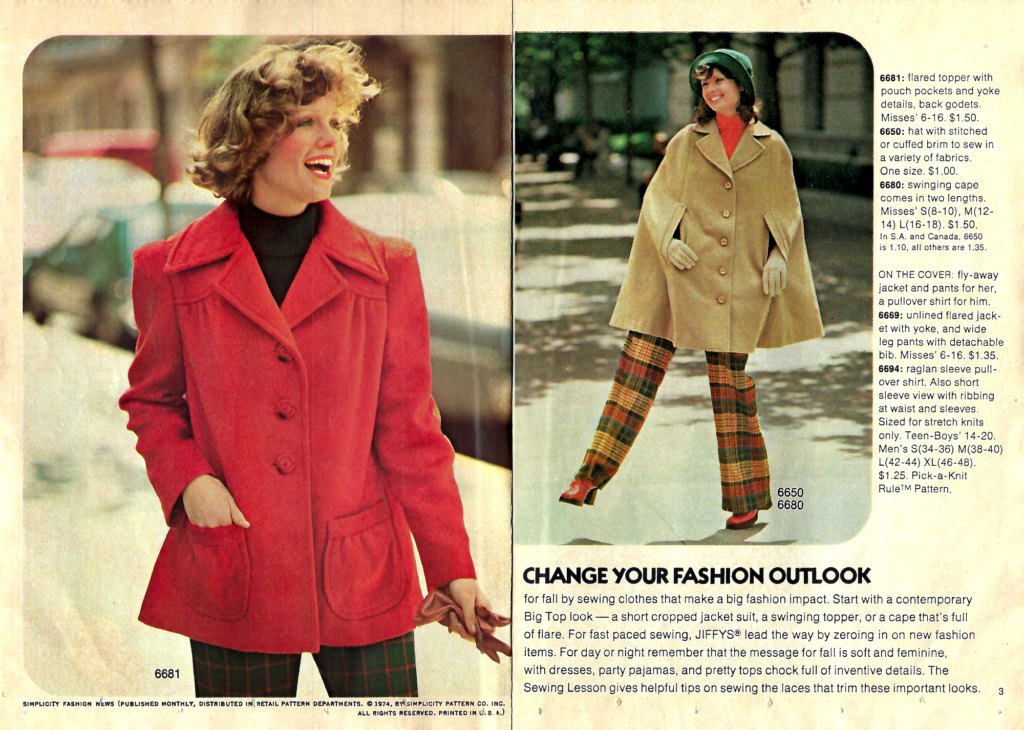
Capes as overcoats had a moment in the mid 70s. Popular fashion was inspired by folklore, nature and everything bohemian. Yves St Laurent and Halston (again) had dramatic flowing capes in their collections. So of course they filtered down to the mass fashion market. I had an extremely warm rust colored wool cape similar to the one above that I wore in high school and college that I would kill to have back.
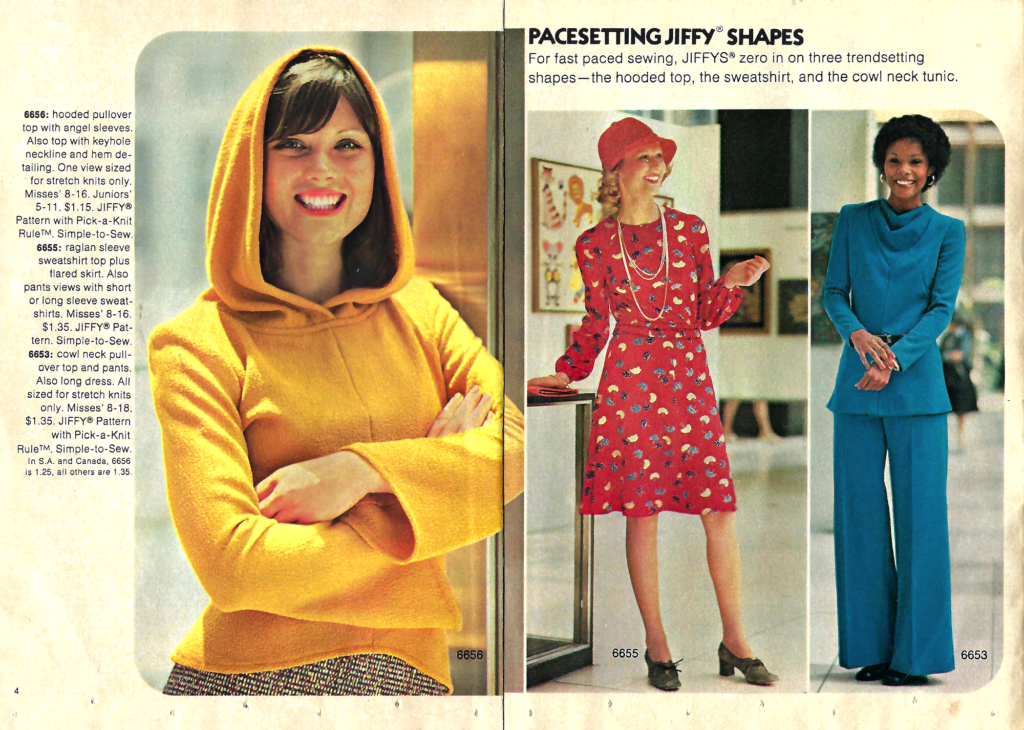
Jiffy patterns were added to the Simplicity line in the 1960s. They were a dream with only 2-4 pattern pieces, easy to make closures and fast, simple construction. Super Jiffy patterns were added in 1971 featuring 1-2 pattern pieces and definitely no zippers, buttons or snaps.
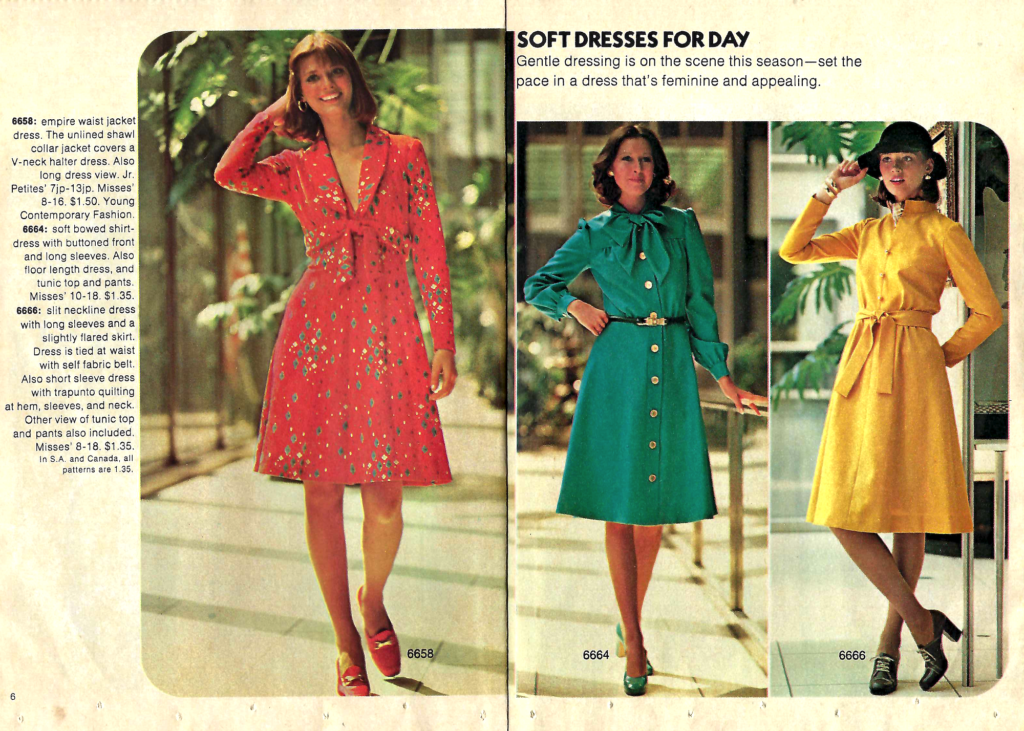
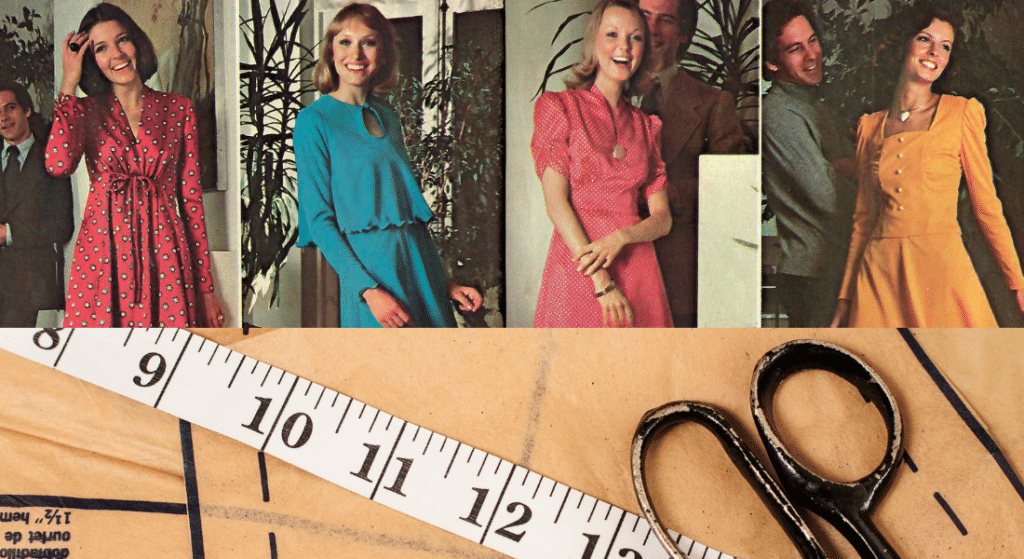
Don’t these dresses look easy to wear? Soft, with minimal structure and awesome lines that would flatter everyone.
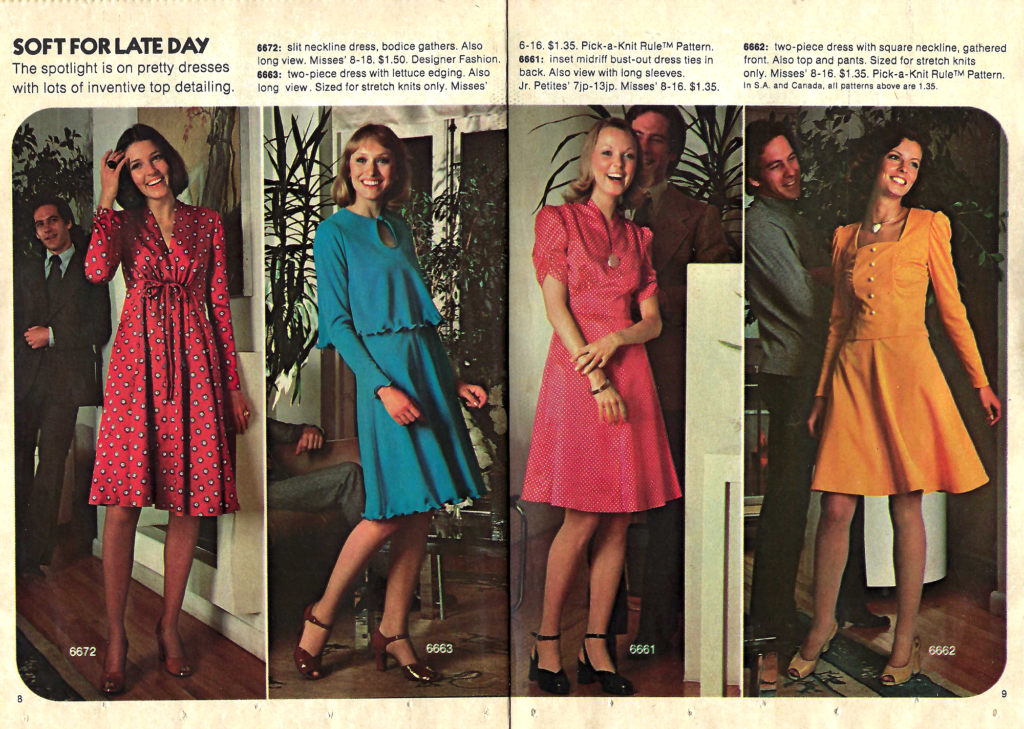
These dresses look easy to wear too. It actually makes sense that the models are smiling because these dresses are fun.
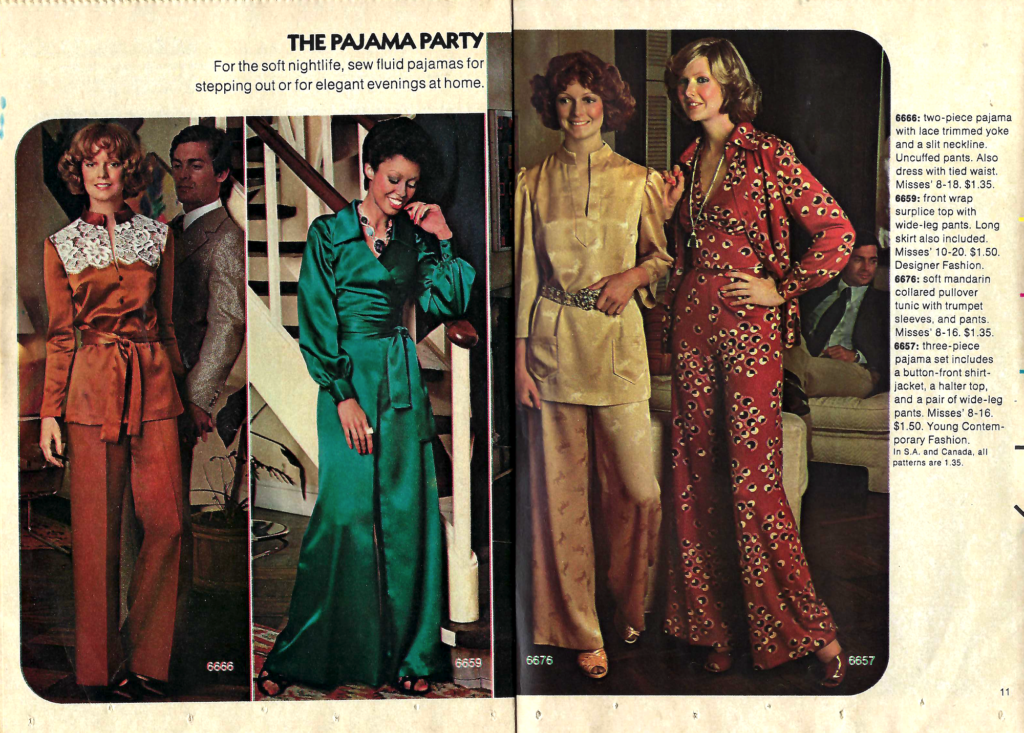
Pajama dressing was popular, or “pyjama dressing” as Halston called it. Yup, him again. His pant suits and jumpsuits were slouchy, but he made them luxe by using crepes and satins (and by being Halston). Feminism also helped popularize it. Women said no to tightly tailored dresses and ridiculously restrictive undergarments (longline bras and girdles) and said yes to looser styles made with silk and rayon.
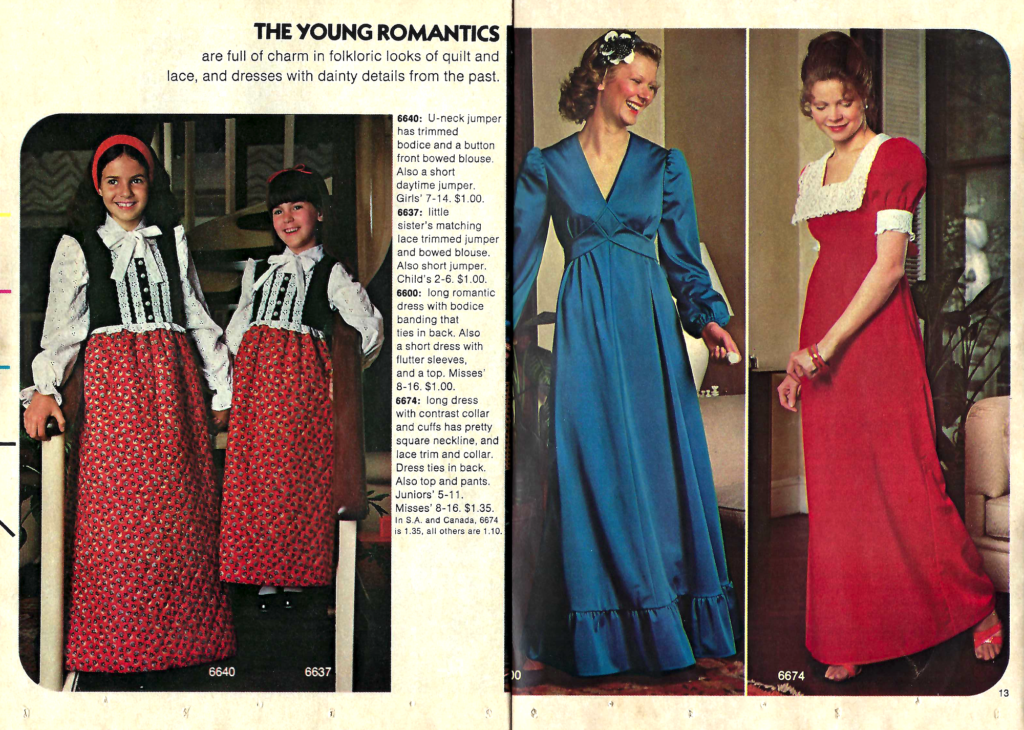
Hostess gowns and “granny gowns” were a Thing. Skirts made from pre-quilted fabric, whether as part of a dress or separate were peak 1974. All these looks are romantic, and were even more so if worn with Jontue or Love’s Baby Soft perfume.
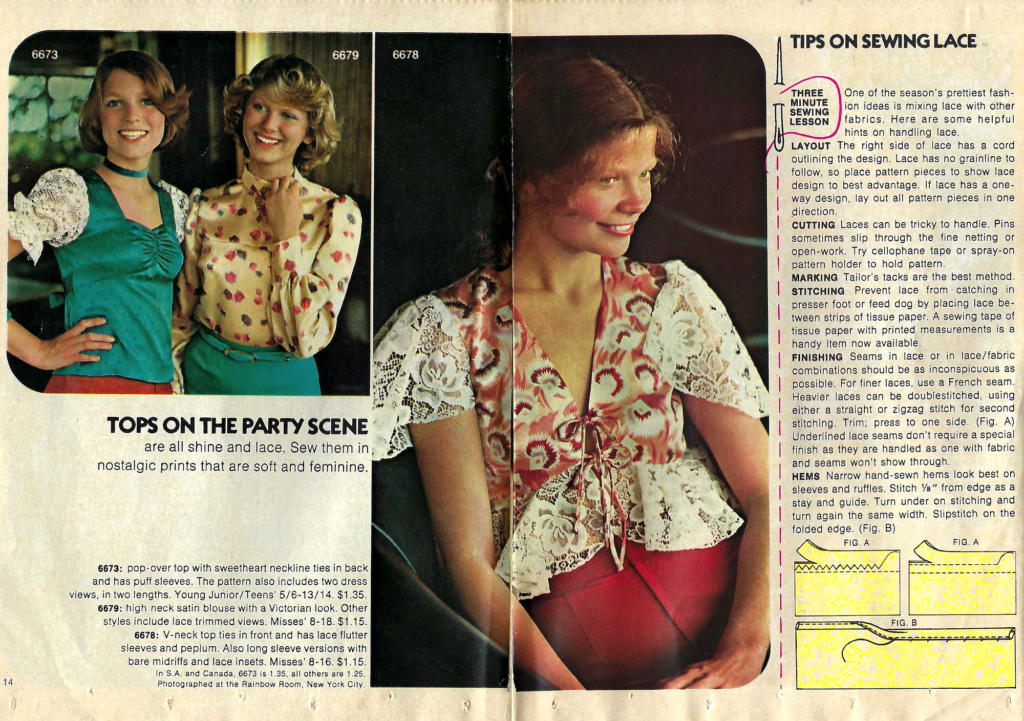
Sewing a top to wear with your bell bottoms was a fast and excellent choice. These are nice, satiny fabrics as well.
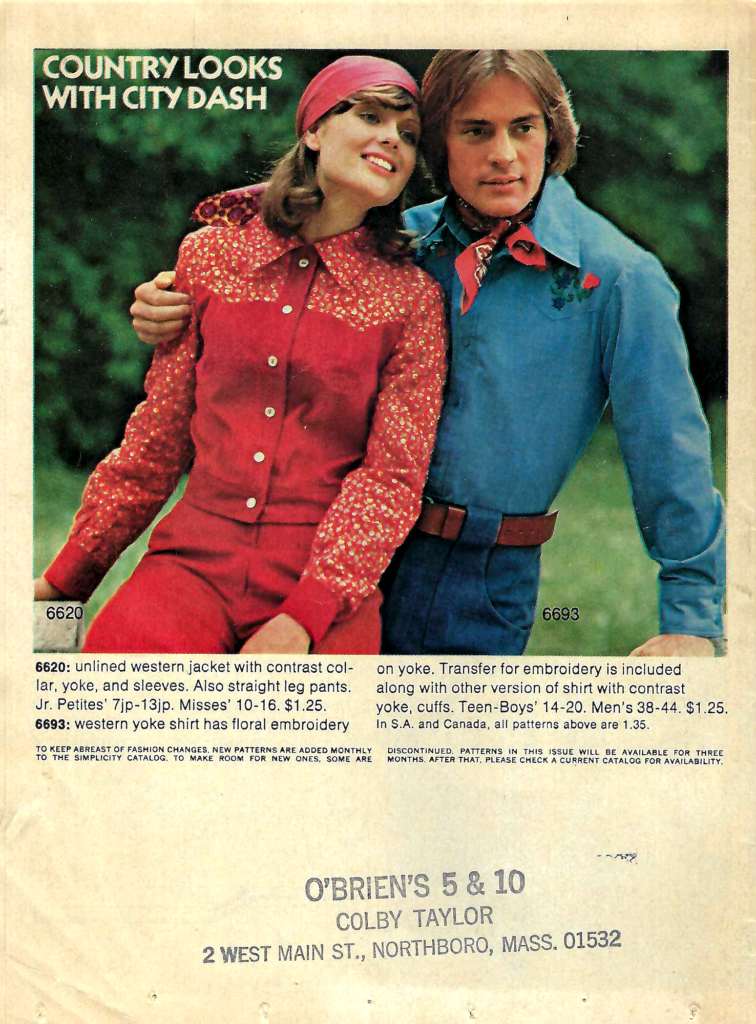
Are these 1974 fall fashions or modern ones? Has there ever been an era when western wear was not in? The side tied neck bandana on the male model aside, these looks could walk into any room now and still be eye catching.
Which of the outfits from this Simplicity 1974 fall fashion booklet would you wear now? Which have you seen echoed in modern trends? Let us know in the comments.
The Rise and Fall and Rise of Home Sewing
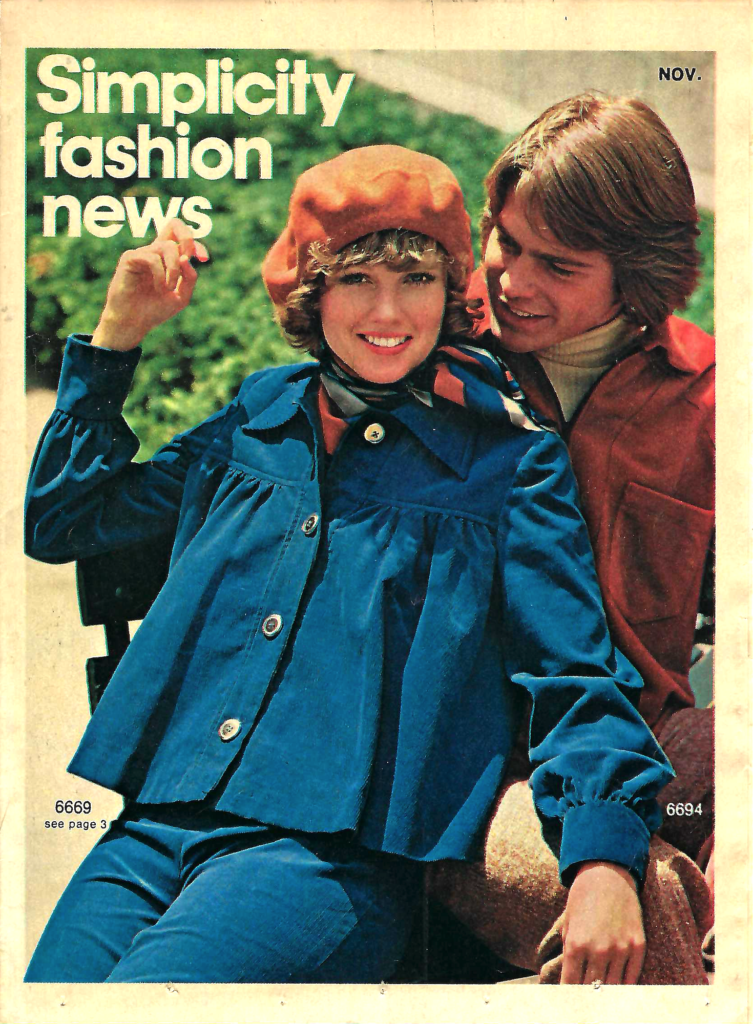
This Simplicity booklet and the advertising booklets from the other pattern makers, would have had nearly the same revered status as the Sears catalog. You couldn’t bring home the big pattern books of wonders from the fabric stores, but you could bring this home to study. Making your clothes at home was still riding high when this was given out in 1974.
Sewing your own clothes was an economic necessity during the Great Depression. It evolved into an art form in the 1950s; the estimate is that 20% of clothing was made at home by the end of the decade. Making your own clothes or clothes for your family rose dramatically during the 1960s, driven by the youth. The youth did not want stuffy clothing like the grown ups wore. They wanted mod miniskirts and A-line shifts. Simplicity’s Jiffy patterns were a fave because a young sewist could whip up a new outfit in an afternoon. Tailoring? Don’t make them laugh. Hippies and the counter culture also contributed to home sewing numbers. They didn’t want corporate mass market looks, they wanted true patches over authentic holes, altered clothing and loose flowing peasant styles.
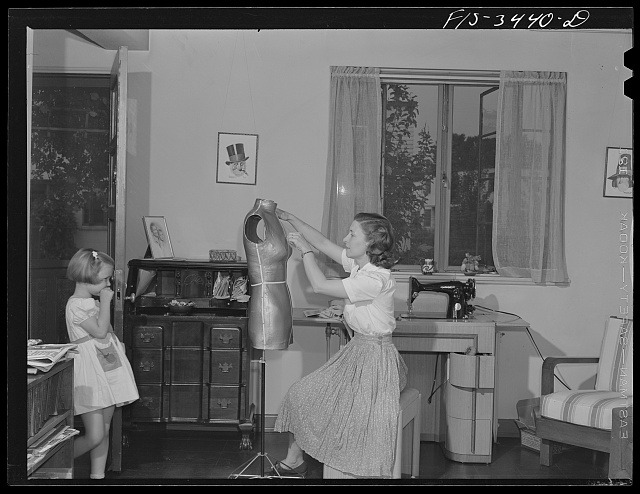
Home sewing was at its popularity pinnacle when this 1974 fall fashions booklet was printed. Pattern sales hit historic highs. But only a few years later in 1980s, it all came crashing down. You can thank the rise of fast fashion for that. It was cheaper and faster to buy something than to make it. Women entering the workforce also had a role in home sewing’s demise. Working outside the home cut down the amount of time for sewing. The trend towards jeans, t-shirts and knits also contributed. All of those are hard to sew on a standard home machine. The final nail in the home sewing coffin was the demise of Home Ec curriculums in high and middle schools. (Bring them back as life skills classes, says I!)
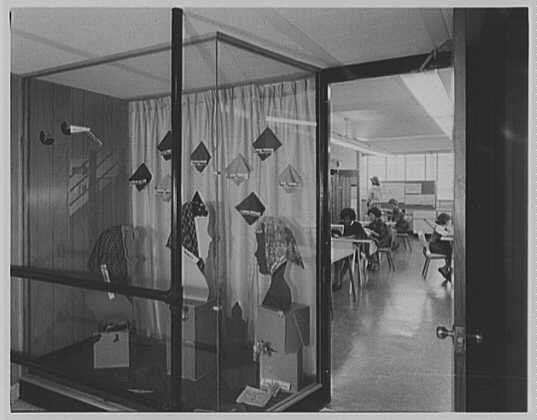
The happy end of the story is that after a couple of decades, home sewing rose in popularity again like a phoenix from the ashes. The revival started slowly in the early 2000s, with indie pattern companies entering the discussion around 2004. Another spark was a reality show called Project Runway which made sewing look easier and more fun than it actually is. (I could not make a bib apron with premade strings in the amount of time contestants have to make gowns.) More indie pattern companies popped up. Social media and sewing blogs taught technical skills and showed off homemade garments. Body positivity factored in. If clothing sold in stores isn’t flattering, you can make your own, with a fit just for you. A tiny upside of the Covid pandemic was that even more people gave sewing a try.
The current home sewing clothing movement is strong, but nowhere near the peak it hit in the mid 70s. Fast fashion has continued to expand. It’s almost always costs more to make something than to buy it. With patterns at $15-$25 and fabric from $10-infinity a yard, home sewing your clothing is an expensive hobby. Also, where are the fabric stores? In the 60s and 70s, there were fabric stores everywhere and fabric sections in department stores everywhere. Fabric stores are scarce as hen’s teeth now, and buying fabric online is no where near as satisfying because you can’t touch before you buy to see how it feels and drapes. Nonetheless, home sewing persists and grows because it’s still a way to express yourself creatively, to support sustainability and to reject unfair labor practices like sweatshops.