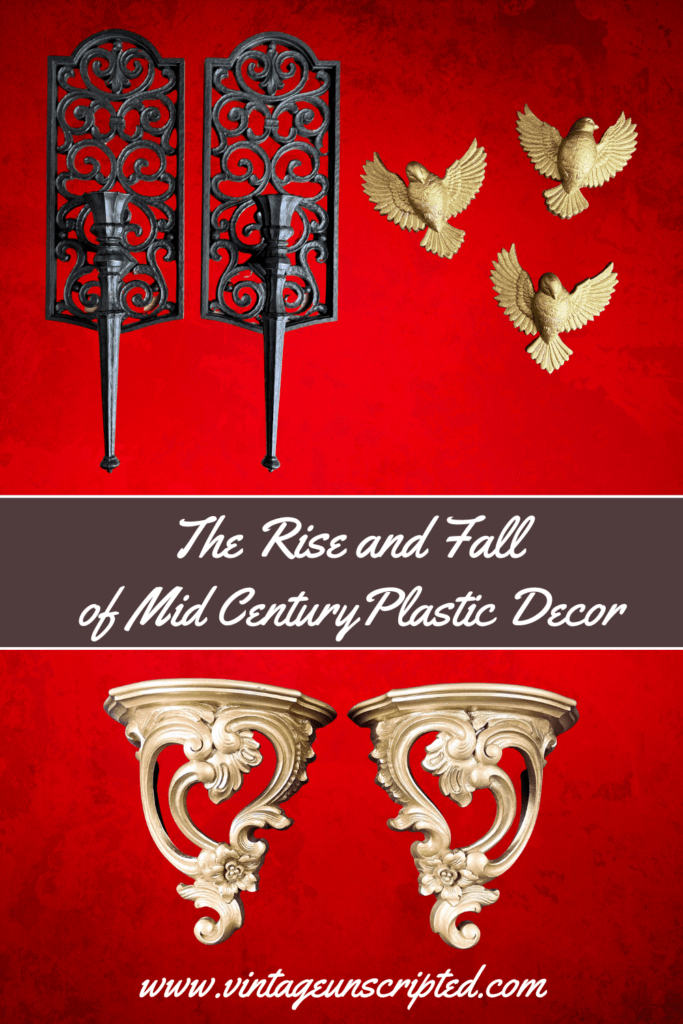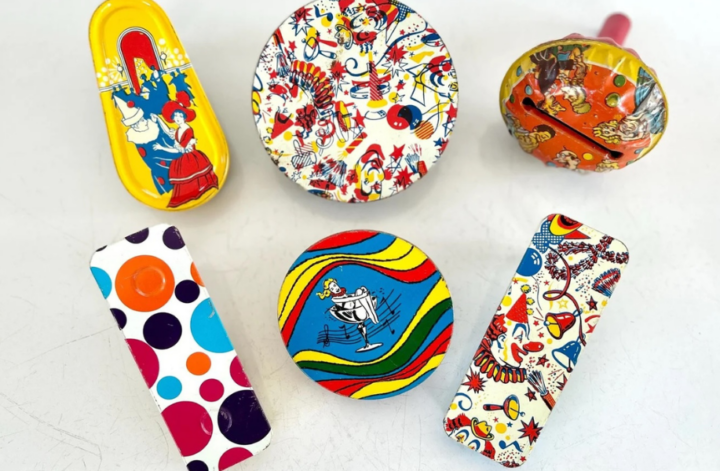

The post-war decades were a magical time to be in America and be in the business of making injection molded decorative items. Companies like Syroco, Burwood, Lerner, Homeco and Dart produced endless streams of fabulous plastic decor to meet explosive consumer demand. All because of thermoplastics.
What is thermoplastic, you ask? It’s a plastic polymer that is pliable and moldable when soft and rigid and solid when cooled. Polyethylene, polystyrene, polyvinyl chloride (PVC), Lucite, nylon and acrylic are all thermoplastics. Most were developed in the 1930s, but production and expansion kicked into overdrive to aid the war effort in the 1940s. Supplies of natural rubber and silk were cut off, so nylon was needed to sub for silk in parachutes, parachute cord, tents and tarps, mosquito netting, tire cord and surgical sutures. Polyethylene and PVC were needed for both jacketing and insulating wires and coaxial cables for radar and other electronics. Polystyrene was used to make components in radios and radar, as well as insulators. And acrylic plexiglas and perspex were used for aircraft windshields, airplane canopies, gun turret domes and bombardier noses.
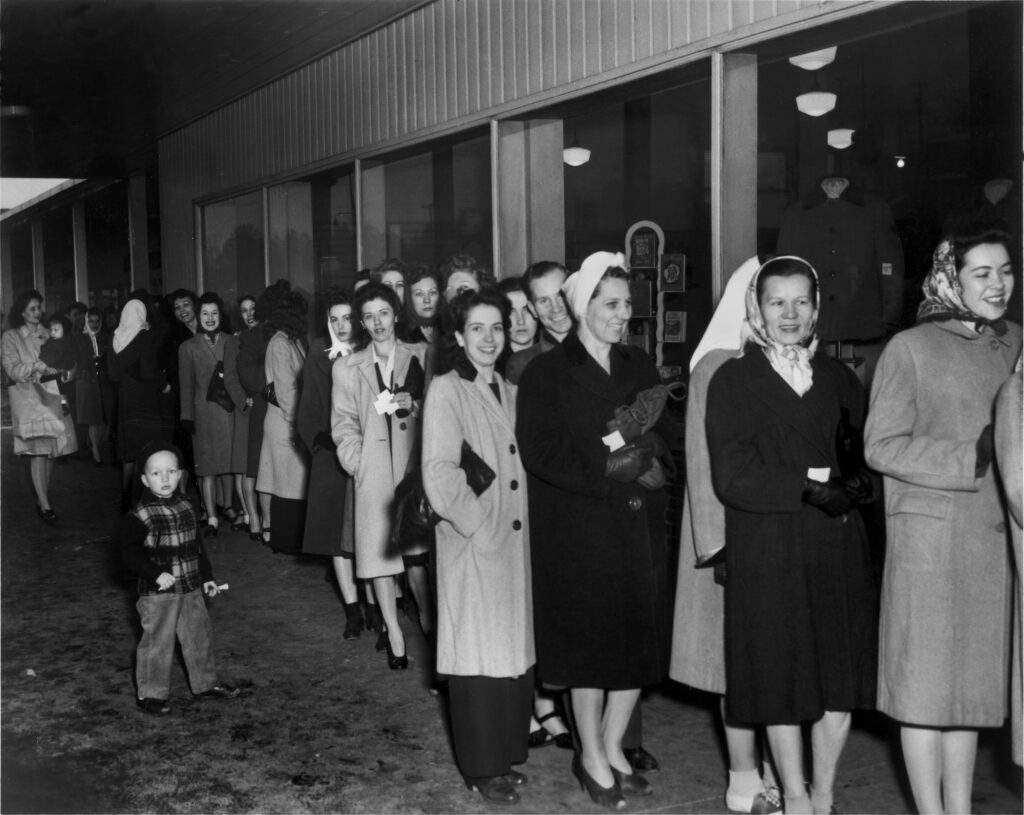
After WWII, companies that had been at fully engaged making military supplies had to pivot and pivot fast. All the experience and knowledge gained from the emergency wartime scale up was shifted into developing consumer goods. There was demand for fabulous plastic among the public. Nylon companies found that out in dramatic fashion. When nylon makers switched from making war goods to making ladies stockings, stocking-starved women, sick of drawing lines up the back of their legs with eyeliner and eyebrow pencils to mimic hosiery seams during the war years, caused “nylon riots” in 1945-1946, stampeding into stores when the limited shipments of nylons were put on sale. Acrylics like Lucite were used to make jewelry, handbags and furniture. And polystyrene was used to make almost everything: toys, radios, kitchen tools, radio housings, canisters, costume jewelry, holiday decor and plastic decor by the companies mentioned way back at the start.
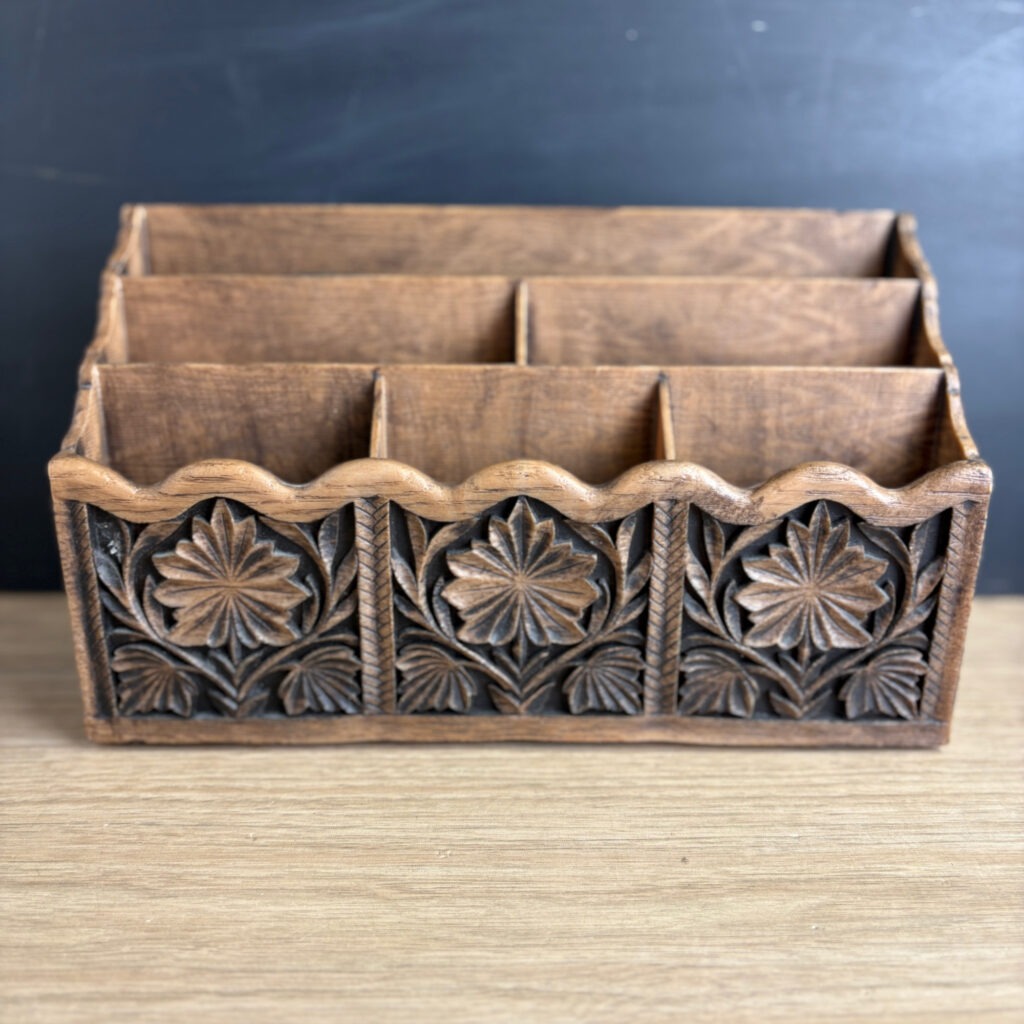
The American plastic decor boom years were 1945-1970. Thermoplastics were excellent for manufacturers. Products could be molded fast to meet post-war consumer demand. They could be made inexpensively, with lower labor costs from automation and lower transportation costs because they were lighter than things made of wood or metal. Thermoplastics gave designers more creative freedom. They could be colored and injected into intricately detailed molds that mimicked wood, wicker, leather, stone and metal. Designers could make designs with molded-in hinges and dividers. This miracle plastic could be made into forms that wood could only dream about.
Consumers loved thermoplastic decor. It was modern and space age, unlike stodgy old wood. It was low maintenance–no polishing or waxing. Decor could be more casual and colorful, pieces were disposable and replaceable and best of all, they were affordable. Who needs an expensive brass wall sconce when you can have a Syroco plastic sconce for a gazillionth of the price and get the same look?
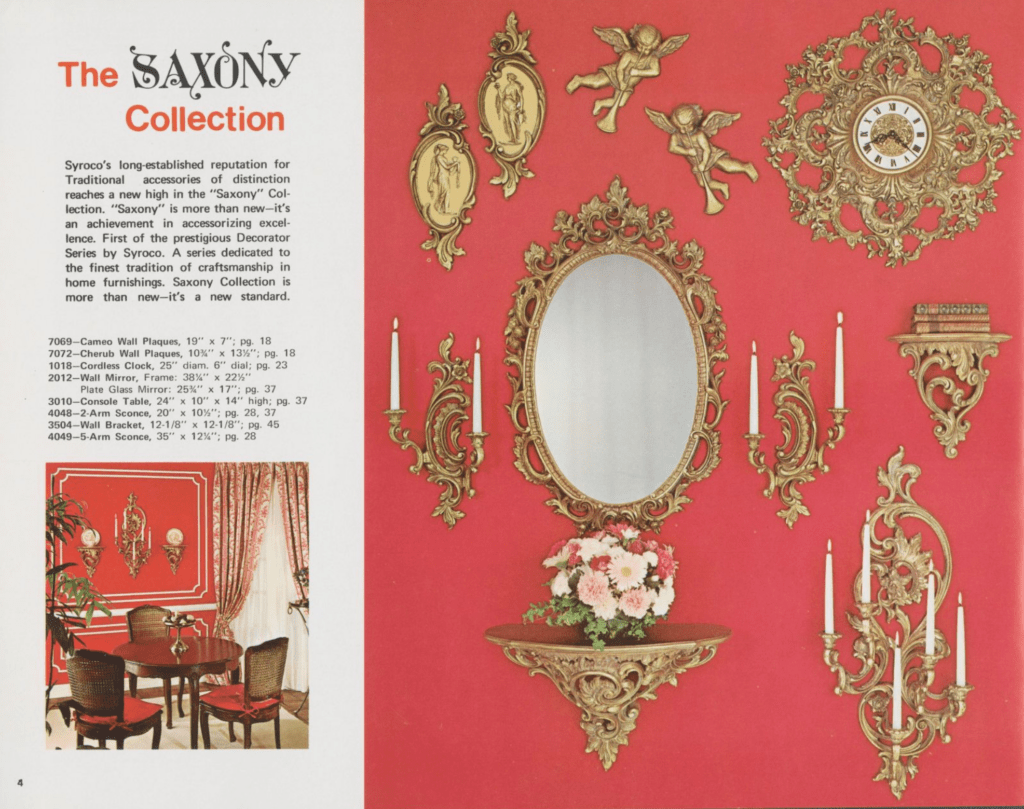
The top American plastic decor companies of the 1960s were the almighty Syroco, followed Burwood, Homeco, Lerner, Dart, the immortal Union Products of Leominster, MA who bestowed the plastic flamingo upon humanity and Arabesque. Those are names vintage lovers will recognize.
How lucrative was the plastics business? Between 1946 and 1960, the plastic goods industry maintained a 15% year over year growth rate, racing by traditional industry mainstays like steel and wood. In 1960, plastics surpassed the aluminum industry, becoming a undeniable force in the economy.
This economic power surge raced through the mid century plastic decor businesses. Syroco, before 1945, made products by compressing wood pulp flour mixed with a thermoset resin. They built a new factory in 1963 specifically dedicated to thermoplastic products because they needed a bigger facility to keep up with demand. Mega conglomerate Rexall Drug and Chemical Co. was eyeing Syroco the way the wolf eyed the pig in the straw house, buying it in 1965. (A couple Rexall notes: they had already scooped up Tupperware in 1958, and they changed the corporate name to Dart Industries (after CEO Justin Dart) in 1968 because acquisitions had outmoded the Rexall Drug name.)
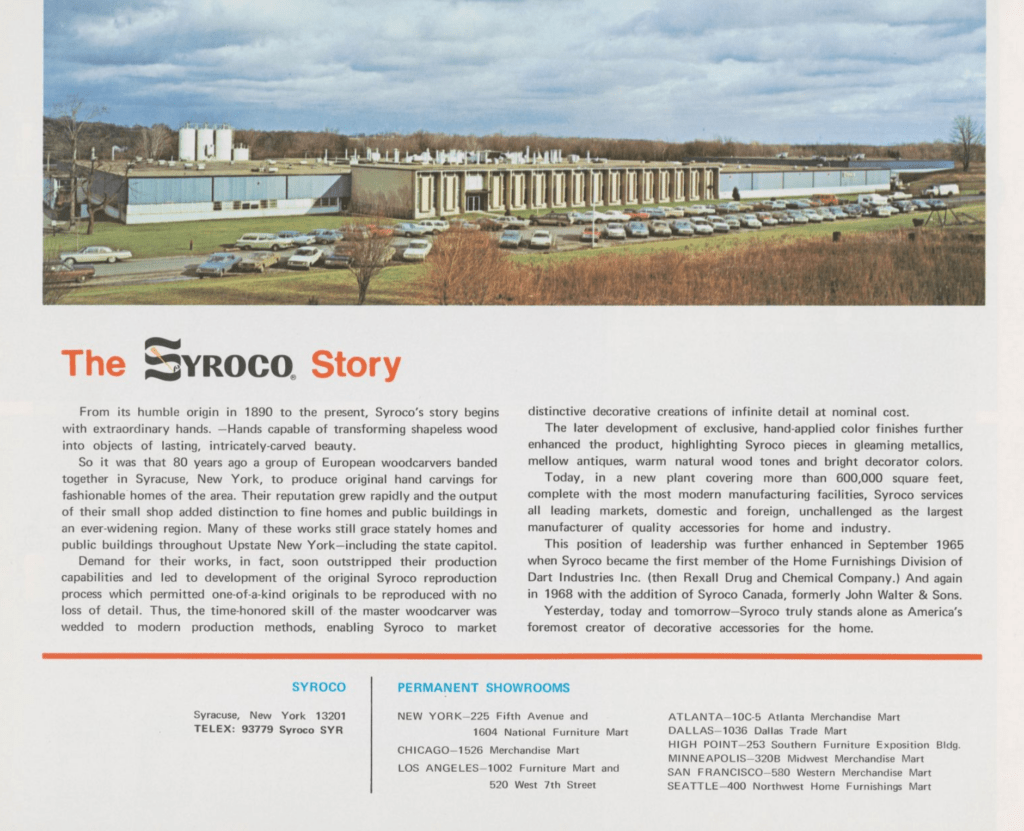
Demand for products, particularly in the Hollywood Regency style, kept Syroco profits rosy from the mid 60s-1970. Corporate records show that Syroco profits after taxes were 9% to 10.5% of sales. That’s a lot of wall mirrors and matching sconces.
How many injected thermoplastic home decor companies were there in the 1960s? There aren’t hard numbers. There were an estimated 100 major companies bringing products to market. Of that 20%-30% owned their own production factories. The remaining smaller brands relied on about 3000+ contract fabricators. The majority of all this making was centered in the midwest and northeast.
Additionally, traditional wood furniture companies, coping with the slumping sales and changing tastes, started their own injection molding shops to make things like cabinet doors, highly ornamented beds and plastic shelled chairs.
Around 1970, demand for mid century plastic decor was still high, but there were signs that the consumer market was getting soggy from being drenched in product. With sales dipping, Dart Industries started swapping molding dies between its subsidiaries to save money. It’s not your imagination, you might find the same piece made by Dart, Syroco and Crestyle. Meanwhile, over at Homeco, their party-plan driven by independent sales consultants was growing at a blistering pace, becoming a multi-million dollar business.

It was the best of times. People got the decor they wanted at prices they could afford. Companies had fast ways to make those inexpensive products. Sure, demand wasn’t what it had been, but nonetheless, the future seemed limitless.
It wasn’t though. The October 1973 Oil Crisis happened. The Organization of Arab Petroleum Exporting Countries (OAPEC or OPEC) cut oil production and embargoed shipments to nations that were perceived as having supported Israel during the Yom Kippur War. The cost of barrels of oil quadrupled. Gas stations had shortages, leading to odd/even purchasing days. A global recession ensued and combined with inflation in the US. The stock market slumped. The post war economic boom was over. (The embargo lasted until March 1974, but the effects lasted much longer.)
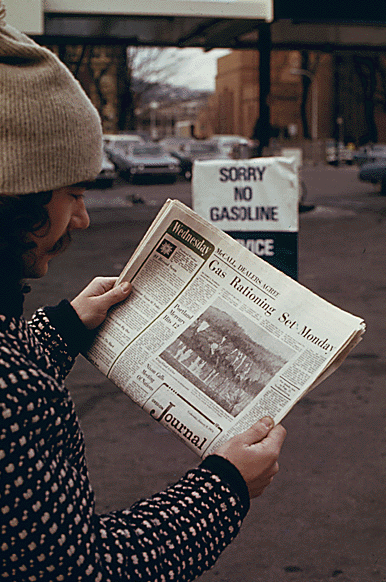
Why would an oil crisis throw the plastics industry into a tailspin? Because petroleum and natural gas are the main components of thermoplastics. Costs for the raw ingredients doubled and tripled almost spontaneously. The manufacturers of the raw plastics that sold supplies to the home decor companies had to dole out the scare materials by strict allocation guidelines. In Washington, the Nixon administration classified the plastics industry as non-essential, giving priority to home heating and car gas instead. A New York Times article from November 30, 1973 talked about plastics companies laying off employees and shortening work weeks.
The golden age of inexpensive, disposable plastic decor was over, almost overnight.
Some of the big decor companies soldiered on. But the smaller design companies that relied on independent fabrication companies were out of luck. Small fabricating companies didn’t have the cash to buy expensive materials and were forced to close. Hundreds disappeared between 1974 and 1977. The vultures started circling the survivors. Big consumer goods and oil companies started gobbling up the remaining independent shops, consolidating them and closing the under performers. Some of the independent shops that managed to stay afloat didn’t last past 1980 because their most reliable clients, the plastic decor companies, ordered microscopic amounts compared to the boom years. And, we flighty humans had moved on to new decor trends from mid century plastics. The market simply wasn’t there.
The 1200-1500 independent thermoplastic molding companies still surviving pivoted just like the companies did after WWII. Many turned to making high precision, high margin pieces for the auto and aerospace industry, which had to switch from their heavier metal parts to lightweight plastics to be able to meet the stringent fuel efficiency standards brought about by the 1974 Oil Crisis.
How did Syroco survive when their competitors folded? They benefited from being under the umbrella of Dart Industries. As the maker of Tupperware, Dart had big purchasing power during the oil crisis, so they had the raw materials smaller companies couldn’t get. And Tupperware engineers had developed cutting edge molding techniques which they shared with Syroco engineers. But having raw materials and the best manufacturing methods could not bring back the public’s desire for the decor products that had been their hallmark through the 1960s. So Syroco pivoted. Through the 1980s and 1990s, they grew to be the largest plastic furniture maker in the US. The company changed hands twice, but as a result of their pivot, they stayed in business until 2007.
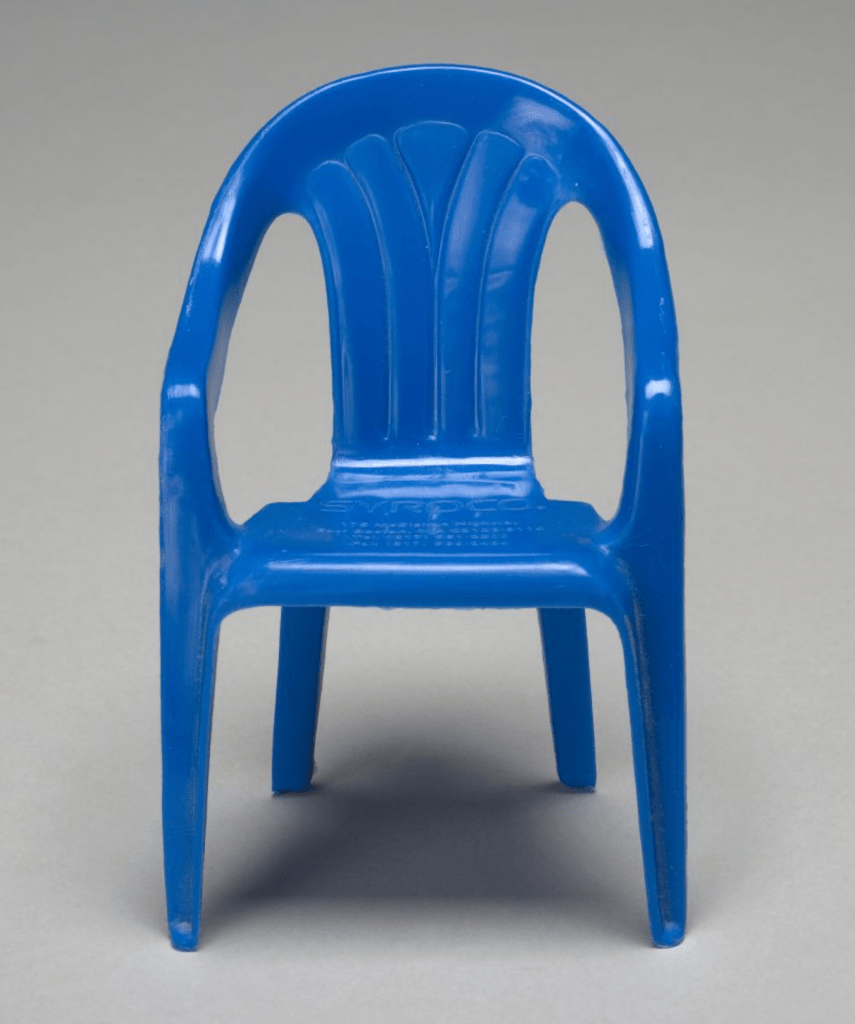
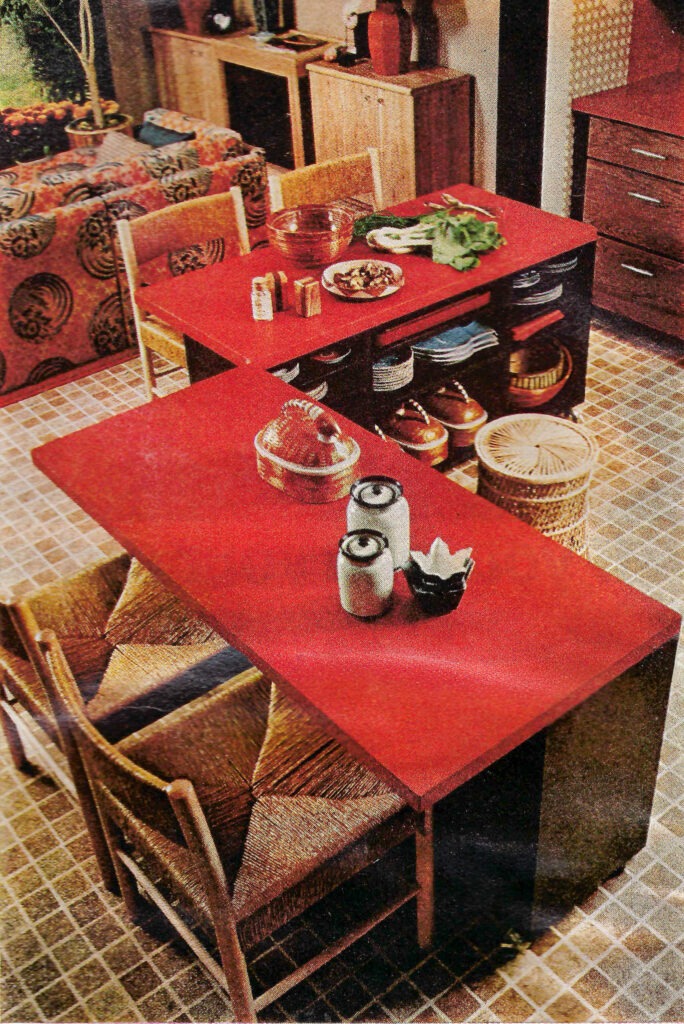
We all know that decor trends come and go. The mod molded plastic trend was stuffed to the back of the closet by the oil crisis, but it was replaced by the glorious back-to-earthy organic natural trend that drove the 70s. We can thank the oil crisis for the rise of avocado green, harvest gold, burnt orange, rust and chocolate brown. It gave us plants in macrame hangers, peacock chairs, wicker, rattan and bamboo. And it gave us carpeting everywhere, including the bathroom. Lord, how we vintage sellers love the late 1970s.
On a more consequential note, because thermoplastics are recyclable, companies began to seriously explore post consumer recycling. And in consumers, an interest was sparked in conserving resources that has continued to stay strong until today.
The mid century plastic decor companies are long gone, but their products live on with vintage lovers. For decades, thermoplastic pieces were treated as kitsch, something you bought for short money at a thrift store. But around 2015, people started looking at it with new nostalgic eyes. It started finding its way out of the dusty corners of junk stores and onto flea market tables. Mid century and Hollywood Regency decor was revived, fueled by bloggers, home magazines and posts on social media. You could find plastic decor from those golden days of the 1950s, 1960s and 1970s in antique malls and in the posts of emerging influencers. They became sure things for vintage sellers.
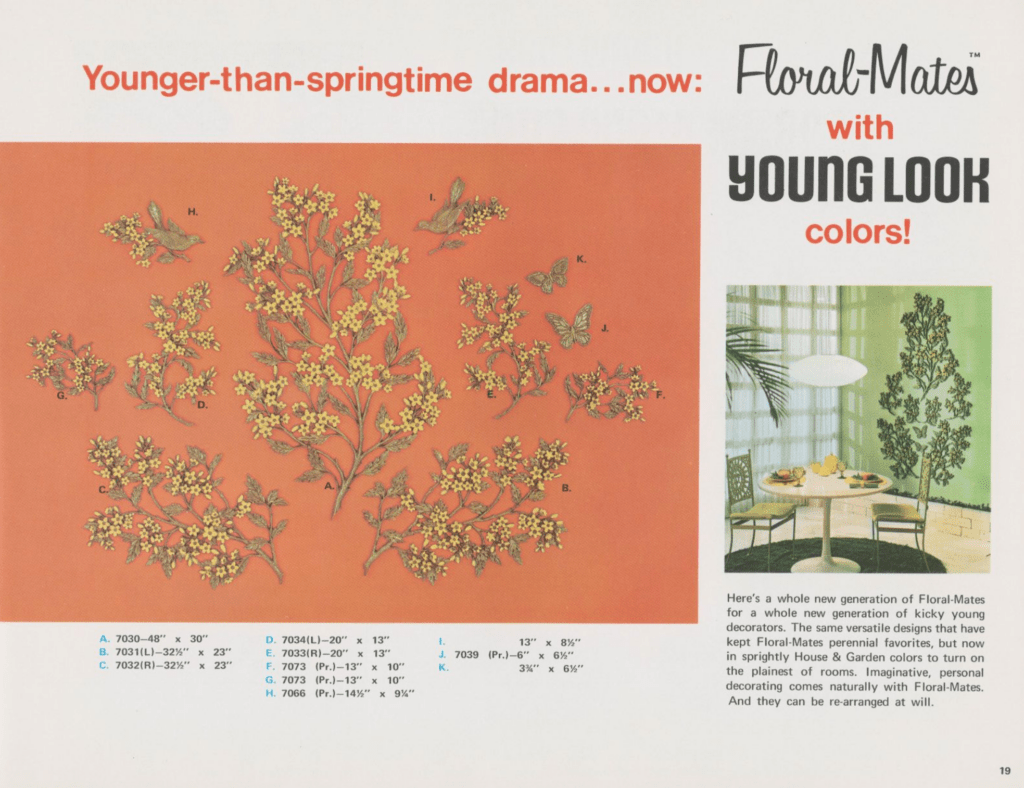
Mid century plastic decor is genuinely collectible now. Starburst clocks and mirrors are probably the most sought after pieces, followed by Regency type mirrors. Gilt wall plaques and dogwood branches are popular, are are animal forms and candle sconces. There was an unfortunate period in the late 2010s when there was a whole lot of spray painting of thermoplastic decor going on. Pieces with their original colors are much more desirable than painted ones.
The story is of plastic decor is one of reaching great heights only to be brought down and shunned, but then to rise again. Is there a moral? Probably. I’m sure you can think of something suitable about patience and resurgence. The only moral I can think of is “history will judge harshly those that wield the spray paint can.”
Read more:
What It Was Like to Live Through the 1970s Energy Crisis, history.com
America Out of Gas: Unreal images from the 1973 Oil Crisis, businessinsider.com
Syroco, Syracuse University Libraries Digital Collections
Stocking Series, Part 1: Wartime Rationing and Nylon Riots, Smithsonianmag.com
Post Script:
Reading about the rise and fall of mid century plastic decor reminded me of this exchange from the 1967 film The Graduate.
Mr. McGuire: I just want to say one word to you. Just one word.
Benjamin: Yes, sir.
Mr. McGuire: Are you listening?
Benjamin: Yes, I am.
Mr. McGuire: Plastics.
Benjamin: Exactly how do you mean?
Mr. McGuire: There’s a great future in plastics. Think about it. Will you think about it?