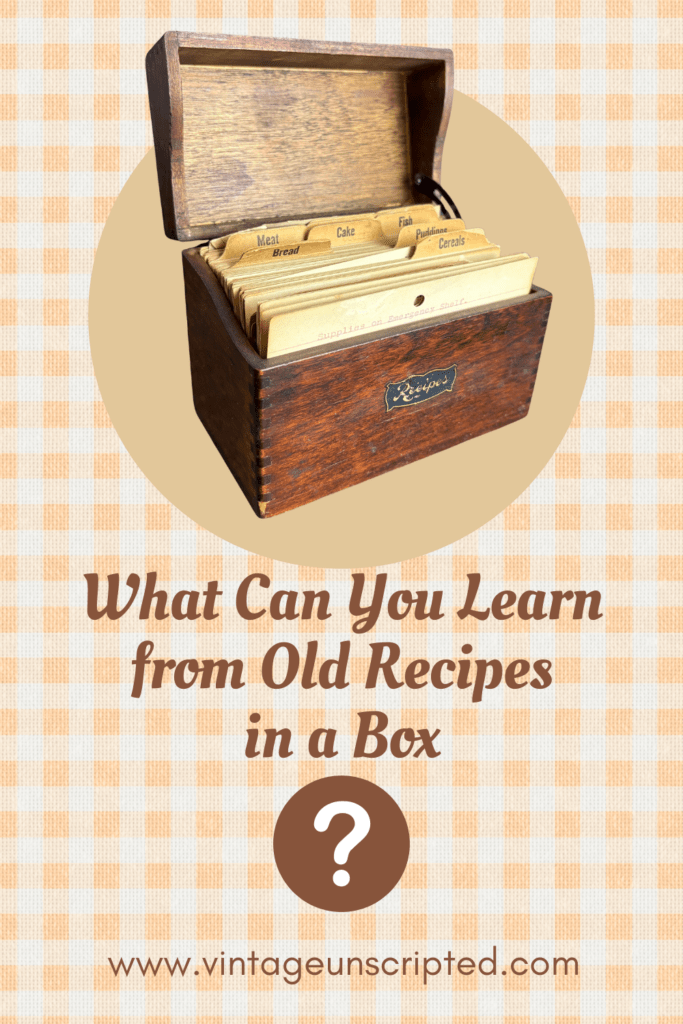
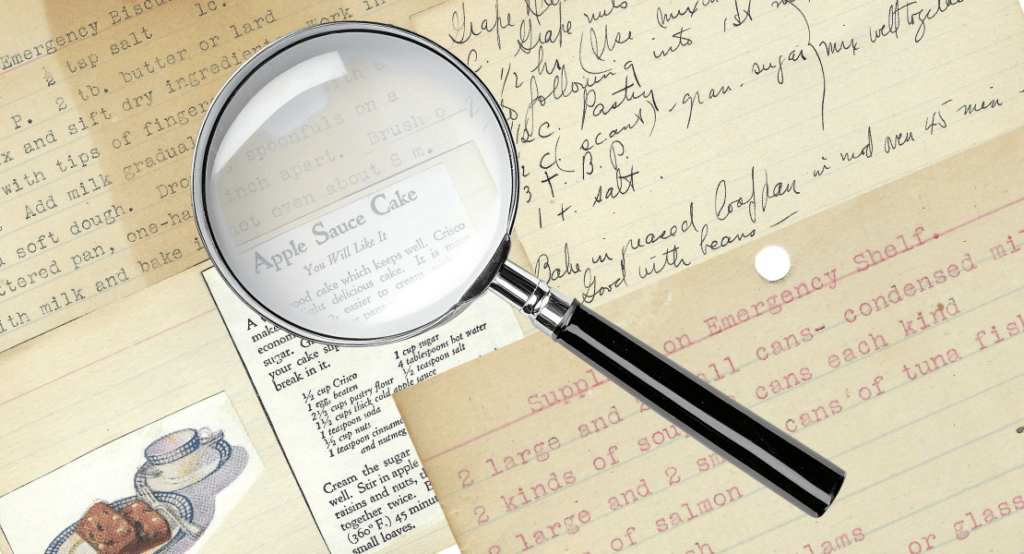
When a world of recipes is an online search away, what do old recipes in a box have to offer? That question would be fighting words to a food historian. Those that study the history of food, cooking and eating to interpret how these things shaped society at a particular time know that old recipes in a box are like a fresh archaeological dig site, especially if there is the added context of who filled the box, when and where.
But you don’t have to be a food historian to enjoy reading and learning from an old recipe box, especially if it’s one that’s been handed down in your family. Even if it wasn’t, it’s still fascinating to see what recipes were deemed worth saving, what recipe cards were used the most (identifiable by the number of stains), how many were collected from other people, how many were clipped from magazines and food packaging, how many are specific to the time they were collected and more.
As it turns out, we have a specimen to analyze.
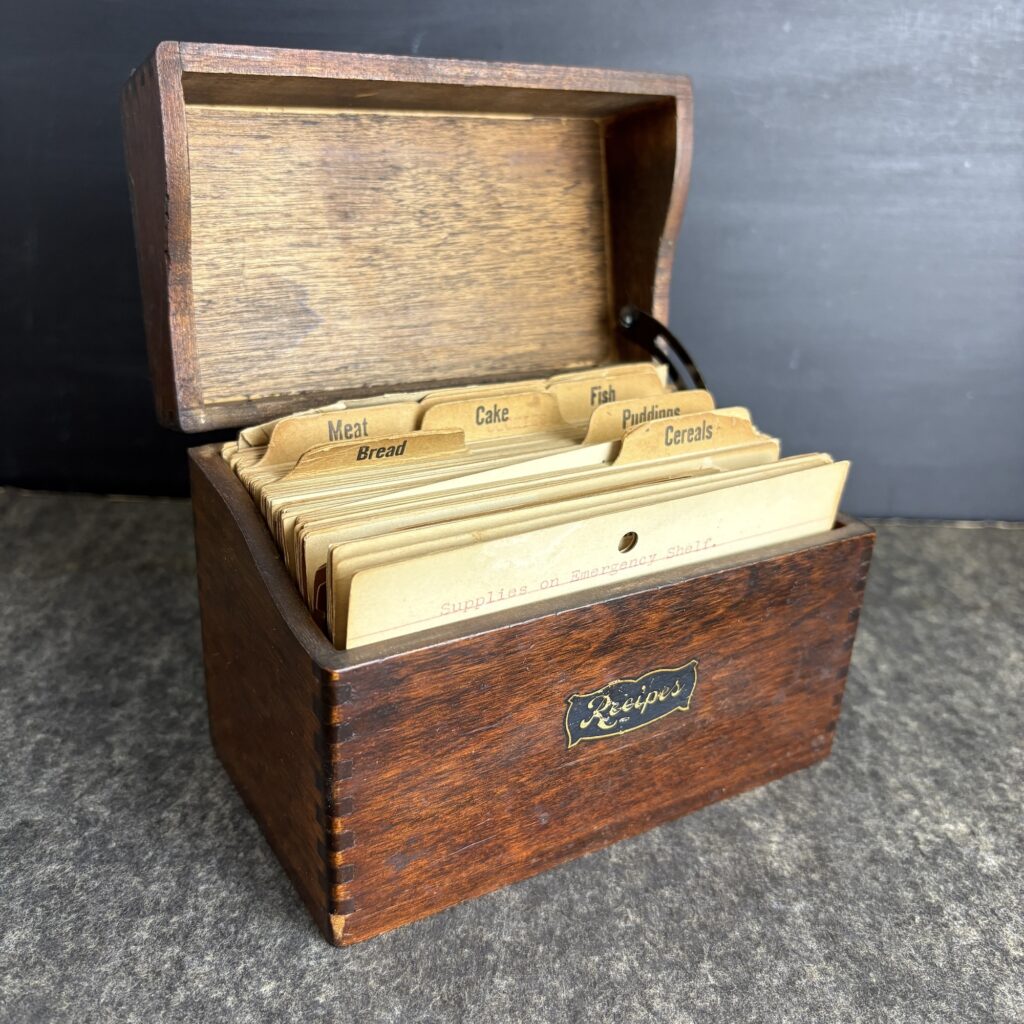
I don’t know how old this box is or who it belonged to. But by inspecting the contents, we should be able to figure out an approximate era. And maybe something more.
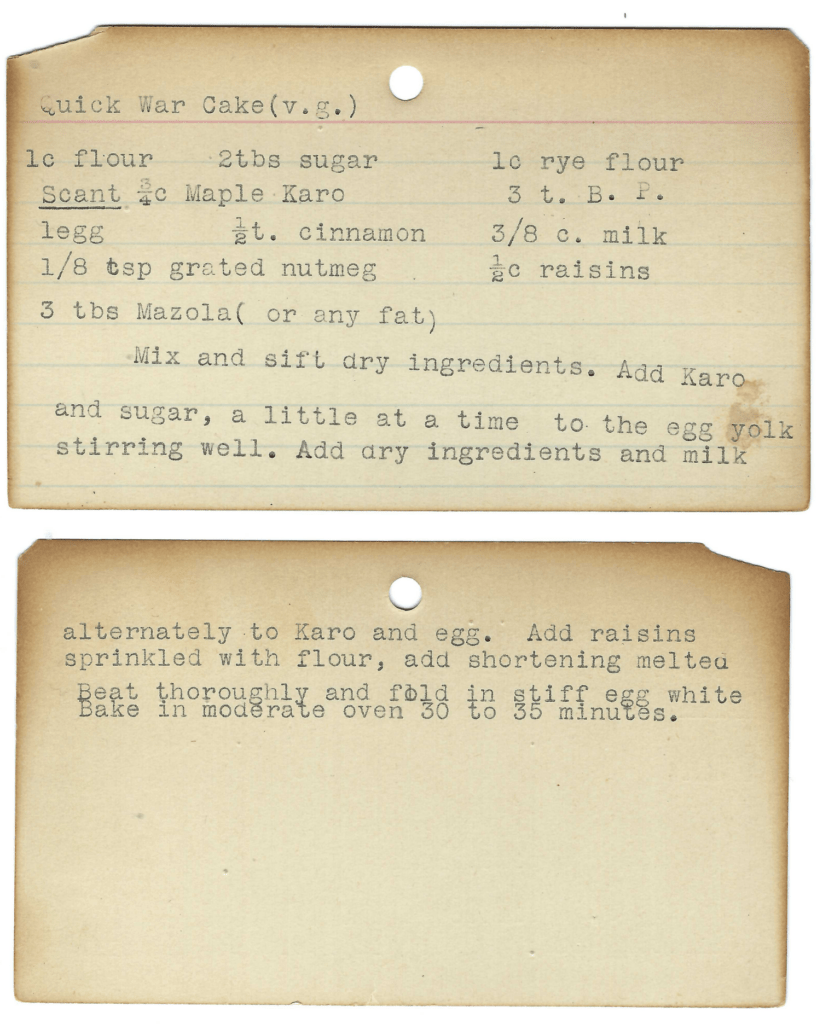
Clue 1: Box has two recipes for War Cakes, one of which is below. Because of food rationing, recipes were created that minimized the use of margarine, butter, sugar and eggs.
The baking instructions call for a “moderate oven.” Ovens with thermostats weren’t common until the post WWII boom when more homes had modern appliances. Previous to that, many homes still used wood and coal stoves. Thermostats were introduced in 1915. Electric and gas stoves with thermostats were available in the 1930s, but they were considered high end. A moderate oven is 350°, give or take.
Clue 2: There is a list of “Supplies on Emergency Shelf” and “On Regular Supply Shelf.”
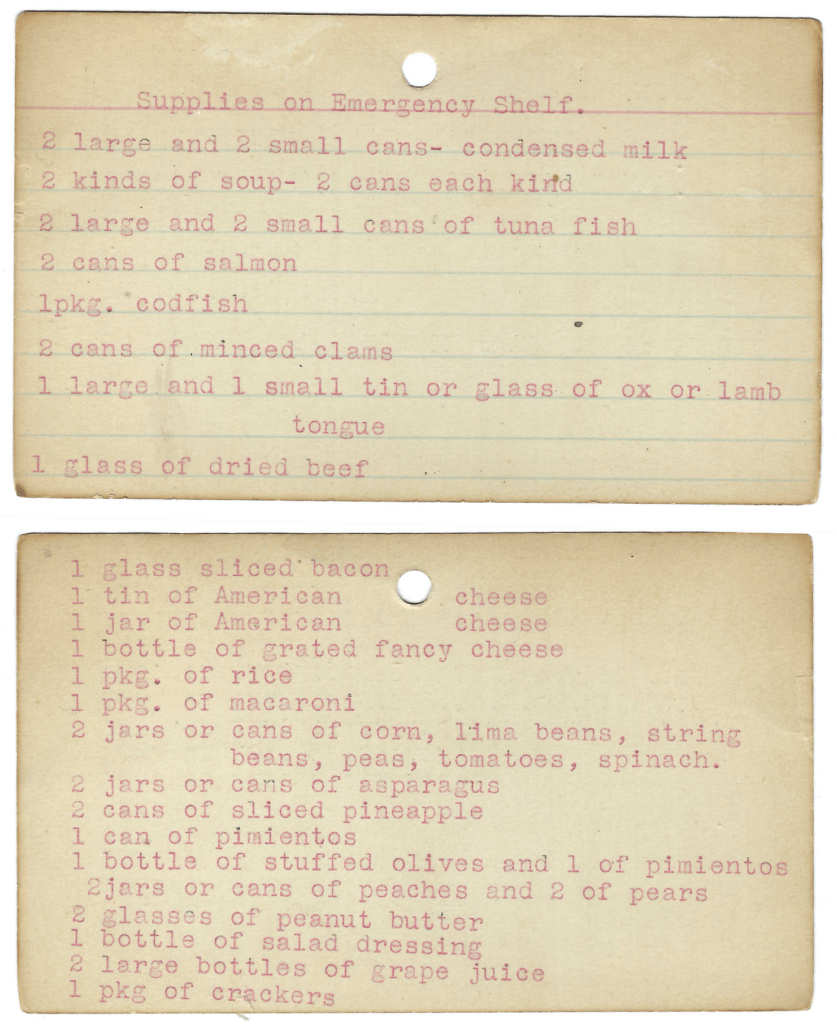
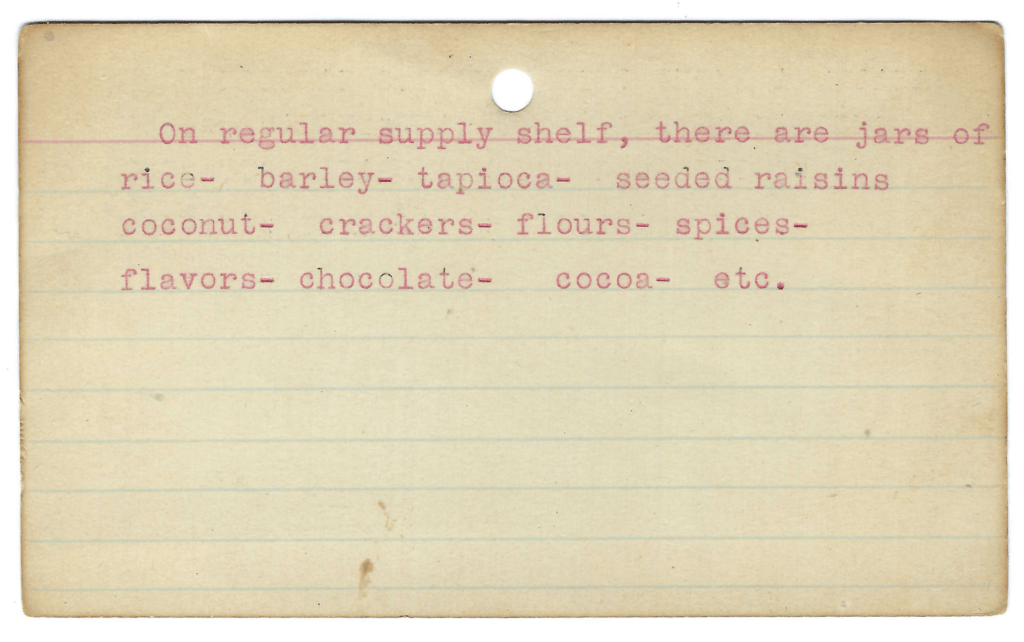
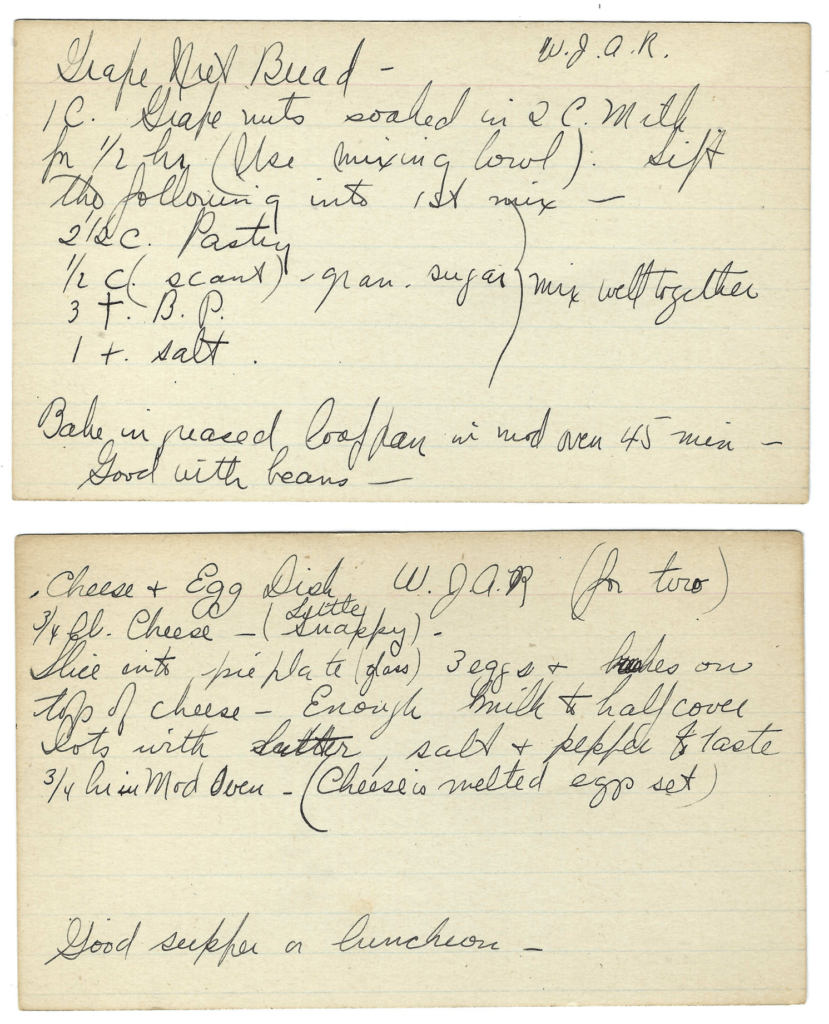
Clue 3: There are recipes marked as being from WJAR, which was either the Providence, RI radio station founded in 1922 (by store owners to promote radio sets they sold), or the Providence television station, founded in 1949.
Clue 4: There is a recipe from WNAC. Hmm…that could wither be a Boston TV station (1948), a Providence TV station (1981) or one of two Boston radio stations, one from 1922-1953 and one from 1953.
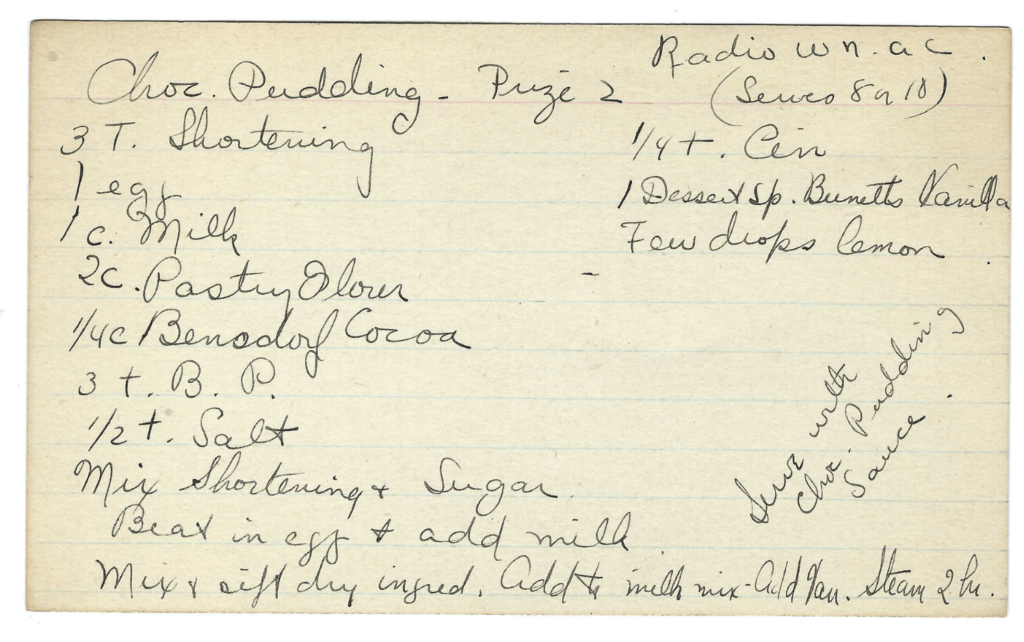
Which station it is can be narrowed down by a second clue. The recipe calls for Bensdorf cocoa, which is actually Bensdorp cocoa. If you were copying down the recipe from a radio announcer, it would be easy to mistake an “p” sound for an “f.” Bensdorp Royal Dutch Cocoa had to stop exporting to the US in 1940 when the Nazis invaded the Netherlands, and did not resume until the late 1940s-early 1950s when production was back up to scale. So most likely the WNAC in question the earlier of the Boston radio stations.
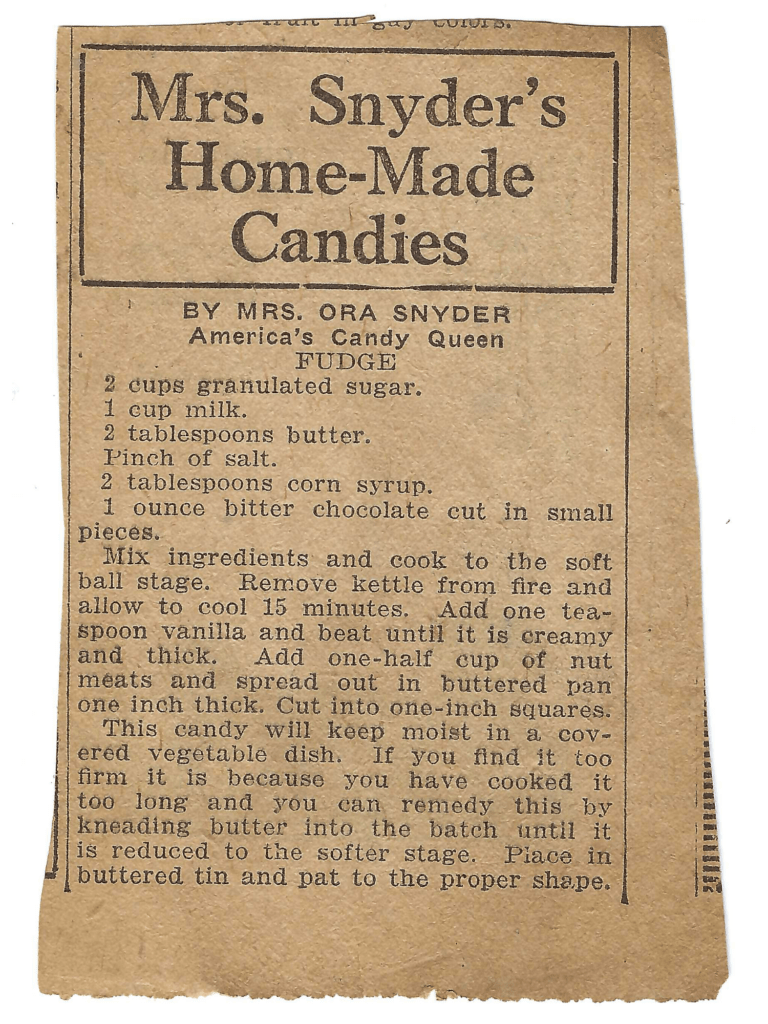
Clue 5: There is a newspaper recipe for fudge by Mrs. Ora Snyder, an Chicago confectioner who was an absolute girl boss from the 1920s until the 1940s. (It was hard not to set this post aside and start one about her.)
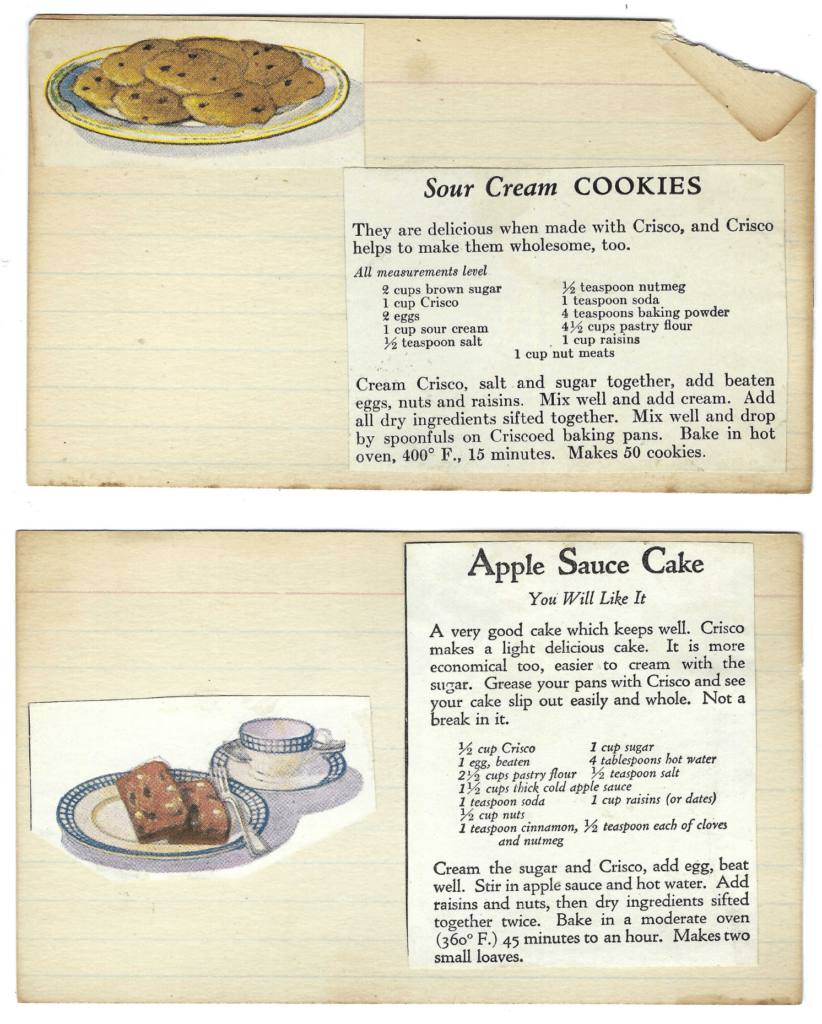
Clue 5: There are Crisco promotional clipped recipes. They didn’t match the style and type from any of the vintage Crisco booklets for sale online (yes, I am that deep in this rabbit hole). And they also don’t seem to have been printed on both sides, meaning it’s unlikely they are from a booklet or a magazine. Looking at the china patterns in the drawings, I’m guessing they are from the 1930s-1940s.
Having assembled these clues, what do they tell us about old recipes in a box?
It’s a fair guess that this box was filled sometime from the late 1930s through the war years. There doesn’t appear to be anything from the 1950s. The box is plump with recipes; perhaps the owner started a new box.
Also, the owner lived somewhere that she could listen to both a Providence and Boston radio station. Daytime radio signals reach in the 1940s was 50-100 miles.
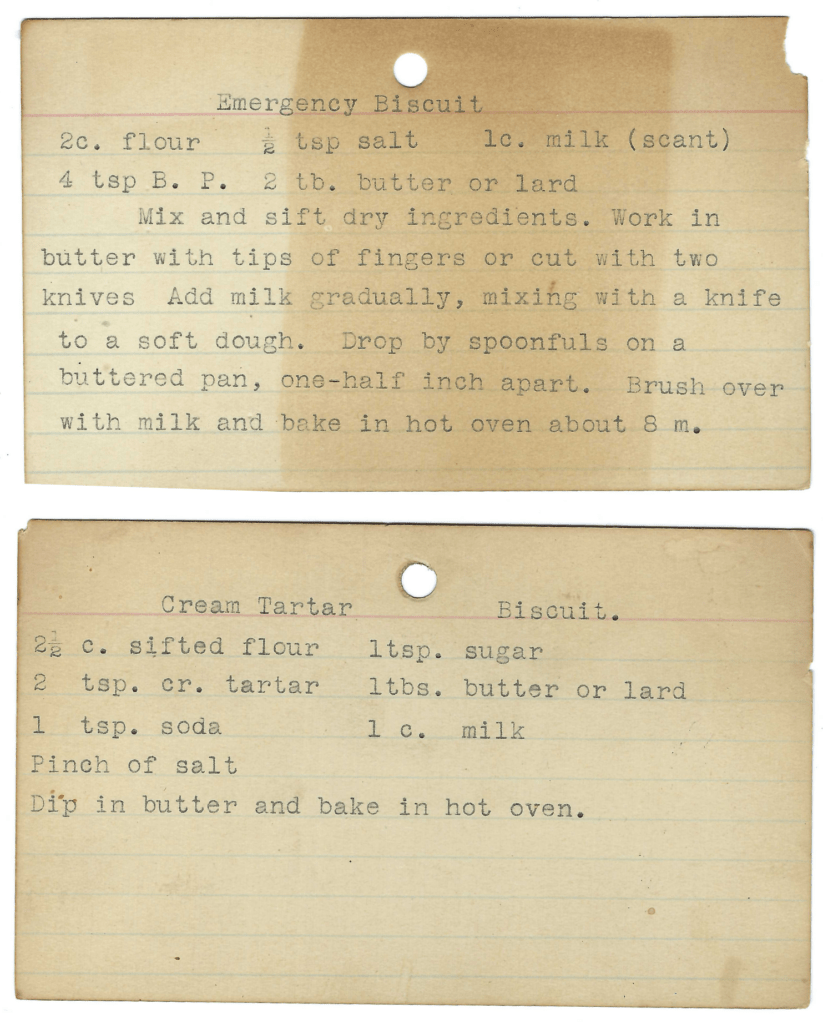
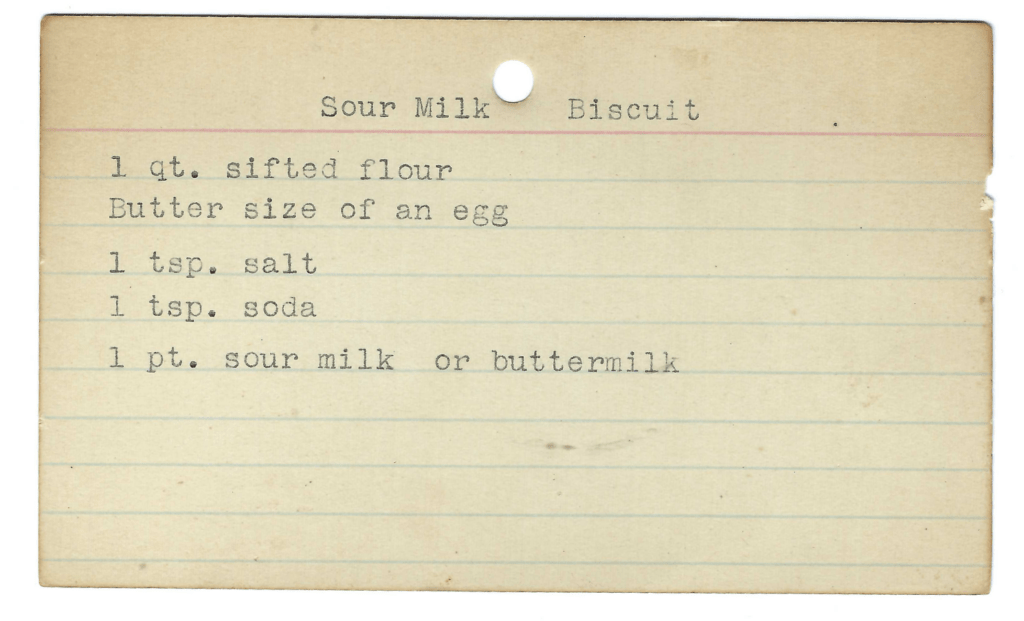
And finally, this recipe box was assembled by an awesome person. We know this because there are three biscuit recipes. Anyone who loves a good biscuit that much is automatically awesome. She also knew her way around biscuit making because two of the card don’t have instructions. (A hot oven is 450.°)
Was any of this research necessary? Yes, if you’ve the type who has never seen a rabbit hole you wouldn’t happily throw yourself into. Especially when you have other things to do that are no where near as interesting.
Who would want something a recipe box like this? A professional food historian, an amateur food historian, a vintage food blogger, a person who reads cookbooks for fun, a WWII aficionado or a dedicated cook who likes to experiment. This recipe box is listed for sale in my online store, but I’m not giving away any of these clues in the online description so the new owner can have the fun we did.
Do you have a vintage box of recipes that you treasure? Tell us about it in the comments.