
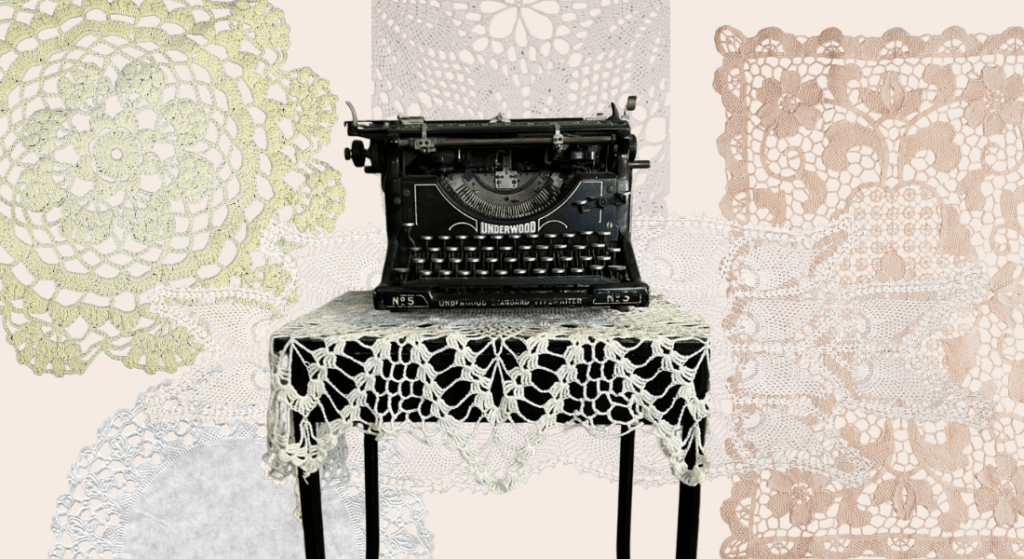
Doilies, dresser scarves and antimacassars; what are they, what are their differences and what is their history? If you have ever shopped for vintage or antiques, you most likely ran across several of these items. They tend to be piled up in baskets or bowls, sometimes bagged, but overall mostly forgotten by buyers. Why though are they so prevalent anywhere antiques are found? One hint is that they all became popular around a similar time frame, the Victorian era.
Popularity happened for a few reasons, many to do with cleanliness. Embroidery, crochet, knitting, sewing and homemaking arts were considered essential lessons for young women’s education at the time. So the creative endeavor of making doilies etc. served more than one purpose. As well as being educational and decorative, they also enhanced homes and preserved furnishings from becoming soiled or damaged from use.
Let’s take a look at the differences among these items and what they were used for.
Doilies:
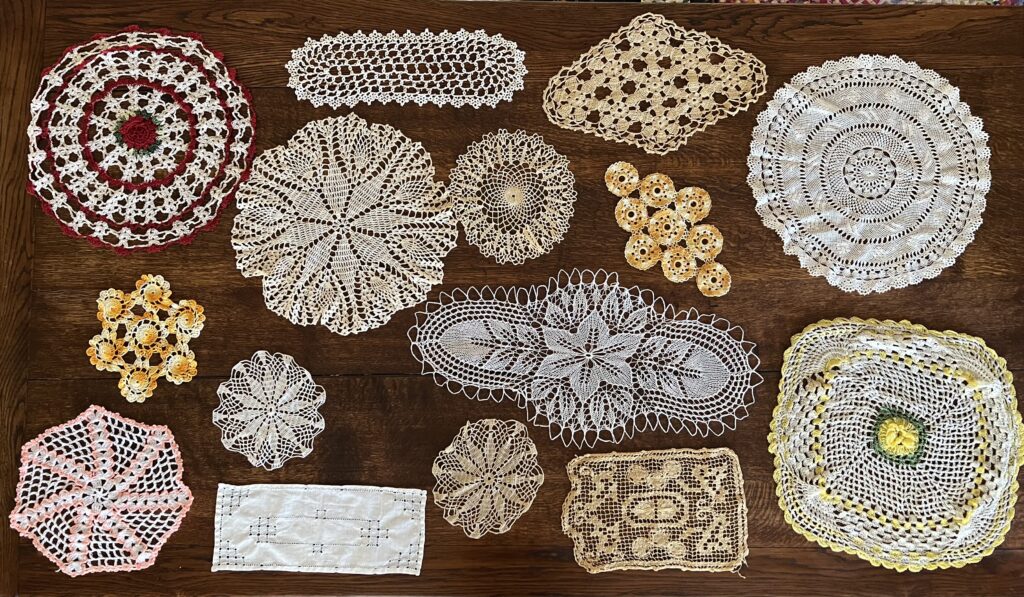
Often crocheted, tatted, embroidered, or knit, they should not be confused with paper doilies and placemats. Doilies tend to be round or rounded shapes and smaller in size. Small doilies were as everything from posy holders to coasters. Larger sizes were placed underneath lamps, vases or bowls to protect the wood surfaces. Doilies were also often used as trivets, protecting counters and tables from hot pots, pans, or platters.
While crochet was done for ages, in 1844 John Mercer invented a way to strengthen cotton thread. Known as “mercerized,” it allowed items made with this new thread to be made stronger and resist wear better.
About the same time, 1846, during the Irish Famine, nuns taught women to crochet doilies, giving them a way to make money during this tough time. The doilies were cheap and easy to make and could be sold for a small profit.
Victorian homes were changing with the times, becoming more ornately decorative. Victorians also loved the idea of idea of having household items for very specific uses. Of note, the Victorian habit of multiple serving pieces and extensive dinnerware collections. A young bride of the times would expect to have a variety of doilies on hand in different sizes and styles dependent upon use.
Dresser Scarves:
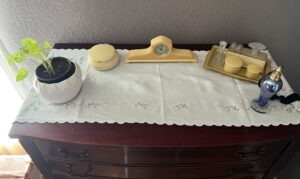
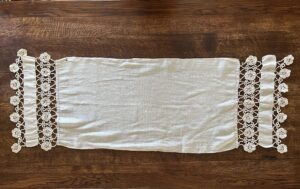
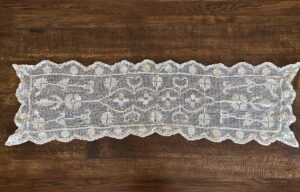
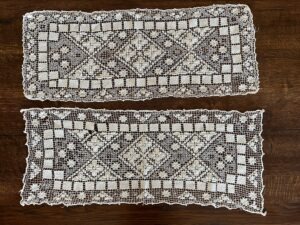
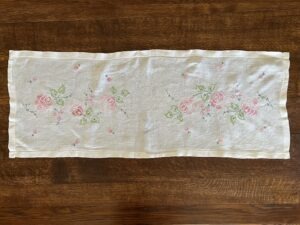
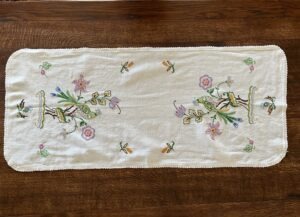
Often made of fabric embroidered with flowers, although sometimes made of lace (either machine made or handmade bobbin lace). Dresser scarves are larger and longer than doilies and more often made of linen, silk, or cotton. They often have lace edging.
Dresser scarves were originally used in dining rooms and kitchens as a way to “dress” a bureau or sideboard. Those tend to be longer and are now known as table runners. As bedroom furniture evolved, dresser scarves moved to the bedroom and became decorative ways to protect furniture and enhance the decor. The over the top look of heavily decorated and layered textiles and furnishing helped to expand the use of dresser scarves as a way to “fancy up” the home.
Antimacassars:
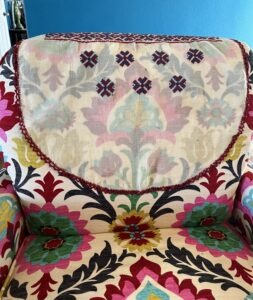
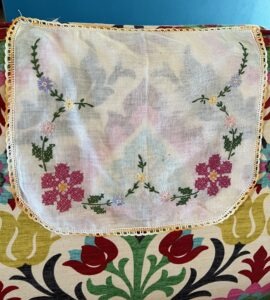
A hair oil known as Macassar Oil became immensely popular in the mid 1800s. It was used by both men and women and popularized by barbers. The oil left residue on the backs of chairs and sofas, which didn’t go over well with many homemakers. Using the idea of doilies and dresser scarves, women began to make decorative textiles sized to fit the backs of chairs or sofas where the head would rest. Soon matching pieces for the arms were added in order to lessen wear and soiling of the fabric arm rests.
You can find doilies, dresser scarves and antimacassars for sale at most antique shops or estate and yard sales. While their original uses have gone out of style, there are loads of ideas online for reusing these items for everything from patching denim to making curtains, framing them as artwork, and turning them into potpourri bags.
And while doilies and dresser scarves have lost much of their original use, antimacassars remain a fixture of travel. If you have ever been on a bus, train, or airplane, you most likely have encountered an antimacassar. They have become standard fare for traveling as mitigation for both wear and tear of materials as well as sanitary use.
Do you have any doilies, dresser scarves, or antimacassars? If so, how do you use them?


1 comment
I use them every day on all my furniture I have all kinds