A piece of furniture made to soothe the soul. Such is the origin of the rocking chair. The first known use of such an item was found among the ruins of Herculaneum, an ancient city destroyed by an eruption of Mount Vesuvius, near Pompeii. It was a cradle. The sole purpose of a cradle is to rock a baby to sleep. While rocking chairs may not be in exactly the same, they are meant to relax in.
Modern day rocking chairs date back to the early 1700s. They originated as a regular chair fitted with rocking rails meant to be placed on patios, according to one telling. Another story speaks to the need for a nursing chair meant to calm a fussy infant.
A few stories cite Benjamin Franklin as the originator of the rocking chair, although there is no proof of that. Being as the first date mentioning a rocking chair was 1725, the story is unlikely as he would have been 19 or 20 at the time. He did not pursue inventing until much later in life.
Back to the original rocking chairs though. At about the same time the idea of a chair with rockers was taking place in America, it was happening across the pond as well. Europeans were realizing that taking the idea of rockers from a cradle and attaching them to a chair not only soothed young children, but adults as well.
Soon the idea caught on and furniture manufacturing companies were producing various styles of chairs with rockers. The calming effect of a gentle back and forth rhythm worked just as well on adults as it did for babies.
The original rocking chairs were made of wood as was almost all furniture at the time. Depending upon where the chairs were manufactured. In the United States the most common style during the middle of the 18th century was the wicker rocker found on porches.
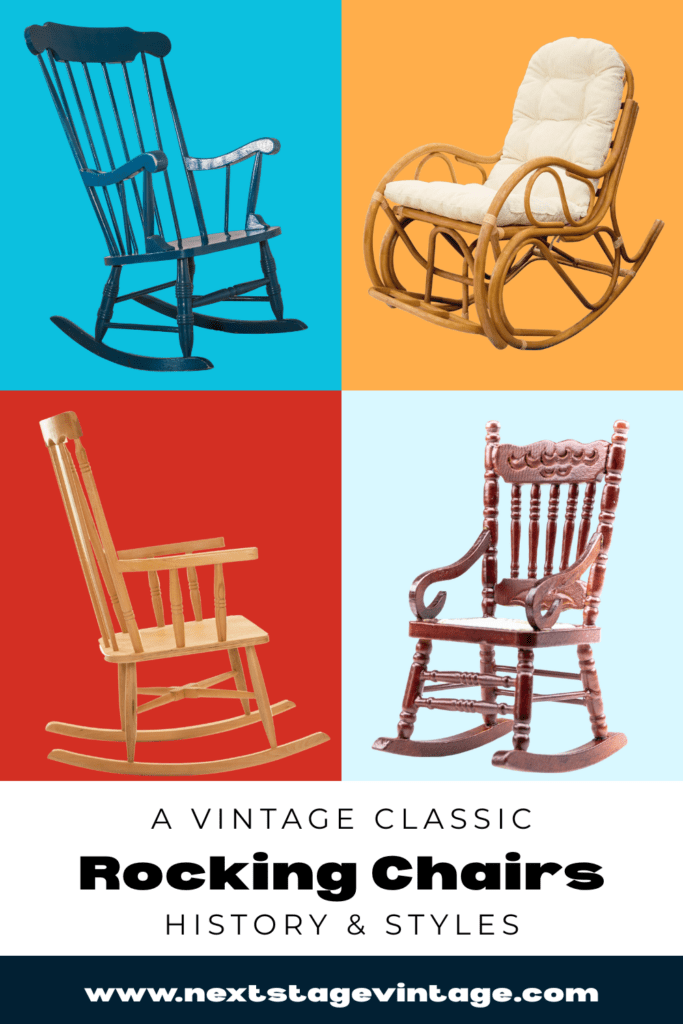
Popular styles of rocking chairs:
Shaker: In 1820 the Shakers created a rocking chair based on their simple classic design. It featured a wicker or rush seat and wide slat back with simple straight slim legs. The chairs were lightweight, minimalist, and practical.
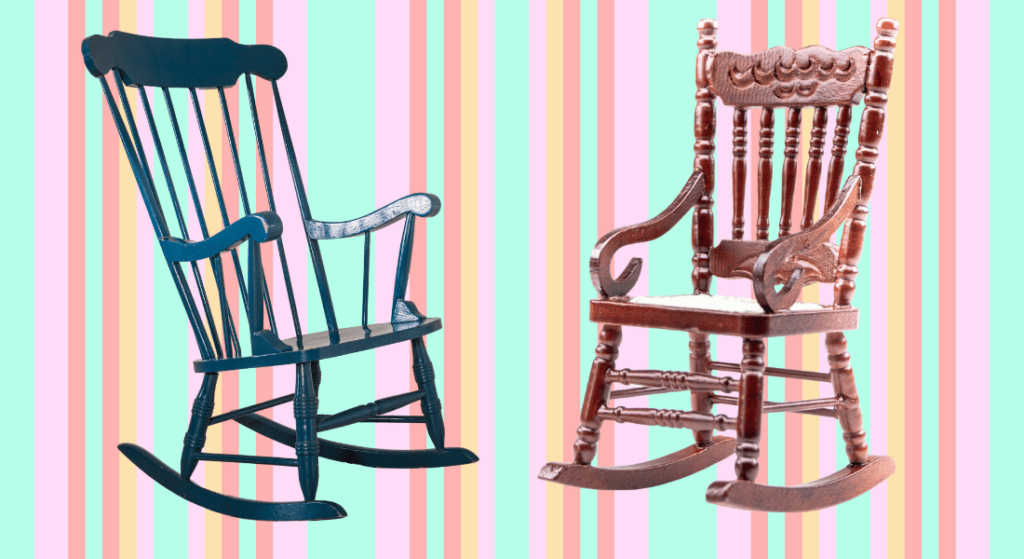
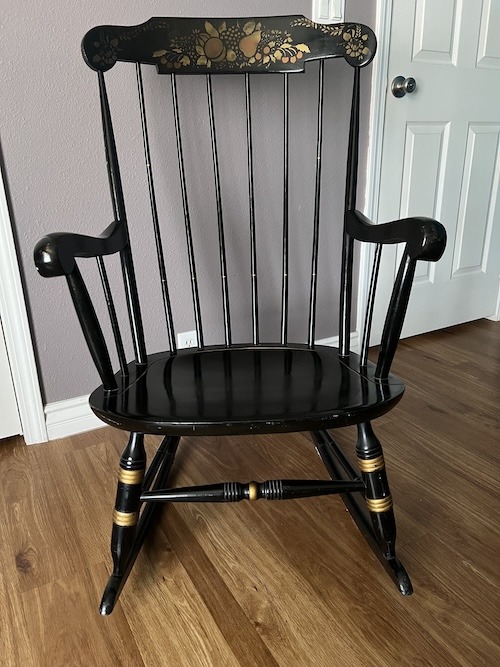
Boston: The Boston rocker was created in Connecticut in 1825. Distinguished by its curved seat and high backrest. They are often painted black with gold trim. The company Nichols & Stone began business in Massachusetts in 1762 beginning as Nichols Brothers Chair Manufactory. They began making Boston style rockers around 1825. The company was bought by Stickley in 2008, who still manufacture furniture under the Nichols & Stone name.
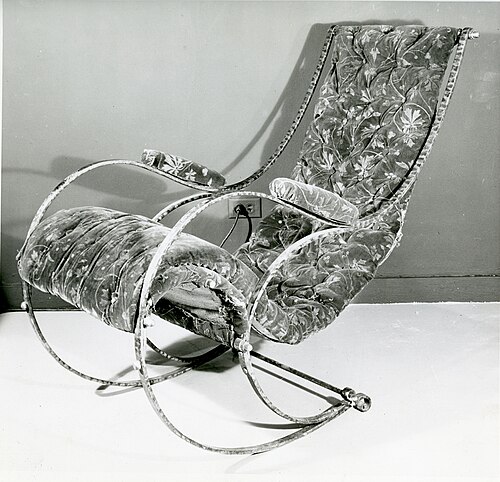
Cooper: In the 1830s, Peter Cooper designed the first steel chair. It was a rocker which incorporated the rockers as part of the chair design rather than separate pieces at the base of the chair. The design was so innovative that it was exhibited at both the 1851 Great Exhibition of the Works of Industry of All Nations at the Crystal Palace and at the Great London Exposition in 1862.
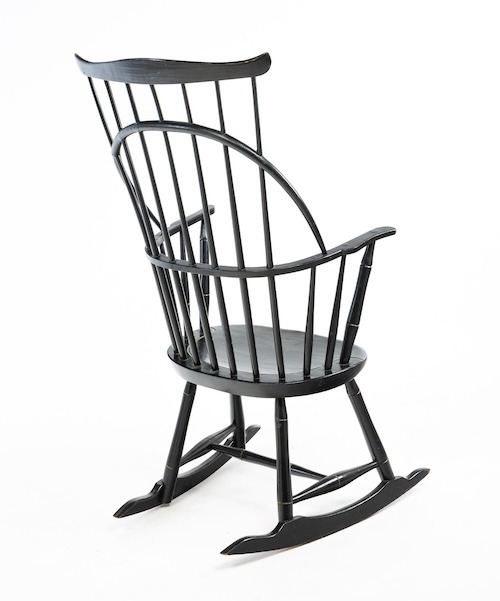
Windsor: Boston rockers were based on the style of Windsor chairs with a few design differences. The Windsor chair doesn’t have the large solid top rail that is found on Boston rockers. It has a splayed back with the arms sloping down from the back. The legs are splayed and braced. Windsor chairs are almost always made of solid wood.
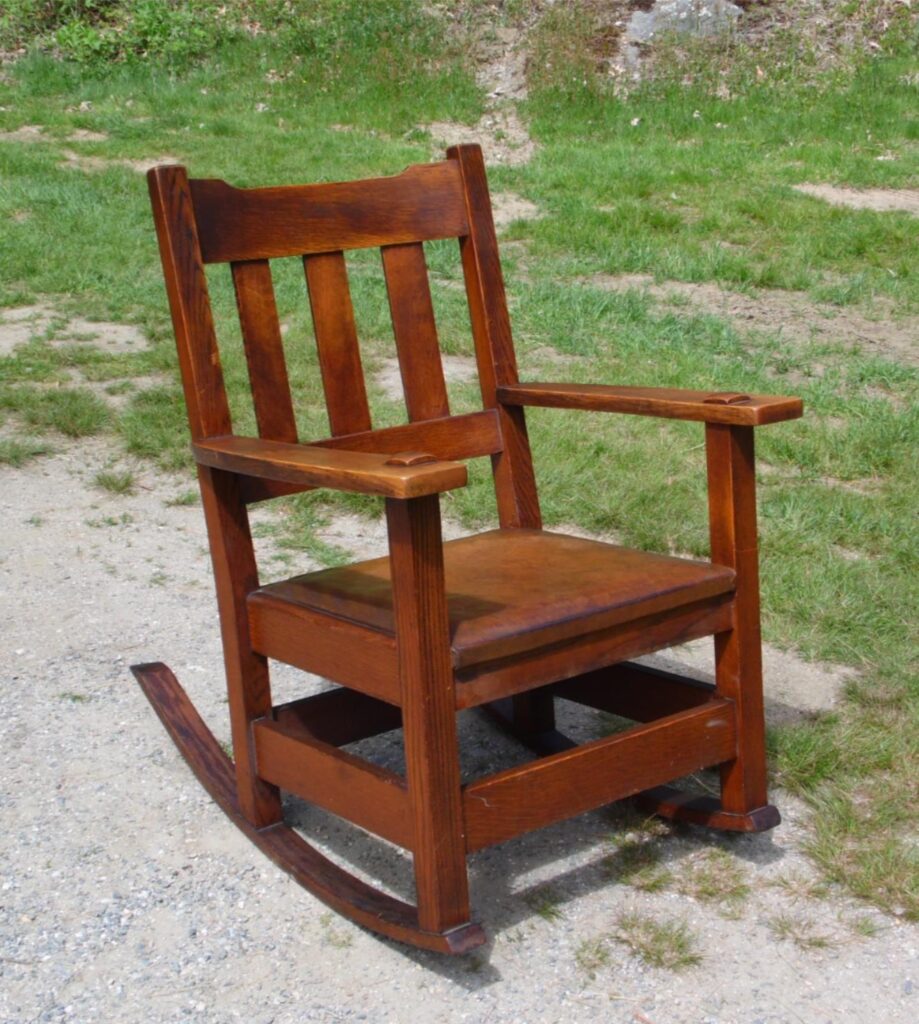
Mission: Sometimes known as Arts and Crafts style, these, feature wide flat arm rests and often sit lower than other chairs. The lines tend to be straight and geometric. The design tends to be a heavier look often with squared off cushions.
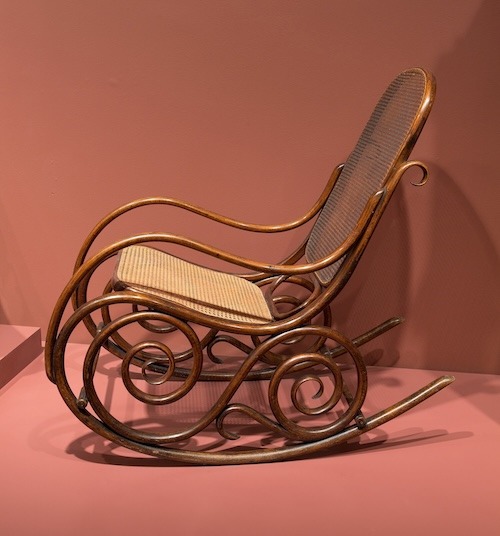
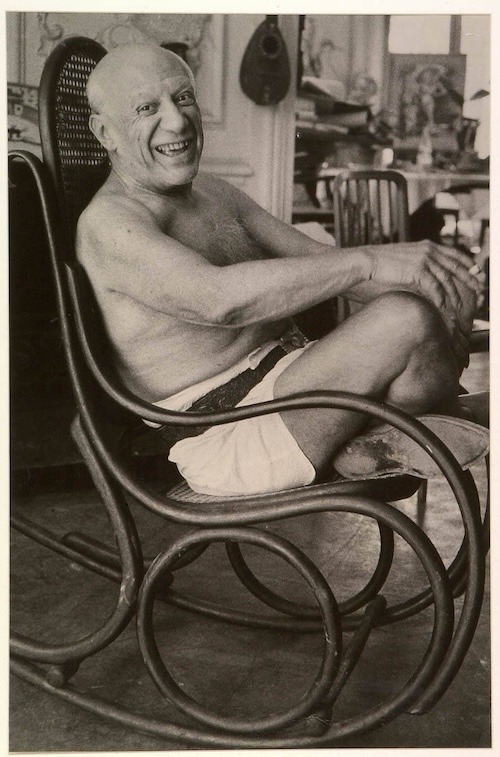
Bentwood: Also known as Thonet rockers, they were designed by Michael Thonet in the 1860s. Michael and his five sons began creating bentwood chairs. They found that by steaming the wood they were able to bend it, thus creating their signature styles. This unusual process caught on throughout central Europe and eventually made its to the rest of the world. Thonet chairs are still popular today.
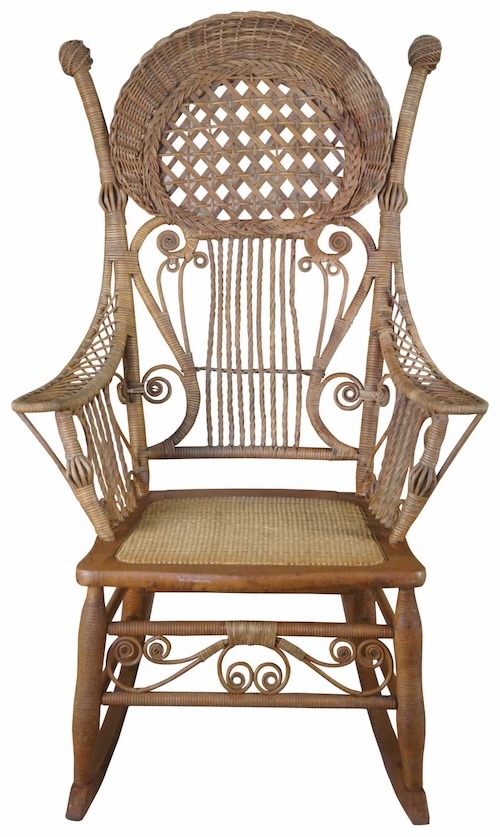
Wicker: The Victorian era brought the original wicker porch chair to new heights. Everything the Victorians did was on a grand scale and with a flourish. Wicker rockers got the Victorian treatment as well. The fancy wicker chairs known as peacock chairs were a product of the design aesthetic of the era. Rattan, as well as tightly twisted paper were used to create ornate patterns far from the staid early simple porch chairs made in the early years of the 18th century.
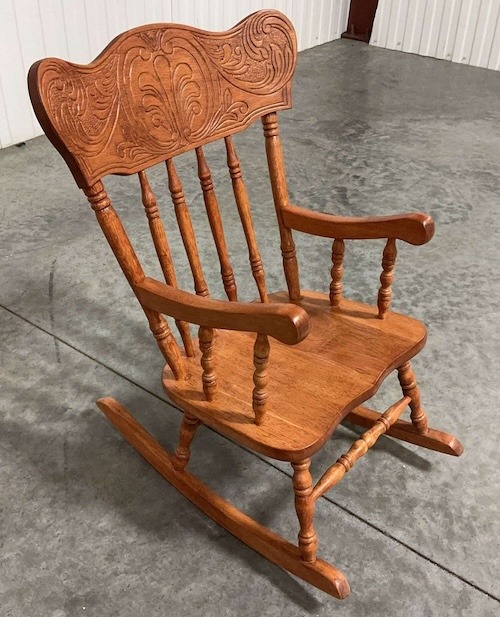
Pressed Back: Pressed back chairs were popular from the late 1800s to the mid 1920s. They had a resurgence in the 1970s and 80s. Similar to the Boston rocker Pressed Back chairs feature a large top rail. This piece was embellished with a pressed in design, usually featuring scrollwork. This style was sold throughout the country through the popular Sears and Roebucks catalog during those early years. Many of these pieces were made of quarter sawn oak.
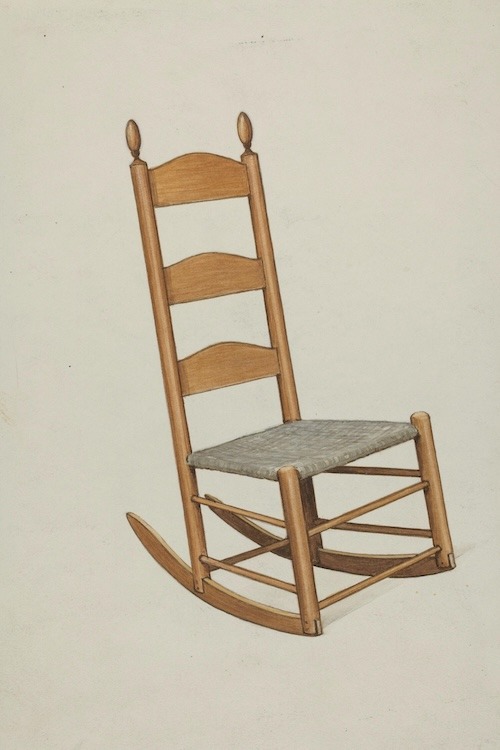
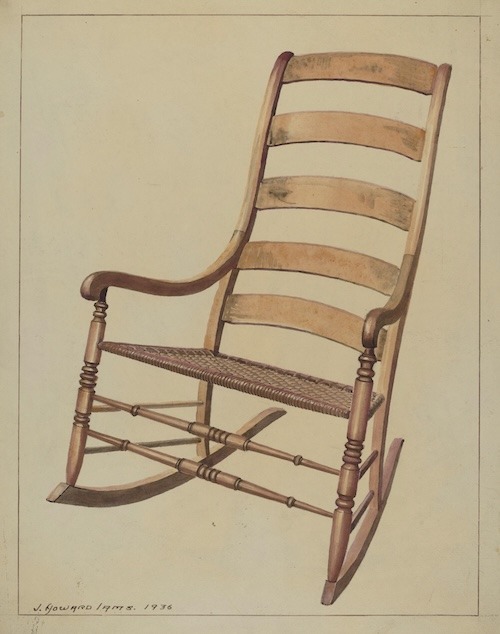
Ladder Back: This style of rocker originated in Europe in medieval times. It features wide sturdy horizontal slats fitted into vertical posts resembling a ladder. The chairs are sturdy and durable. The design was adopted by Colonial American furniture manufacturers. These are the style of rocker seen most often in the south on porches made of ash, maple, or oak.
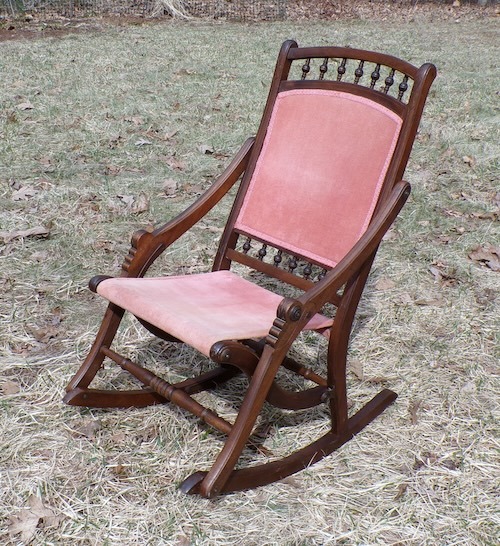
Folding Rocker: We mentioned earlier that the Victorians enjoyed their flourishes. They were also quite inventive. Having a folding chair that could be easily moved from place to place was just the thing for the early version of “Glamping.” Beautifully decorative, yet practical as well.
Did you know? These three famous men enjoyed their rocking chairs.
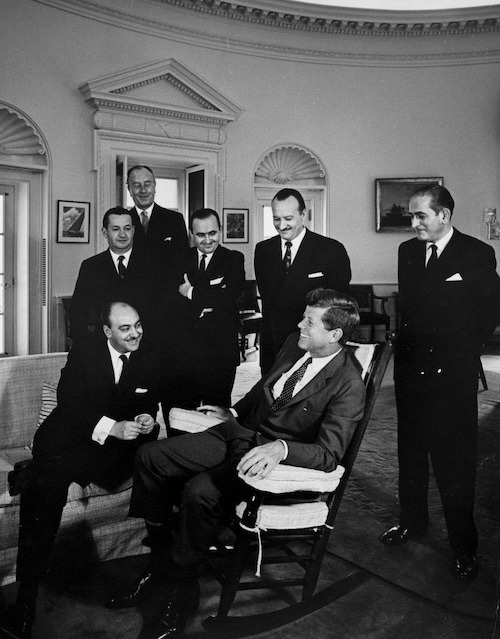
John F. Kennedy suffered from chronic back pain. He underwent four surgeries and was prescribed both medication and therapeutic methods to alleviate his pain, one of which was the use of a rocking chair. It was reported there were 14 rocking chairs in the White House during his administration.
Pablo Picasso painted a picture of his wife Jacquline Roque seated in a Thonet style rocking chair. There are also photographs showing Picasso seated in the same chair.
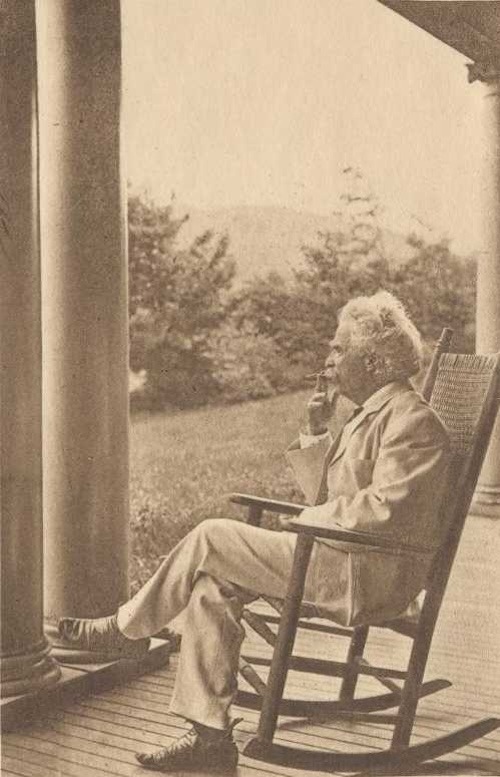
Mark Twain was also photographed seated in contemplation in his rocking chair on the porch looking out over his property in Dublin, New Hampshire.