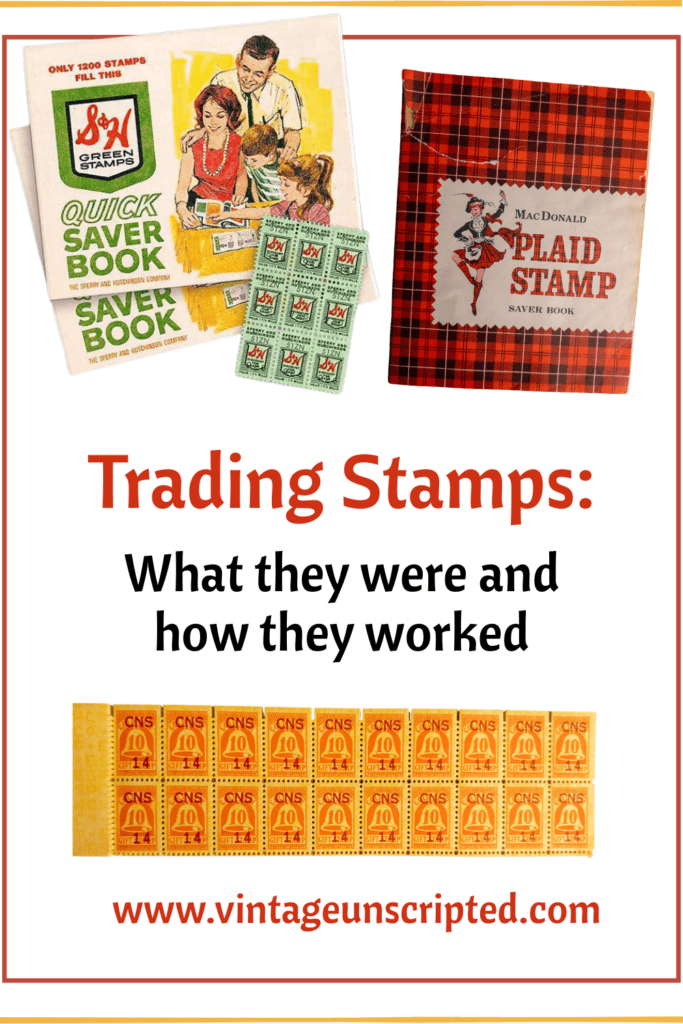
In the 1950s and 1960s, two books were treated with reverence because they were the places where wishes lived. One was the Sears and Roebuck catalog, especially the Christmas edition. And the other was the S&H Green Stamps Ideabook, filled with merchandise from toasters to trips that could be yours if you saved enough of their trading stamps. Everyone in the family browsed those sacred volumes, because they offered something for everyone to daydream about.
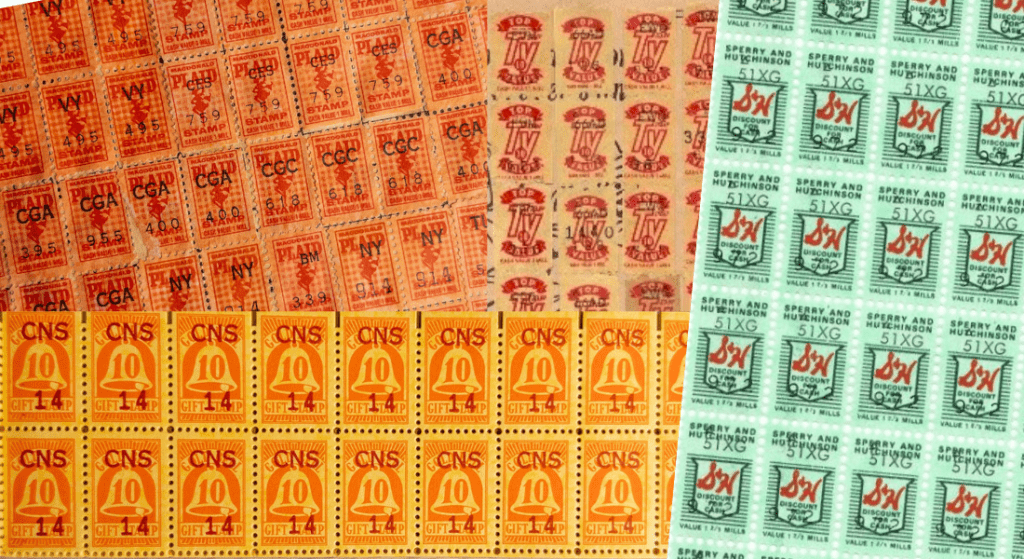
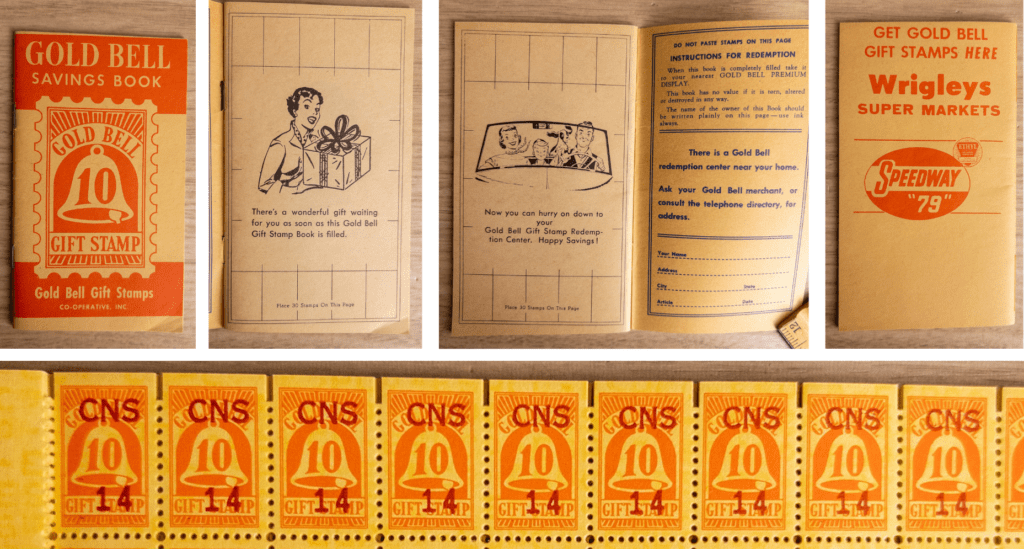
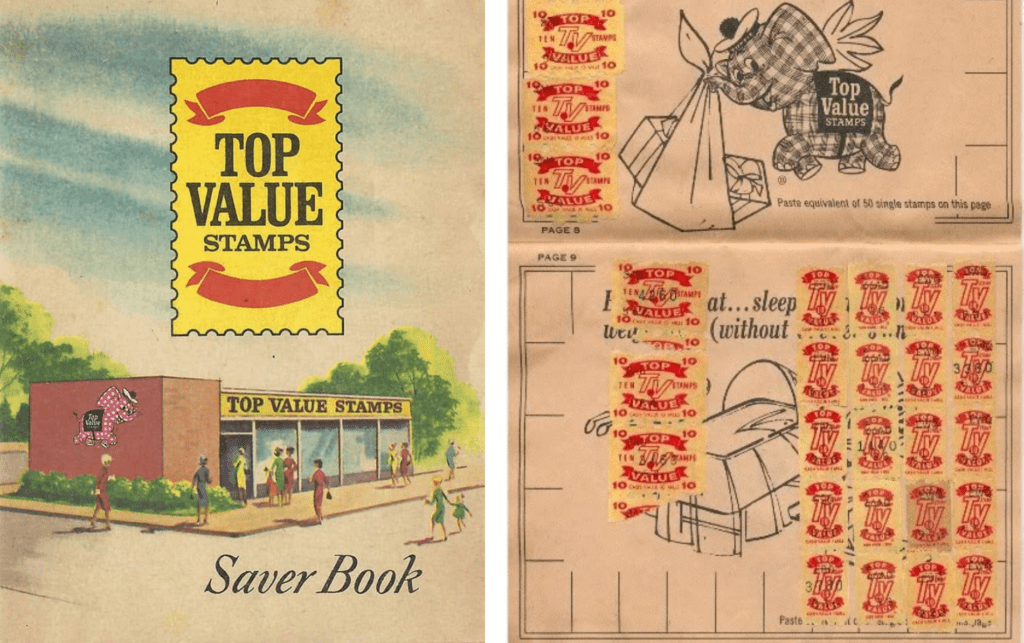
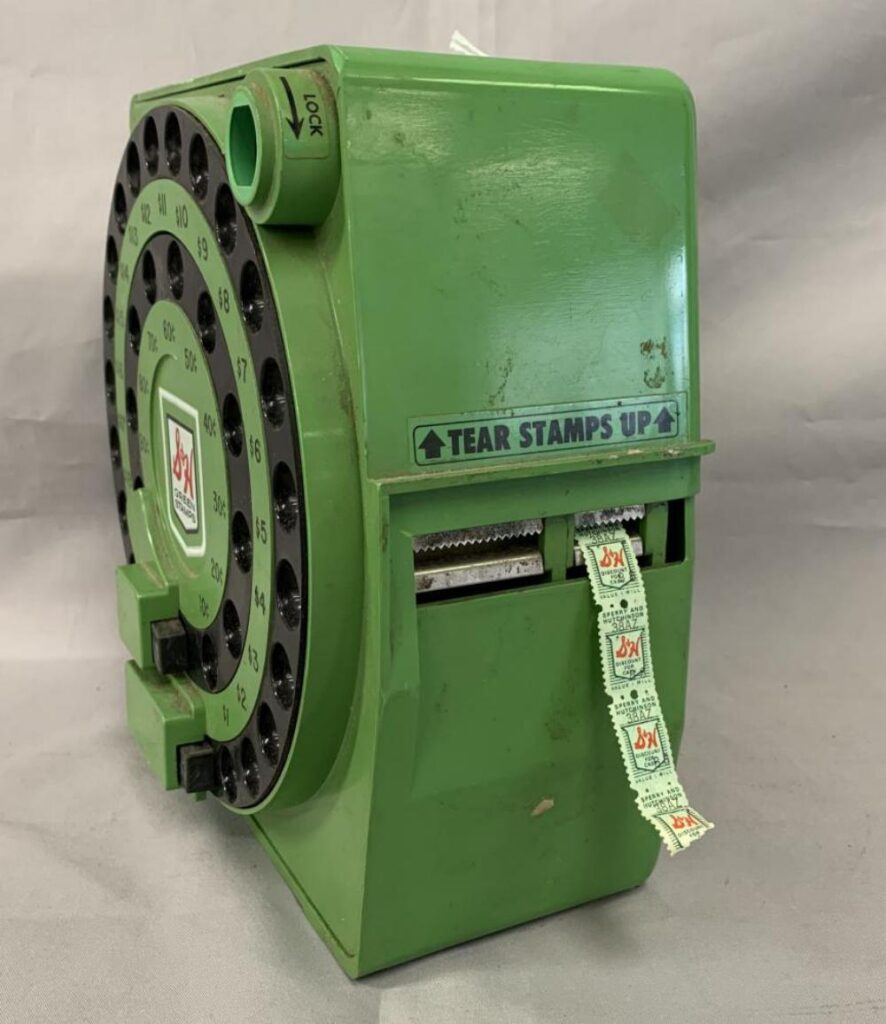
Trading stamps were little gummed squares, just like USPS stamps, that retailers gifted to customers in increments depending on how much they spent. Primarily given out by supermarkets, gas stations and drug stores, they were also available at department stores and small local retailers. Stamps were collected and pasted into books. Many a child was employed for this job because they were lick and stick stamps and the glue tasted horrible and stuck to your tongue. For some reason children, myself included, found this task endlessly entertaining. When you filled a certain number of books, you could exchange them for merchandise. Different premiums required different numbers of books, just like at a skeeball arcade, where prizes require different numbers of tickets. Trading stamps were a loyalty program and like the best loyalty programs, they made customers feel like they were getting something for nothing.
The History of Trading Stamps
Schuster’s Department Store in Milwaukee, WI, is credited as the first store to reward customers with trading stamps way back in 1890. In 1896, Sperry & Hutchinson of Jackson, MI offered retailers a chance to buy their stamps to use as encouragement for customers to pay off store tabs and bills on time. The Mays Department Stores launched Eagle Stamps in St. Louis, MO in 1903. Gold Bond Stamps were founded in Minnesota in 1938, hitching their brand to major grocery wholesalers. By the mid century height of trading stamp popularity, there were approximately 200 different stamp companies.
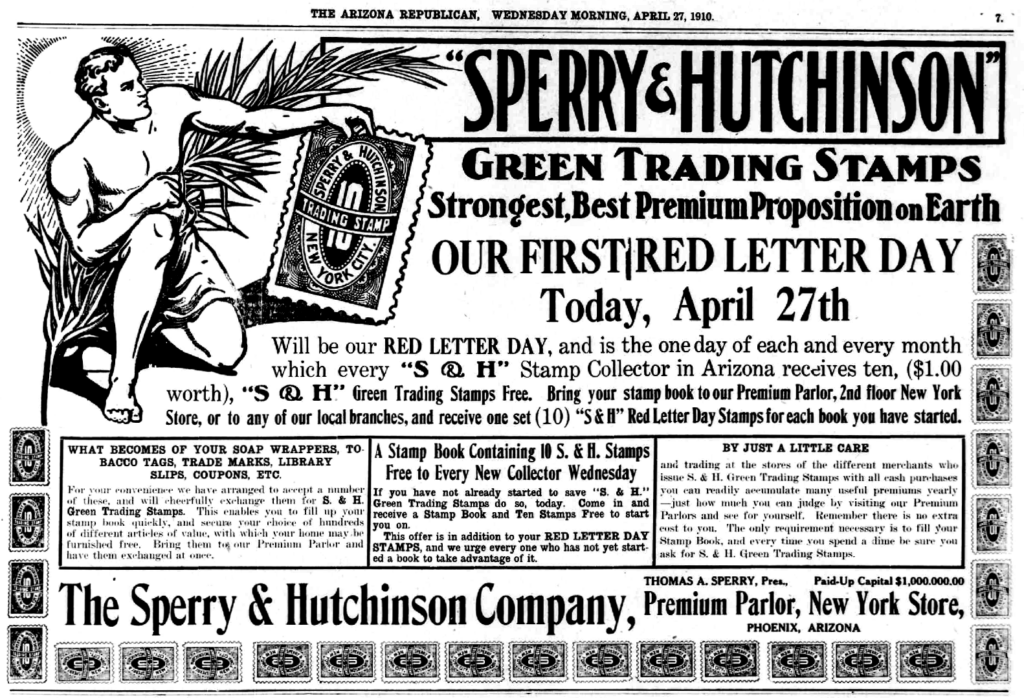
Like with any business, there were highs and lows. During the early 1930s Depression years, customers needed deals on essentials rather than rewards. Shopping to get trading stamps was a luxury that few could afford, so stores cut back on offering them. Later in the 30s, when financial conditions were easing, stores again began offer trading stamps to attract back shoppers.
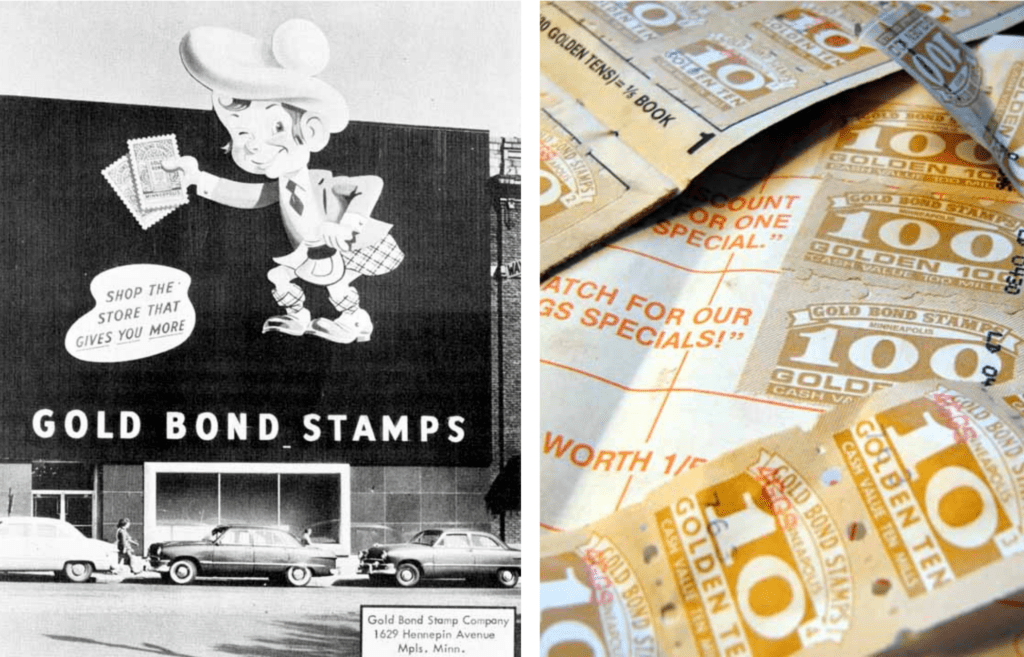
The next time trading stamps hit a low was during WWII when the government restricted their use and production, citing them as both a waste of paper and printing resources needed for the war effort. Wartime rationing meant that stores did not need to actively try to attract customers. Supply was outstripped by demand for most food commodities. When the restrictions were dropped in 1945 and consumer goods flooded back into the market, retailers leapt back to trading stamp programs and shoppers leapt back to collecting them in books.
The 1950s and 1960s were the peak years for trading stamps. How those golden days ended…we’ll get to that later.
How Trading Stamp Companies Worked
It was a simple premise. Trading store companies offered retailers a straightforward way to draw in and retain customers. Retailers purchased the stamps, giving the companies up front revenue. Stores need to buy lots of stamps because they were handed out quickly, but it took months or years for customers to fill and redeem books. That lag gave trading stamp companies millions of dollars in “float” money, which they invested.
When customers redeemed books for premiums, the trading stamp companies were also sitting in the catbird seat. They purchased the premiums people would take home at wholesale prices, but the number of books required to receive them were calculated at the retail price. Again, more profit for the trading stamp companies. The cherry on the profit sundae was the windfall from stamps that were never turned in–100% profit on those strays.
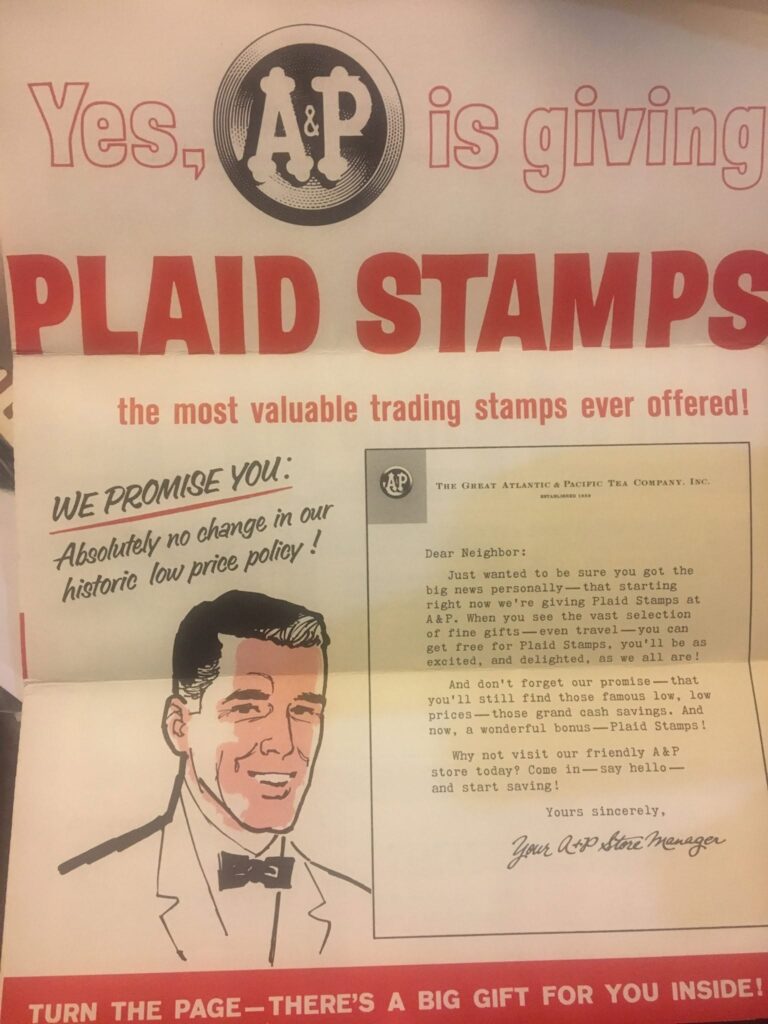
During the post war boom, many big grocery retailers decided they didn’t need a third party company getting fat on their money, so they started their own proprietary trading stamp programs. The grocery chains used the profits to reinvest in their companies and to lower grocery prices. A&P, despite being the largest retailer in America until they were overtaken by Sears in the mid 60s, partnered with Plaid stamps. They were the primary vendor of those stamps, although some small businesses also handed them out.
The Mathematics of Trading Stamps
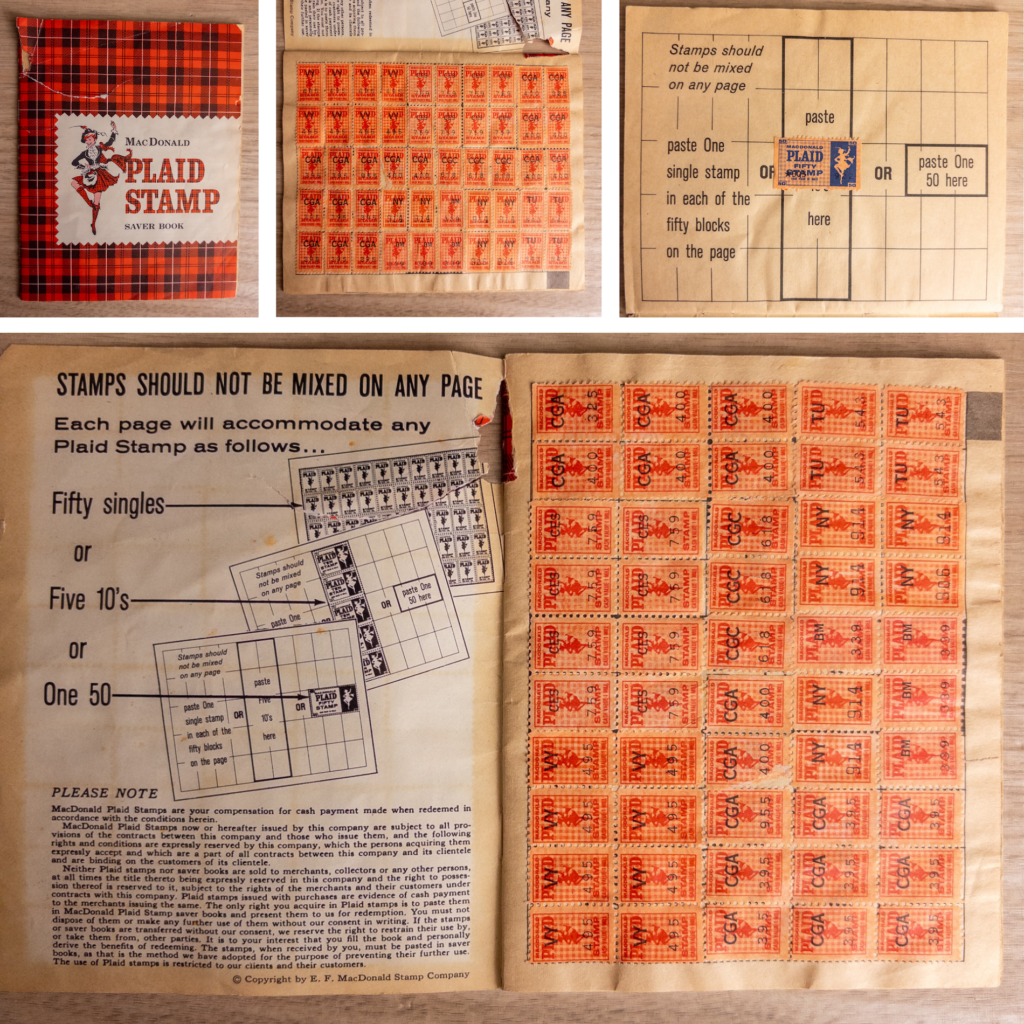
During the 1950s-1960s, on average, for every 10¢ a shopper spent, they would receive one trading stamp. Stamps came in larger denominations as well, like a 10 stamp for $1 spent and a 50 stamp for $5 spent.
Every page in a trading stamp book held 50 stamps (or five 10 stamps or one 50 stamp). Each book held 12oo stamps, meaning the shopper had to spend $120 to fill it. Obviously, this was easier to do with stamps from third party companies because you might be able to collect them from the grocery store, the dry cleaner and the gas station.
As for redeeming them, different premiums required a different number of books. With S&H Green Stamps, you could get a Blenko 9″ lace edge bowl or a set of 5 Mirro coppertone aluminum molds for 1.5 books, a Quaker TV tray set for 5.25 books, a 5-in-1 aluminum ladder for 9 books, a 2 night/3 day vacation in Washington DC for 20.25 books, a Neustadter mink stole for 135 books or a Glaspar 14′ outboard fiberglass boat for 180 books.
Using 1966 as an example, how long would it take the average household to fill one book? Here’s the data:
- the median household income was $7400
- grocery costs were 15-18% of income
- a $25 weekly grocery order would earn 250 stamps, filling 2.5 pages
That means it would take about 5 weeks to fill one book. An average family could fill 10 books a year. (It would be more than that if they were getting the same brand of stamps from multiple different retailers.)
Were Trading Stamps a Good Deal for Consumers?
Not especially. At the time, it wasn’t horrible. The return was around 2-3%, or 2-3¢ per dollar spent. Of course, that was offset by retailers charging slightly more to cover the cost of the trading stamps.
In comparison to a modern loyalty program such as Starbucks, which offers a 4-6% return, trading stamps look paltry. Compared to an independent coffee shop’s punch card where you buy 10, get 1 free for a 9-10% return, trading stamps look very skimpy indeed.
The S&H Legal Beef
S&H had a good thing going and they were aggressive about protecting it, filing for 43 injunctions and sending out 300 cease and desist letters between 1957-1965 to shut down any unauthorized use of their stamps. They went after…
- third party stamp exchanges, where for a fee, customers could either turn in their stamps for cash or trade them for a different brand of trading stamp
- retailers who were not S&H participants, such as a local dry cleaner, hardware store or independent grocer, who purchased stamps from customers and then bestowed them upon other customers as a perk
- retailers who accepted S&H stamps as partial payment for goods
- S&H authorized retailers of all sizes who broke their contract by offering more stamps for each dollar spent than was authorized, even if it was a short lived promotion
- other stamp companies who tried to get retailers to offer both S&H and their brand of stamp
The Federal Trade Commission (FTC) was unamused by this, and slapped S&H with a cease and desist, claiming that the company was trying “to suppress the operation of trading stamp exchanges and other “free and open” redemption of stamps.” The appeals court sided with S&H, saying that the FTC didn’t prove that S&H violated either the spirit or the letter of anti-trust laws.
In 1972, the case wound up in the Supreme Court, which unanimously sided with the FTC in what is considered a landmark ruling. The court decided that the FTC’s power was not restricted to “technical antitrust violations.” According to the court, the FTC had the power to define business practices as unfair if they harmed consumers or public welfare, even if whatever the company was doing was technically legal based on antitrust frameworks.
To this day, a three factor test for deciding if what a company is doing constitutes unfairness is called the “S&H factor.”
What Was the Downfall of Trading Stamps?
By the early 1970s, trading stamps started to lose their luster from over saturation. The 1973 Oil Crisis and crushing inflation were the final nails in their coffin. Shoppers didn’t want stamps, they wanted low prices. Supermarkets took the money they had spent on trading stamps and used it to both lower prices and to promote lower prices. Coupons rose in popularity because they offered immediate rewards instead of delayed gratification. Discount stores like Walmart were becoming more common.
About 25% of trading stamps were given out by gas stations. Gas shortages and gas rationing ended their trading stamp programs.
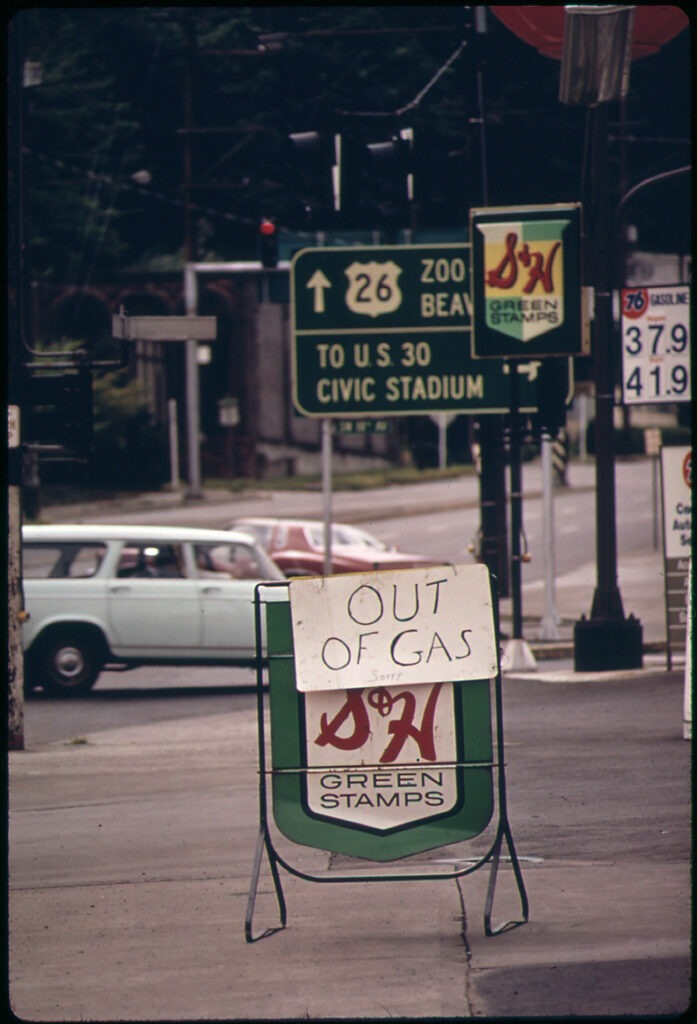
Consumers were also more savvy by necessity. Wages stagnated. Your money had to go farther. Stores answered this by offering “generic” products that cost 10-15% less. Unit price labeling appeared on shelves, so shoppers could compare prices among different brands and different sizes. Shoppers also stopped being as strictly loyal to one store as they had been before because they wanted those stamps, and might visit multiple stores to get items that were on sale. Smart shoppers knew they were getting good deals in real time, and that was better than getting a set of TV trays in a few months.
Some of the companies straggled on. S&H Green Stamps, the biggest and baddest of all the trading stamp companies, survived until 2000. They pivoted towards smaller retailers, grinding it out through the 1980s-1990s. Then they became a digital rewards program in 1999, S&H Green Points, which lasted until 2020.
The last surviving physical trading stamp company was Eagle Stamps, which finally shuttered in 2008. A smaller regional stamp brand centered in Missouri and Illinois, Eagle was part of the May Department Stores. Instead of big supermarket chains and national retailers, who were clobbered financially in the 1970s, Eagle Stamps were distributed by smaller independent retailers that weathered the situation better. May Department Stores ended the stamp program in 1989, but allowed customers 10 years to redeem their stamp books for cash or merchandise.
Yes, but is it Art?
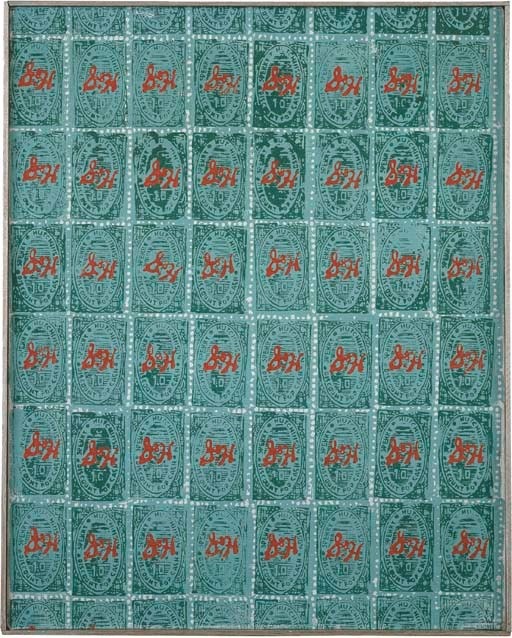
Inspired by time spent pasting S&H Green Stamps into books with his mother, Pop artist Andy Warhol created “S&H Green Stamps (64 S&H Green Stamps)” in 1962. It sold at Christies for $5,168,000 in 2006.
Read more:
Blue Chip Stamps were integral to Warren Buffett and Charlie Munger being able to buy the foundation companies of what became Berkshire Hathaway. Read about that here.
Get more details of the FTC vs S&H here.
A&P stores offered the E.F. MacDonald Company Plaid Stamps from 1961-1972, scrapping the program to go with a “Where Economy Originates” marketing campaign. In 1978, they threw a Hail Mary pass and introduced Gold Bond and S&H Green Stamps in a quarter of their 1800 stores. Read about it here.
A writer’s personal reminiscence from the Lehigh Valley Press, S&H green stamps – a fond walk down memory lane.