This week’s fresh to market vintage introduces you to the Cadogan teapot, a quirky parlor trick that was popular in England during the Regency era from 1800-1850. Teapots have two openings, right? A lidded hole in the top where the water and tea goes in and the spout where the tea pours out. But what if a teapot looks like it only has one opening, the spout? How did the tea get in there?
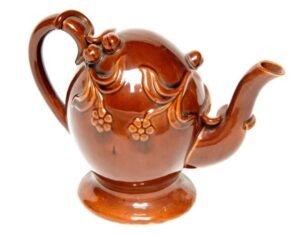 It was quite simple, there’s a hole in the bottom with a tube connected. Tea is brewed in a traditional teapot and poured into the Cadogan through the secret hole. When the teapot is flipped, the tube is above the waterline so nothing leaks out. Teatime guests are amazed by the magical novelty teapot that shouldn’t be able to make tea, but does.
It’s called the Cadogan after Lady Cadogan, owner of a Song Dynasty peach shaped wine vessel that inspired British potters to make the teapots. Rockingham was the most noted maker during the Regency era. The Rockingham earthenware pot to the right was made during that period.
As to why the form was reproduced for the export market in the 1920, one can only guess that antiques from the Regency era were popular at the time, so Japanese exporters were offering decorative, more affordable alternatives to the real thing.
The other picks in this week’s fresh to market vintage aren’t as mysterious, but they are very nice indeed. Off we go!
Ceramic Teapot, Marked Japanese Export c 1920s
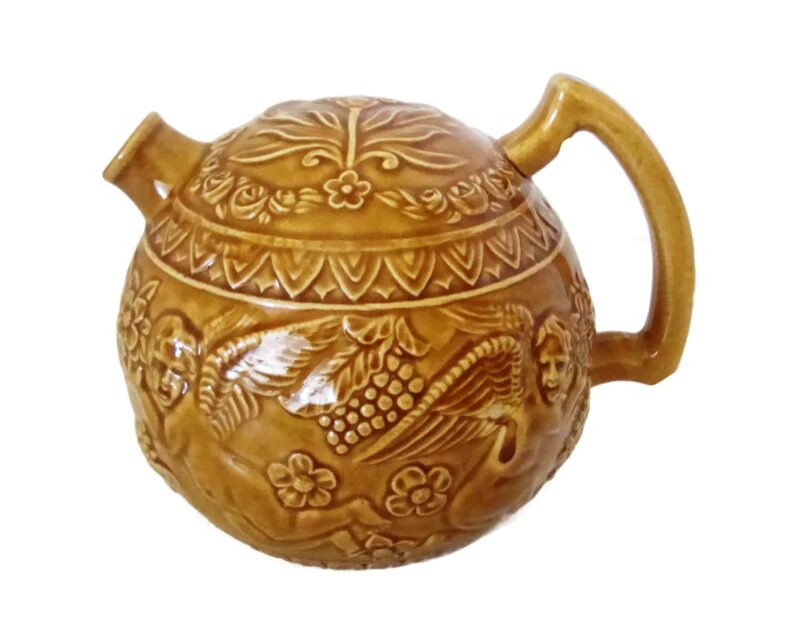
I’ve owned this piece for years and hadn’t given much thought to its purpose until recently when it dawned on me there was no way to fill it other than through the spout which made it a very ineffective teapot. I asked my VU sisters if they had an idea about its purpose and like true vintage sellers, they were delighted to help research it. The conclusion we came to is that it is a decorative piece made as an export to the American market in the 20s (based on the back stamp) and that it was designed along the lines of a Cadogan teapot (sans a hole in the bottom) but was not intended to be used.
This is educated speculation on our part, so if you have any thoughts on the purpose of this mysterious teapot, please let us know.
Vintage Ceramic Teapot, Gold Floral Cherub Design, $55
Linda, Selective Salvage
Flower Power Enamel Brooch
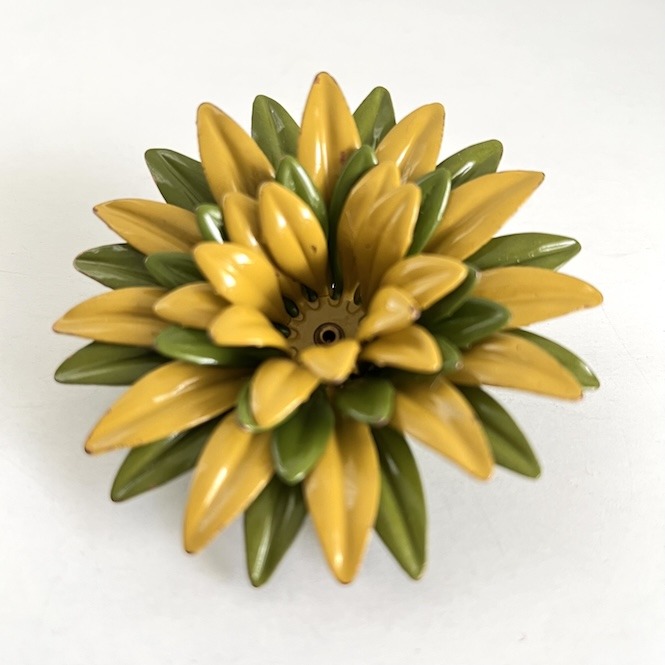
If you lived through the 1960s you may understand the term “Flower Power.” If not, you may wish to subscribe to our blog if you haven’t already as we have an upcoming story all about flower power jewelry, and where the term originated. Meanwhile, you might enjoy this oversized mustard yellow and olive green flower power brooch that is indicative of the era.
1960s Flower Power Brooch, $ 32.95
Pam, Vintage Renude
1980s Homco Faux Rattan Mirror
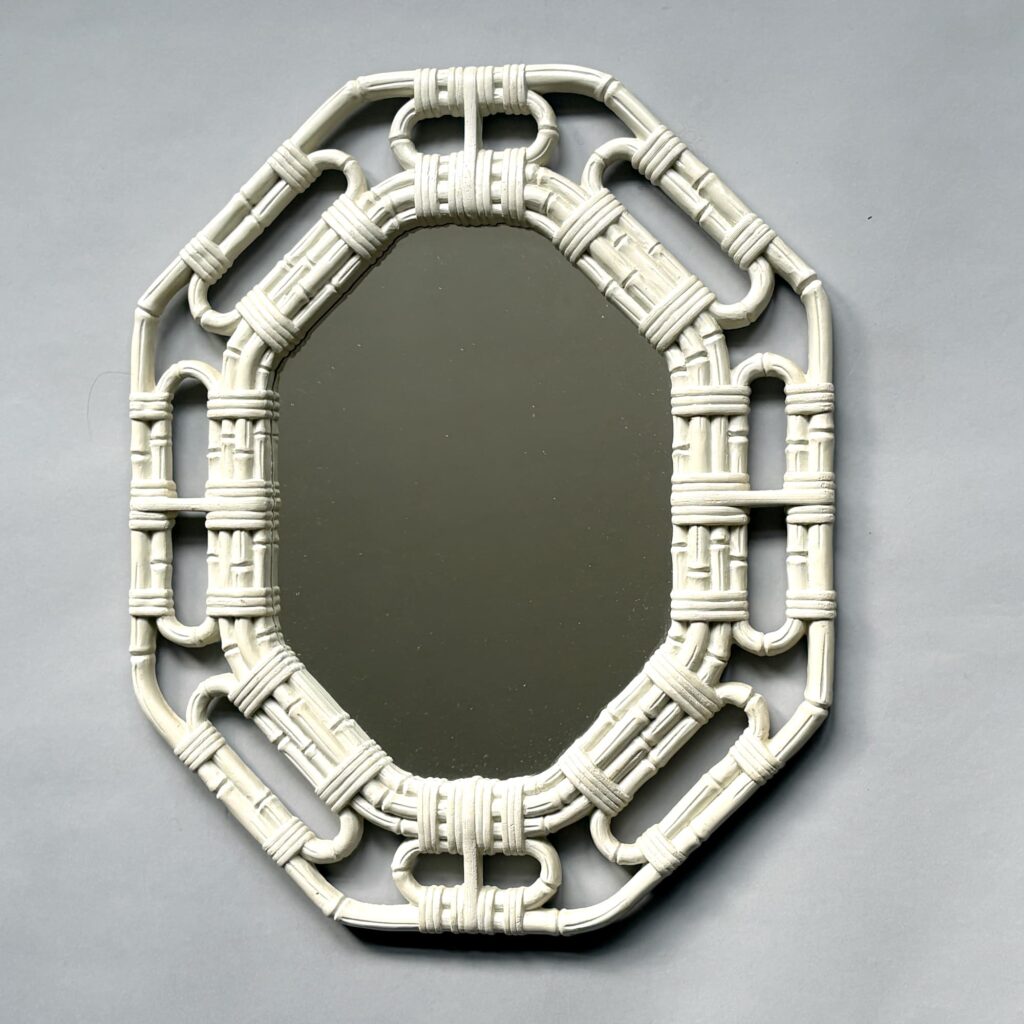
Little decorative mirrors can be useful helpers. Hung by the door, they help you put your best face forward when you emerge from your burrow for the day. Hung in a dark corner, they add reflective light.
This little faux rattan mirror is by Homco. Homco was a home party business, founded in 1957 by a single mother, Mary Crosby, in Carrollton, TX. The home party salespeople, called “displayers,” showcased Homco decorative and tabletop products, keeping about 60% of their sales for their efforts. Homco rode the wave of home party sales popularity through the 70s into the early 80s. But times change. Mary passed away in 1987. The company was sold shortly after, went bankrupt in 2008 and slowly fizzled its way to obscurity.
Homco White Resin Faux Rattan Accent Mirror, $29.
Laurie, NextStage Vintage
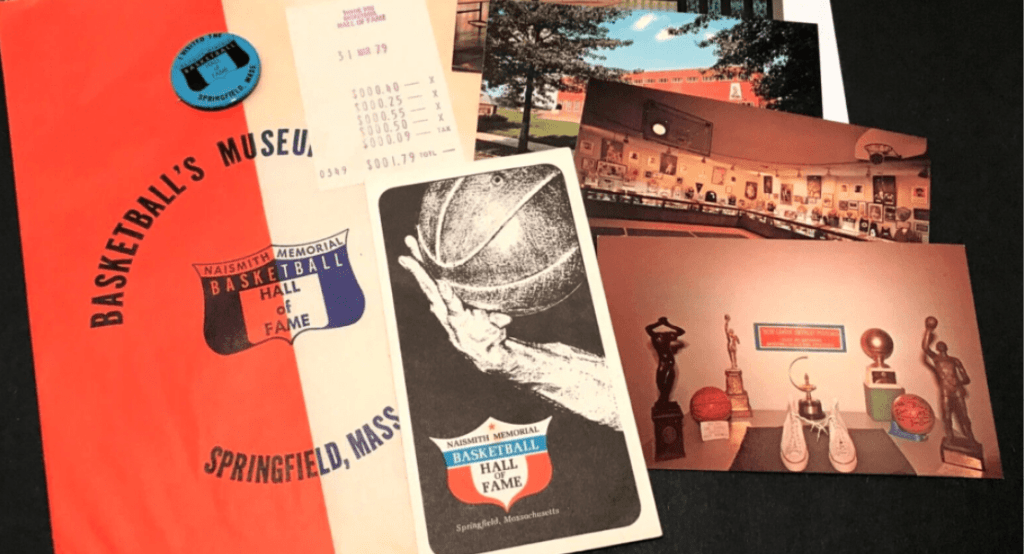
1970s Basketball Hall of Fame Souvenirs
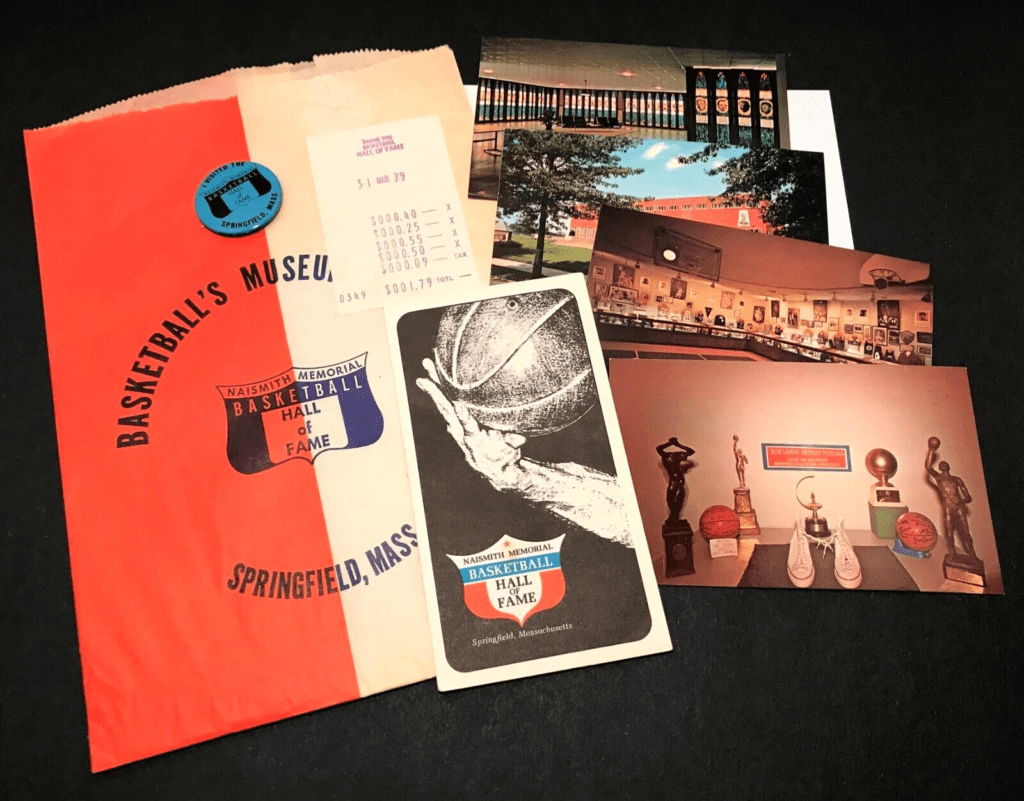
A trip to any hall of fame is to stand among excellence. The Naismith Memorial Basketball Hall of Fame in Springfield, MA, is no exception. Why Springfield? Because in 1891, Dr. James Naismith, a PE instructor at what was then the YMCA International Training School and is now Springfield College, nailed a couple of peach baskets to the gymnasium balcony, handed students a soccer ball and basketball was born.
There have been three homes for the Naismith Memorial Basketball Hall of Fame. Originally opening on the Springfield College campus in 1968, it moved to a spot on the Connecticut River in downtown Springfield in 1985. A newer bigger hall of fame was built adjacent, opening in 2002.
This souvenir collection from the 1970s is a time capsule, from the postcards of the original displays (Detroit Pistons Bob Lanier size 22 Chuck Taylor sneakers!) to the cash register receipt printed in purple ink. There’s something sweet and pure about the fact that the memorabilia was so treasured it was kept safe in the original bag for so many years.
Vintage 1970s Basketball Hall of Fame souvenir lot, $ 14.99
Available from this week’s guest, jerzee908
That’s this week’s fresh to market vintage. If we were writing a fiction, we could have you check that your flower power pin is positioned properly in the little mirror because you’re off for a special day at the Basketball Hall of Fame. But here at Vintage Unscripted, we don’t write fiction. We write our non-fiction posts about vintage things that we wanted to know more about.
Don’t miss one of our posts! Subscribe to our email newsletter. You get one email a week with links to all the posts from the previous week. And you can be sure that your info is marked safe from spam with us–we would sooner wear our pillbox hat askew than share your information.