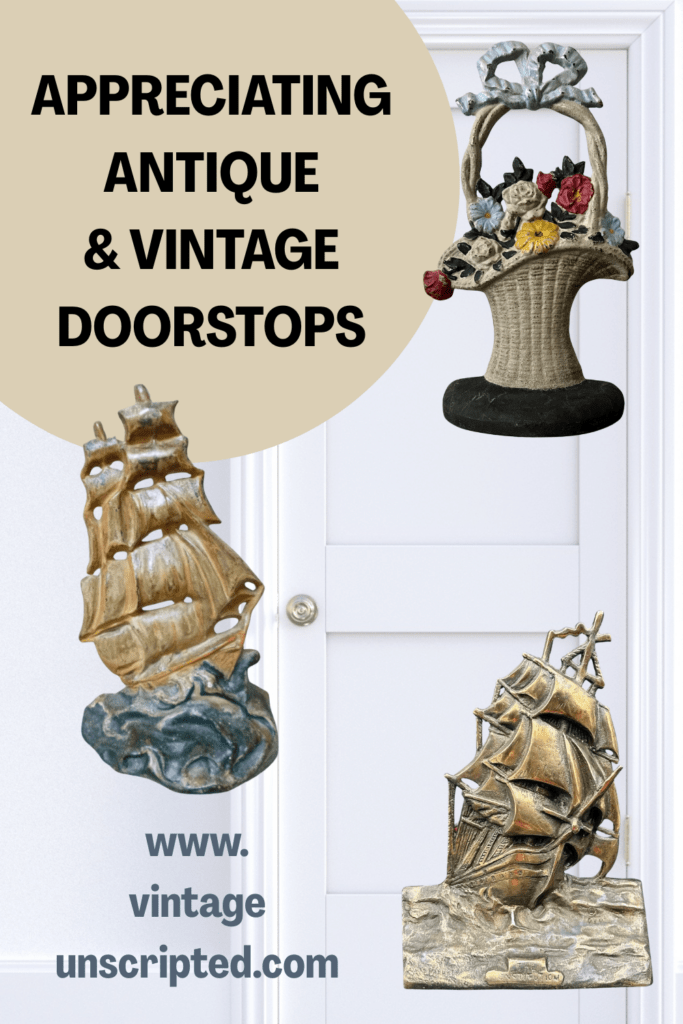
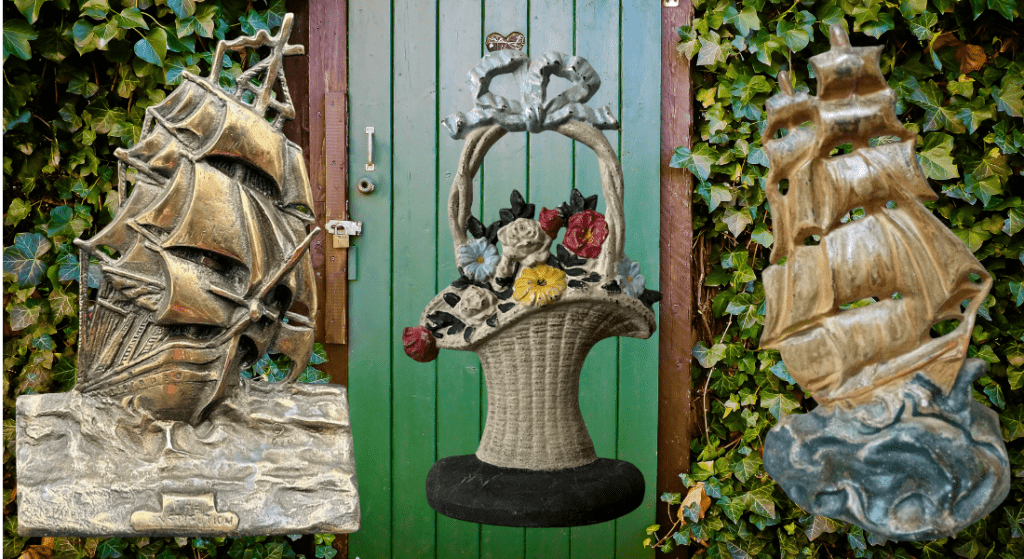
Some items are timeless collectibles, one of those being antique and vintage doorstops. Originally appearing in England in the 1700s, doorstops evolved over time from heavy rocks to decorative cast metal designs. The heyday of doorstops in the United States was between 1900 and the 1930s.
During the 1930s, many of the company’s products were switched from cast iron to zinc alloy. The metal was poured into hand made molds and then finished by hand, including being sanded and painted individually. There were several manufacturers in the U.S. making cast iron doorstops. Well known manufacturers included: Hubley, Bradley & Hubbard, Wilton Products, Albany Foundry, and A.M. Greenblatt.
Hubley
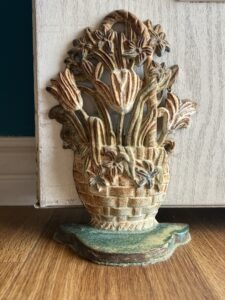
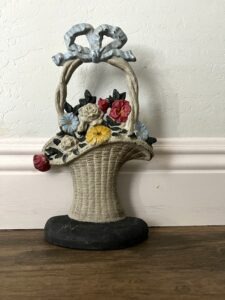
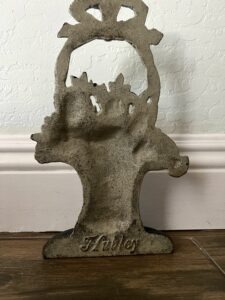
The most well known was Hubley, based in Lancaster, Pennsylvania. The company began in 1894, founded by John Hubley, and was known for manufacturing cast iron toys, book ends and doorstops. Hubley was purchased by Gabriel around 1969 and eventually ceased to exist. Most Hubley doorstops have the company name molded into the back. Their most popular designs were flower baskets.
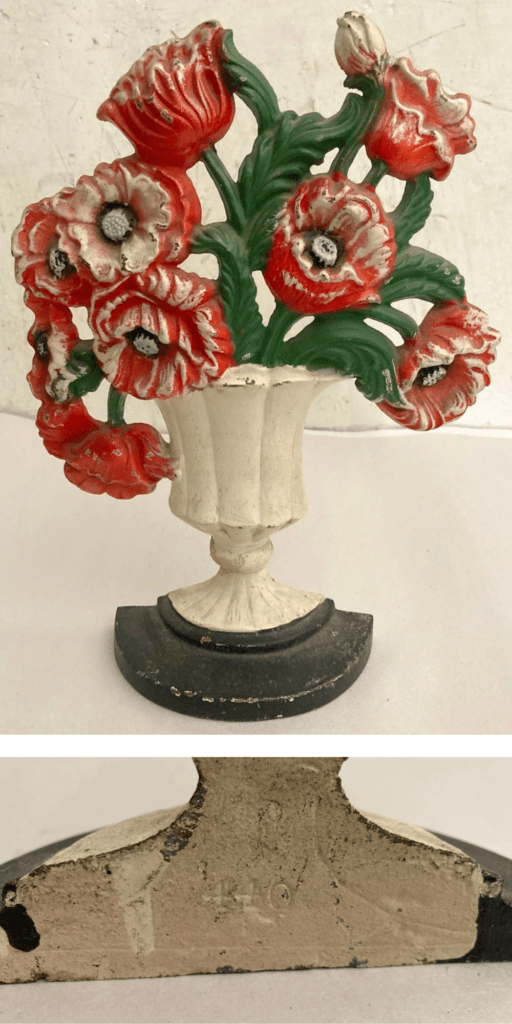
Hubley Poppy Vase doorstop, #440, available from DRV Antiques, $165.
Bradley & Hubbard:
Bradley & Hubbard began business in 1852, making kerosene lamps, clocks, match safes, and other decorative metal household objects. Many of the company’s doorstops featured domestic animals, such as birds, dogs, cats, and roosters. Bradley & Hubbard doorstops can be identified by the company mark on the back of a circle with B&H in the center. The company was well known for its line of lamps more so than their other objects. The business was purchased by the Charles Parker Company in 1940 and eventually shut down due to the war effort, as the need for manufactured metal changed.
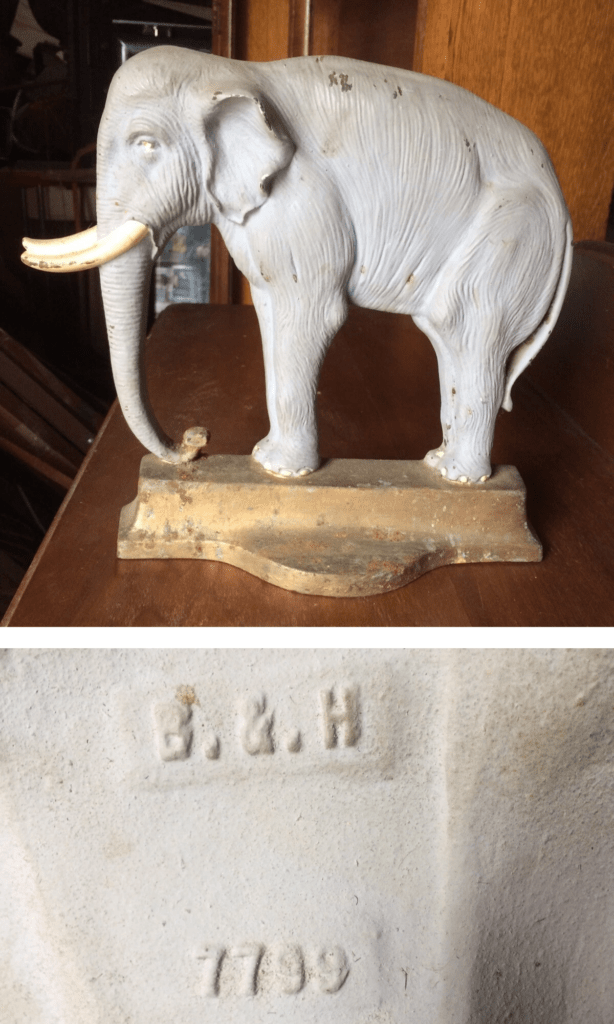
Bradley & Hubbard elephant doorstop #7799, available from Sloan’s Antiques, $675.
Wilton Products
Wilton Products began life at the Susquehanna Casting Company near Wrightsville, Pennsylvania. Ralph Wilton began working for his uncle in 1892, manufacturing cast iron products sold to other companies. He soon began his own business painting and selling many of those items. Wilton was known for trivets, ashtrays, and door knockers as well as doorstops. Today the company is known as Wilton Armetale, although they closed in 1989. Wilton products of Pennsylvania is not affiliated with Wilton the cake decoration company.
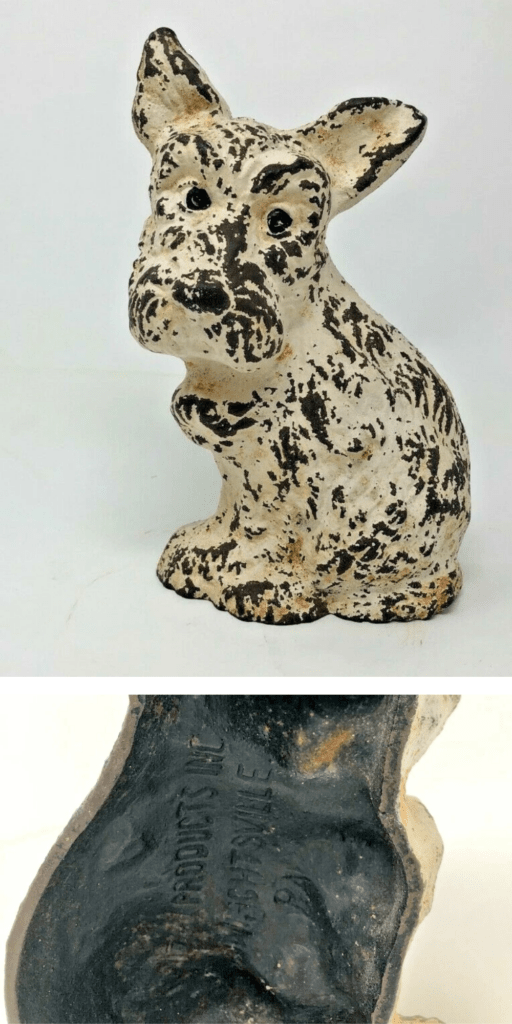
Wilton Products Sad Scottie Dog doorstop, available from thecopperwreath, $99.
Albany Foundry
Albany Foundry, based in Albany New York, differed from some of the other companies making cast iron products in that they very often did not paint their items. Their items were often sold with instructions to “paint your own”. The company started out in 1897 as a stove manufacturer, then expanded into bookends, andirons, candlesticks, doorstops, and other items of cast iron. The company was in business until 1932, when the small island it was on became part of the Port Authority of Albany. The island no longer exists as the channel has been filled in.
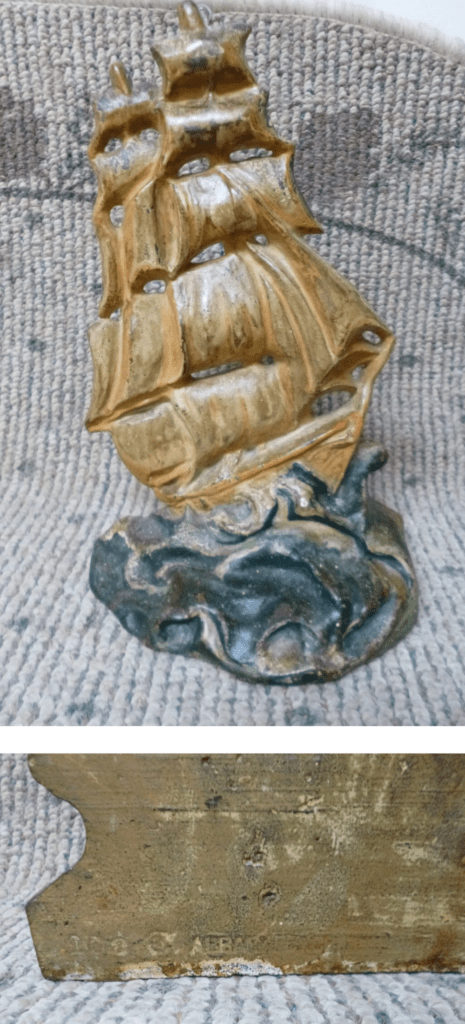
Albany Foundry Clipper Ship doorstop, #108, available from Cotton Valley Antiques. $145.
A.M. Greenblatt
A.M. Greenblatt studios opened in 1924 in Boston, Mass. They were known for high quality and beautifully painted doorstops. Along with the standard flower basket designs they made a variety of frigates, lighthouses, and animals. Items were usually marked with the company name and date of manufacture. The company closed in 1948.
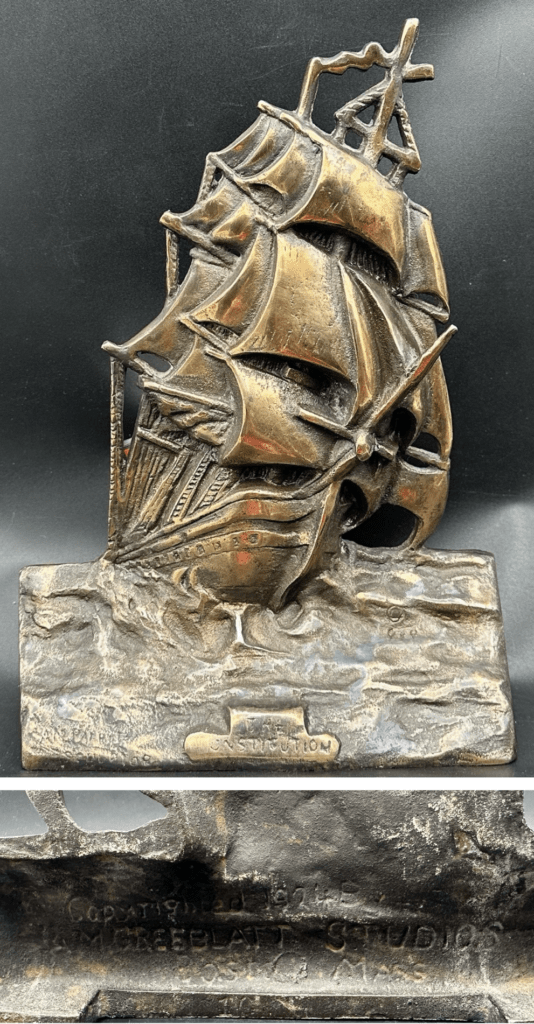
A.M. Greenblatt USS Constitution doorstop, available from Duo of Great Discoveries, $59.95
There were many other lesser known or smaller companies making cast iron or brass doorstops. While the larger and better known companies are easier to identify, many were never marked or made in small quantities which became much more difficult to find over time. While most doorstops are single sided similar to the look of a single book end, others were molded in two pieces and held together by screws or bolts. These can be identified as originals by the single slotted screw as opposed to the more modern reproductions which usually have Phillips head screws.
Reproductions
There are many reproductions available on the market, often made overseas and not as detailed. When shopping for authentic doorstops look for signs of new paint rough edges and wear inconsistent with normal use, such as paint wear in areas not normally coming in contact with other surfaces. Also check for weight that feels too light for the object’s size. You can also check online for similar designs or makers’ marks from known factories. The website Doorstops.com, although rather primitive by today’s standards, contains a wealth of information on antique and vintage doorstops, including photos, maker’s marks, and factory information.
As collectors and sellers, we have written about various collectibles over the years. You can find some of those articles here.