Collecting vintage medicine packaging is part curiosity, part nostalgia. Collectors like mid century packaging for over the counter drugs like the blue bottles with labels for Bromo Seltzer, Phillips’ Milk of Magnesium and Vick’s VapoRub, the small hinged tins for Anacin, Ex-Lax and Sucrets, and the instantly recognizable clear Alka-Seltzer and Listerine bottles. But older medication packaging, like the Cramp Bark in this week’s fresh to market vintage, is like catnip to pharma-collectors.
Whether it’s the antique embossed bottles, like the Osgood’s India Cholagogue bottle we wrote about, or the tins with the awesome graphics, like the Parke Davis Cramp Bark tin, antique medicine packaging is intriguing. Some packaging has wild claims that it cures cancer, tuberculosis, diphtheria, shattered nerves, female irregularities, generalized debility and just about any other ailment. Common ingredients included alcohol, cocaine, morphine and opium, none of which cured you but did make you forget you were hurting. After the Pure Food and Drug Act of 1906, drug companies had to list their ingredients, which helped. But oh those packages from before the law…
The Parke, Davis Cramp Bark tin claims it could treat cramps, cancer and scurvy, a wide range of ailments. While the claims about cancer and scurvy are suspect, it is actually still used as a herbal remedy to treat painful menstruation cramps and to relax muscles. We’re not suggesting you run out and get some, but it’s always interesting when an antique medication still has modern uses.
We would however, suggest that you mosey your way down through all of this week’s fresh to market vintage.
Hand Painted Floral Copper Cuff Bracelet
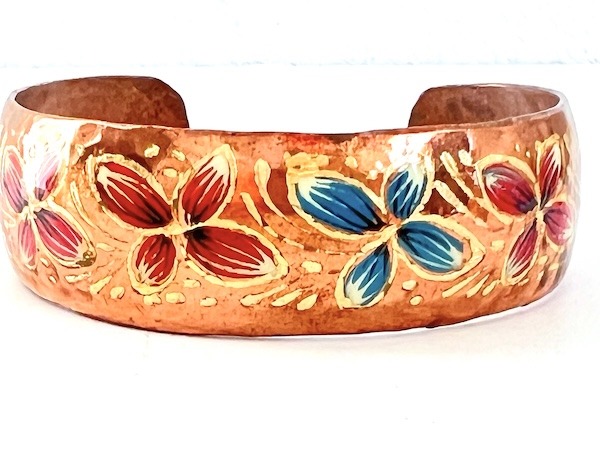
There are folks who swear wearing copper helps with ailments such as arthritis, although so far there is no evidence of such. Beyond that, copper has been used to make jewelry for ages. This pretty bracelet is painted with colorful flowers that work well year-round, but are especially suited to spring. The bracelet is a cuff and therefore is adjustable to fit many sized wrists. It would make a fun addition to a spring wardrobe.
Flower Copper Bracelet, $31.95
Pam, Vintage Renude
Antique “Parke, Davis” Cramp Bark Tin
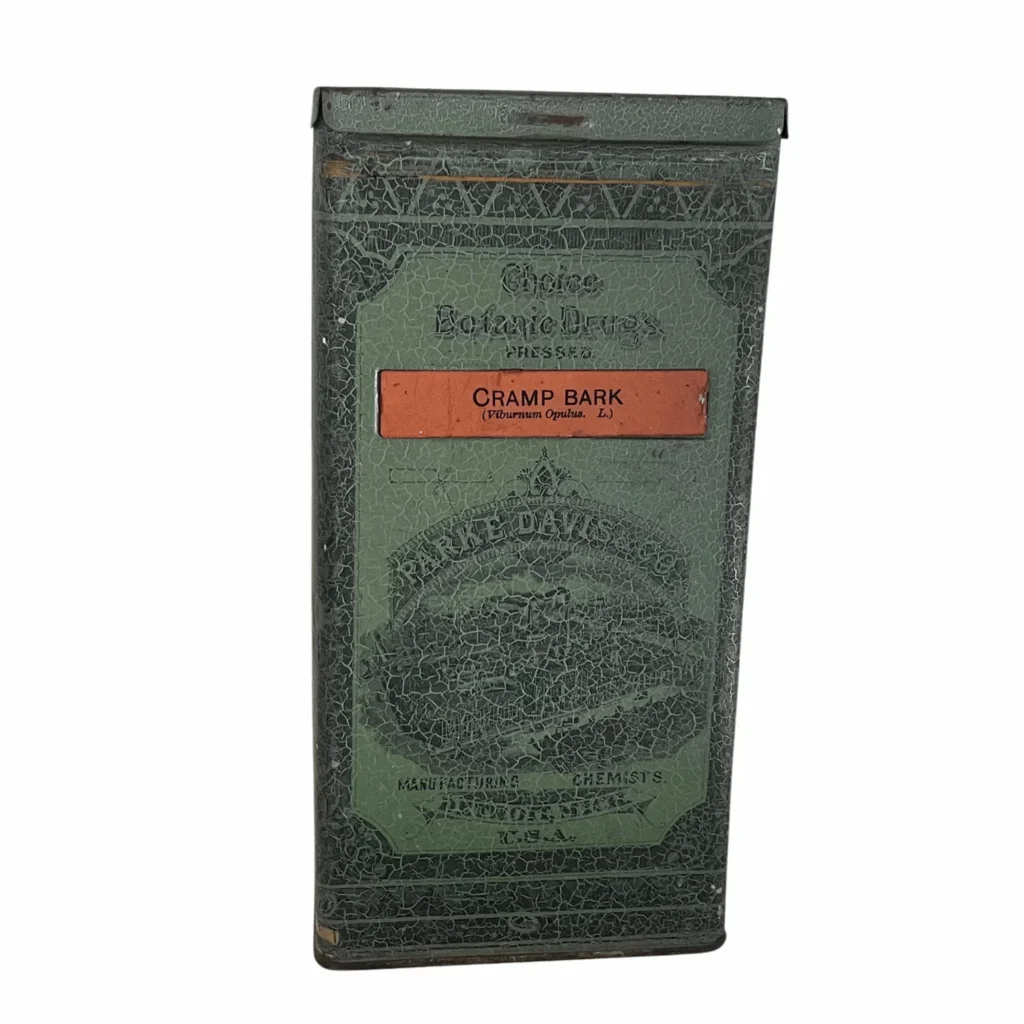
Founded in 1866, Parke, Davis, now a subsidiary of Pfizer, was once the world’s largest pharmaceutical company. It is credited with building the first modern pharmaceutical laboratory and developing the first methods of performing clinical trials of new medications. This tin once held the bark of the flowering shrub Viburnum opulus, which was used to treat cramps, inflammation of the uterus, cancer and even scurvy. There remains no scientific proof to support these uses, but to a modern-day tin collector, the contents are not the point.
Antique “Parke, Davis” Store Tin, $125
Linda, Selective Salvage
1992 Laurel Burch Kindred Spirits Cats
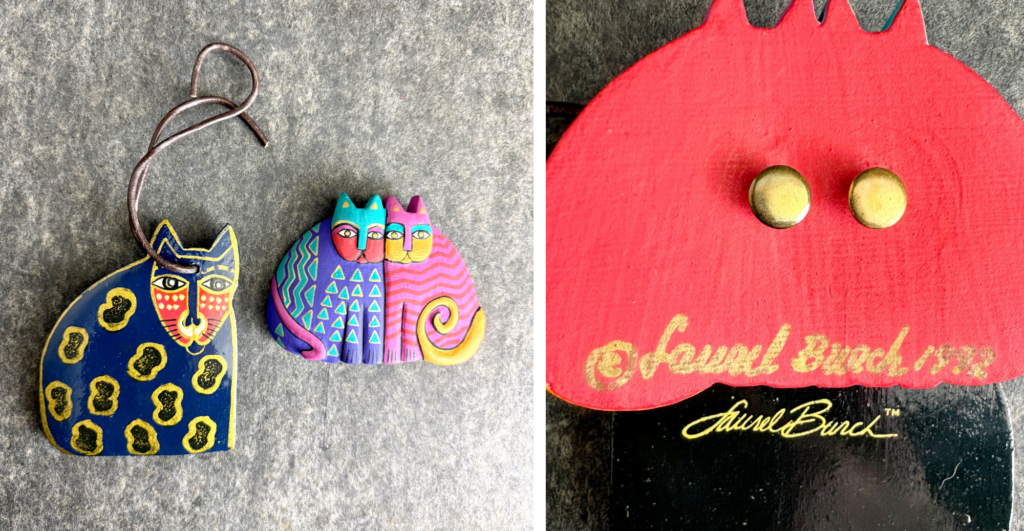
Those days when something routine turns out to be something magical are very good days. These two Laurel Burch cats are not the same. The one on the left is a commercially produced cat and probably hung as “jewelry” on one of her early mass market backpacks or tote bags. It has a stamped signature.
The other piece, the pair of cats, are from her hand painted Kindred Spirits line, hand signed and dated in gold marker by Laurel Burch. Not commercially made. Not mass market. Something she touched with her hands. I’m not quite sure what it was used for, the hardware on the back is a puzzle I have not solved, but it’s possible it was originally on a tote bag as part of the clasp.
Laurel Burch was in a transitional period in the early 90s, from handmade artist to commercially successful designer/artist. Finding these two pieces that illustrates that transition was the kind of vintage magic that feeds the vintage lover’s soul.
Handmade and Commercially Made Laurel Burch Cats, $75.
Laurie, NextStage Vintage
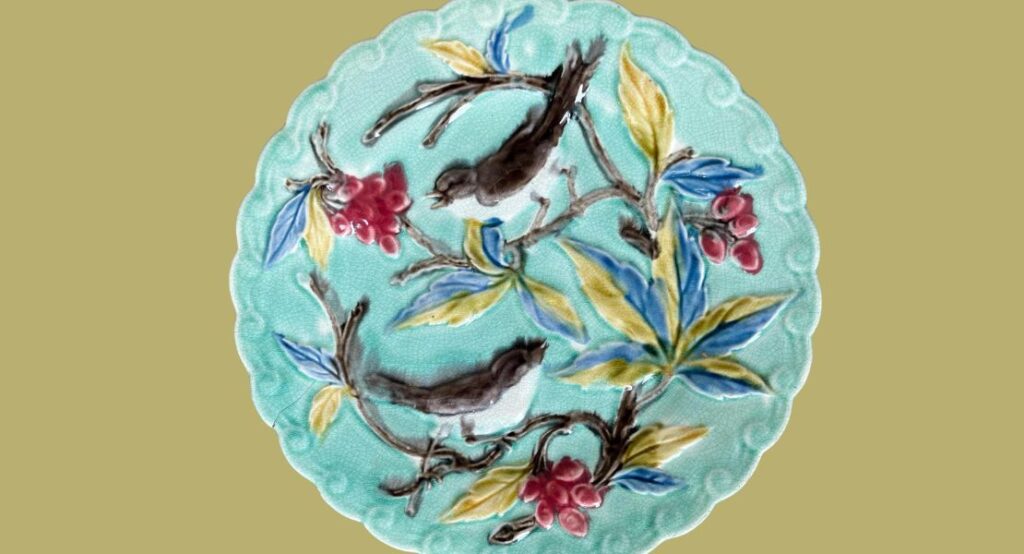
1900s Birds Botanical Majolica Plate
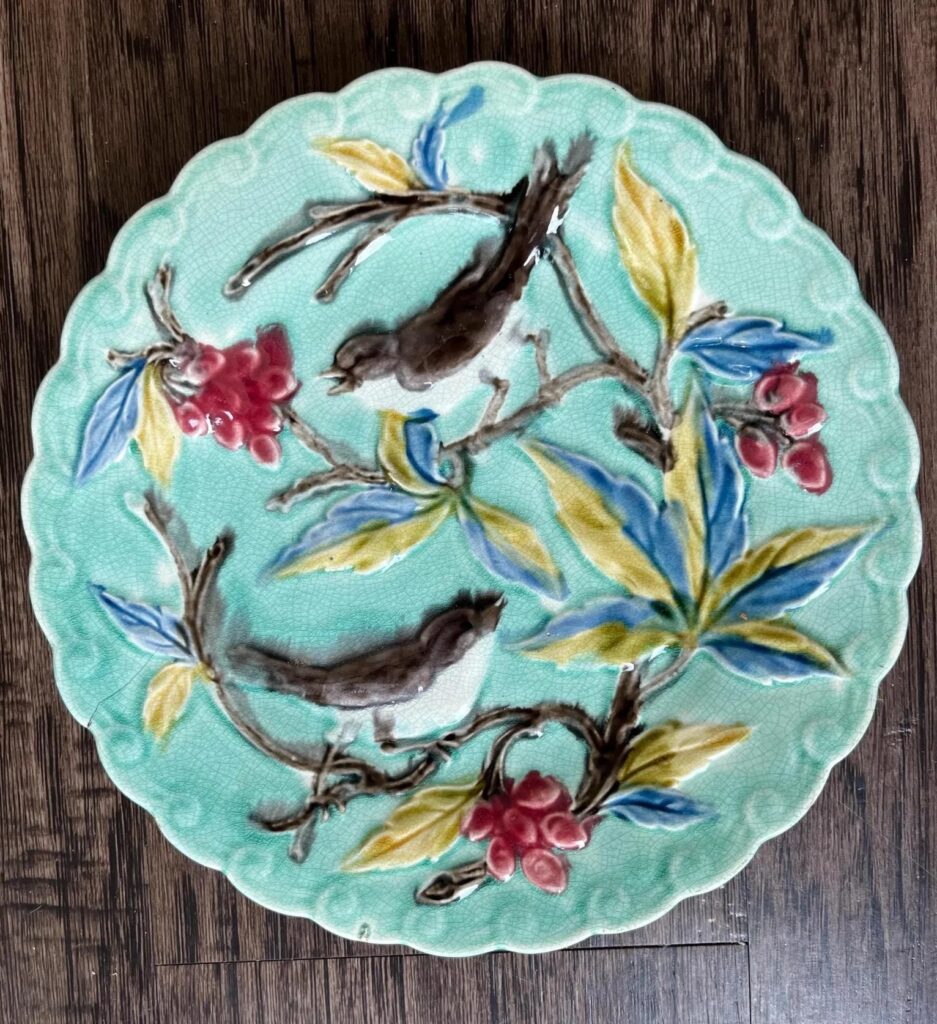
Ah, that sweet time between cold winter and scorching summer when you can open your windows and hear the birds. This antique French majolica plate from the early 1900s brings that feeling inside. Hand painted birds on that perfect spring colored background; how perfect.
The Victorians loved their majolica back then, we love their majolica now. Majolica is earthenware with a white tin oxide glaze that makes the bright colors pop. Victorian majolica often has bold sculptural elements like plants and animals that are painted with thick glossy bright colors. The pieces can be whimsical and also ornate, in shapes like leaves, botanical shaped teapot and idiosyncratic tableware like asparagus servers and oyster plates (which are scorching hot as a collectible now). They also loved decorative majolica like jardinieres and umbrella stands.
As this week’s guest seller Coco suggests, Victorian majolica is best used for decorative purposes and not as tableware. Lots of the glazes had lead, and other colors that may be exposed through crazing contained such delicacies as cadmium and antimony.
Early 1900s French Majolica Birds Botanical Plate, $89.99.
Available from this week’s guest Coco, Fern Finds Vintage Shop
Some people believe in the healing power of copper or the medicinal power of cramp bark. But we hope everybody believes in the restorative power of true vintage. There’s nothing better for the soul than seeing something that makes you nostalgic or something that makes you squeal at its old time design.
We aren’t going to make the claim that reading Vintage Unscripted has curative powers, but we do know checking out current posts is an excellent way to escape reality for a few minutes. The best way to schedule that escape is to subscribe to our email newsletter. You get one email a week with links to all our posts from the previous week. And cross our heart, we would sooner rip a giant bandaid off our hairy leg than ever share your info.