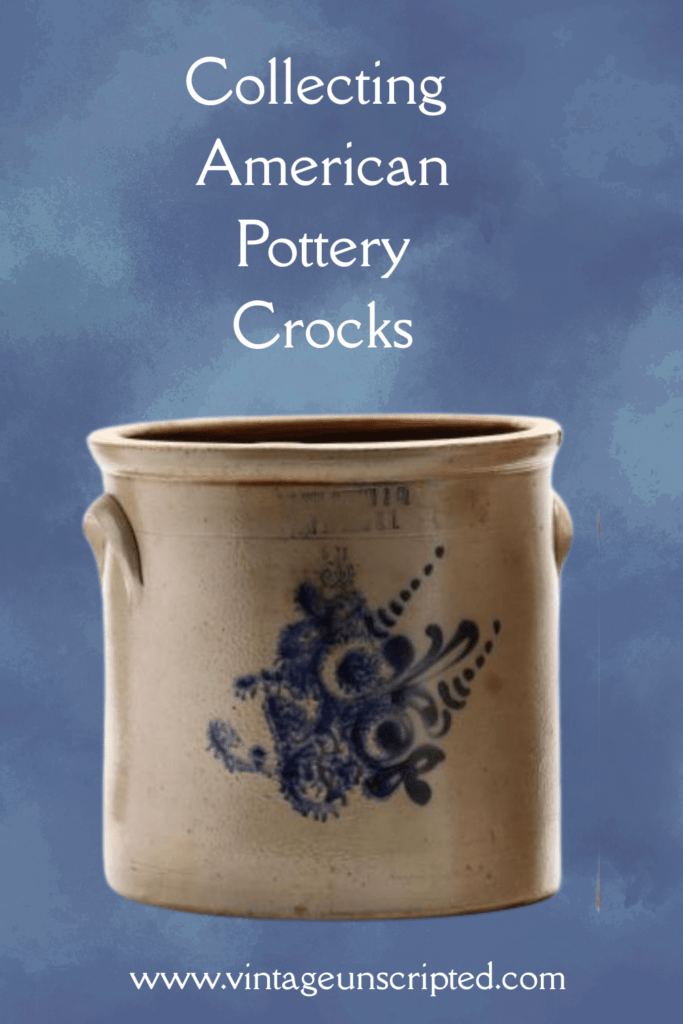
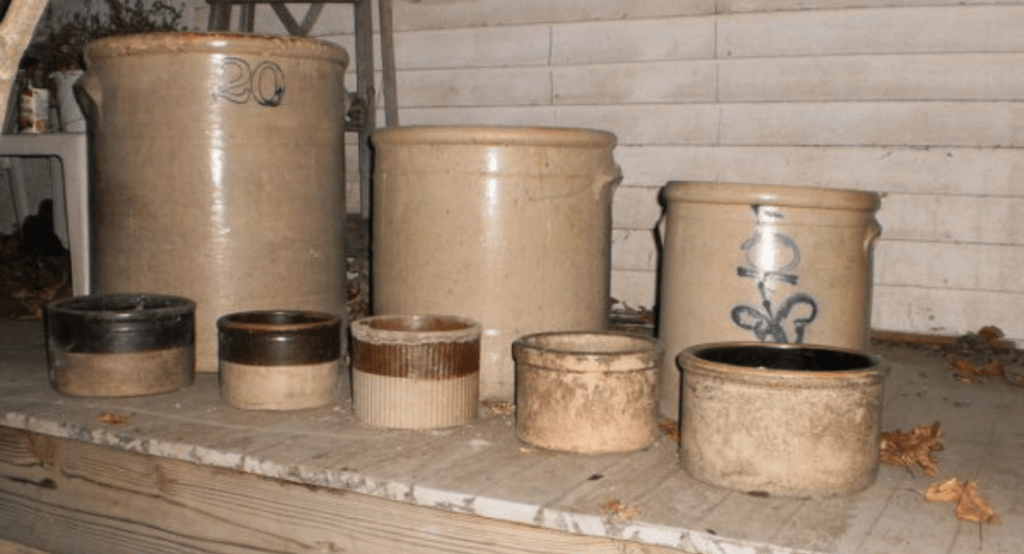
Pottery crocks, as opposed to the popular foam shoes of a homophonically similar name, have been around for thousands of years. Stoneware or clay pottery was used as storage for centuries and is still used today. There are many benefits to using pottery crocks. Besides their decorative value, they hold steady temperatures more efficiently than glass or plastic, are sturdy, resist wear and tear easily, and tend to be decorative as well as useful.
In ancient times, crocks were used to hold liquids such as wine, oil, and water. They were a way to keep spices from the elements, preventing degradation due to sunlight and critters. Most crocks had lids to keep out the elements as well as maintain freshness prior to refrigeration. You may notice that some pottery crocks have unglazed lower halves while the top portion is glazed. Crocks made that way were meant to be partially buried underground in cellars. The colder earth helped to preserve food for longer periods of time.
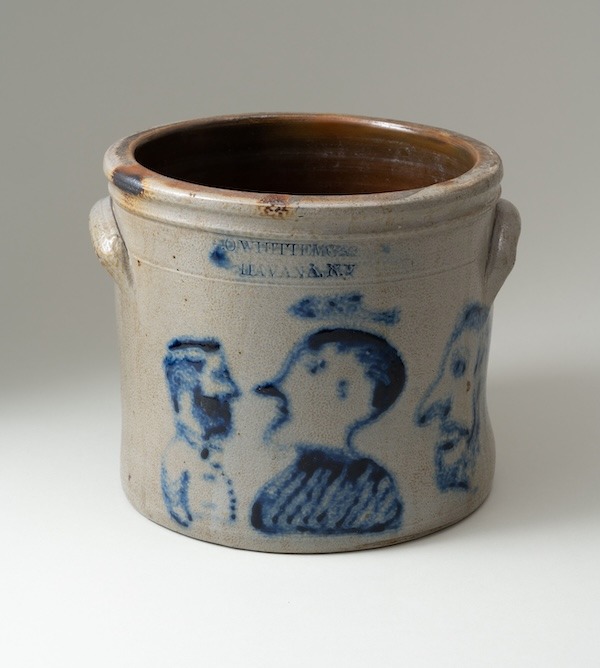
In previous centuries, larger stoneware crocks were used as storage for things such as grains, molasses, flour, pickled vegetables, butter, preserved meats and, of course, liquor. While clay pottery was common throughout Europe and Asia for centuries, crocks came to America in the latter part of the 18th century. Along with other pottery, the manufacture of crocks around the country flourished. Anywhere that good quality clay could be extracted from the earth you might find a pottery works nearby.
American pottery crocks can be found in different parts of the country. Each area created their own signature styles based upon the type of clay in local regions and intended usage. In farming areas, crocks were used as storage for corn, wheat, oats and other crops. In other parts of the country, ,jugs were made to store vinegar, liquor, water and other liquids. There was a plethora of butter crocks and pickling barrels as vegetables.
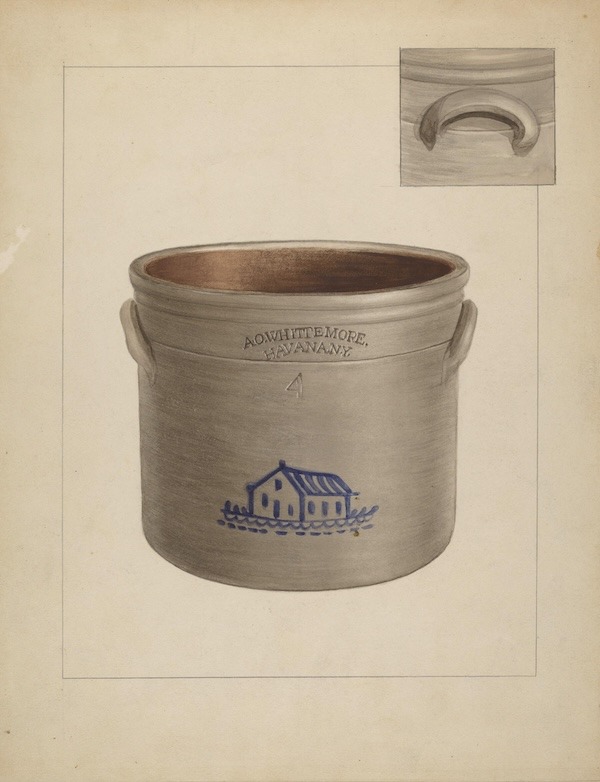
The New England area was known for salt glazed crocks. Salt glazing is a technique where large amounts of salt are thrown into the kiln during firing to create a glaze, making the pottery impermeable and giving it a glossy finish. Norton Pottery began in 1785 and remained in the same family until 1894, at which time the final descendant owner passed away and the business closed. Edmands Pottery was a Massachusetts company begun in 1812 by Barnabus Edmunds and William Boroughs. The company was one of the largest in the area and remained in business until 1905.
Monmouth Pottery based in Illinois ran from 1894 to 1906 and created a variety of styles from salt glaze to Bristol and Albany slip glaze. The company was folded into the Western Stoneware Company along with several other companies. Western Stoneware is a group of otherwise independent potteries and remains in business today.
In 1900, the Ransbottom Pottery company opened their doors and began producing stoneware and pottery. By 1916, they had become the largest producer of pottery and stoneware in the country. 1920 brought a partnership with Robinson Clay products, a company that made bricks and tiles. Their blue crown marking on Robinson Ransbottom crocks make them easily identifiable. The company remained in business until 2005.
Probably the most well known name in crockery is Redwing Stoneware in Minnesota. The company began in 1877. The area, originally named after a Dakotah Nation chief, had large amounts of red clay, hence the name. The company produced large crocks and jugs for storing food and liquids. As the country moved forward, Redwing began producing clay sewer pipes. Then as refrigeration became commonplace, they moved to producing decorative pottery and dinnerware. After several changes and consolidations, the company is still in business today producing all manner of kitchen and decorative stoneware.
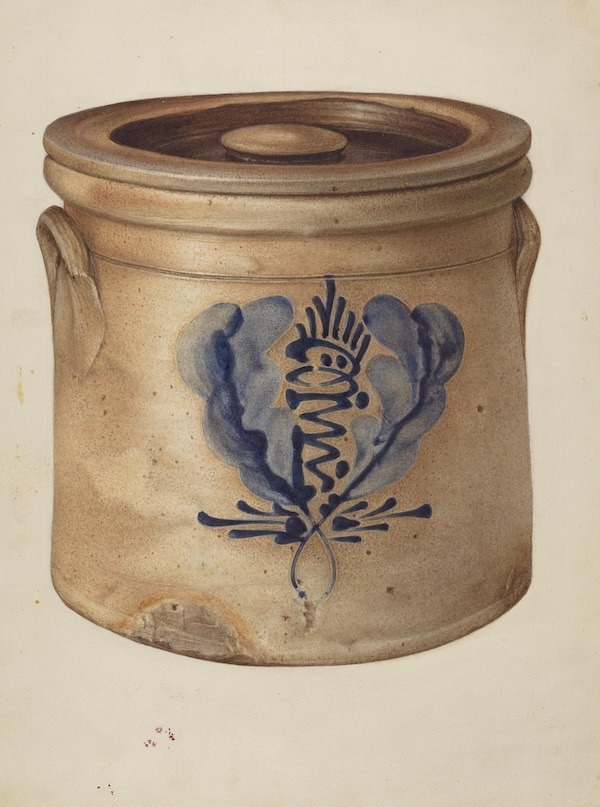
Crockery today is considered more of a decorative item than a way to preserve foodstuffs. The popularity has not waned however. Antique and vintage crocks in good condition can still sell for high values. Many of the larger pieces are now used as planters or storage pots for everything from wet umbrellas to kids toys. smaller ones are repurposed as vases and kitchen utensil holders, pen and pencil cups and fun decor pieces.
Do you collect crocks? If so we would love to know how you use them. Let us know in the comments.
Read more:
For an insightful visual education in crocks, visit CrockerFarm.com, an auction house in Maryland specializing in crocks.
Also take a peek at Love to Know‘s guide to Antique Crocks for information on identification and values.