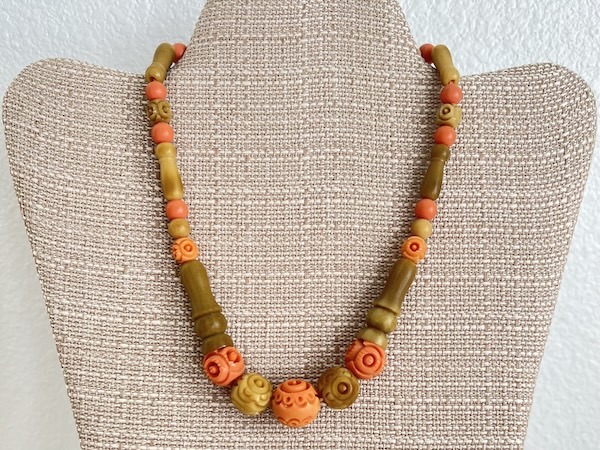
Galalith was a synthetic material made from casein, which is a milk protein. Invented in the late 1890s, Galalith was presented at the 1900 Paris World’s Fair. It quickly became a favorite material for Art Deco jewelry, buttons and fountain pens in the 1920s and 1930s. It was often used to imitate ivory, tortoiseshell and amber. Galalith could be carved and dyed, but not molded.
The name comes from the Greek: gala for milk, lithos for stone. The milk component caused it to be in scarce supply during WWII as milk was rationed for use as a nutritional source. The 1950s dimmed its star further, as petroleum-based plastics rose in popularity because they could be heat-molded. The 1970s delivered the final nail in the coffin: concern about the formaldehyde used to harden Galalith. Production ceased in 1981.
To identify galalith, immerse it in hot, not boiling, water for 15-30 seconds. When you sniff it after heating it up, it will smell like sour, burnt or rancid milk.