
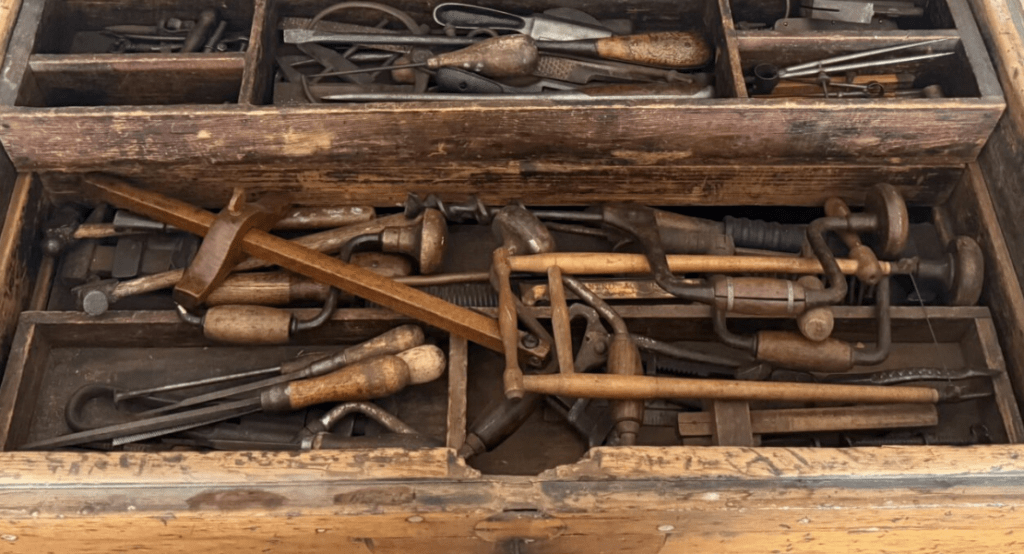
Collecting vintage and antique tool boxes is a hobby most often ascribed to our male counterparts. As a woman who’s always been a bit of a tomboy, I have an affinity for old tools and containers used to hold them. Tool boxes come in many sizes and forms– everything from massive industrial store displays to repurposed cookie tins. The variety of containers specifically called tool boxes come in an incredible array of styles and shapes as well. Craftsmen often built their own tool boxes to suit their specific needs.
The idea of a container to hold tools goes back as far as ancient history. We have examples from as early as c.1000 with a tool chest found in Sweden known as Mästermyrkristan, complete with tools. While I doubt any of us will come across such a find, old tool boxes and chests can be easily found at flea markets, garage, and estate sales. As collectors, we often find new uses for older items and tool boxes work well as containers for everything from small items such as jewelry parts to larger chests used as coffee tables or blanket storage.
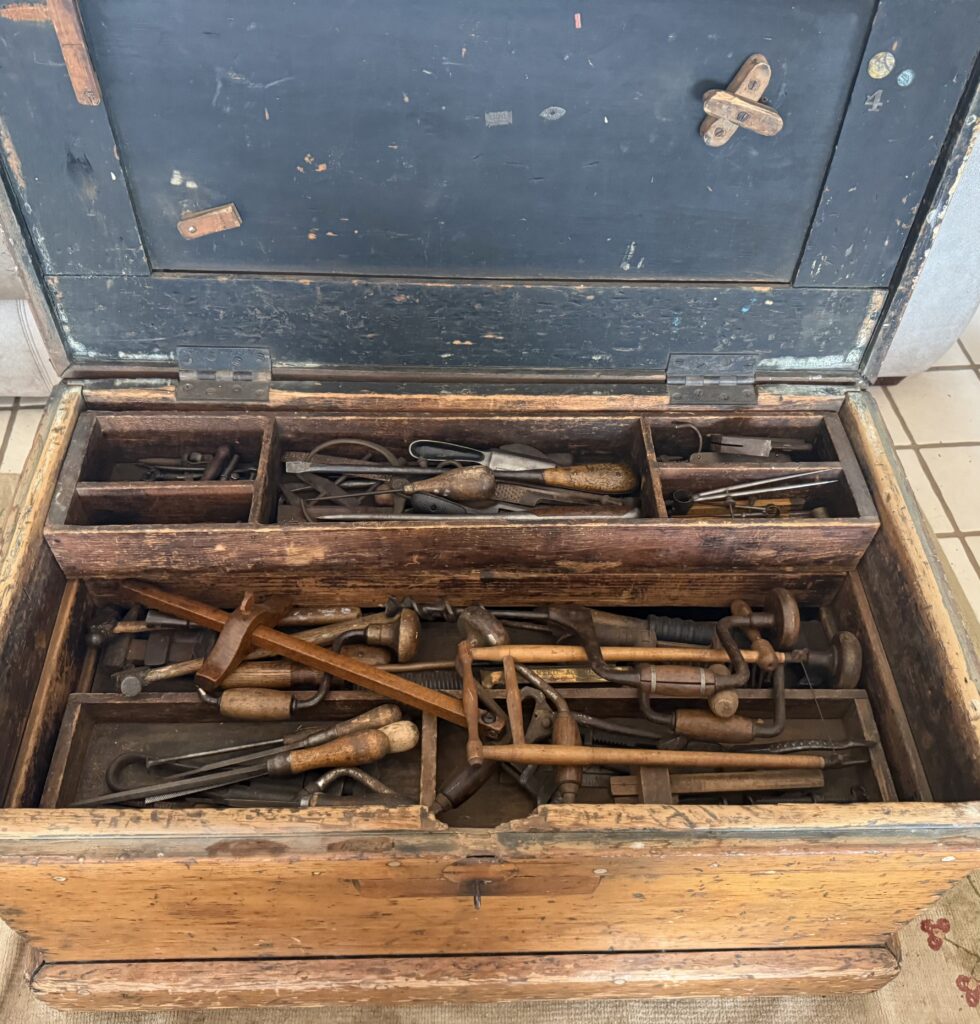
Traveling craftsmen would carry their tools from place to place and therefore kept smaller portable chests with handles. They often contain oddly shaped niches built to contain specific items. As any craftsperson knows, your tools of the trade can be expensive and precious and meant to be treated with care.
Tradesmen working in a fixed location often kept much larger chests filled with tools of the trade. Having large containers on wheels made it easier to move larger items or greater quantities of tools around a workshop, often to be shared with several workers. Mechanics in particular tend to prefer large upright tool chests with lots of drawers on wheels known as a rolling tool chest.
One of the oldest and best known builders of tool boxes is H. Gerstner & Sons. Based in Dayton, Ohio, the company has been in business since 1906. Known for its well built wood tool boxes and chests, they still make wood tool boxes and will make custom pieces to your specifications and well as standard shapes and sizes, each one hand finished. Additionally, they sell replacement supplies for older pieces.
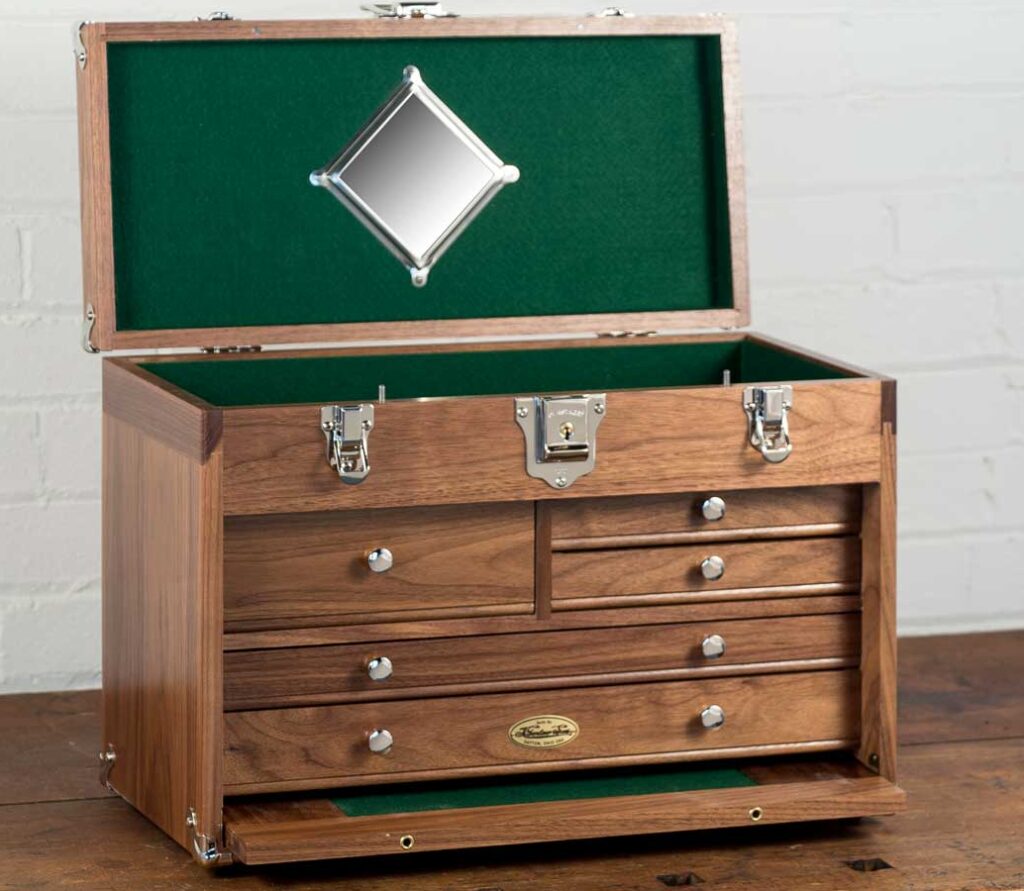
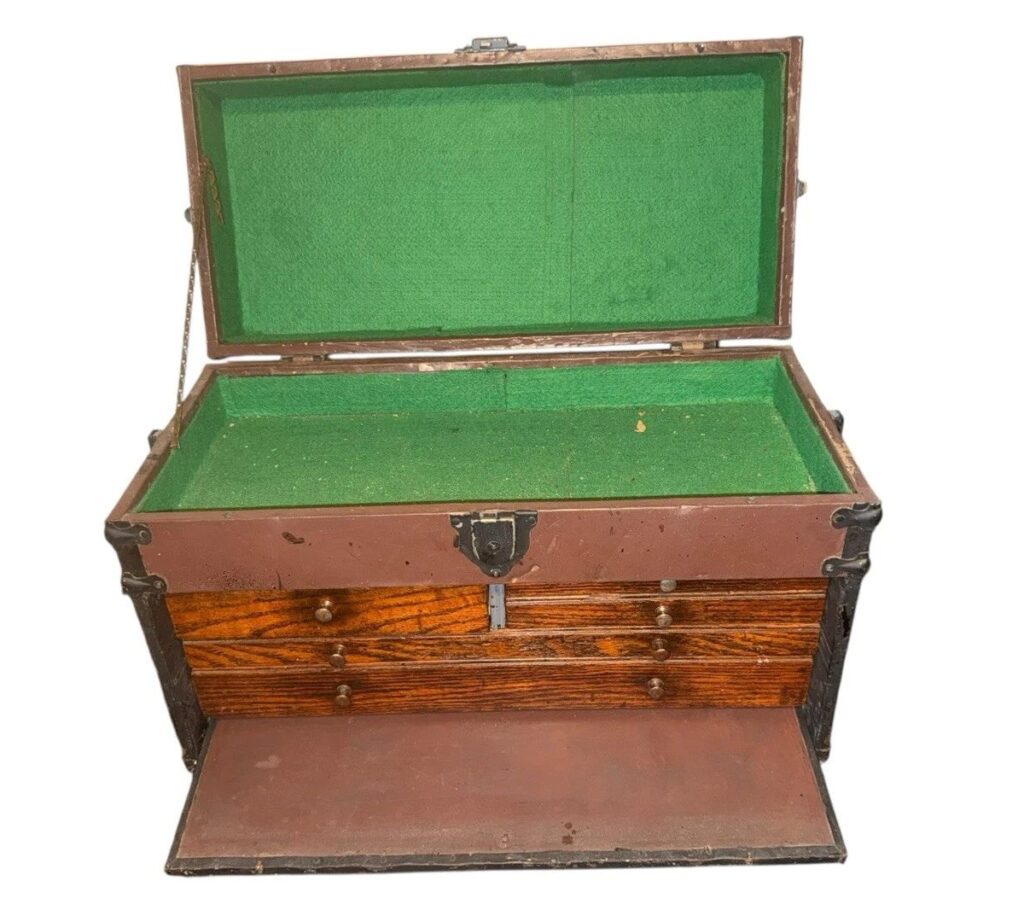
Machinist tool boxes are often made of wood and feature a top that opens to a flat surface with multiple drawers beneath, each meant to hold very specific tools. While some larger tool boxes were built as workstations with workbenches on top.
Smaller cabinets built for medical or dental devices or perhaps scientific tools could be hung on a wall or set on top of a desk. Some are built as shelving with drawers and there are metal large containers meant to hold layers of items that spin known as Rotabins. These range from small tabletop versions to huge large receptacles built for manufacturing.
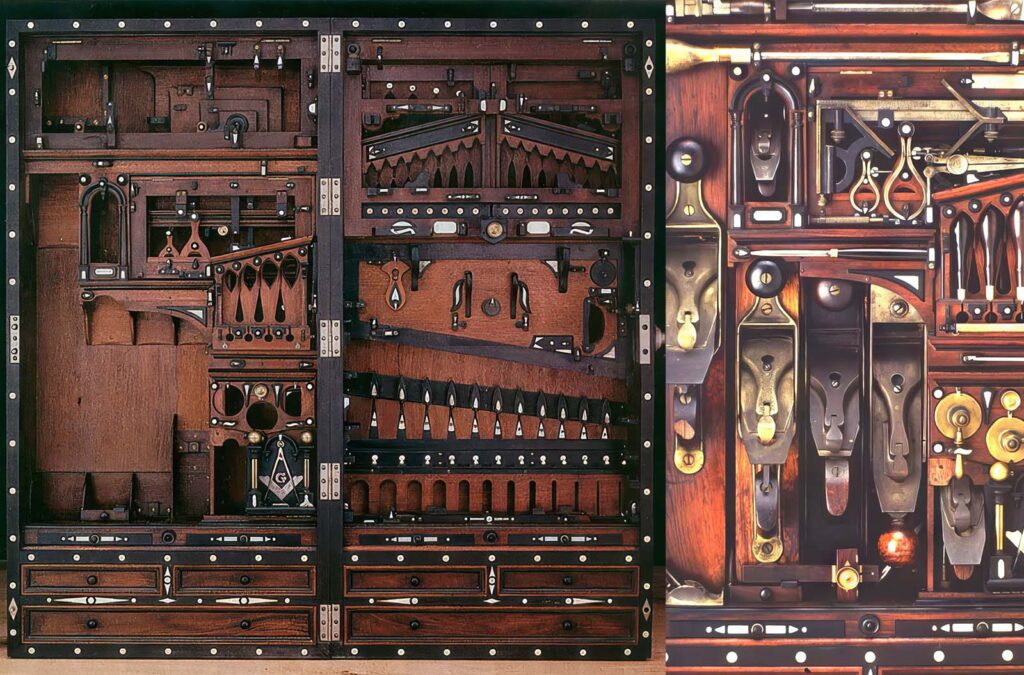
One of the most interesting tool boxes ever made is the Studley Tool Chest. Created by piano maker Henry O. Studley (1838-1925) which hangs on a wall and is approximately 40 inches by 20 inches and 9 inches deep. It holds close to 300 tools and is considered a masterpiece of construction.
Along with many of the original tools, my father’s 1950s machinist tool box has been passed down to my son while I still retain several of his original tools as well as a well worn tin filled with random nails, screws, nuts, and bolts. If you are looking at collecting vintage and antique tool boxes, I suggest starting with family and friends. Most of us have tools of various types collected over time in need of a home. A vintage tool box would be the perfect accompaniment and a great way to begin a collection.
Want to know more?
Here’s a video on Henry Studley’s tool chest.
Check out the history of H. Gerstner & Sons here.
Here’s a link to the Mästermyrkristan chest from the Swedish History Museum.




1 comment
It hit me, as a great grandfather, that I have a few items from my great grandfather, a few tools.
It is nice to read somebody encouraging that these things be kept.
Too often ” dads junk” is merely, and aggressively, discarded..