
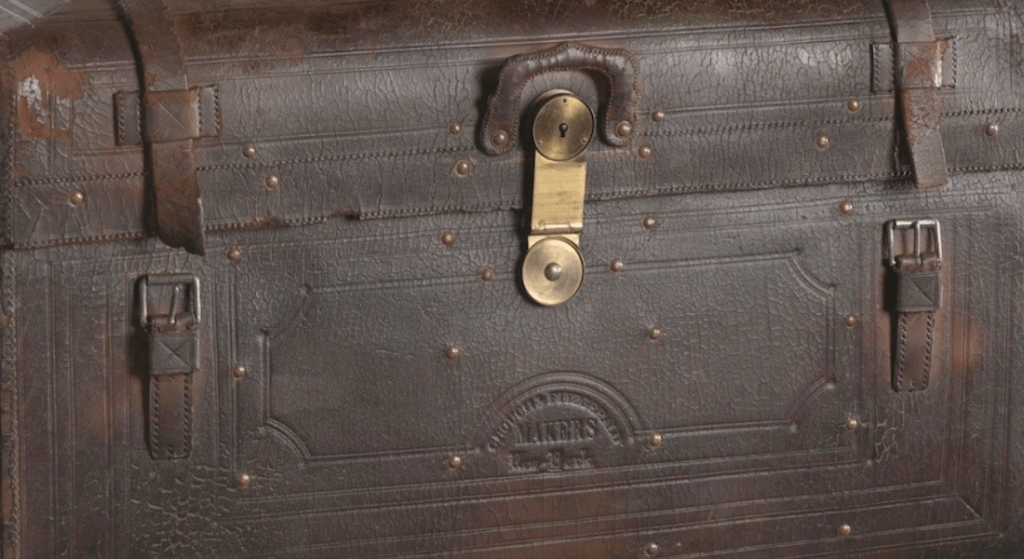
Antique trunks have a murky history, there are various stories about how they came about.
Some stories date them back to the ancient world and travelers thousands of years ago while some stories are more recent, meaning several hundred years old. Either way, the idea of hauling goods has been around as long as folks have been traveling and moving.
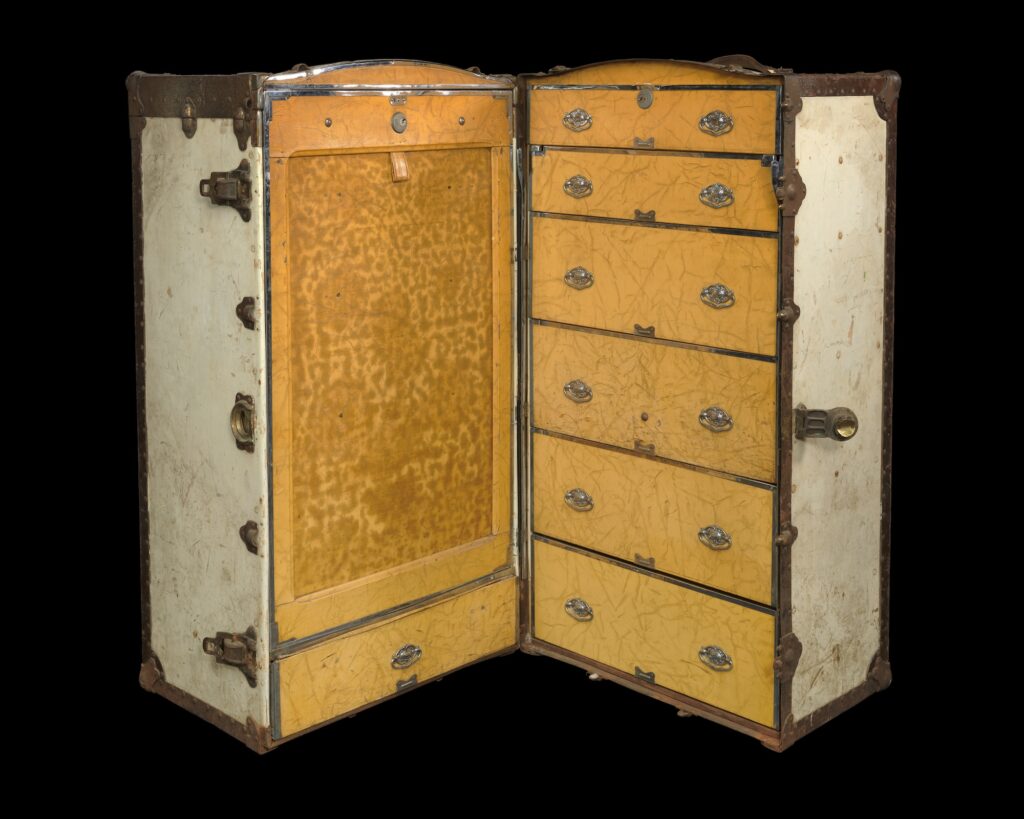
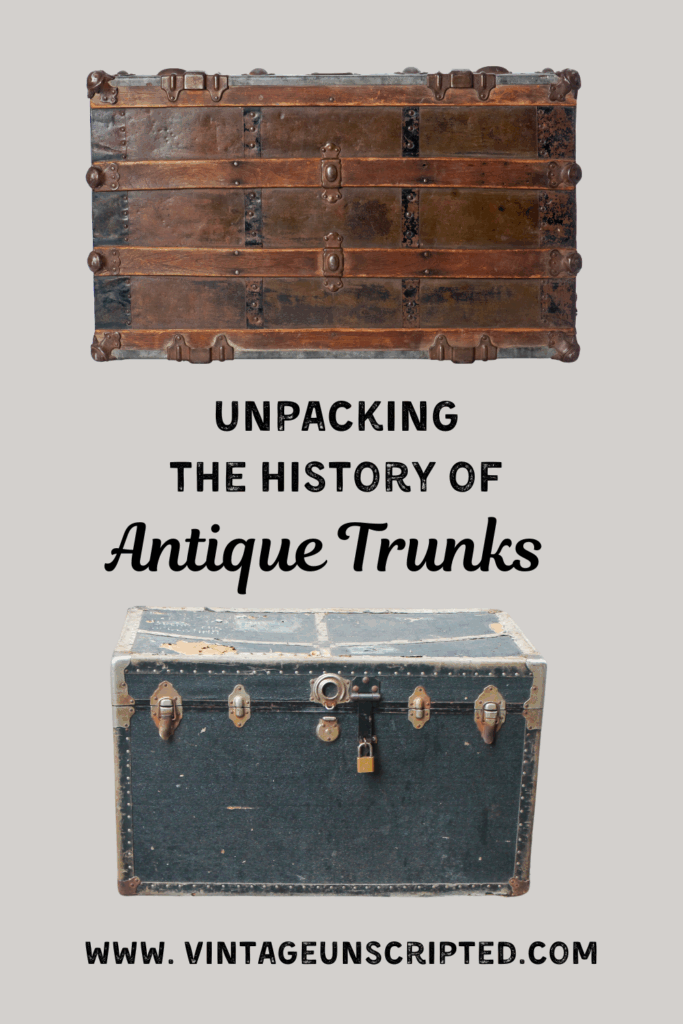
Trunks have evolved through the ages from sacks slung on the backs of pack animals to wooden boxes hauled on wagons and ships. The “steamer trunk” moniker was taken from steam-powered ships and locomotives that carried people across vast distances. These were large rectangular trunks often with shelves or compartments inside meant to facilitate travel. Most trunks were flat allowing for ease of stacking, although some had domed lids or were made to stand on end with one side curved to allow room for hangers inside.
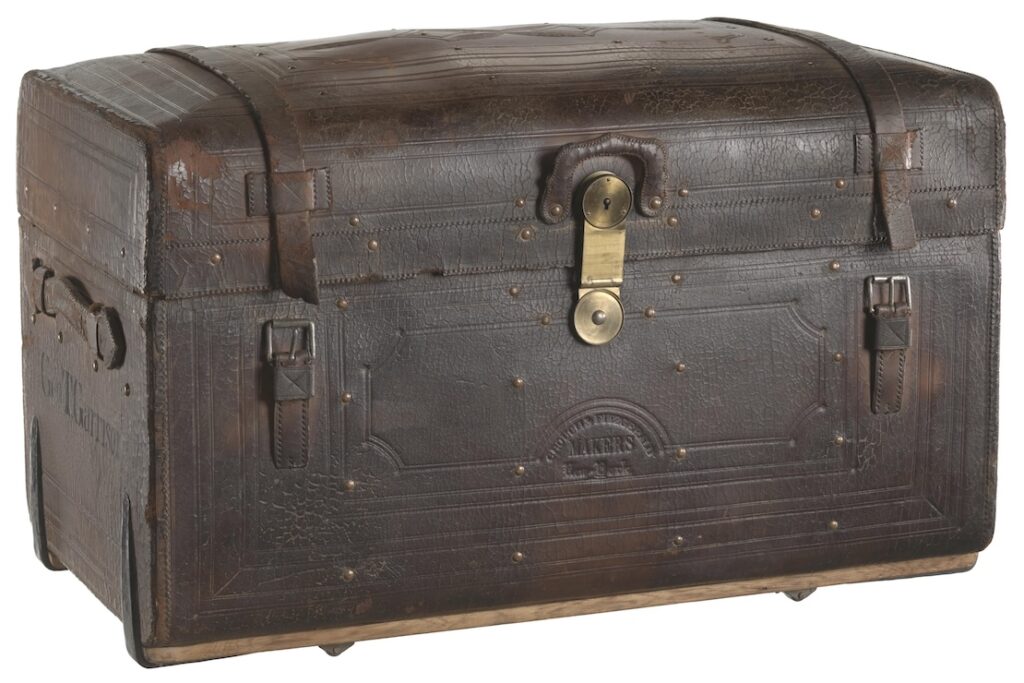
The most famous trunk maker is, of course, Louis Vuitton. The company began in 1854 and has been in business ever since. Known for their high quality and willingness to personalize trunks to meet the needs of their owners, the company soon became the default for quality trunks. While mostly known now for their handbags, the company still carries an extensive line of trunks. The signature monogram canvas was created in 1896, while it’s undergone changes throughout the years, it still remains the company’s signature today.
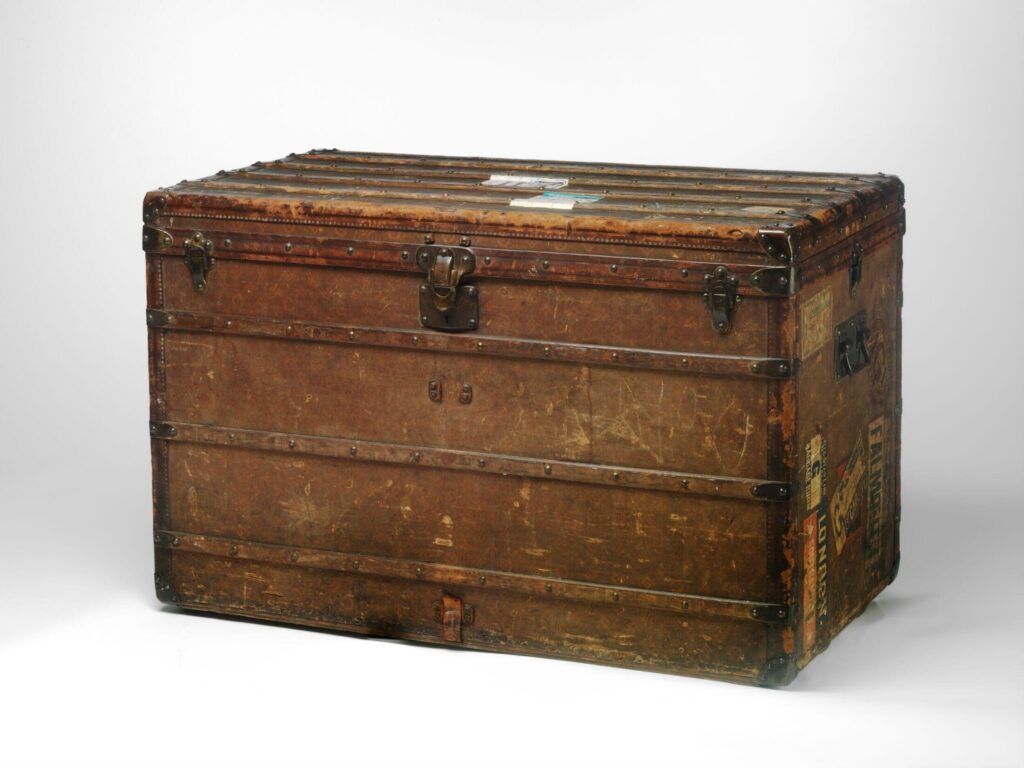
One interesting note about steamer trunks used on ships was that depending upon the owners level of passage, access to their trunks was limited by class. Cunard Lines suggested that first class passengers were allowed access daily while second class passengers were able to access their trunks once weekly and third class passengers were not entitled to access at all. Long ocean trips could be quite uncomfortable for those who could not afford the highest level of passage.
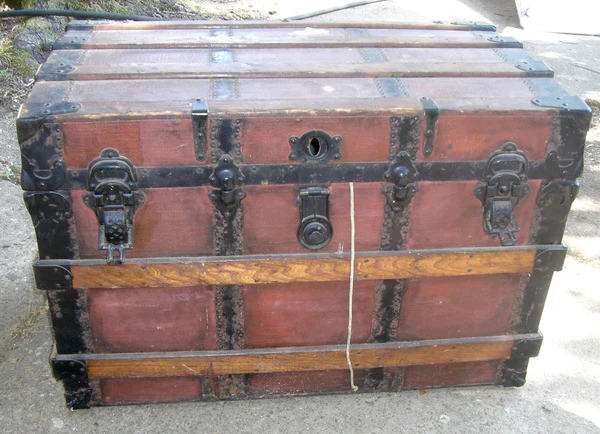
Styles of trunks have been adapted to meet the various ways people traveled throughout the years. Carriages were fitted with space for smaller trunks that sat either atop or behind the passenger compartments. Larger trunks were built for ships at sea able to hold enough for a long holiday or perhaps a full household worth of items for those migrating across the sea. Travelers who had money to spare could have trunks custom fitted as wardrobes with space for hanging suits, dresses and even hats as well as drawers for smaller accessories.
In the late 17th and early 18th centuries wealthy Europeans went on the Grand Tour as part of their education. They may have brought along an extra trunk to fill with purchased trinkets from several of their stops throughout their years-long trip. This idea of travel gave rise to the word “tourist” and was the impetus for travel for the sake of pleasure and knowledge of the outside world.
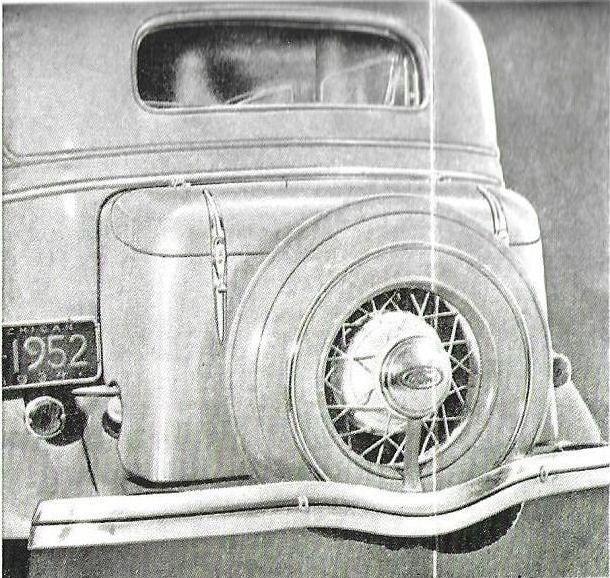
With the advent of cars, folks began traveling for pleasure on their own and trunks were fitted at the back of the vehicle enabling families to vacation for a few days at a time.
More recently trunks were used by the U.S. Military. However the sizing and material differ from commercial travel trunks. Military trunks known as footlockers are still used. I recall being sent off to summer camp as a young girl. We were required to purchase and bring along a metal foot locker to hold our belongings for the month-long sessions. Each of our brightly colored footlockers sat beside our bunk beds, many with fun stickers to help identify them when loaded onto the bus to transport us to and from camp.
I currently own three antique travel trunks used by my ancestors on the voyage from Eastern Europe to Ellis Island in the early 20th century. My three antique trunks vary in size, shape, and style. Although each one dates from the late 1800s to early 1900s. These sturdy and often beautiful utilitarian items are just as useful today as they were when originally made. Perhaps not as a form of luggage, but as storage, tables, or night stands they add charm and a great place to organize necessary but rarely used items.
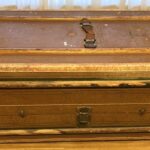
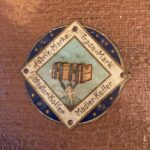
Personal collection of antique trunks including trunk badge from Moritz Mädler trunk makers since 1850.
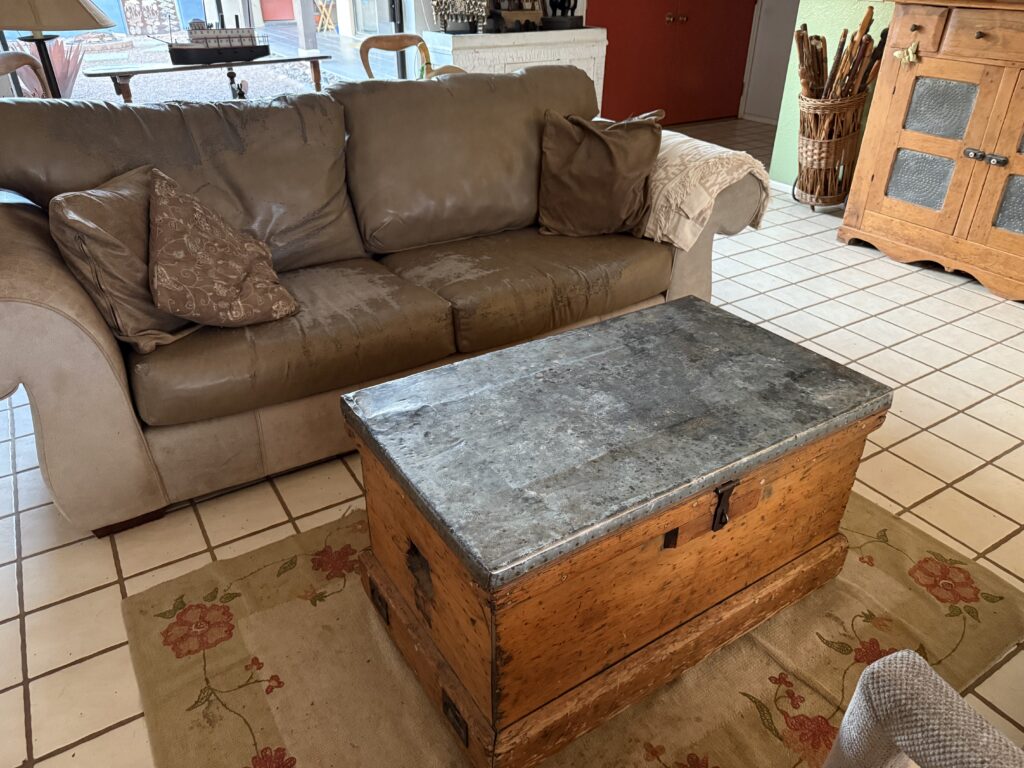
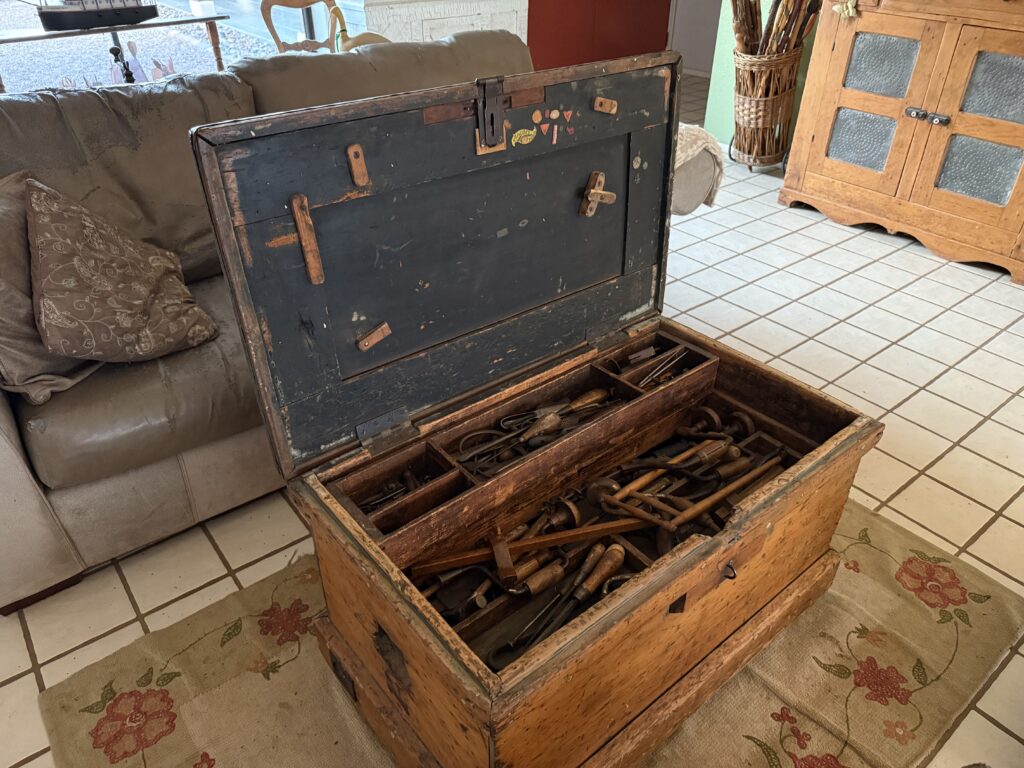
My friend, Linda, of Selective Salvage, shared photos of a tin-topped carpenter’s trunk that they use as a coffee table. As you can see, it still serves its original purpose, housing her husband’s collection of antique tools.
To learn more about antique trunks check out Le malle en coin, and for more info on Louis Vuitton find their Vuitton encyclopedia here. You can also find more Vuitton info at Louis Vuitton.



2 comments
I’m a descendant of some of the owners of Herkert and Meisel and I appreciate you including them in this article. Cheers!
Happy to hear from you Seth. These trunks are reminder of our ancestral history. I truly enjoy them and hope to pass them down through the generations as part of our family history.