
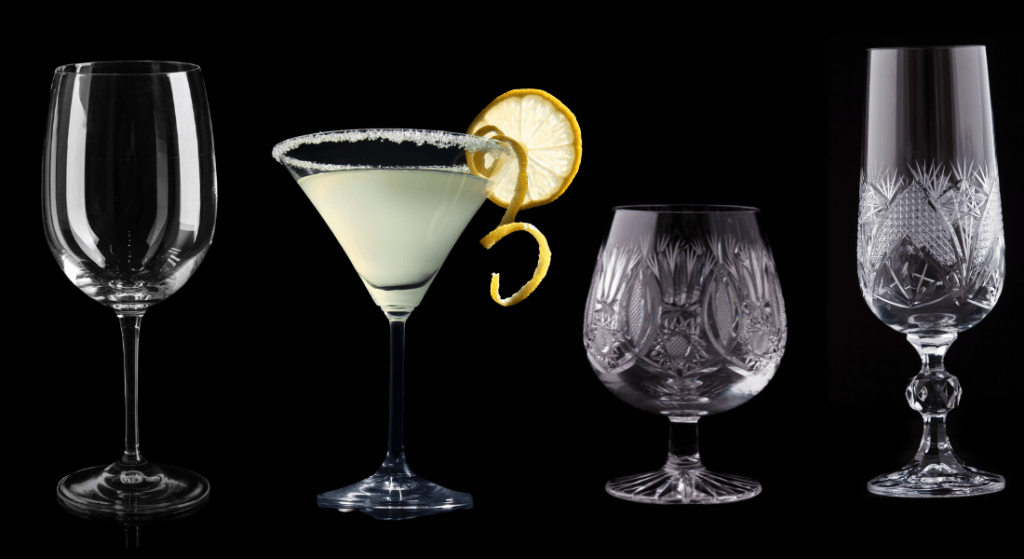
Asking what the difference is between crystal and glass is like asking what’s the difference between an apple and a granny smith apple. Apple is the umbrella term and granny smith is the specific type. Glass is the overall term, crystal is a type of glass.
Glass defined is an amorphous, aka non-crystaline, clear solid made by fusing sand/silica and other chemicals depending on what type of glass you’re making. Not all glass contains silica, but the kinds of glass that vintage sellers and vintage lovers are going to come across does. The most common types of glass used for drinkware are: soda-lime, which is cheap to make and shatter resistant; borosilicate glass, which is resistant to fast temperature changes (Pyrex); crystal, which has minerals that make it brilliant, clear and thin; and tempered glass, which is heat treated making it stronger than regular glass.
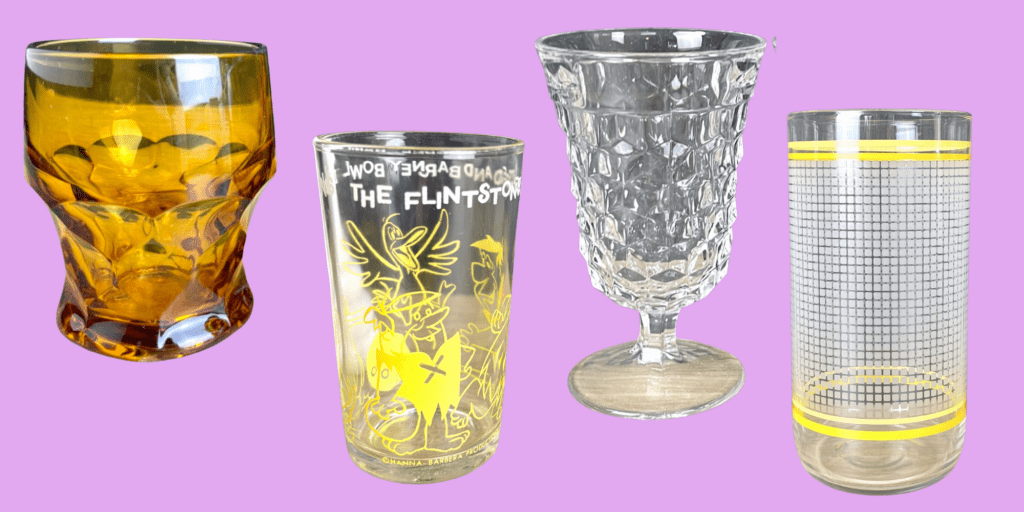
Most of the glassware we use is soda-lime glass. It’s the workhorse in your glasses cabinet. It can be very pretty, it can be lots of colors, and it can take many forms. Don’t look down your snoot at soda-lime glass. It may be ubiquitous, but it’s far from ordinary. Most Depression, carnival, printed and pressed pattern glasses are soda-lime. Without soda-lime you would not have your McDonald’s glasses or your pink depression juice glasses.
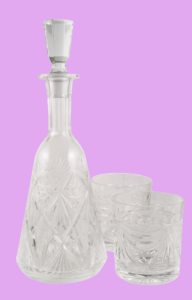
Crystal is a kind of glass that’s been enhanced with things like lead, barium, zinc and potassium oxides to make it denser, clearer and more sparkly. Because of the composition, crystal glassware can be thinner and have detailed designs and cuttings. The big names in crystal are Waterford, Lalique, Steuben and Baccarat, although there are gazillions of brands making crystal glass.

How to tell glass and crystal apart
The things that help you tell other glasses and crystal apart are largely characteristics crystal has that glass does not.
If light catches crystal the right way, it will reflect a prism. The added minerals bring with them high refraction and light diffraction capabilities. Even lead-free crystal will refract a rainbow. Glass will not.
Crystal will be brighter and clearer than glass. It’s not uncommon for regular clear glass to have a pale yellow or blue color cast which would not be found in crystal. You can compare clear glassware made by the same company a few years apart and find one is a slightly different shade of clear than the other one.
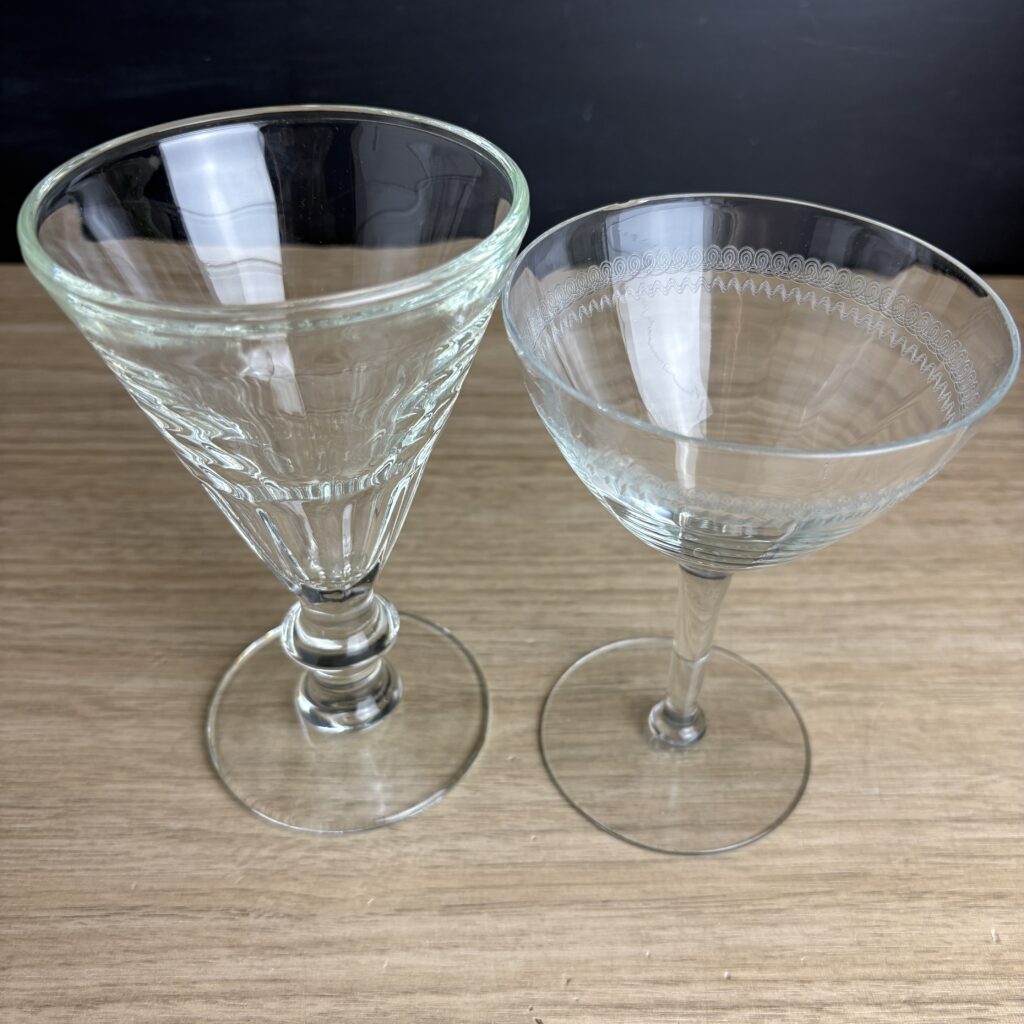
Both crystal and regular glass can be cut, but the cutting designs can be more detailed on crystal. Both crystal and regular glass can have pressed designs as well.
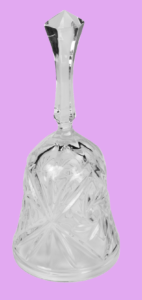 Because of the added minerals, crystal will be heavier than glass, although since glass might be thicker, this can be hard to judge. Big lead crystal vases could be used instead of weights at the gym, they have some impressive heft to them.
Check the rim. Crystal rims on drinkware are generally thinner than soda-lime glass rims.
Give the glass a ting. Crystal rings like a bell. Regular glass makes a sound, but not with the clarity of crystal glassware.
Does the lead in lead crystal make it dangerous to use?
That is a complicated question. First some history…
The 1970s were the years of the great lead awareness awakening in the United States. In 1971, the US Food and Drug Administration (FDA) started restricting the amount of leachable lead in tableware. It was a start, but the levels allowed then were way above what is allowed now. As the 70s rolled on, consumers were more savvy about lead poisoning because of regulations on lead in gasoline and paint. If lead was bad in those things, wasn’t it bad in glass?
 Lead-based paints, at least for residential use, were banned in 1978. Some crystal manufacturers saw where consumer sentiment was headed and wisely started to shift away from lead to the other minerals that give crystal the same qualities.
The FDA says the primary risk from using lead crystal glass comes when liquor or wine is stored in it. Long contact with the acidity of the liquids can cause lead to leach out of the glass. There are no federal guidelines for drinking out of lead crystal glasses because the contact is short term.
This February 20, 1991 article from the New York Times summarizes the FDA position:

To summarize: crystal made with alternatives to lead does not present any health risks and occasional use of lead crystal is not considered a health risk.
As for the big makers, Waterford began transitioning to lead free crystal in 2023. And Baccarat makes both lead crystal and non lead crystal stemware.
Can you minimize the risk from lead crystal glassware?
Health Canada, a division of the Canadian government, suggests soaking new lead crystal glassware in vinegar for 24 hours and then rinsing it thoroughly before using it. They also suggest always washing your crystal by hand with a soft cloth, not running it through the dishwasher.
Can you test crystal with a lead test kit?
Generally speaking, no. Lead test kit swabs are made for testing things like paint. Lead is mixed into the glass, not sitting on the surface, so your results will be unreliable. Laboratory testing is the only reliable method.
Note: I tried to find the specific recommendations on the FDA website or updated guidance, but was unable to track down the actual report. Most of the studies I could find also date from the 1990s.
Read more
Crystal Vs Glass: Differences and FAQs, lenox.com
Six Expert Approved Ways to Identify Crystal Glassware, southernliving.com
Is Vintage Glassware Safe to Drink Out Of?, americastestkitchen.com
The Disturbingly Long History of Lead Toxicity in Winemaking, wineenthusiast.com


2 comments
Do you buy vintage glass accumulations?
Thanks for asking Jenny, but no, we don’t. Check with your local consignment shops, they’re a great option.