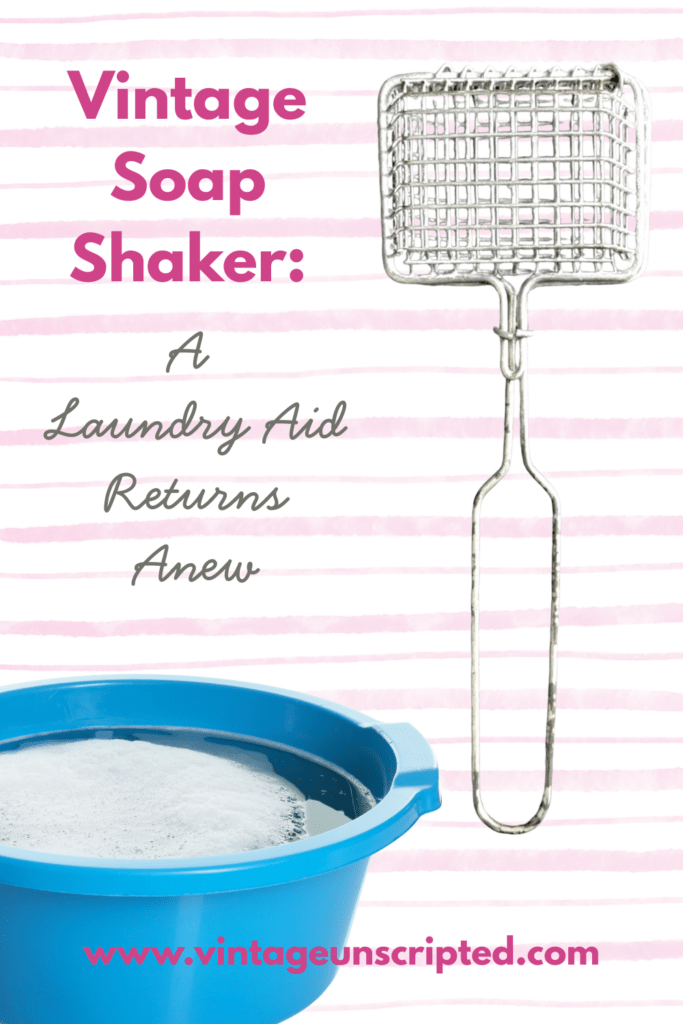
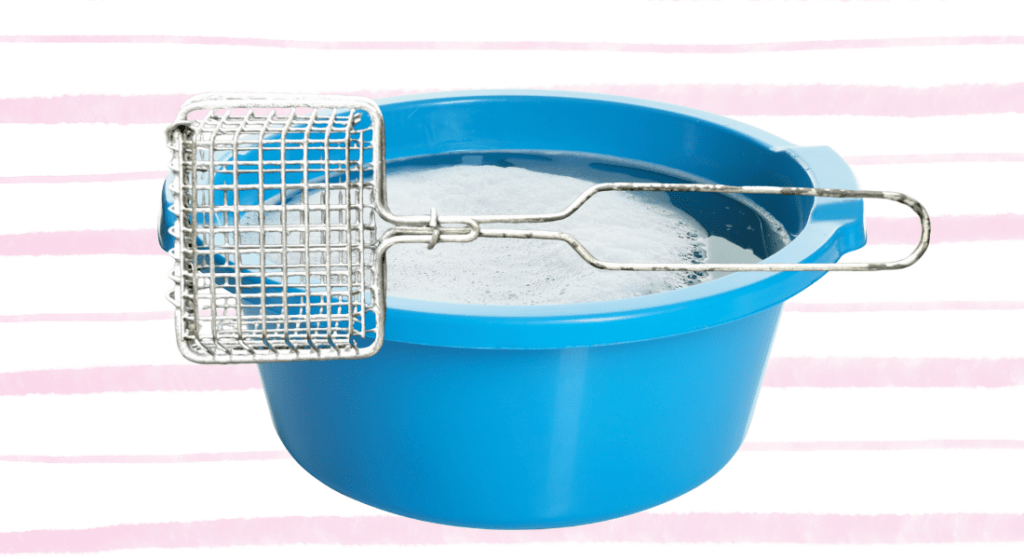
A simple gadget was invented in the late 1800s that provided a simple new way to be thrifty by using up slivers of bar soap–the cage-shaped soap shaker. You might know it as a soap saver, soap cage or soap wand. Whatever you call it, it was a small metal cage on a handle that opened up so you could fill it with the remnants of soap bars that got too tiny to use in the tub. Once the cage had a few slivers, you could swish it in a sinkful of water to do your hand laundry. I’d love to tell you who invented it, but it seems to be one of those things that was developed by many people in many places to fill a need.
Unlike earlier in the century, by the late 1800s, soap was used for keeping your body clean, doing laundry and housecleaning, just like it is now. Different soaps had different purposes, but they all wore down to slivers that found their way into the soap shaker.
An interesting history nugget about soap and hygiene: according to the Smithsonian National Museum of American History’s post on bathing, bathing yourself was uncommon before the Civil War. There were those that considered bathing unhealthy because it washed off that essential layer of oil and dirt. Bathing was also stereotyped as “European excess, luxury, and moral and physical softness.” After the Civil War, the lightbulb was beginning to flicker about the connection between germs and disease, and bathing became more common.
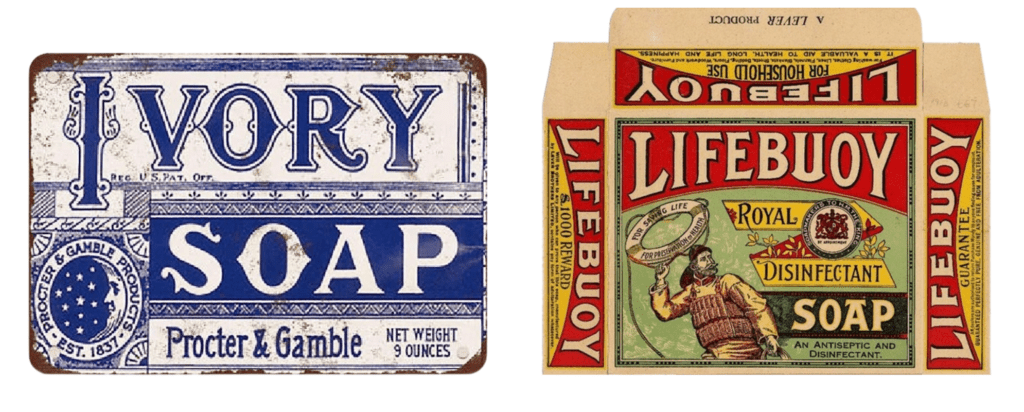
Many households made their own soap from rendered animal fat and lye from wood ash. But commercial soaps were also available, among them Proctor & Gamble’s Ivory (1879), B.J. Johnson Soap Company’s Palmolive (1898), Lever Bros.’ Lifebuoy (1894) and the oldest continuously made brand, Pears, from way back in 1807. However you got your soap, a soap shaker made it possible to use every bit of it.
The soap shaker was essential during the Depression years (1920s-1930s) when nothing could be wasted. It remained a valued household tool until the mass marketing of liquid and powdered detergents took off in the 1950s. The economy was better and it was much easier to do hand laundry with a liquid like Woolite (introduced in 1951) than to corral all your soap slivers.
With the modern emphasis on eco friendly bar dish and laundry detergents, soap shakers are finding their way back into the arsenal of housekeeping tools. There are new versions available, but honestly, it’s not like the technology has changed. And you know we think vintage is always better.
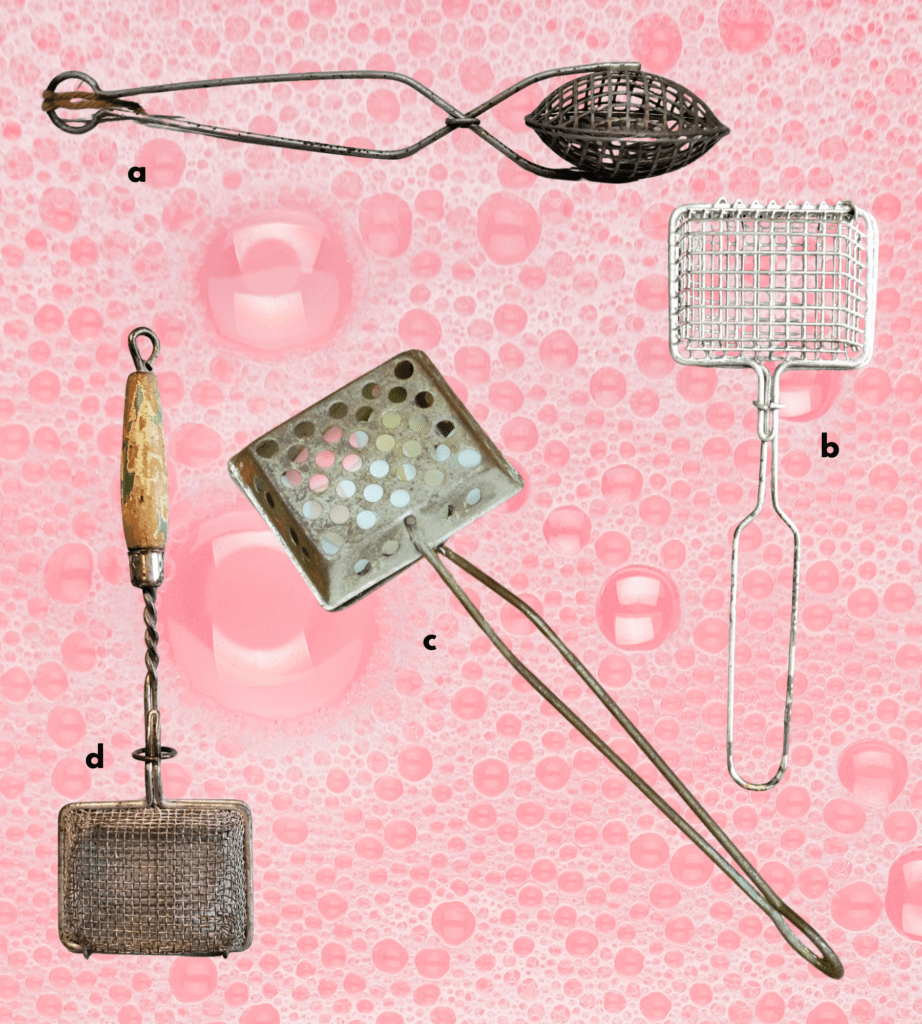
Vintage soap shakers come in a variety of styles.
a) Round mesh soap saver, $25, from Vintage Tenn House.
b) Metal soap shaker wire cage, $18, from NextStage Vintage.
c) Antique soap saver basket, $20, from Pine Springs Cottage.
d) Wire cage antique soap saver, $24, from Foxon River Recreative.
To read more about soap history:
The History of Soap, Wirecutter.com
Suds Up: How to Make Soap, 19th Century Style, Smithsonian National Museum of American History