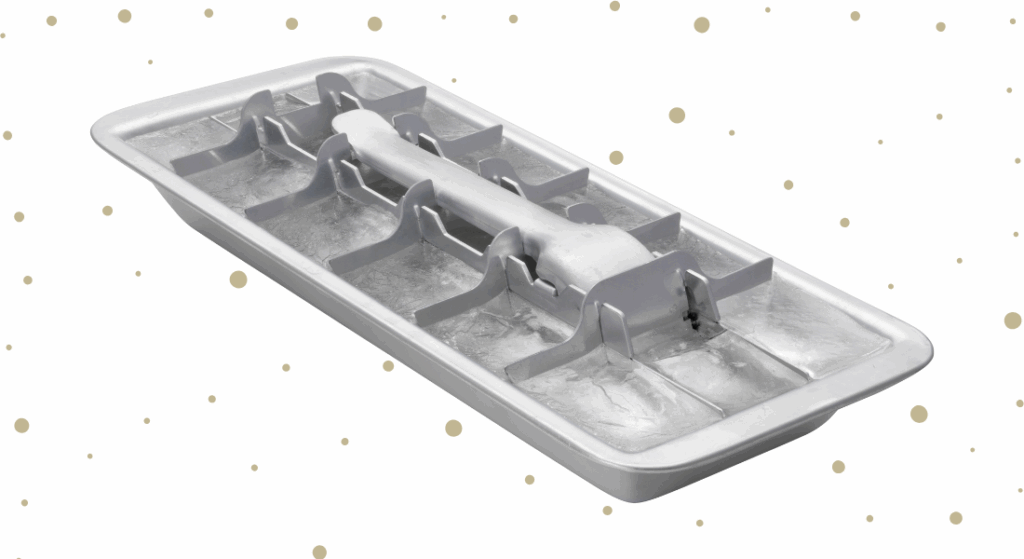
There are people who understand that vintage aluminum ice cube trays are the best ice cube trays, and others who will never grasp how direct the correlation is from the cracking sound that happens when you pull up the lever is to how satisfying the ice cubes are in your drink. Keep your plastic and silicone, my heart belongs to aluminum.
The history of aluminum ice cube trays parallels the invention of electric refrigerators. As electric refrigerators became a possible dream in the late 1920s, people no longer had a block of ice in their ice box that they could chip slivers from. But life without ice is lukewarm, so a new way to get it had to be invented. Enter inventor Guy L. Tinkham, designer of the first aluminum ice cube tray.
Tinkham’s first design, submitted in 1931 and approved in 1933, was for a flexible aluminum tray with with points at appropriate intervals that would score the ice into cubes as it was bent. To quote the patent: “This invention relates to ice-trays or similar containers for use in refrigerating machines for the production of the so-called cubes or other small units of ice or other fluid material frozen in the trays.”
Note: from this day forth, I shall call them “small units of ice.”
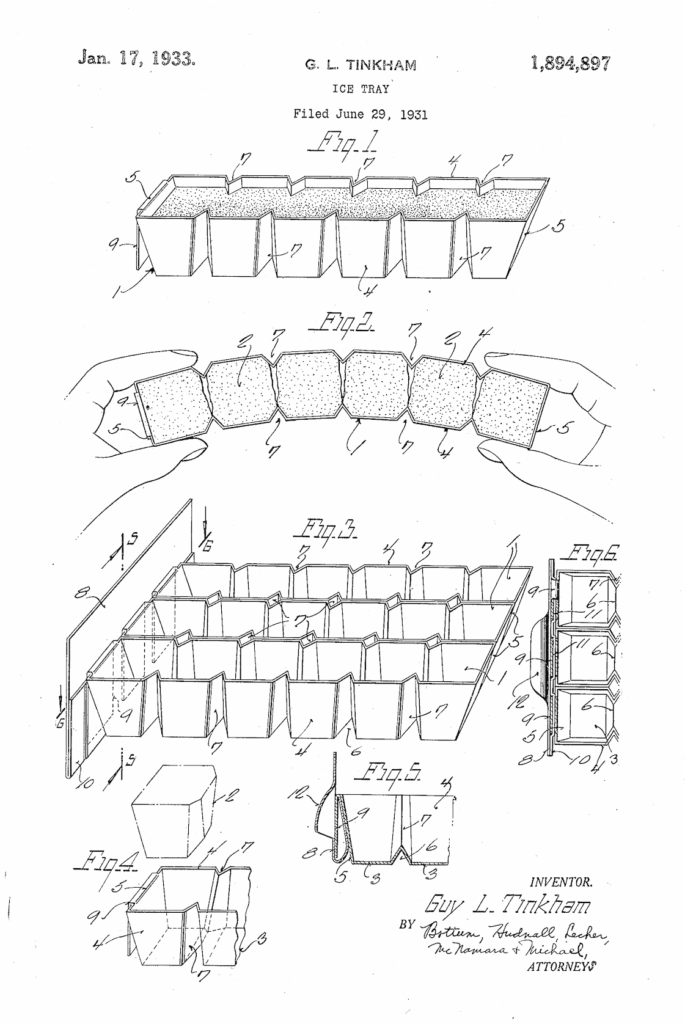
Tinkham was not satisfied with designing one small unit of ice tray. In the 1930s, he designed and patented two similar cube trays, two methods for manufacturing ice cube trays and two methods for making expansion joints in his ice cube trays.
Tinkham’s tray worked by flexing it, similar to plastic and silicone trays now. I have never seen one, nor could I find a photo in museum collections.
The most common vintage ice cube trays now found in the wild have levers that you pull up to make the small units of ice. We have Edward H. Roberts, a General Electric engineer to thank for that. Actually, we can thank Roberts for a lot of refrigerator refinements, as I found out reading a charming and informative blog by his son, Steve Roberts.
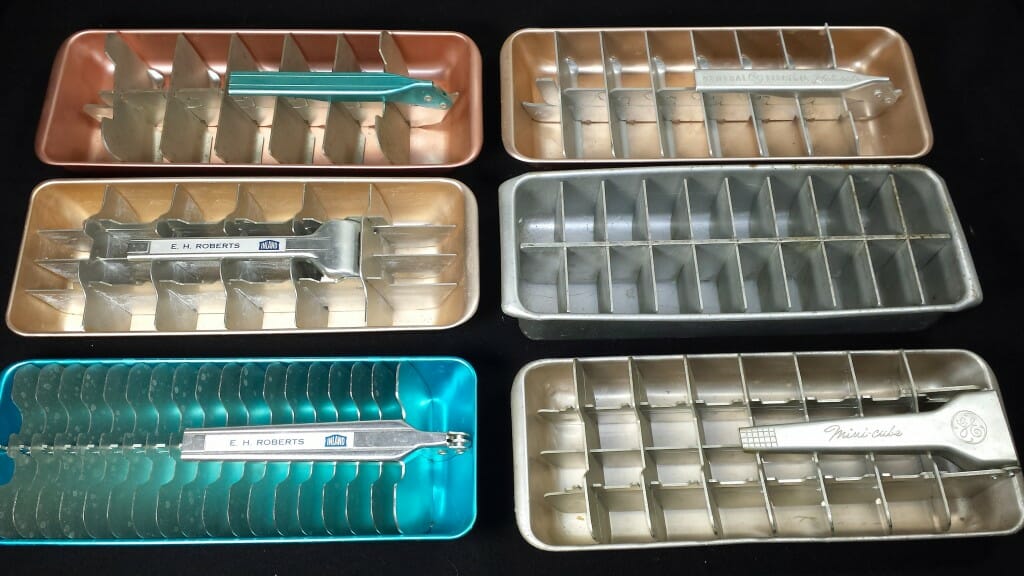
Roberts designed many trays, shown in this photo from the blog. He is best known as the designer of the GE Redi-Cube.
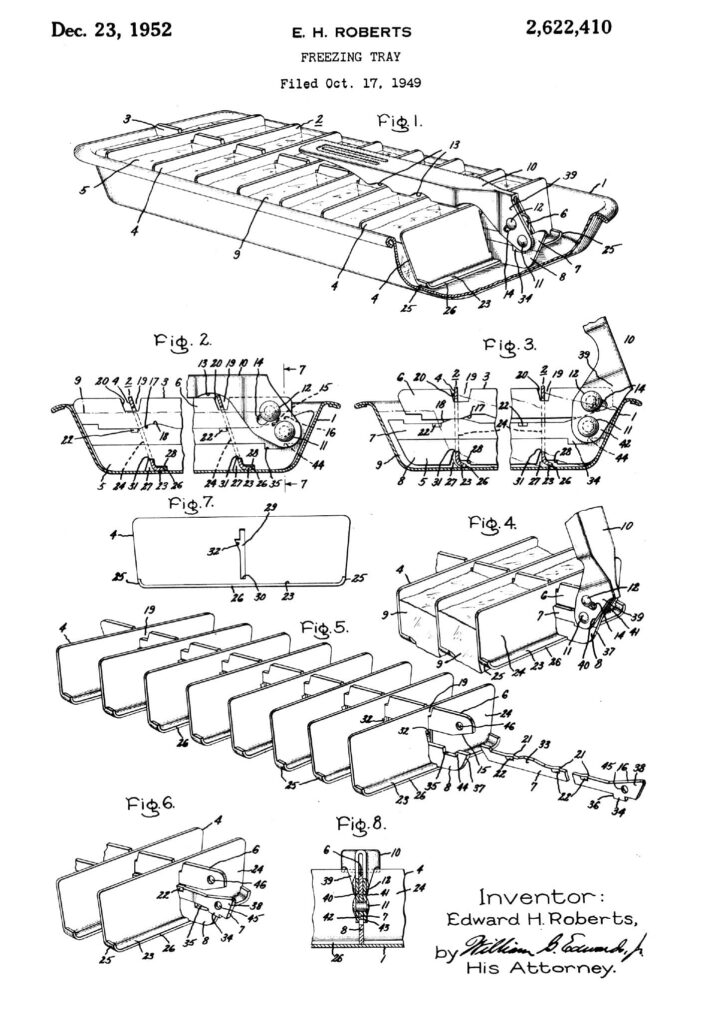
He filed a patent for the first lever operated aluminum ice cube tray in 1949 and it was granted in 1952.
Another ice cube innovator was Lloyd Groff Copeman. Walking in the snowy woods, he noticed the snow and ice did not stick to his rubber boots. This sparked him to design rubber walled ice cube trays. This is a divergence from our topic, aluminum ice cube trays, but I think you’ll find it interesting.
Before we go further, a word about Copeman. He had more than 650 patents, filing his last one for an “impervious container” shortly before he entered the hospital in the final stages of cancer and diabetes in 1956. He is amazing. You can read his biography here. A list of all his patents and more biographical info is available here, at a site designed by relatives when they discovered there wasn’t any info about him on the internet.
Copeman’s first ice cube tray, or “sharp freezing container for mechanical refrigerators” was designed in 1929.
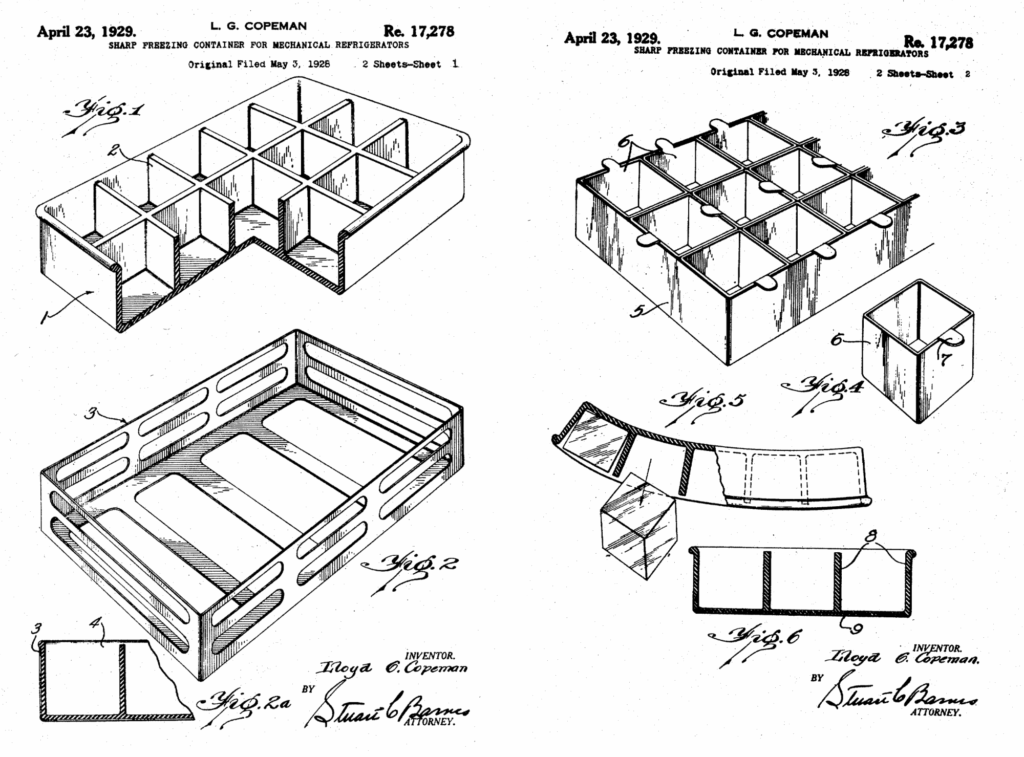
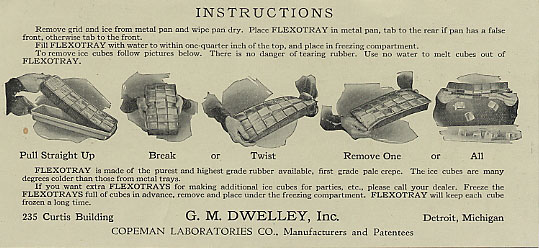
The patent states: “Each ice cube is therefore formed within flexible or distortable walls the distortion of which permits easy separation and or removal of the ice cubes. This will true regardless of whether each ice cube is formed in an individual container of flexible material or the complete tray is made up of flexible material.” The instructions for use are below.
Copeman filed several patents for his “sharp freezing container” with further refinements.
Aluminum ice cube trays ruled the ice cube making market until plastic started nosing it’s way in during the 1970s. And what of automatic ice makers in refrigerators? Servel introduced one in 1953, but they became more commonly available when Frigidaire started making them as door front features in 1965.
That’s the history part of the program. Now we get to the Opinionated part. My thesis is that aluminum ice cube trays have significant advantages to plastic or silicone.
Firstly, aluminum conducts cold far better than plastic or silicone. It is durable. It is not an odor magnet like the other two. It does not contain any bad chemicals like BPA in plastic trays. And, as previously stated, it makes an entirely satisfying crack then you pull that handle.
There is one downside. If you stick a wet hand into the freezer to pull out an aluminum ice cube tray, there’s a better than average chance your fingers are going to stick to it the way Flick’s tongue stuck to the flagpole in A Christmas Story. So don’t do it.

You can buy a reproduction aluminum ice cube tray, but why would you when you can get the original from the 1950s and 1960s?We’ve found a few worthies available for sale on Etsy.
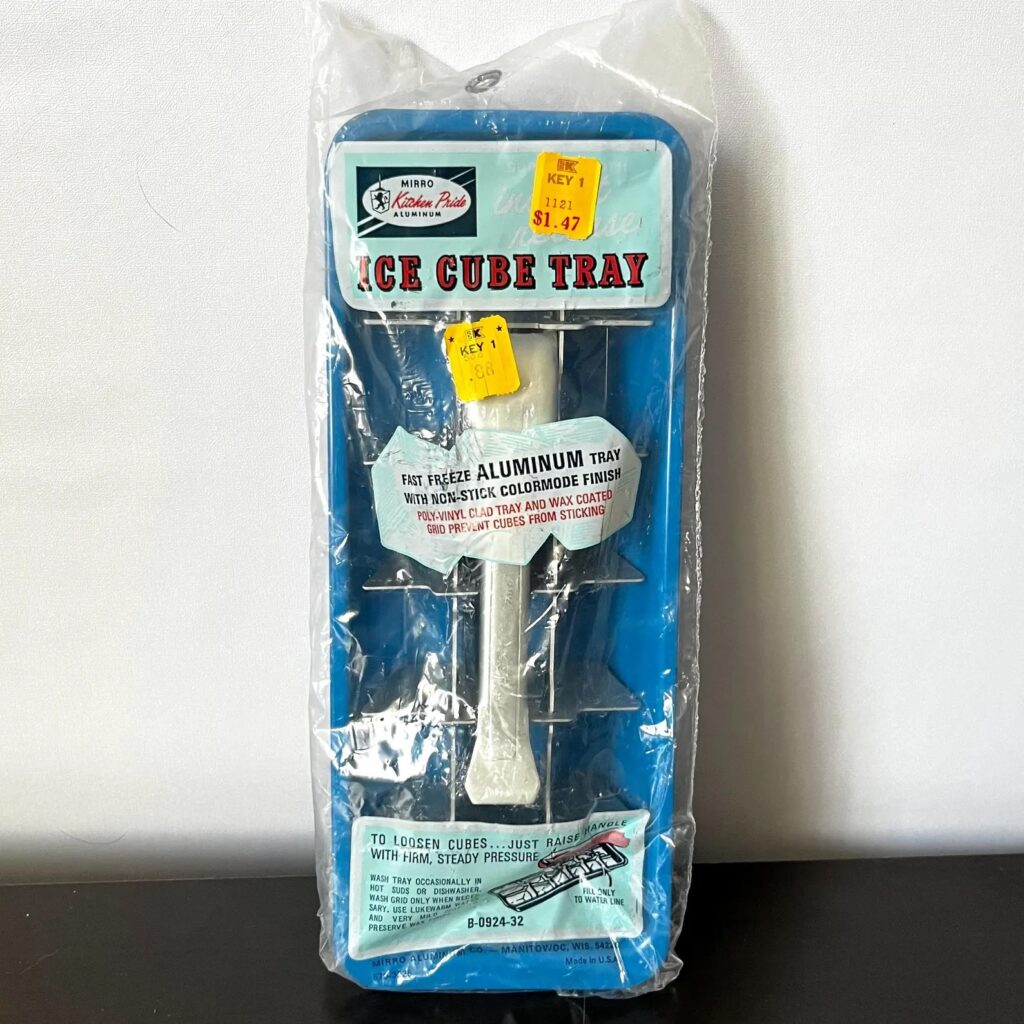
Mirro Kitchen Pride PVC clad aluminum ice cube tray still in the original packaging with Kmart price tags, from TheVintageBoomer, $20.
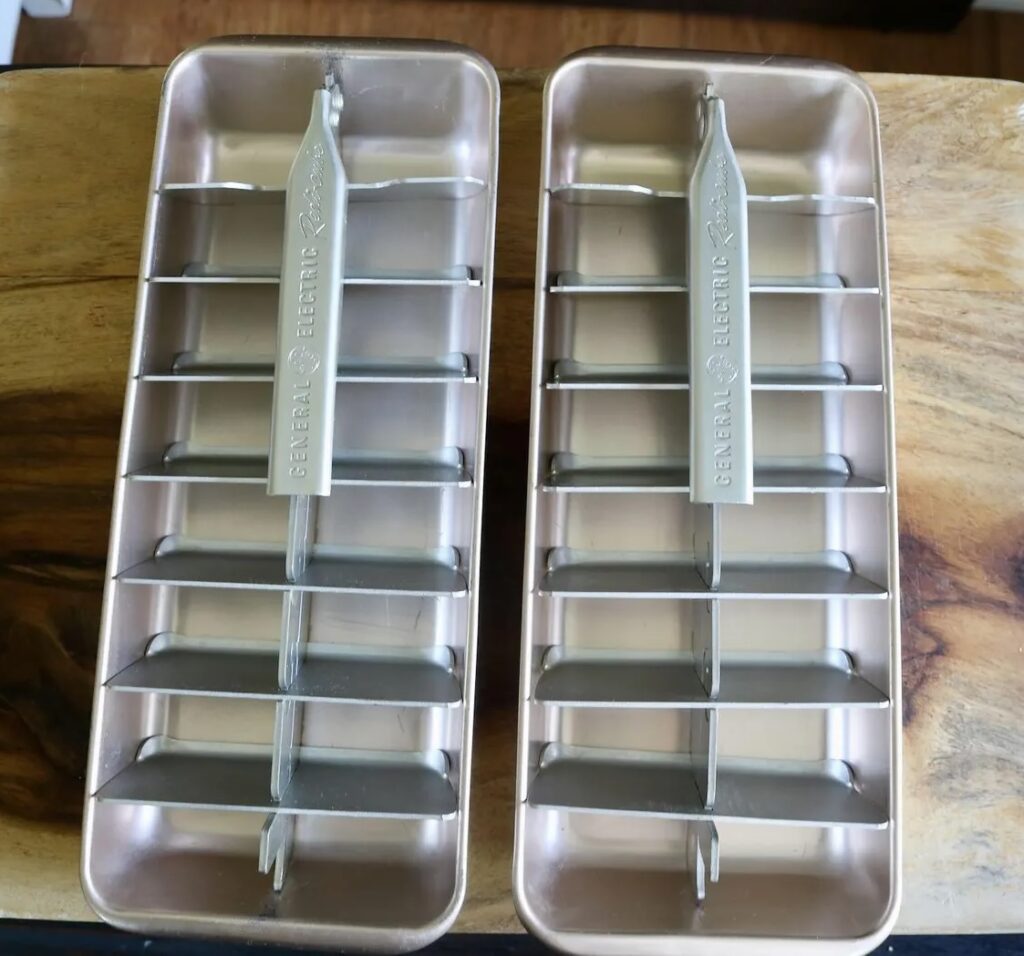
Pair of GE Redi-Cubes ice cube trays, designed by Edward H. Roberts, from CopperPotVintage66, $45.
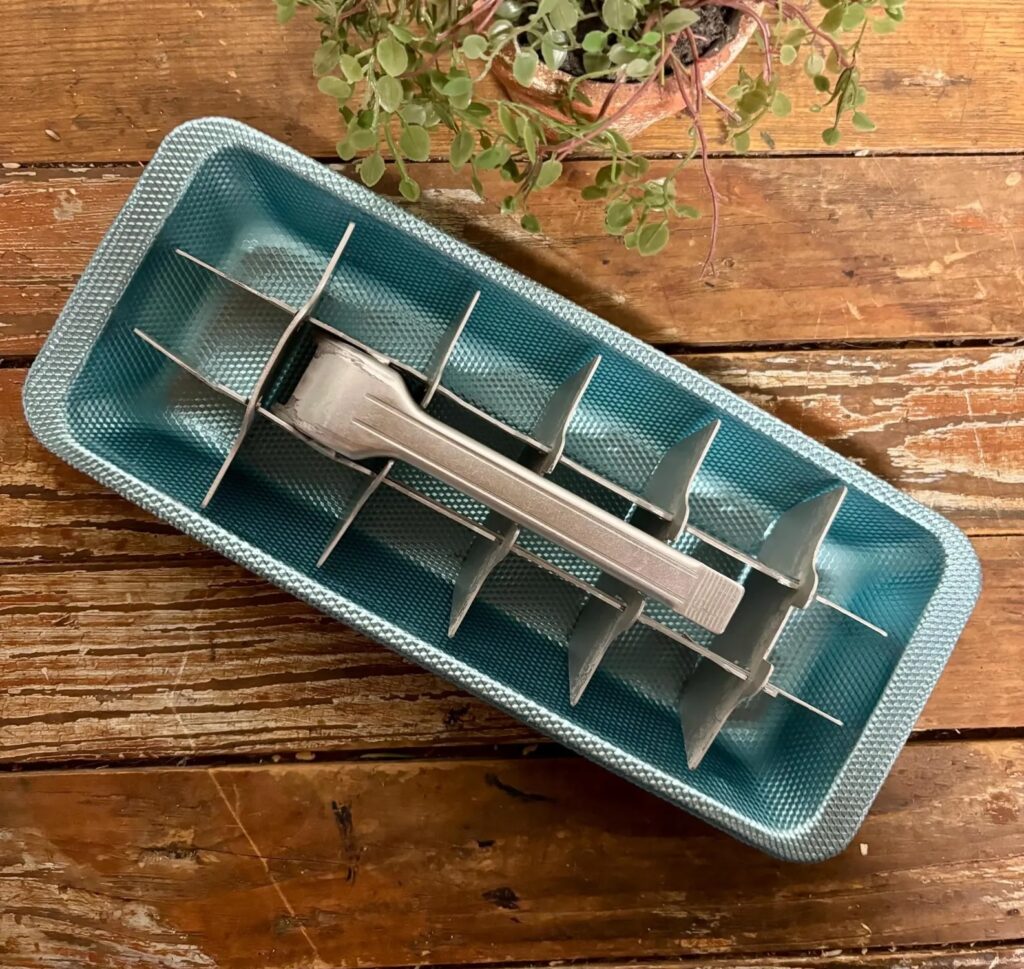
Light blue anodized aluminum ice cube tray from EarthtonesHome, $24.
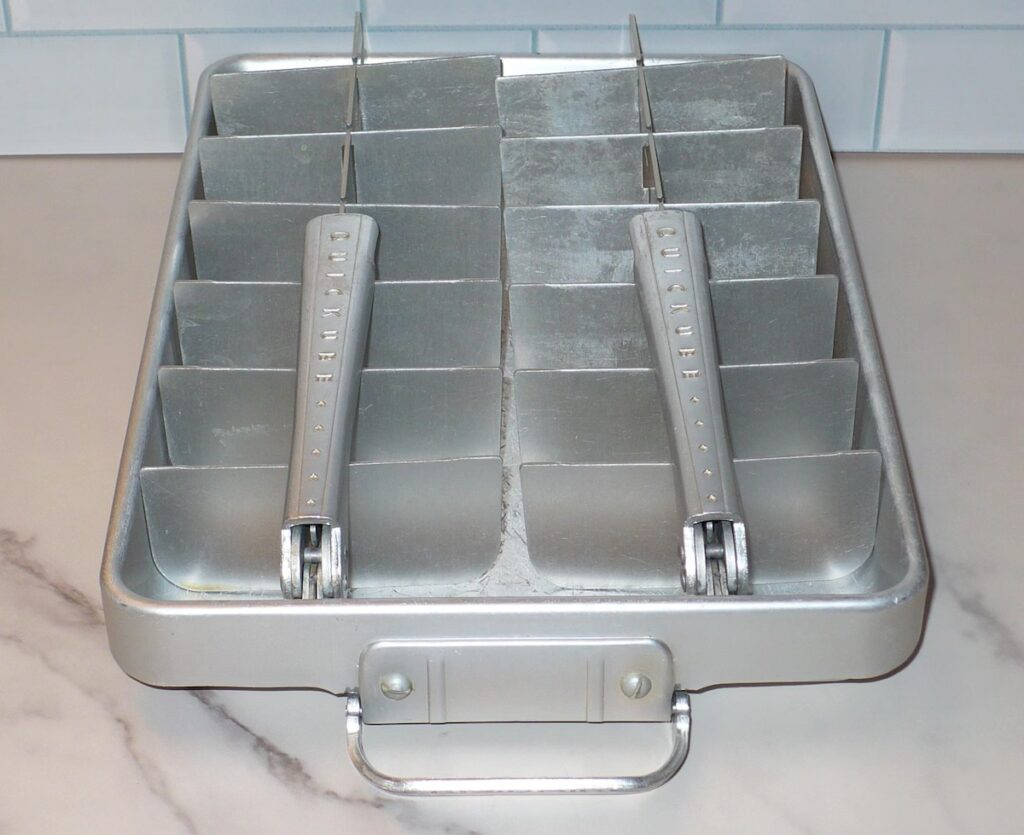
Frigidaire Quickcube double ice cube tray from shabbysweet, $40.
If you need a tutorial on proper use of an aluminum ice cube tray, twobrokeguys1214 had an outstanding video.
Julia Child donated her Frigidaire ice cube tray to the Smithsonian, although it does not have the cube making insert. She may have followed my Aunt Lucille’s ice cube method: freeze a solid tray, loosen it with hot water, take a heavy cast aluminum jigger and smash the ice block into hunks.
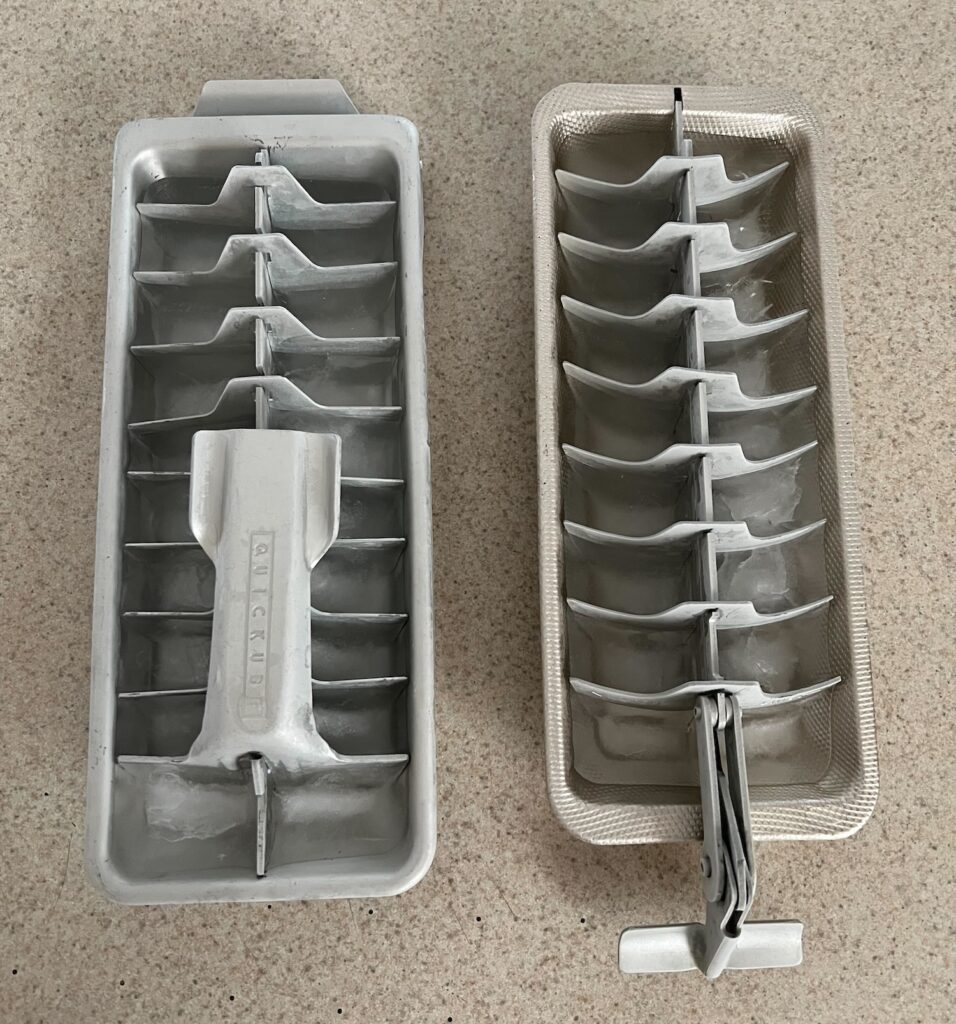
VU‘s Pam is an aluminum ice cube tray true believer, these are her two trays, currently in service.