
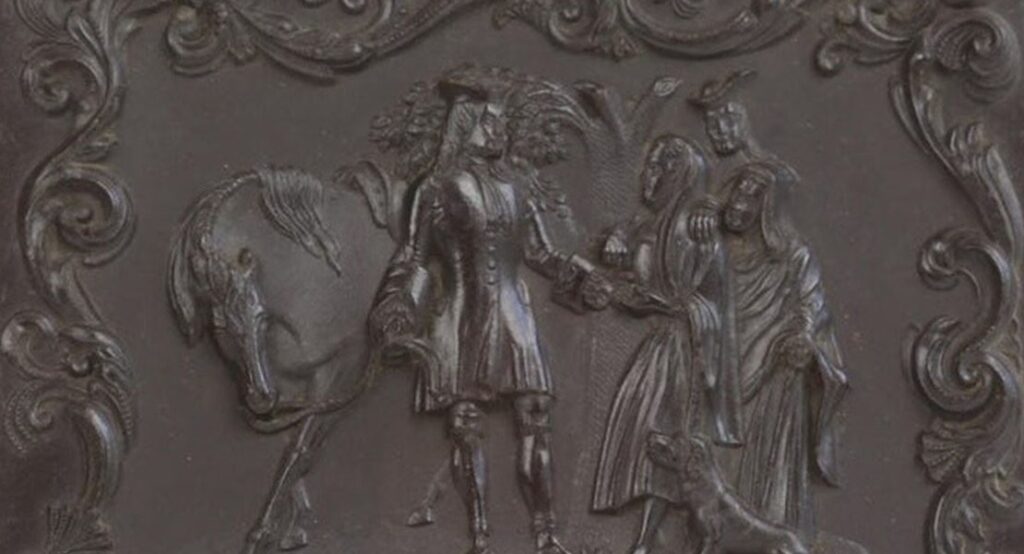
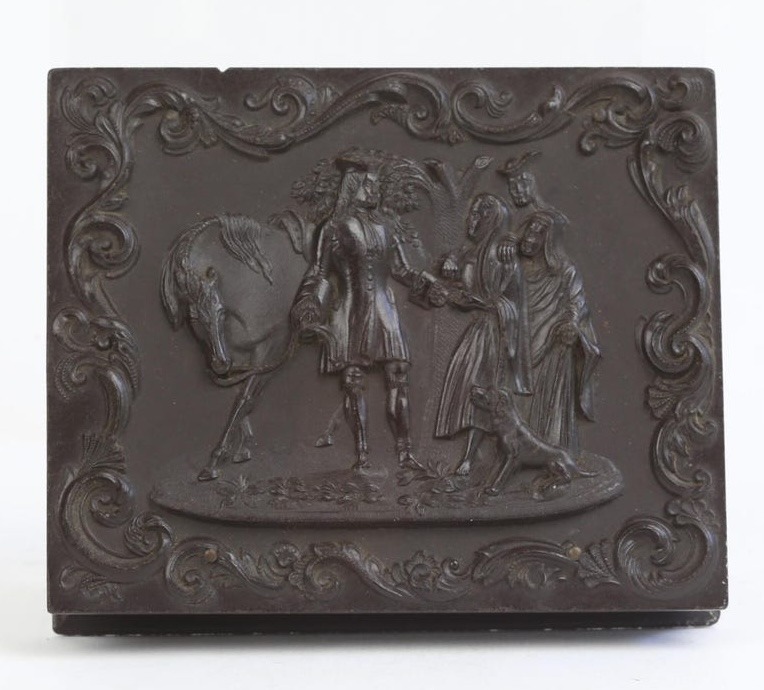
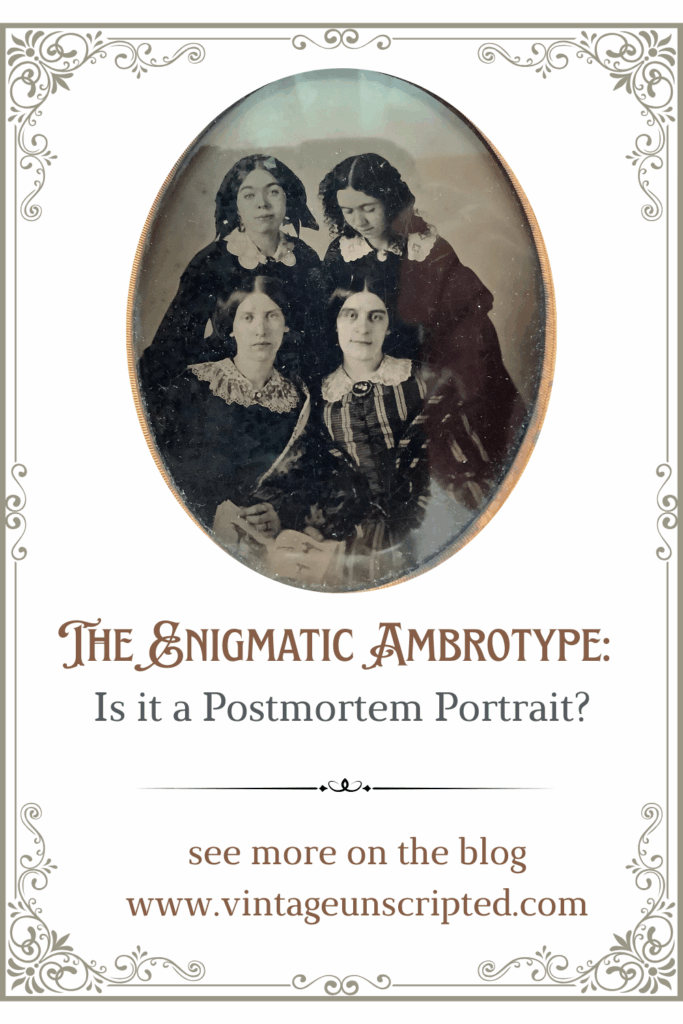
I went to the flea market as usual for a Sunday morning, despite it being rather misty. Eventually it turned into rain. There were not many sellers there, but I still went around and visited. Two women had a table set up that had some lovely antiques that would not be harmed by the rain, along with a shelf system that protected others that could not be rained upon. I found this ambrotype case, which was rather large and beautiful. I opened it and saw that it was a group of women, and so I bought it, wrapped it up quickly and put it in my bag to protect it from the rain.
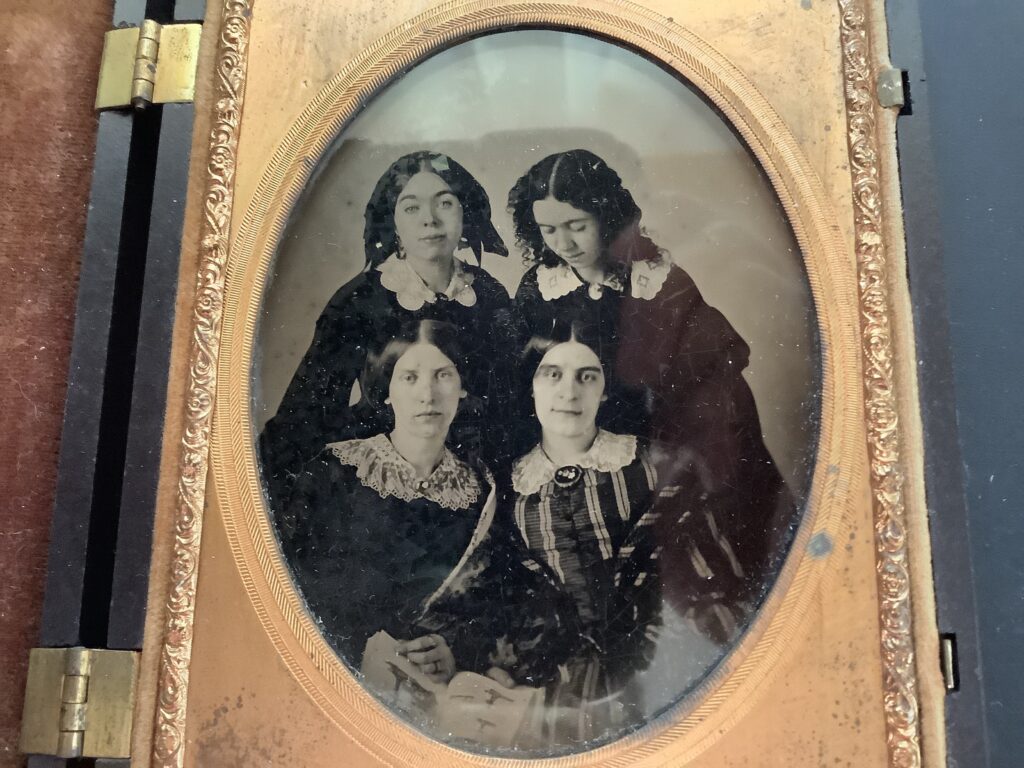
When I brought it home, I noticed the most amazing women arranged in an unusual grouping.
The first thing I noticed was that three of the women were dressed in black and the fourth was dressed in a pretty striped dress. I wondered if these women were in mourning and were posing in an ambrotype studio for a record of the four of them together. The woman in the striped dress may have been deceased, and was dressed in her best dress with no need for mourning black.
In this era, posing for a photographer might’ve been their first experience of their faces being recorded. It was not too long before that if you wanted to capture somebody’s visage, it would need to be a portrait painting or a small cameo painting. So I thought for them, this ambrotype was special, costly and notable.
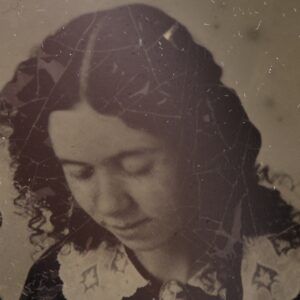
One of the young women was leaning over and looking down at what I believe is the sister in front of her. This is not a typical pose for maybe the only photograph you will have in your life in the 1850s. I am wondering if she is gently holding her dead sister to keep her in the right position for their portrait. Postmortem photographs were made of a deceased member of a family, sometimes with others, so that they will be remembered in a captured image and not just in memory. I hope you will look at the images taken blown up just a little bit to decide for yourself.



We have no idea of the exact date, nor the name of the family or even the studio that they were photographed in. Inside the case is an advertisement for A P Chritchlow, who made daguerreotype cases in the 1850s in Florence, MA to sell to photographic studios to protect glass plate portraits of the time period.
I have asked others of their opinions about this image. The reason why I think the front right woman is not alive is because of her eyes which appear very shiny and she is bent towards her sister at the front. Her thumb rests on the page of a book while the living sister is holding the book. One friend thought it was the woman bent over who was deceased, but in a postmortem situation, she would’ve been the whole reason for the photograph and great pains would be taken to make sure that she was upright and looking at the camera along with her siblings. The woman looking down does not seem to have a hairdo like the older sisters in front and that is because I believe she’s the youngest. She may be 15 to 17 years old and was not required to do up her hair just yet.
I’d love to hear what you have to say about this very interesting image. Leave us a comment.
Here are some links if you want to take a deeper delve into mourning and postmortem photography, and even a link to a television series.
Kate Tattersall Adventures
Post-Mortem Photography
Dead Still



1 comment
What a fabulous find, Mary Ellen. I love your conjecture about the photo, but I hate the fact that we don’t know the answer to your question!! I hope that a family member will come across your blog post and be able to let us know if this is indeed a postmortem portrait.