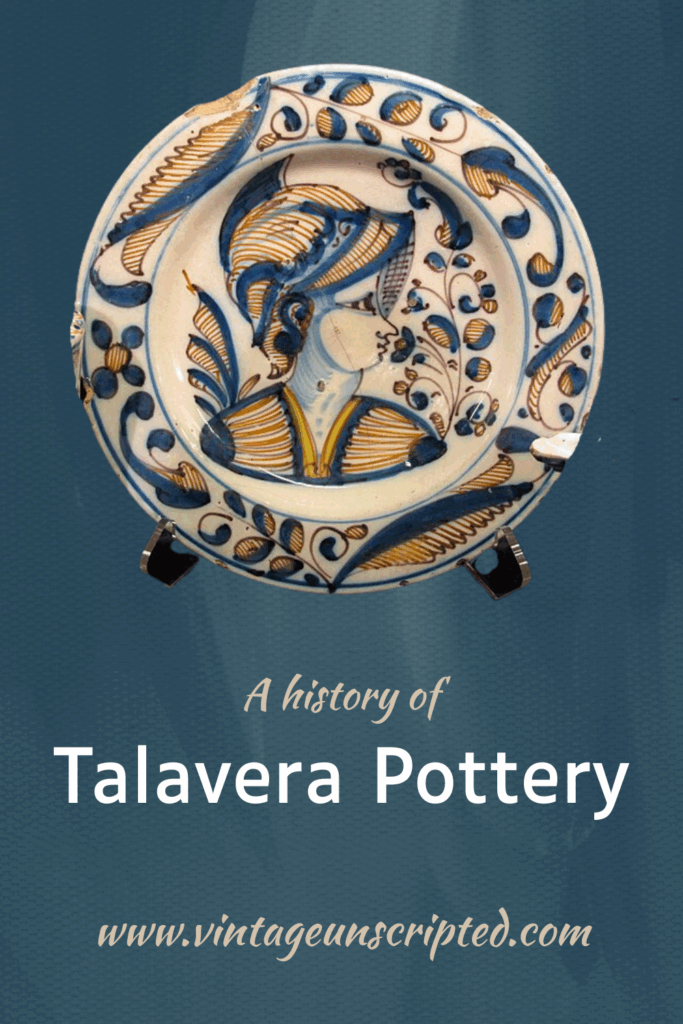
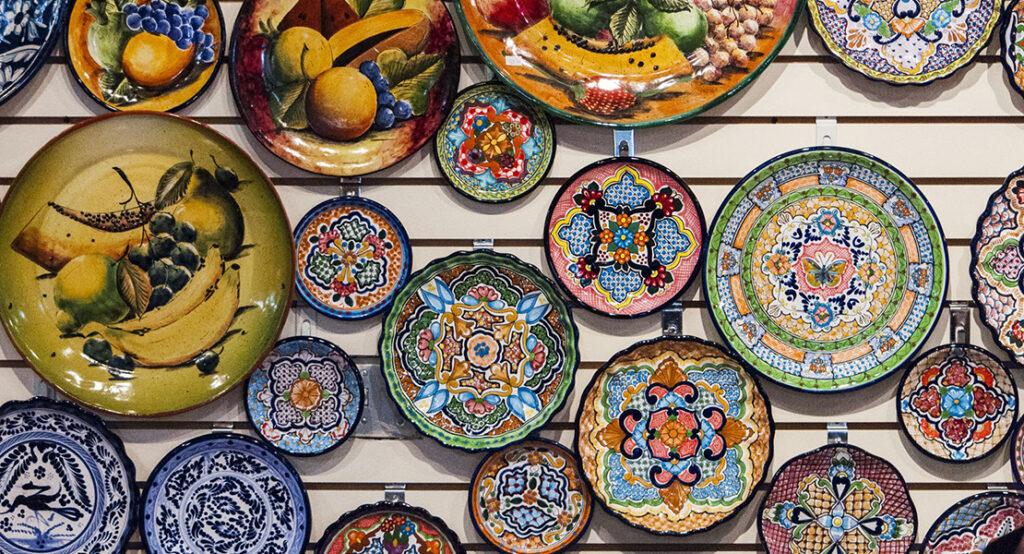
Growing up in Los Angeles with our rich heritage of Mexican culture and colorful art, it’s no surprise the bright colors and patterns of Talavera pottery caught my attention at an early age. The history of this durable and beautiful pottery goes back to 13th century Spain, 16th century Mexico and even further back to the Roman Empire to its beginnings. The patterns, colors, glazes, and clay forms originated in the Middle East as well as pottery made in China centuries ago.
To this day, Mexican and Spanish Talavera pottery manufacturing is highly regulated and certified. Made in the states of Puebla and Tlaxcala, Mexico, and the town of Talavera de la Reina in Spain due to both the particular clay found in the regions and the historical tradition of the families who made Talavera pottery for generations. Originally Talavera pottery was only made in blue or Azul. Colors were expanded over the years to include yellow, orange, green, mauve, and black. Each color is made from natural minerals.
There is a very small limited number of certified potteries who make authentic Talavera. There are only a few places in the world where authentic Talavera pottery is made, they only exist in Spain and Mexico. Each workshop is certified by the Consejo Regulador de la Talavera. The council was created in 1998. Each shop is inspected twice a year and subject to laboratory regulations and verifications including maximum levels of both lead and cadmium due to the use in food consumption. Only certified workshops are authorized to use the potters signature, workshop logo, and certified hologram noting certification. This high standard of quality and specificity makes authentic Talavera pottery highly collectible.
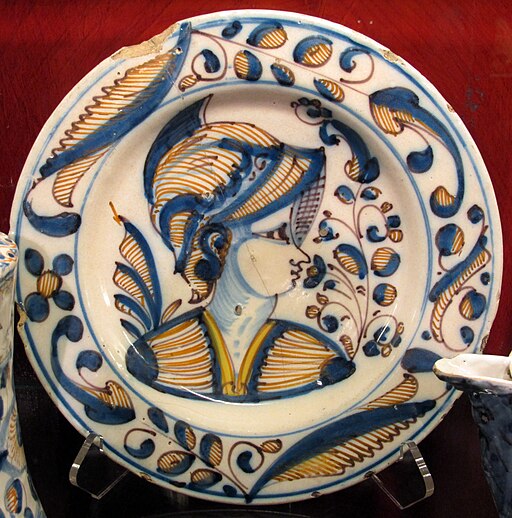
Due to this stringent process and certification most of what’s found in the marketplace is not true authentic Talavera. Making true Talavera pottery is a long involved process. One item can take up to six months to create. There is often only a potter and a painter involved in creating each piece. The art has been passed down from generation to generation and has not changes since the 15th century. Because this process has been unchanged for centuries, UNESCO added the process in 2019 to its list of The Intangible Cultural Heritage of Humanity. Here is a video from UNESCO documenting some of the artists and processes involved.
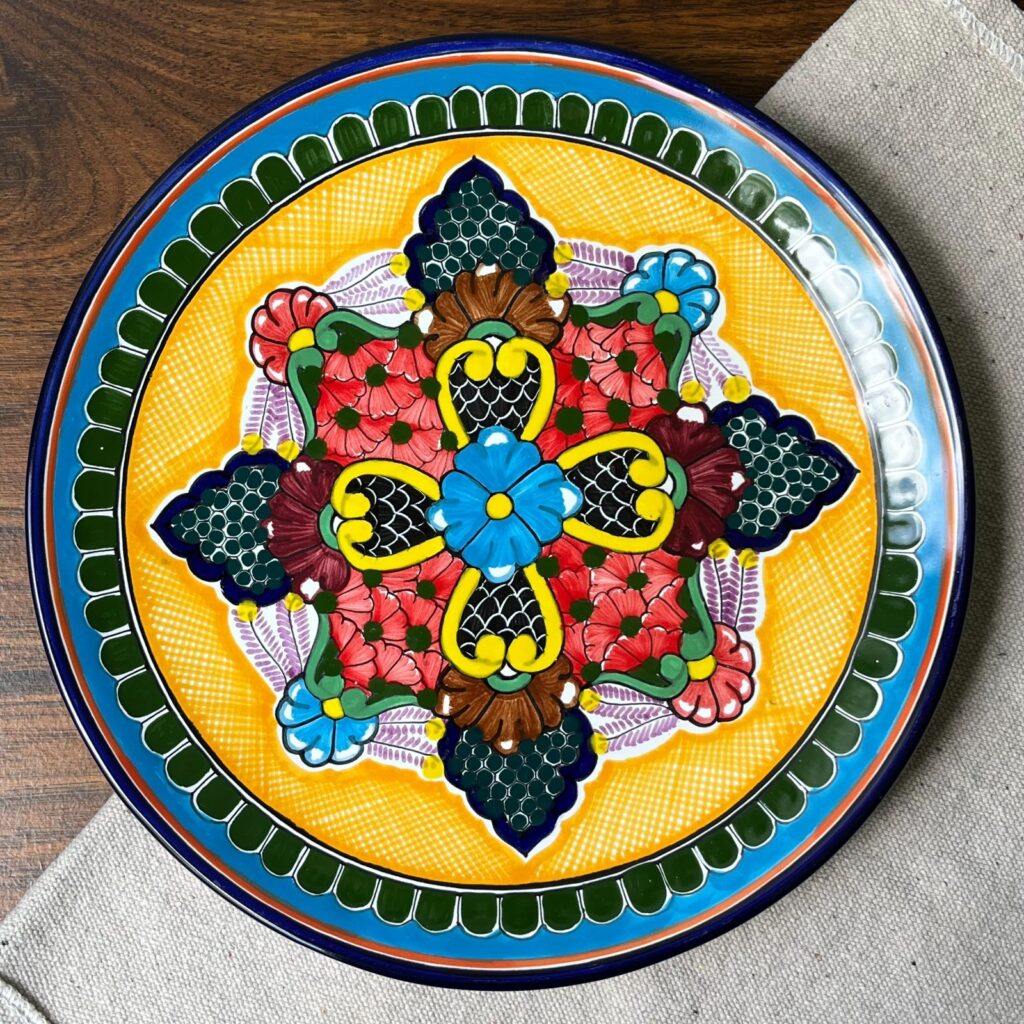

There are many makers of similarly styled items that are bright and colorful but do not meet the strict designations of true Talavera pottery. They may be called Talavera but are known as variations of Majolica. Majolica is the name used for any type of tin glazed earthenware.
If you would like to learn more about Talavera pottery, Talavera.com has articles on the history of Talavera, how to spot imitations, and more. Also, check out this article on Wikipedia or this article from the Library of Congress.
And don’t forget to sign-up for our email newsletter so you don’t miss out on any of our other posts for vintage lovers.