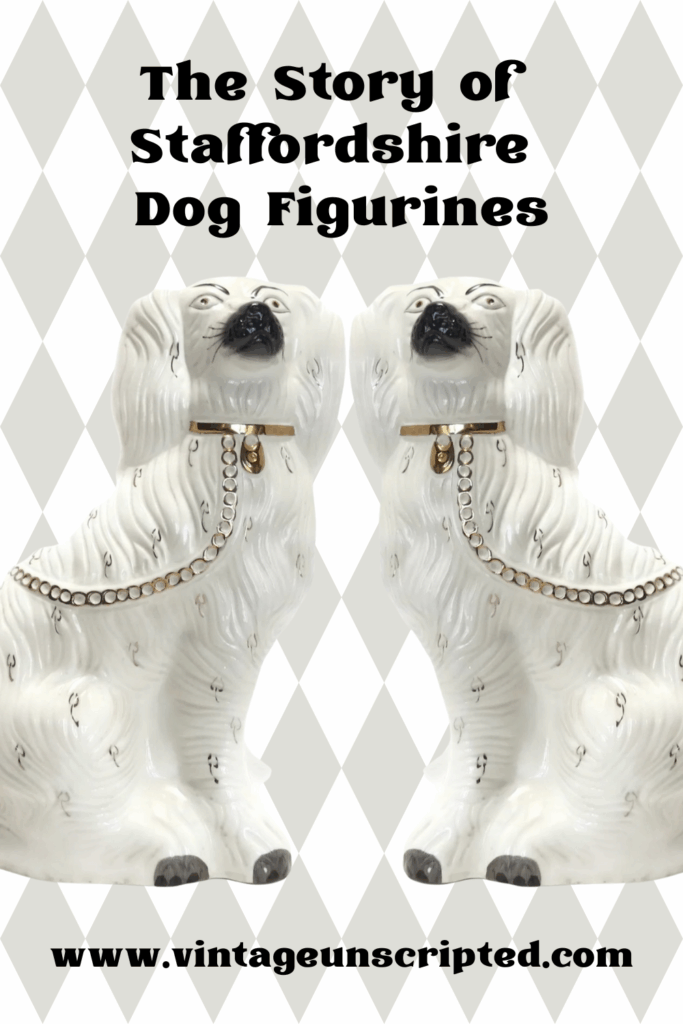
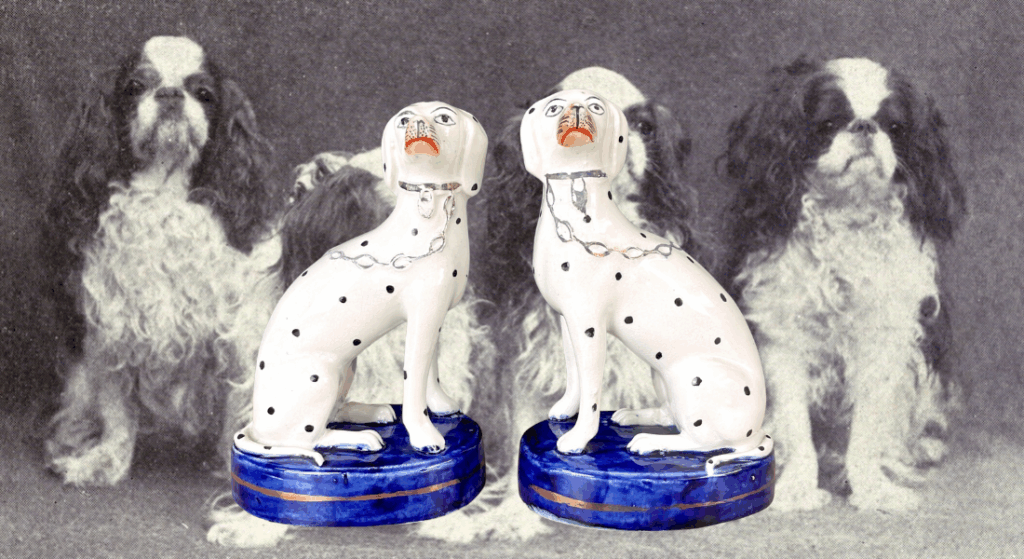
Staffordshire dogs, also called “hearth spaniels” and “fireplace dogs,” have been a part of British decor since the 18th century. They’re called Staffordshire because Staffordshire, a county in England, has been considered the center of British pottery makers due to its abundance of clay, salt, lead, and coal. All ingredients used in manufacturing local pottery were available and ready.
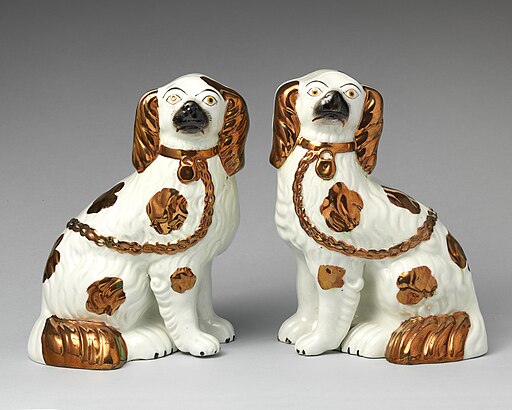
The popularity of pairs of dogs is attributed to British Royalty’s fondness for spaniels throughout the 1600s, spurred on by King Charles. By the 1800s, Queen Victoria kept dogs, one of which was a spaniel, and popularity surged once again. By this time Staffordshire pottery had become hugely popular and the dogs were found on fireplaces throughout the British Empire. They had become fixtures in most homes as they were affordable and readily available. These were the Victorian version of kitsch and knick-knacks.
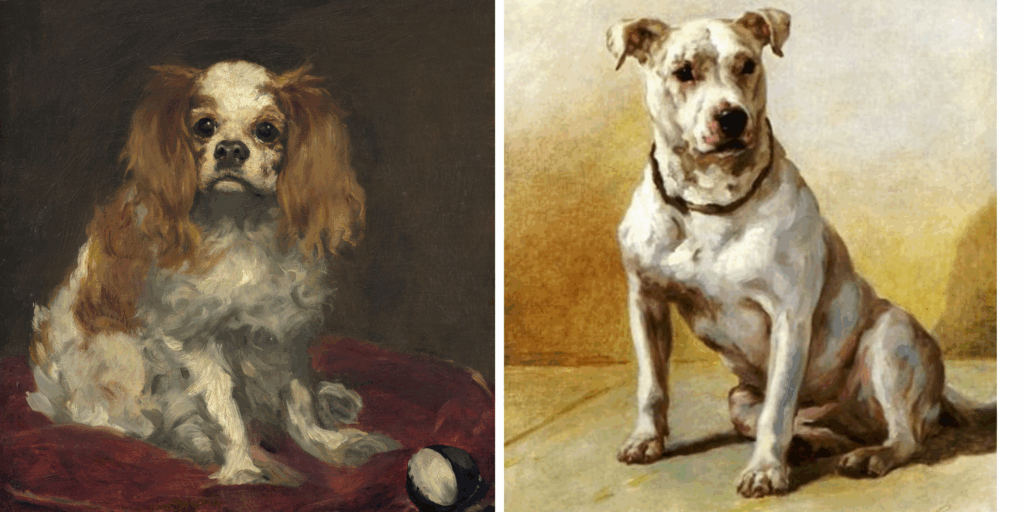
The dogs come in a variety of breeds, with Spaniels being the most popular thanks to both King Charles and Queen Victoria. It’s thought that the origins may have come from the Chinese Foo Dogs which were considered guardians protecting against evil and placed at the entrance of temples, palaces, and homes. Foo Dogs are actually not dogs, but lions. Since there was a great deal of trade between China and Europe throughout history, the idea of placing a pair of dogs to ward off evil spirits would not have been unusual.
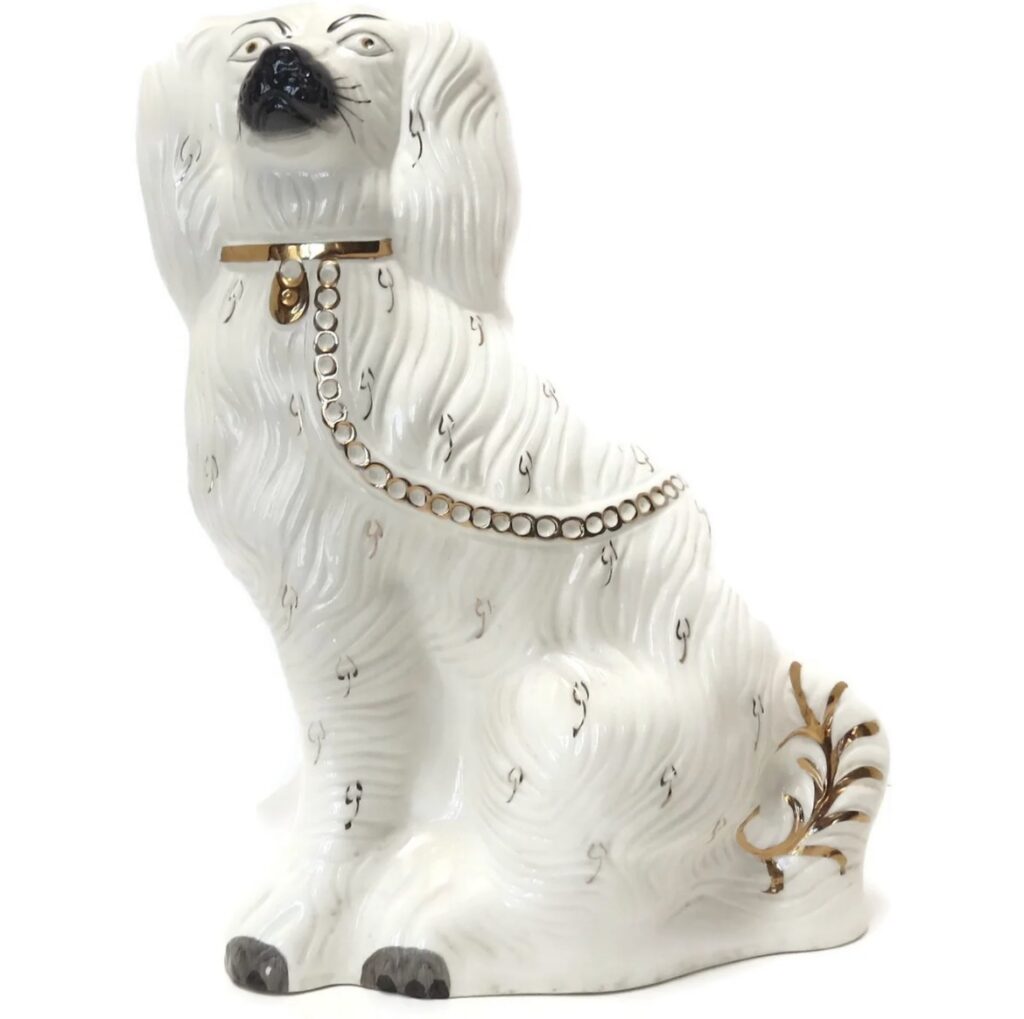
As every home had a fireplace both for cooking and warmth, it was a logical decision to place a pair of dogs atop the mantle. They were both decorative and functional. As many husbands were either away at sea or working far from home, one rumor was that wives would place the dogs on the window sill in such a way as to notify passing lovers that the man of the house was either away or home.
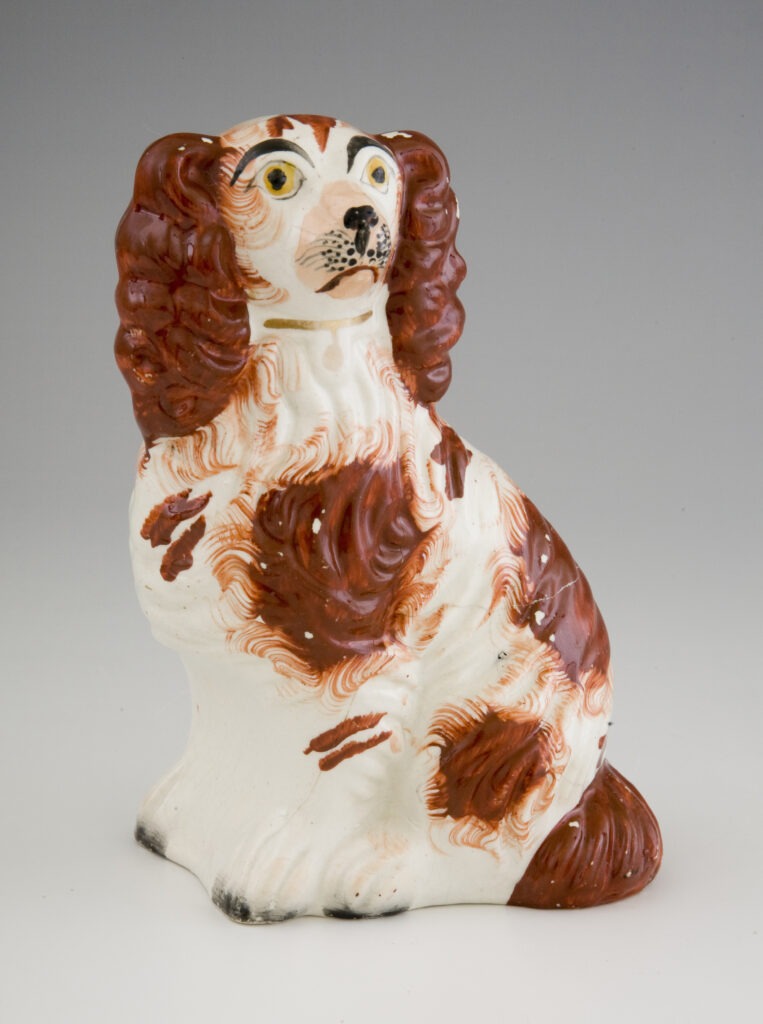
Unlike Foo Dogs, which tend to be quite large and heavy, often made from stone or concrete, Staffordshire dogs tend to be no larger than a foot or so tall, very often much smaller. Their intent was not to be as oppressive and frightening as Foo Dogs, but more decorative and symbols of status.
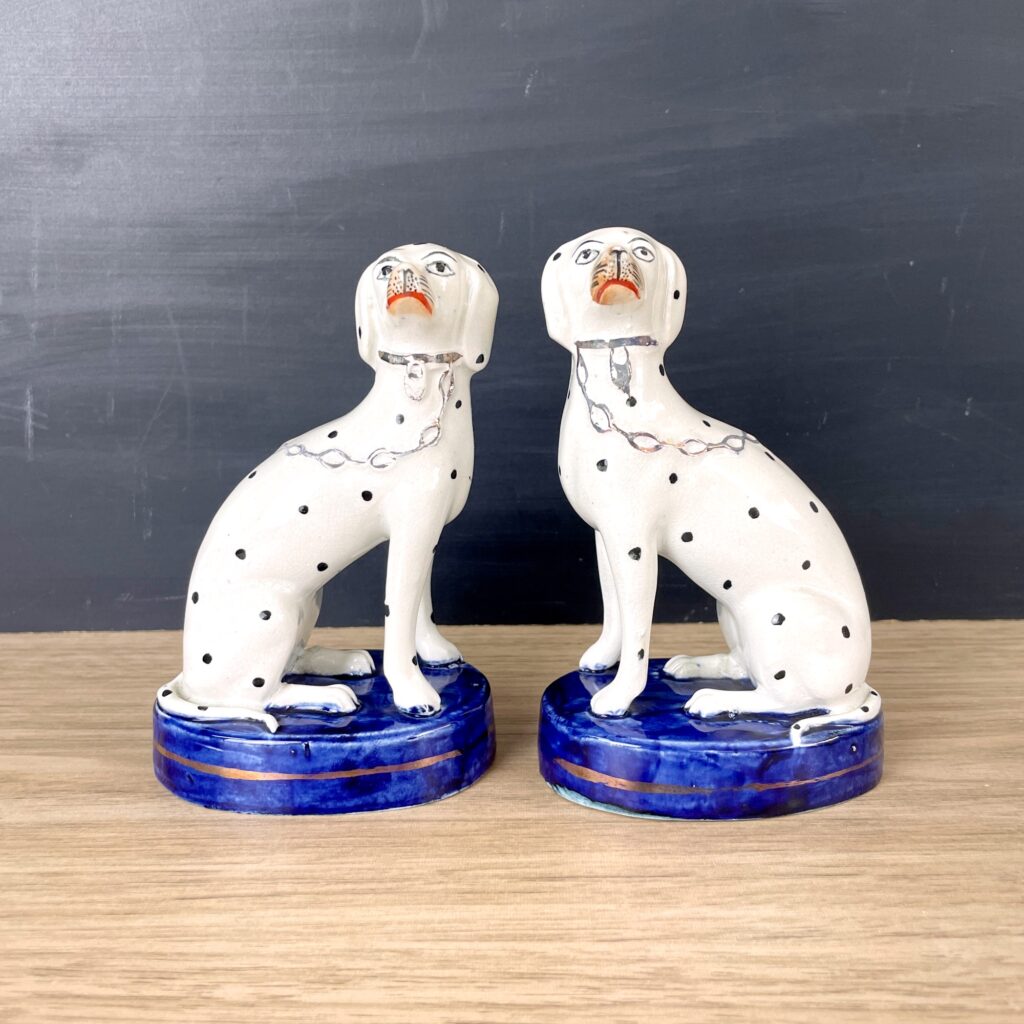
As times changed along with tastes, their popularity waned. The quality also tended to suffer as more and more pieces were produced. By the 1920s, they were going out of style. Now finding a well-made matching pair can be quite expensive. There are plenty of single dogs and lower quality pairs still available.
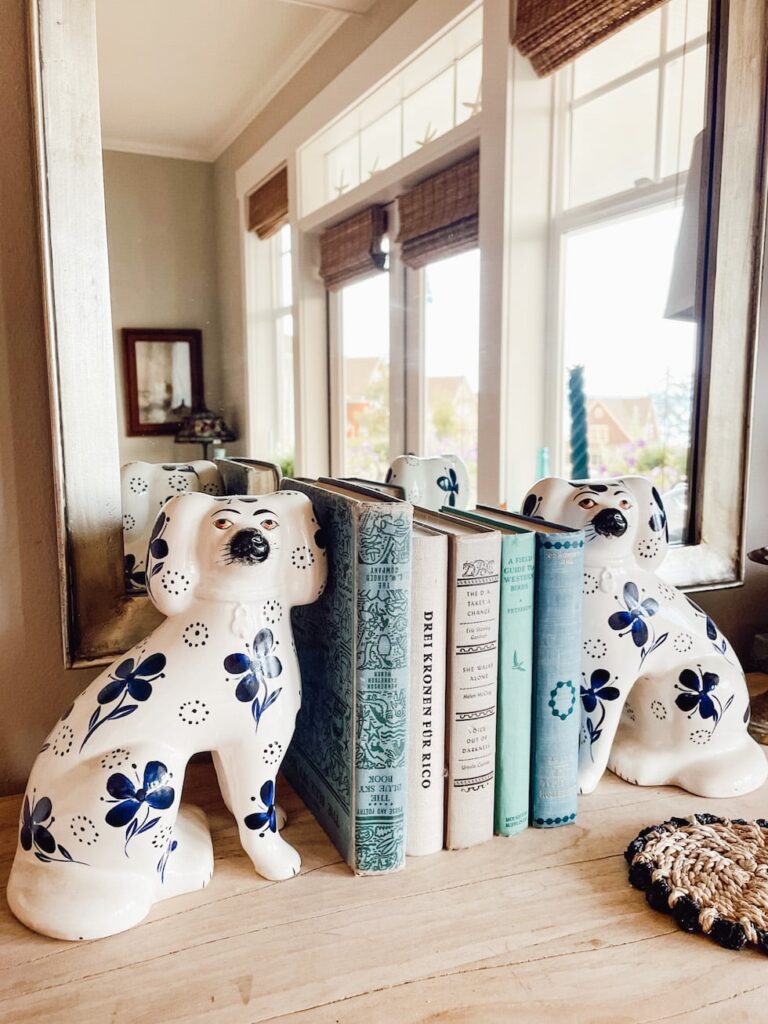
Over the years styles have come and go and Staffordshire dogs have popped up in home decor designs on and off. They are a staple with Grandmillenial aesthetic fans, who use them in unexpected ways, mixed with modern pieces. But as anything else vintage or antique, if you love it, you love it, and that’s all that matters. So if you happen to have one or two Staffordshire dogs about, enjoy them, and don’t worry if they aren’t currently in style. They’ll be back.