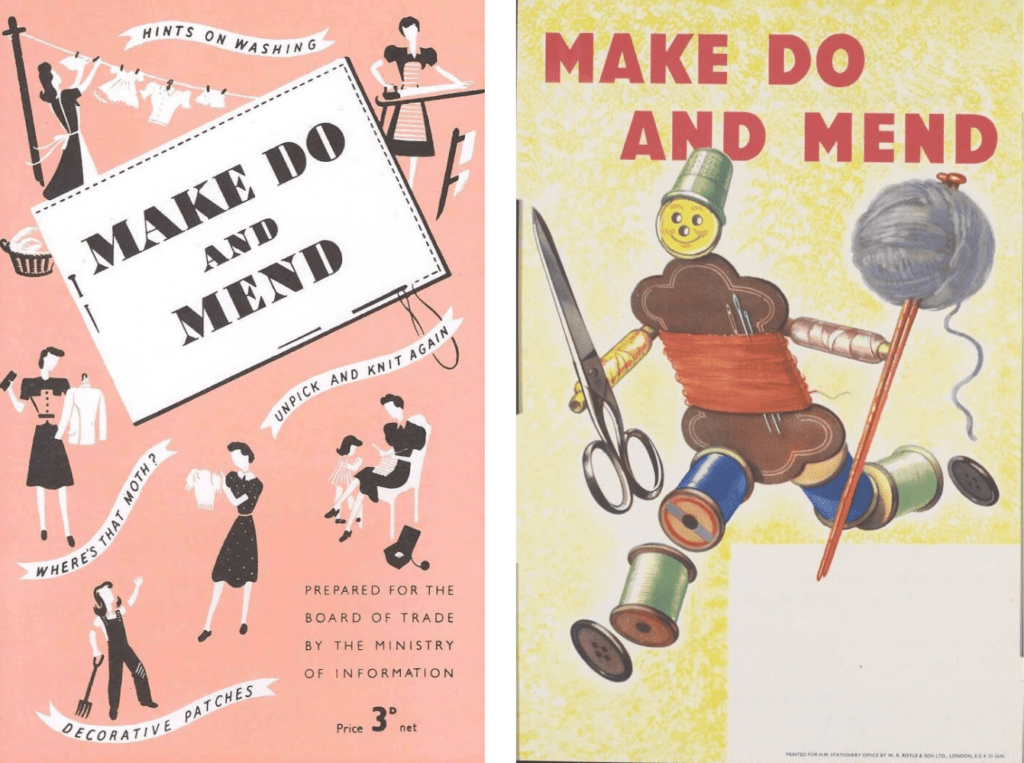
Make-dos are a magical category of vintage because they are one of a kind and come with the extra swagger of ingenuity. What we call “repurposing” now was calling “making do” in the first half of the 20th century. People had plenty of reasons to make do back then, namely the Great Depression and the two World Wars. The British government had a campaign during WWII titled “Make Do and Mend.” Mending showed appropriate frugality during times of scarcity due to the war effort. How lovely it is to see the pewter daffodil brooch in this week’s fresh to market vintage that was mended from one thing into another, giving it new life instead of having it languish at the bottom of the jewelry box with other sad broken jewelry. That took a blend of frugality and creativity.
Mending has reemerged as a cool skill to master. A well made or favorite garment that needs a repair is worth the effort to do it yourself or get it done. Gen Z has embraced the idea, yet another example of how the youth will save us. Here’s a look at mending behavior by the numbers:
- Some studies have found that 77% of Gen Z have mended something (mending including things as simple as sewing on a button to repairing a hole).
- 45% of those aged 35-44 years old reportedly mend garments.
- 30% of us have things hanging in our closets that we don’t wear because they need repair. (Do not ask us about the two Ikea bags full of of vintage finds that need smallish repairs.)
- Even though 72% of us are willing and able to sew on a button, 47% of us are not having any part of more extensive repairs.
- But get this–82% of repairs we make eliminate the need to buy something new.
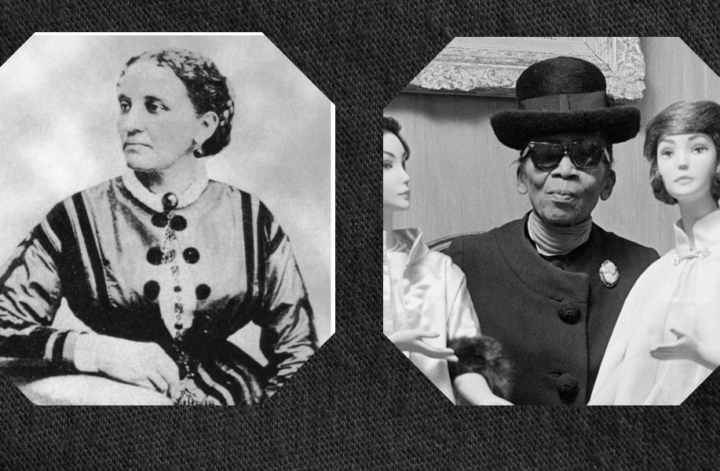
Visible mending, where a repair is celebrated artistically instead of done discreetly, is a huge trend with an excellent presence on Instagram. You can also find basic mending instructions in the digital version of Make and Mend for Victory, a 1942 booklet from the Spool Cotton Company. And Make Do and Mend, the book shown above left, was reprinted by London’s Imperial War Museum in 2023 and is available both new and used.
Before you get out your glue to mend that loose veneer on your dresser, your embroidery floss to mend a hole in your jeans or your duct tape to repair everything else, make sure you stop by the rest of our fresh to market vintage picks.
Antique Pewter Daffodil Brooch
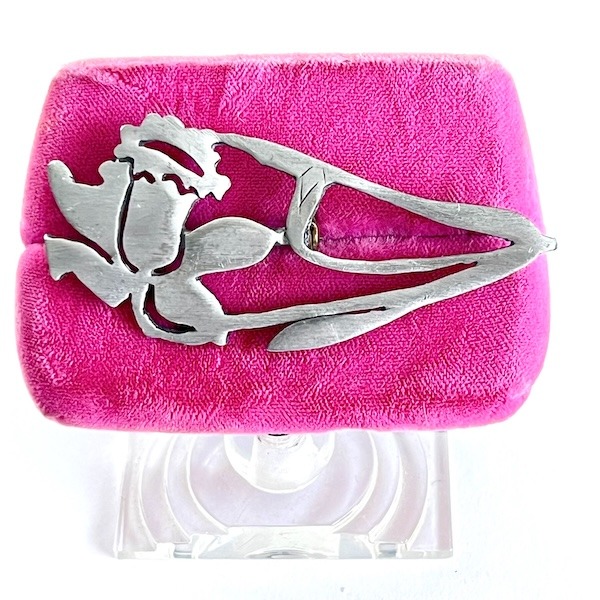
Most of us don’t remember the days of “make do and mend” although many of us were brought up with those principles. Today we live in a different era, where many items are disposable. This brooch started life as something else. Perhaps a belt buckle or a bit of decoration attached to a hat. Whatever it was originally, someone thought enough of it to repurpose it into a brooch by adding a clasp on the back. The metal has a soft patina that only comes from years of use. I would love to know its history.
Pewter Daffodil Flower Brooch, $32.95
Pam, Vintage Renude
American Woven Wicker Basket (c 1920s)
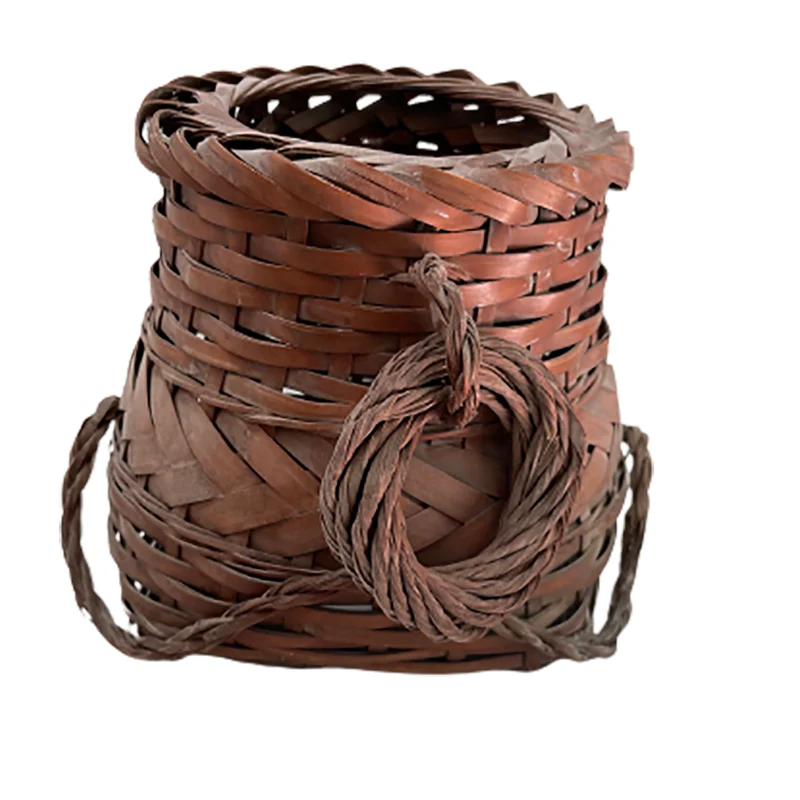
I love this sweet little woven basket that was likely designed to hold a nosegay back in the 1920s. Made of wicker woven with interesting looped handles, it would also make a fun pen holder, adding a vintage touch to your home office.
Woven Wicker Basket, $75
Linda, Selective Salvage
1970s Dripping Color Candles
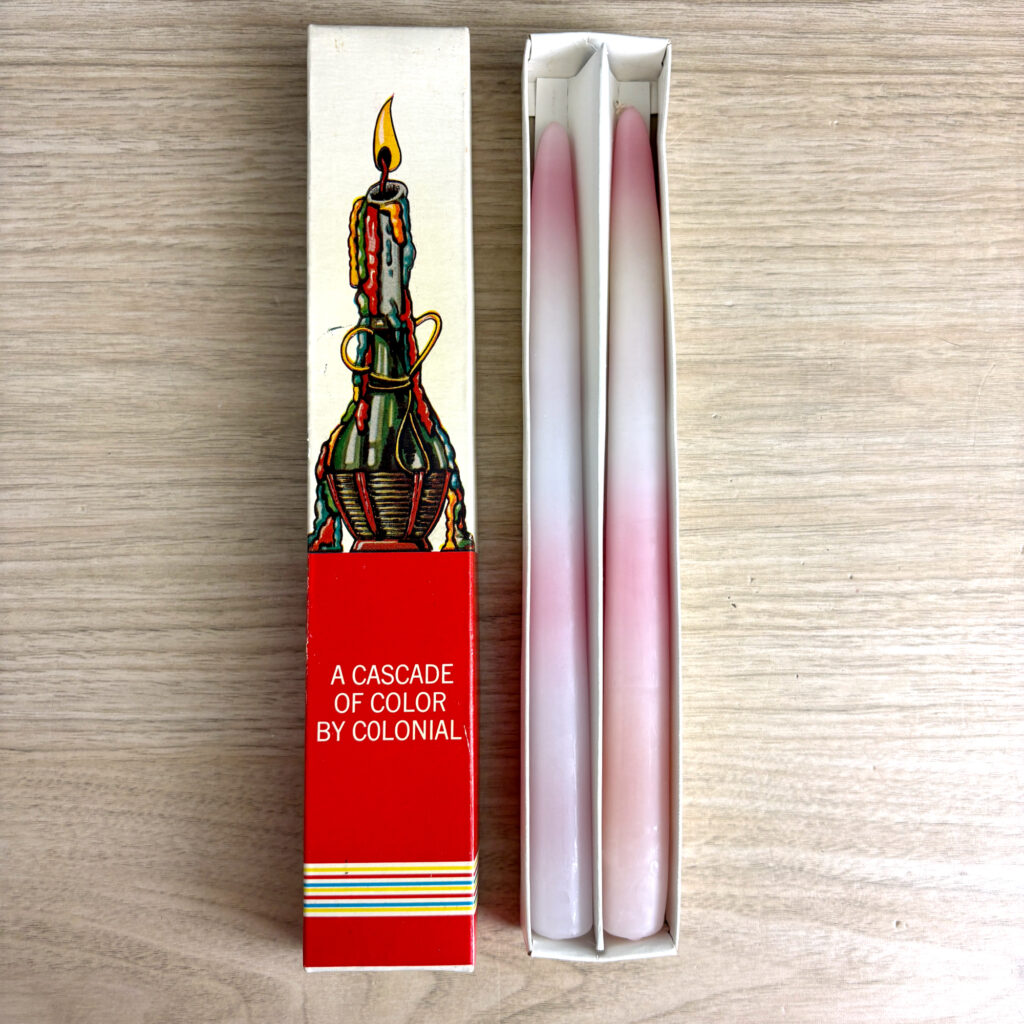
The 70s bohemian set loved a chianti bottle thickly covered in candle wax dripped down from a taper in the mouth of the bottle. The organic way to do this was to use up half burned tapers in different colors and burn them in turn to create different layers. You might even tip the bottle from time to time to build up different areas. The trend spread and some candle companies hopped on board and offered one pair of candles made with layered colors that could do the work of five or six single color tapers. Other companies sold boxes of 8″ tapers in 6 different colors. Both worked.
Dripless tapers are my first choice for regular use because scraping wax off candlesticks, tablecloths and tables is a 0/10 do not recommend. Cheap candles are more likely to drip as they are made from wax with a lower melting point and less steric acid. But finding these reminded me of how much fun it was to watch that chianti bottle nice and chunky.
A Cascade of Color by Colonial Candle of Cape Cod Dripping Candles, $21.
Laurie, NextStage Vintage
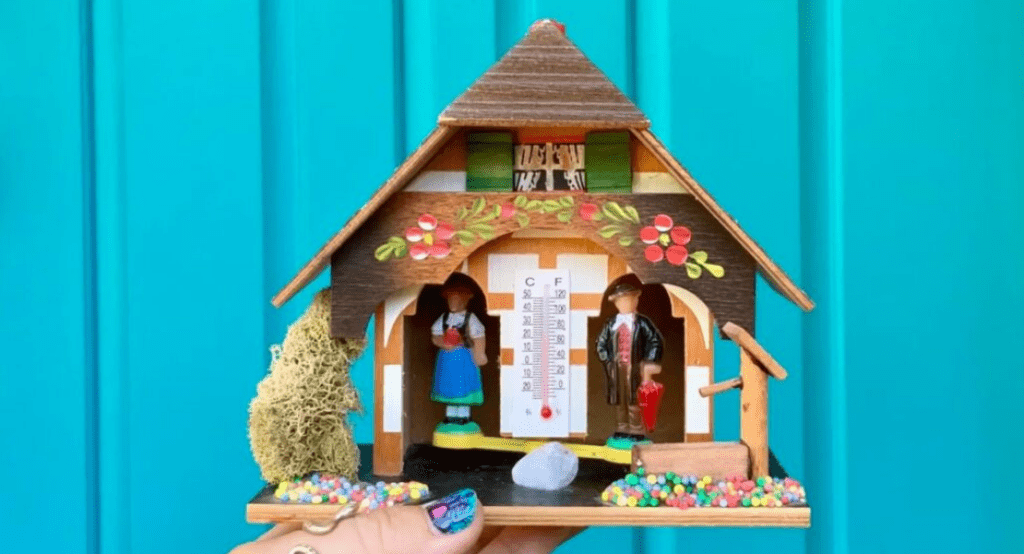
1970s German Weather House
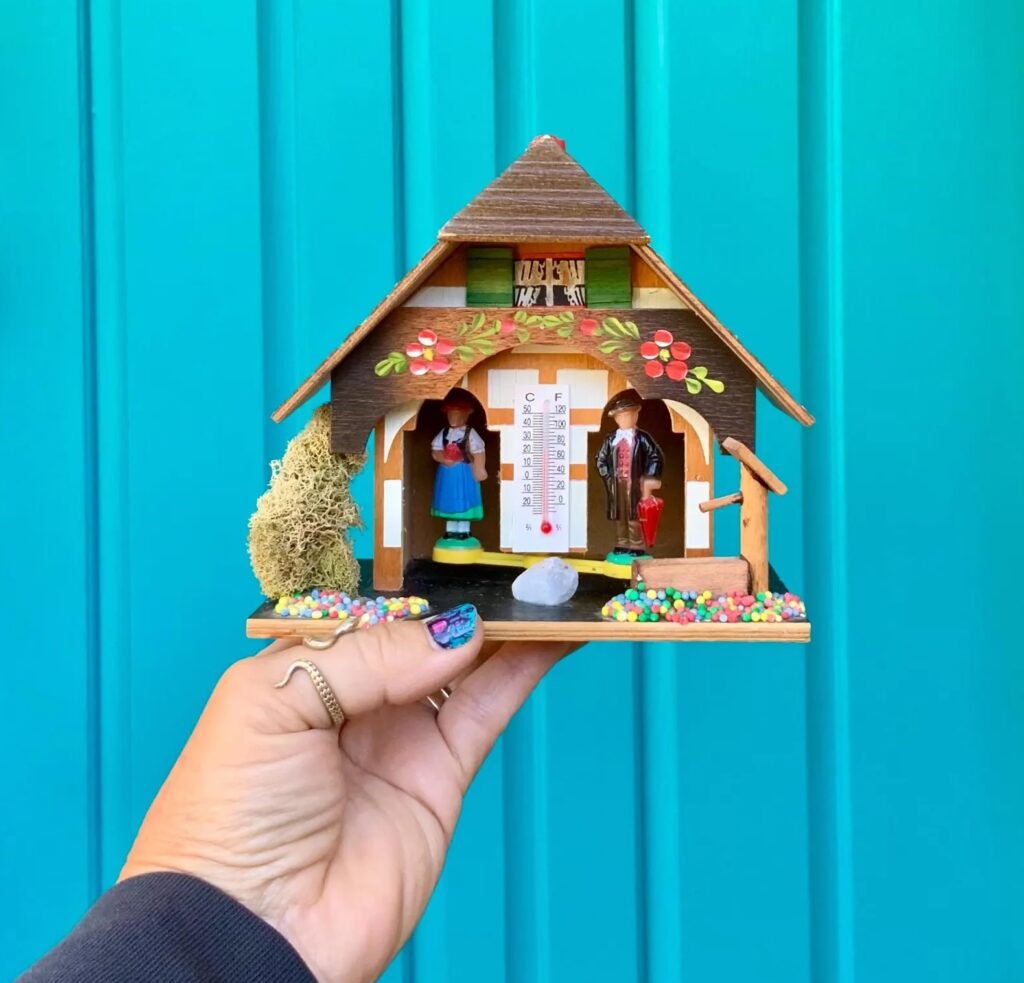
There is something magical about German weather houses, or wetterhäuschen. A traditional craft from the Black Forest, it starts with a charming chalet. Inside is a woman who swings out if it’s sunny and a the man with an umbrella who come out when it’s damp. This wetterhäuschen has the added bonus of a thermometer with both Fahrenheit and Centigrade markings.
If you want to preserve your truth that these houses work entirely by magic, you are correct. Stop reading now.
Wetterhäuschen are super basic analog hygrometers that work because a moisture sensitive string made of cat gut, hair or plant fibers is attached to the rotating shaft. When it’s dry, the string contracts and pivots the woman out. When it’s moist or humid, the string expands and the man pivots out. (Also, cat gut is gut, but not from cats–it’s made from the processed intestinal submucosa of sheep, goats and cattle. Among it’s other non weather house uses is as an absorbable suture to hold tissue together internally.) So weather houses do not work by magic in the fairy wand sense of the word, but they do work by science magic.
1970s German Alpine Home Weather Station, $59.50
From this week’s guest Ellan, ellans relics 02
Were you among those who had wax-encrusted bottles in the 70s, or are you hearing about this for the first time? Although we are here to sell vintage products, we waxed poetic about the virtues of making do at the top of this post. So in actual fact, if you have partial candles in different colors that will drip, you could make do without a perfect pair of cascading color tapers. Ouch, it hurt to admit that.
One thing that you don’t need to “make do” about is remembering to check in with Vintage Unscripted every week. Subscribe to our email newsletter and you’ll get one email a week with links to all the posts from the previous week. And we would sooner burn drippy red candles on our mom’s vintage white Christmas tablecloth again and have a long, sloppy cry about it afterwards than ever share your info.