There are two “antique” and two “vintage” picks in this week’s fresh to market vintage. Which brings up the question, what makes something “antique” and what makes something else “vintage?” One has a legal reason, the other has a functional reason.
Back in 1930 during the Great Depression, Senators Reed Smoot and Willis Hawley sponsored the Smoot-Hawley Act (Tariff Act of 1930), which placed import tariffs on tens of thousands of goods with the intent of protecting American businesses by raising the cost of imported goods. Unfortunately, it had the opposite effect. Other countries imposed tariffs, global trade shrank, and the Depression worsened.
Under Smoot-Hawley, there were no tariffs on “antiques.” Customs agents needed an actual rule to determine what was antique; the vibe of looking old was not an enforceable criterion. So Congress decided that antique = 100 years. Antique sellers and auction houses grabbed on and ran with it. That’s why today if something is called antique, it is generally acknowledged to have graced the planet for at least 100 years.
Vintage is not based on a law. Vintage is based on popular convenience and convention. With the rise of reselling in the 60s and 70s, clothing dealers in London, New York and Los Angeles needed a way to distinguish between recent secondhand and older pieces that represented a distinct style from another time and might be collectible. Someone started calling the older clothing “vintage.” Other sellers picked up on it, it spread to magazines and eventually to all of us. Online selling sites like Etsy, eBay and Ruby Lane have codified vintage as pieces aged from 20 years to 99 years in their selling rules.
We felt it was important to clear this up because we have heard that there are people who are nowhere near 100 years old calling themselves “antiques.” Please be respectful and call yourself “vintage” unless you have passed the century mark. It doesn’t matter how much your joints creak or how old you feel, you are still “vintage.” And in the parlance of vintage sellers, those squeaky knees and surface blemishes are “patina.”
Now that that’s cleared up, on to this week’s fresh to market vintage.
Antique Judd Owl Sliding Book Rack
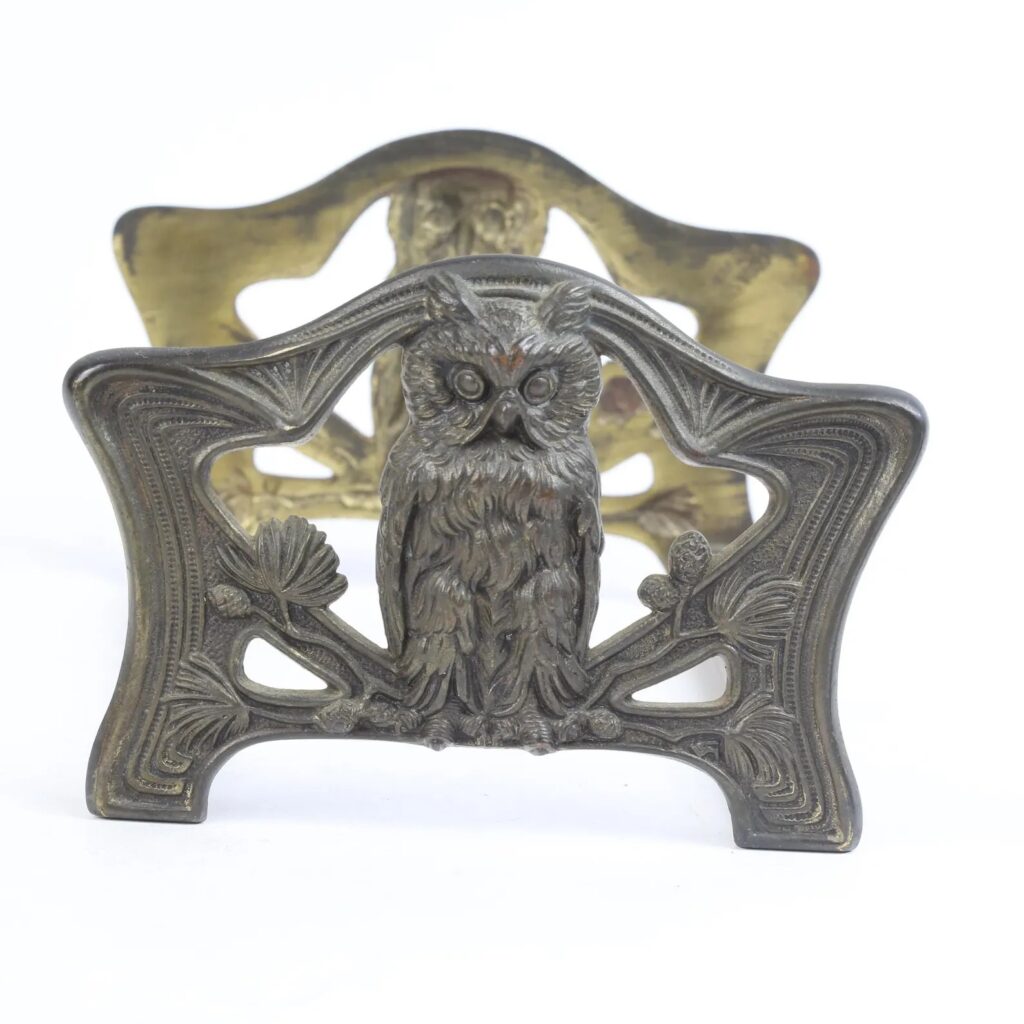
Cast Iron Molded Book Rack, $68.99
Mary Ellen, Aunt Hatties Attic
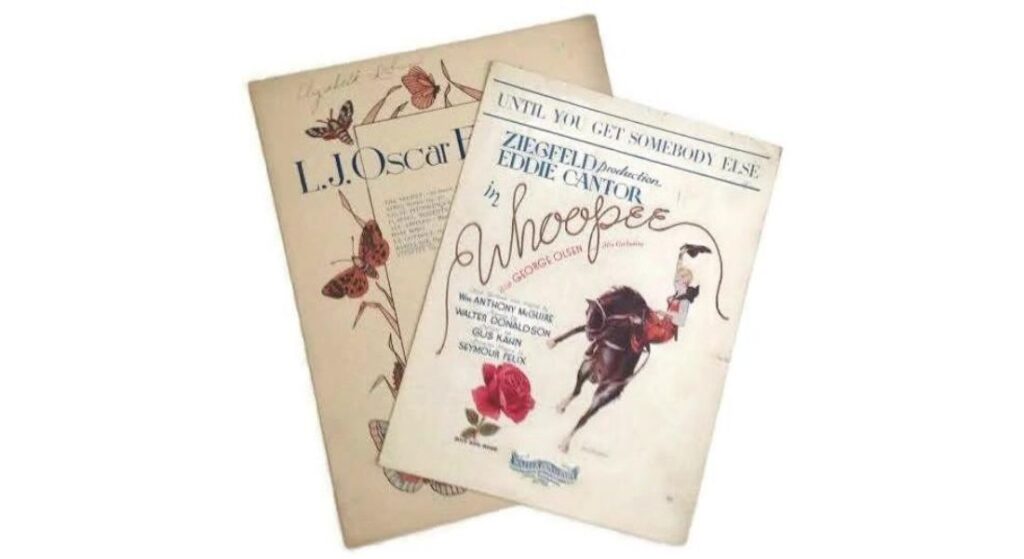
Vintage Sheet Music, Ziegfield Eddie Cantor (c 1910-1920)
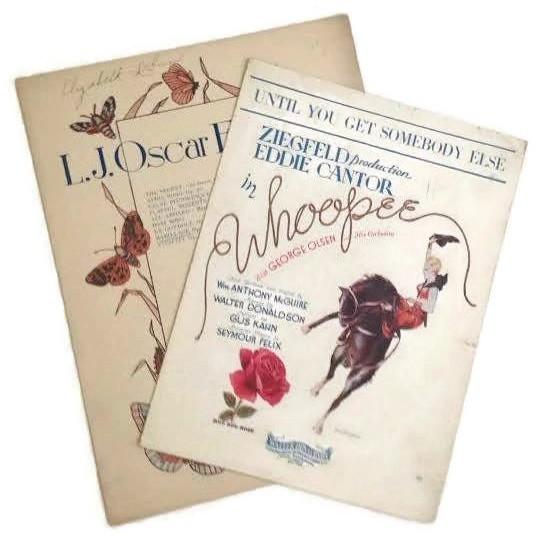
Two pieces of vintage sheet music including: “L.J. Oscar Fontaine” – 1911 – Beautiful butterflies grace the cover in shades of rust, gold and blue and “Until You Get Someone Else” – 1928 – from Ziegfeld Production starring Eddie Cantor in “Whoopee”. Complete in decent vintage condition. Suitable for framing. Colors are good and the graphics are nice.
Eddie Cantor & Ziegfield Sheet Music, $20
Linda, Selective Salvage
Pink Choker Necklace Marked Japan
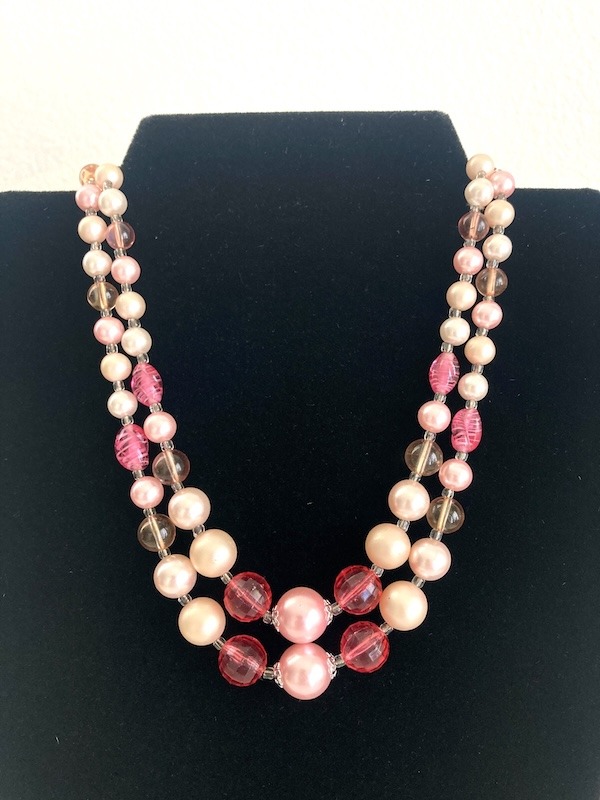
One of the ways Japan rebuilt their economy after WWII was to increase manufacturing. Costume jewelry was stylish at the time. It was also cheap to manufacture and could easily be shipped in large quantities. With wartime restrictions no longer in place, women could purchase fashionable clothing and accessorize accordingly again. This style of necklace was incredibly popular. The short colorful beads emulated the jewelry worn by the movie stars of the day. This look is still popular today.
Double Strand Choker Necklace in Pink, $24.95
Pam, Vintage Renude
1950s Hazel-Atlas Platonite Apple Snack Set
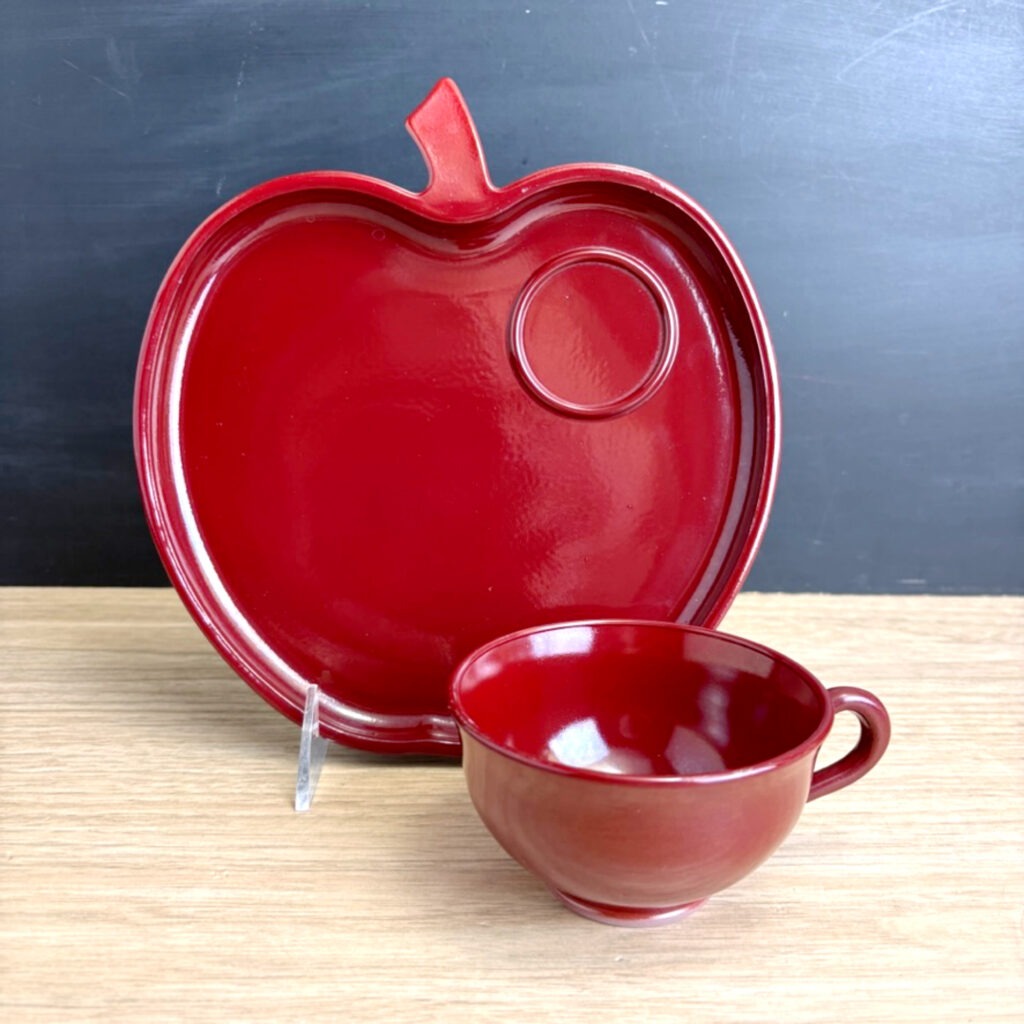
This Hazel-Atlas apple snack set is made from their Platonite milk glass with a burgundy fired-on finish. Platonite was Hazel-Atlas’s proprietary opaque white glass, used for tableware from 1936 through the 1950s. It was sturdier than regular milk glass, yet more lightweight and also more heat resistant. From the manufacturing perspective, it provided excellent adhesion for decorating with fired-on finishes, gold banding and decals. For vintage lovers, it’s a tableware classic.
Hazel-Atlas Platonite Apple Snack Set in Burgundy, $25.
Laurie, NextStage Vintage
Of course we want you to read our posts immediately the day they are published. Not going to lie, we would be happy if you scheduled your whole week around our Wednesday, Friday and Sunday posts. But we understand that for even our most devoted readers, things like getting all that summer stuff done get in the way. That’s why we have a subscription email newsletter that arrives in your inbox once a week with links to all the posts from the week before. That way you can have your fun and not miss a single Vintage Unscripted post. As it should be…