
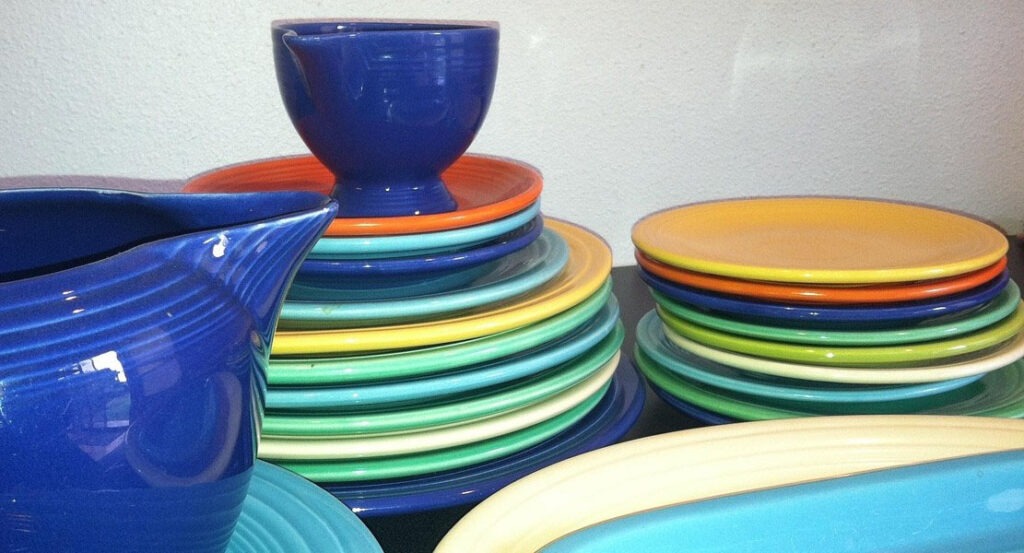
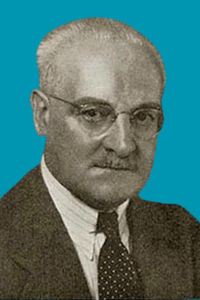
 If you have ever admired Weller pottery, Roseville pottery or Homer Laughlin Fiesta Ware you may be familiar with this name. Frederick Hurten Rhead worked at each of these companies and more. Known as an American pottery artist, he was born in 1880 in Staffordshire, England. Working in nearby Stoke-On-Trent, which was the pottery capital of the U.K., he grew up as part of a creative family. His father worked at Minton’s, one of the oldest ceramic manufacturers in the U.K. His brother Harry and sister Charlotte were both pottery artists. All three were trained by their father, and they all became famous pottery artists in their own right.
Frederick moved to the U.S. in 1902, landing in Ohio. Ohio was the center of pottery makers in the U.S during this time. Similar to Stoke-On-Trent, the area had large deposits of clay well suited to pottery making. He worked for a small company known as Avon Faience in Tiltonsville, OH. From there he moved on working at several of the potteries in the Ohio area.
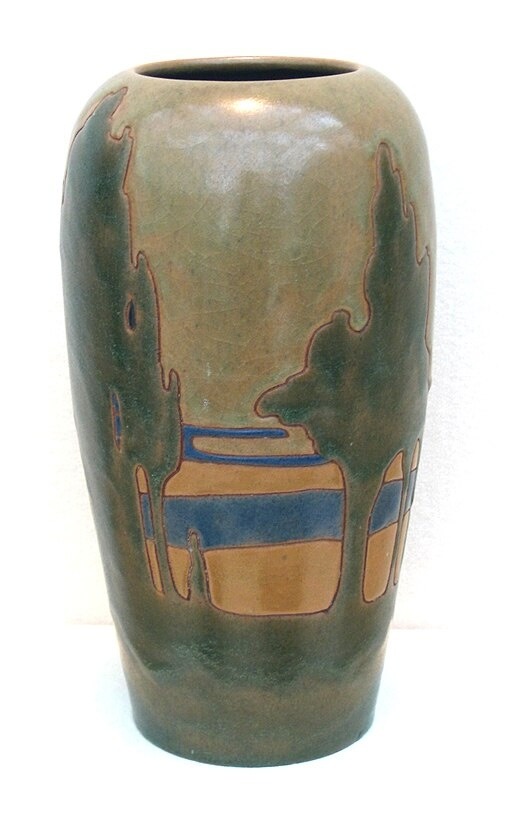
His next stop was to Weller Pottery in Zanesville where he worked as a designer. From Weller, he moved to Roseville Pottery where he became an art director. By 1908, his brother Harry joined him at Roseville and eventually took over Frederick’s position. By that time Frederick was moving on once again, this time to University City, Missouri. University City was one of the first American planned communities. Rhead taught correspondence courses there in pottery at the Peoples University. The city and university founder eventually went bankrupt, and funding for the pottery studio and school ended.
Rhead and his wife moved to California, where he began working teaching pottery to women at the Arequipa tuberculosis sanatorium. The Arequipa Pottery was part of the sanatorium and a way for them to make extra money while being part of therapeutic recovery.
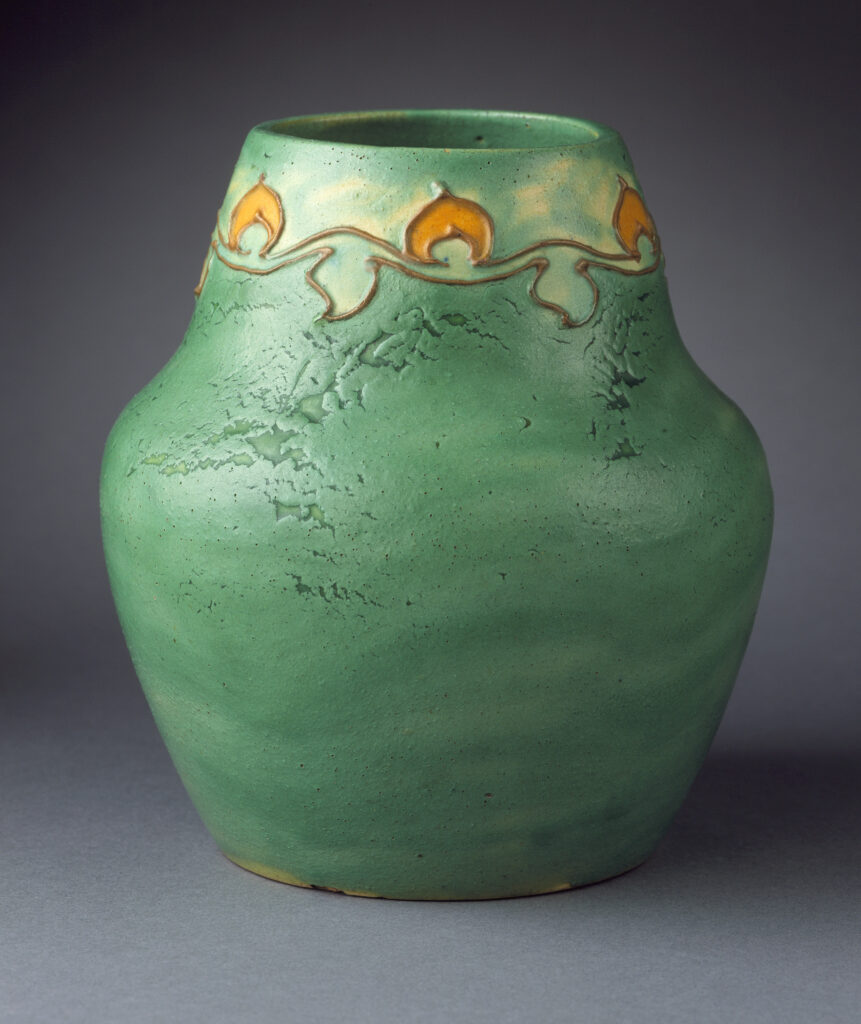
For several years, Rhead remained in California and opened a pottery under his own name. Rhead pottery remained in business until 1917. Following that, he moved back to Zanesville, Ohio. Rhead worked at the American Encaustic Tilling Company. The company was at one time the largest tile company in the world. The Great Depression ended their run, and by 1927 Rhead was employed by the Homer Laughlin China Company. American Encaustic was reborn after the depression in 1937 as Shawnee Pottery and remained in business until 1961.
As art director at Homer Laughlin, Rhead designed his best known work. The introduction in January, 1936, of his Fiesta line of pottery. The mix of colors wasn’t a new idea, Catalina and Bauer pottery had both created mix and match colored pottery prior to Fiesta’s appearance on the scene. Whether it was the shapes, color options or just luck, Fiesta ware took off. The original five colors were red, cobalt blue, light green, yellow, and ivory. Frederick continued to work at Homer Laughlin until his passing in 1942.
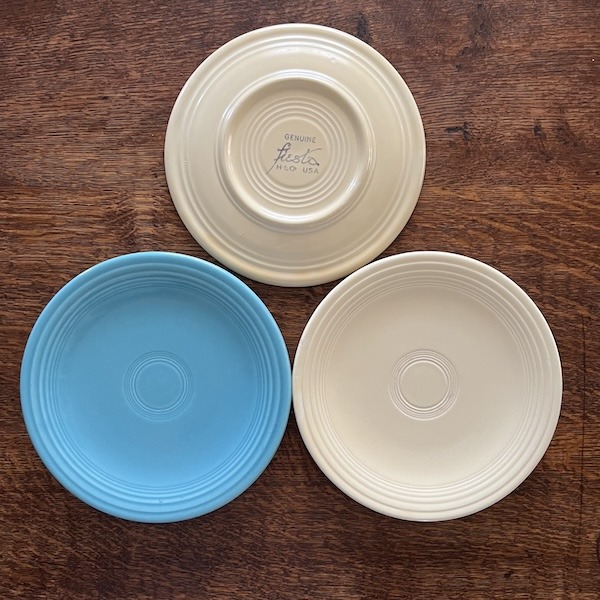
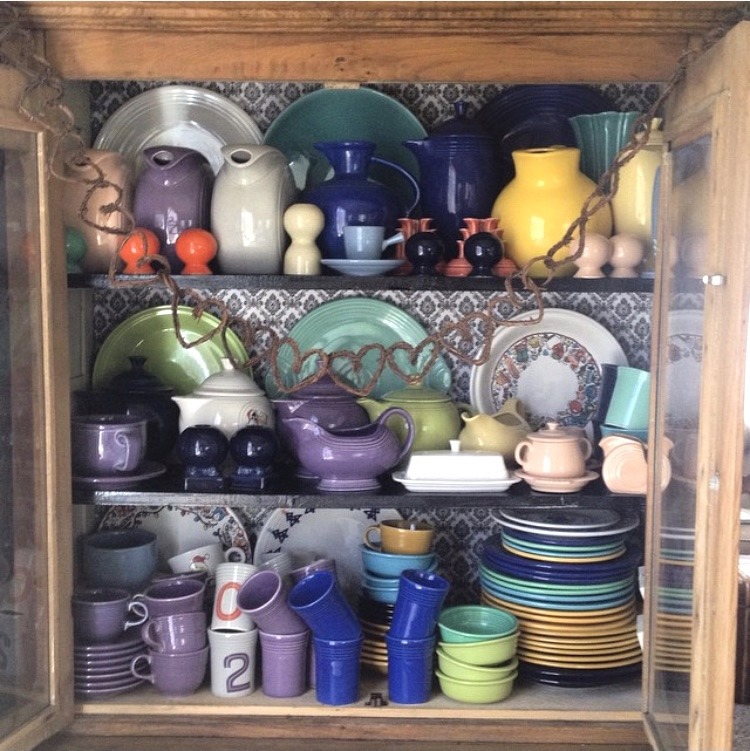
Fiestaware remained on the market until 1973, when it was discontinued due to changing tastes. Without the “radioactive red” which was no longer available due to the need for uranium during WWII, the line slowly lost market share. In 1986, fifty years after the initial introduction, the line was resurrected with new colors, shapes and several new molds due to new materials being used. Fiestaware continues to be produced in new colors and with limited edition pieces today.
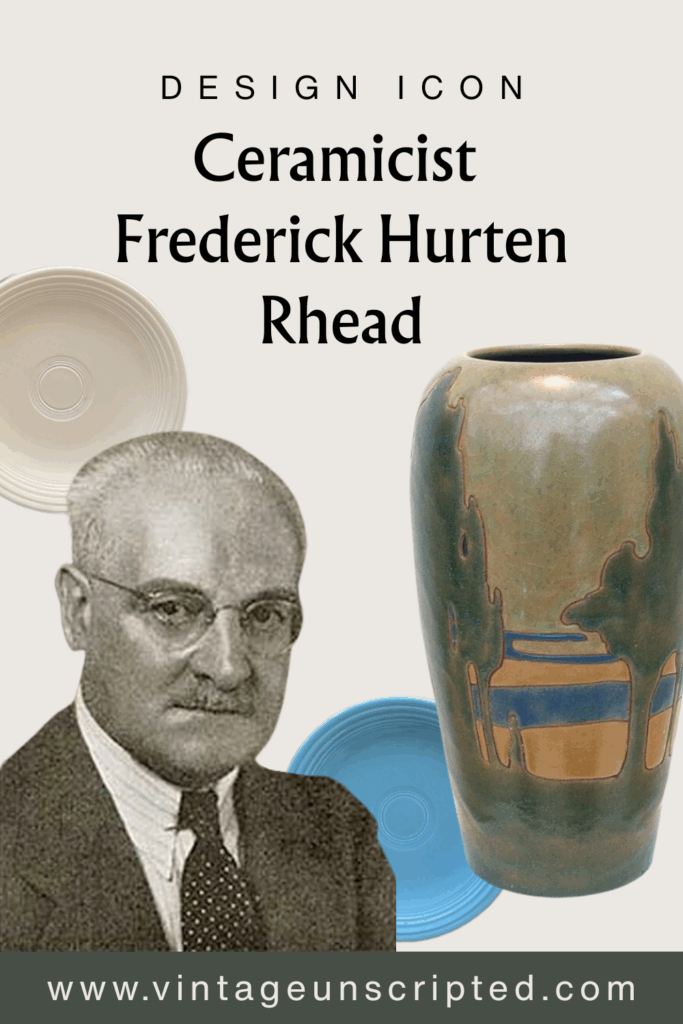
For more information on Frederick Hurten Rhead, check out this article on Wikipedia
To read about more Design Icons click here.



4 comments
I have a collection of vintage Fiestaware in originals colors which we use everyday. I collected it for years for our summer home, and now use it year round.
It is beautifully made, the colors are cheerful & add joy to any setting, and it holds up well. I use it in the microwave and put it in the dishwasher.
Greatest dishes, ever!
My Fiestaware collection began with my Grandma’s originals and grew over the years. I’ve always loved the fun bright colors.
Do you know where I can find an expert on Rhead’s vases? I inherited a vase that one appraiser said was at least influenced be Rhead, and might be one of his pieces. I’m trying to find someone with enough expertise to tell me more. Thanks
Hi, and happy New Year. We are definitely not experts and not qualified as such. You may want to search online for an appraiser familiar with pottery. Since Rhead was quite prolific, I’m sure there were several designers influenced by him. You may wish to contact some of the museums who hold his items as well. The Metropolitan Museum of Art is a good place to start. Good luck!