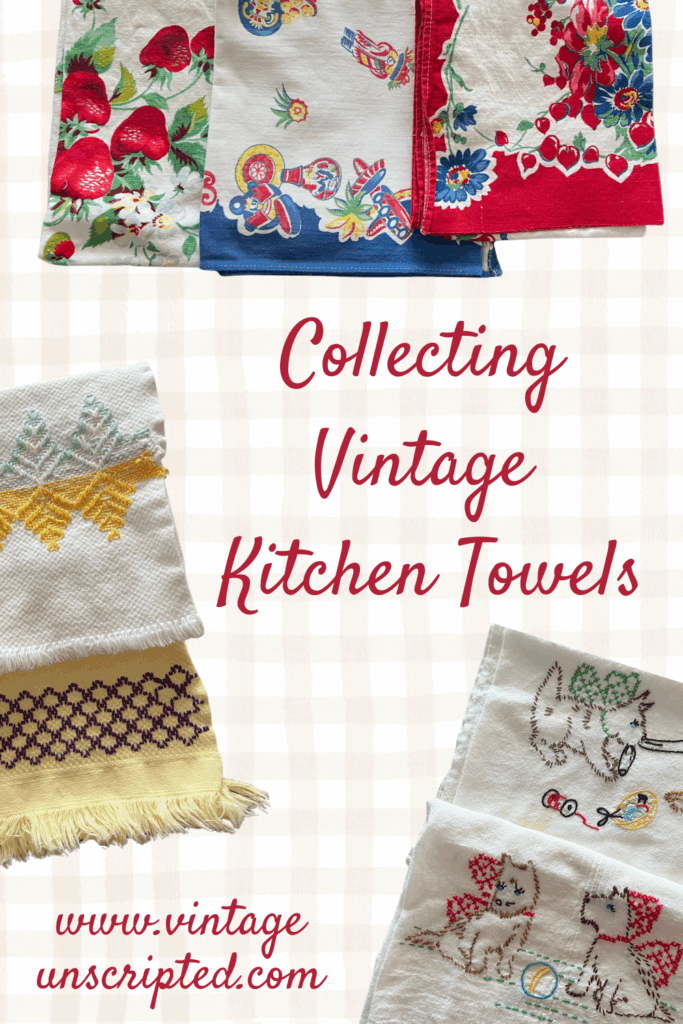
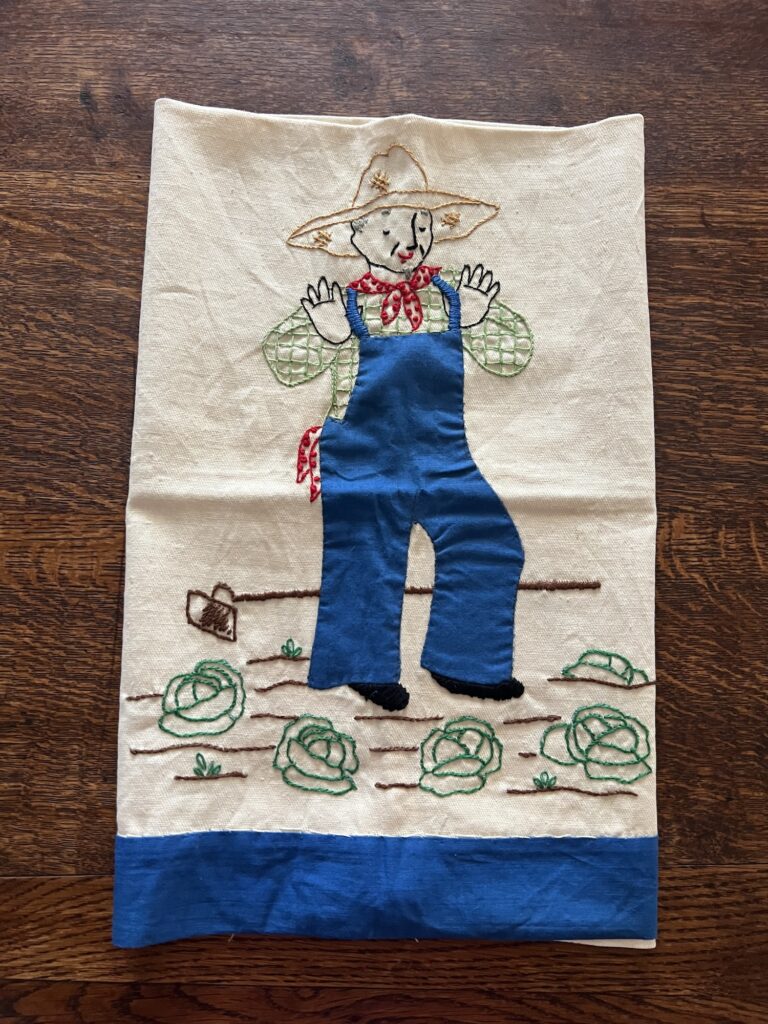
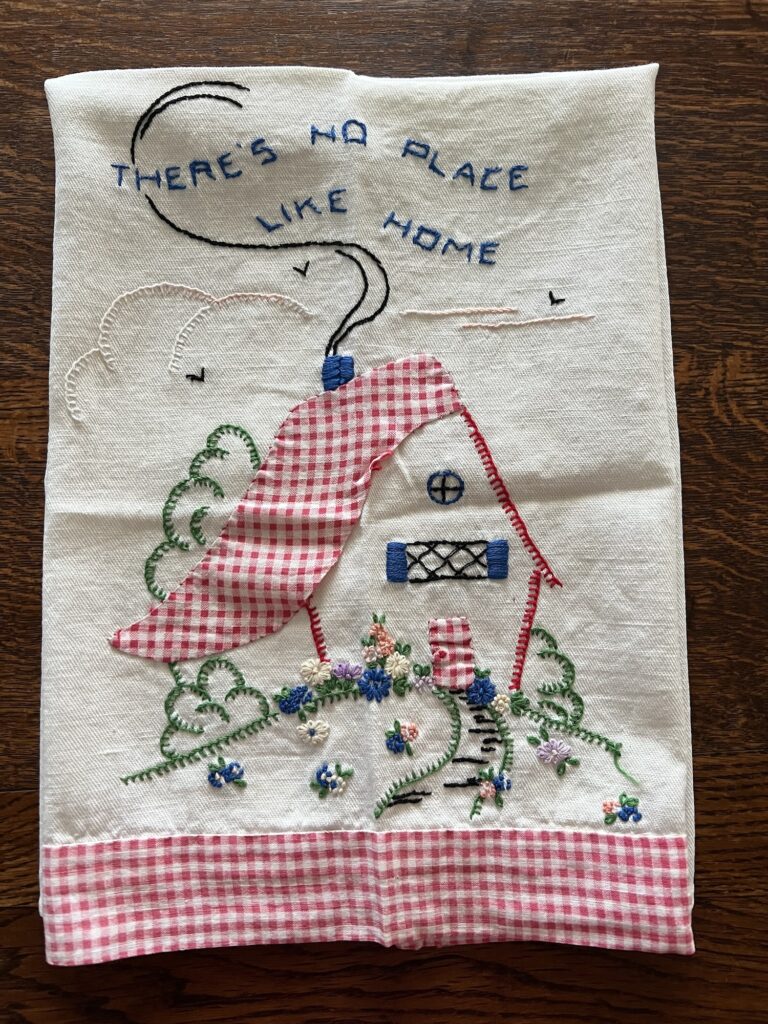
Even though I am a vintage seller, I collect relatively few things, one of those being vintage kitchen towels. Unlike many collectors however, I use much of my collection. Admittedly I do have a few that will never be used, mostly ones passed down from my grandmother and mother like this one that my mother made when she was young.
I was a child of the 60s and a teenager in the 70s. The shouts of “Ecology Now” still ring in my head. So while most folks buy rolls of paper towels, I buy vintage kitchen towels. I have a stash always at hand in my cupboard, and one hanging at the ready next to my kitchen sink. There are usually a few sitting inside the washing machine by the end of the week, waiting to be joined by the rest of the week’s laundry.
Long before we lived in a society where so much of what we use is disposable, folks had to wash and reuse more than just our garments. Kitchen towels were used for clean up, to cover rising loaves of bread, keep pesky birds from eating pies cooling on the windowsill, and a million more uses.
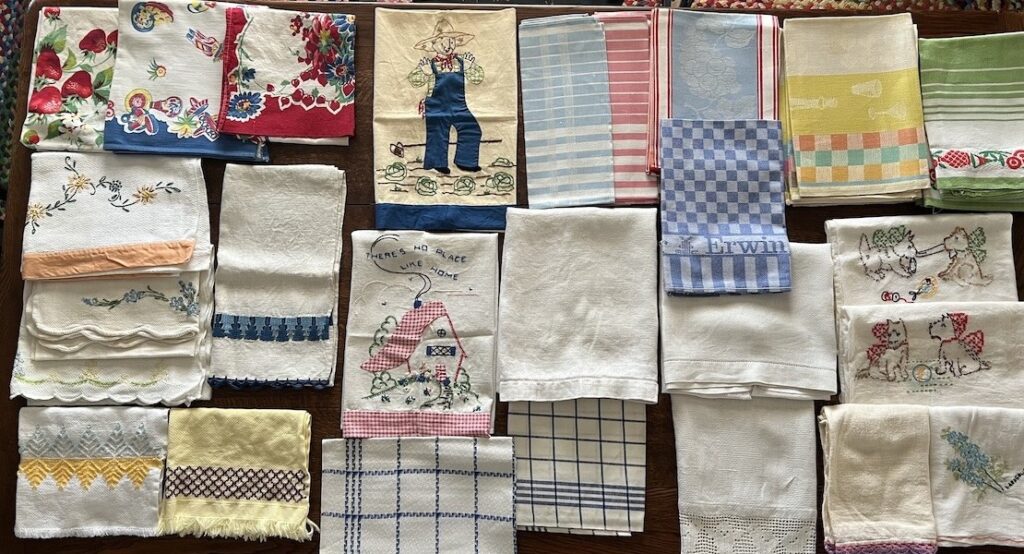
Vintage kitchen towels come in a variety of styles, fabrics, sizes, and range from basic utilitarian, to fun, to fancy used only for the most important of company. Because many women years ago weren’t able to work outside the home, you can often find vintage embellished towels made or enhanced by women. When the housework was done, there was no TV or phone to occupy our day so folks tended to make things they could use. The idea of having a utilitarian item also be nice to look at meant fabric companies produced fabrics decorated specifically to be made into kitchen towels, napkins, pillows, dolls, and other useful items. Huck toweling could also be bought by the yard at fabric stores to decorate with embroidery, lace edging, applique, and counted cross stitch. From workhorse fabric to highfalutin, fancy schmancy, never to be used, let’s take a look at the different fabrics and styles of kitchen towels.
Huck Towels:
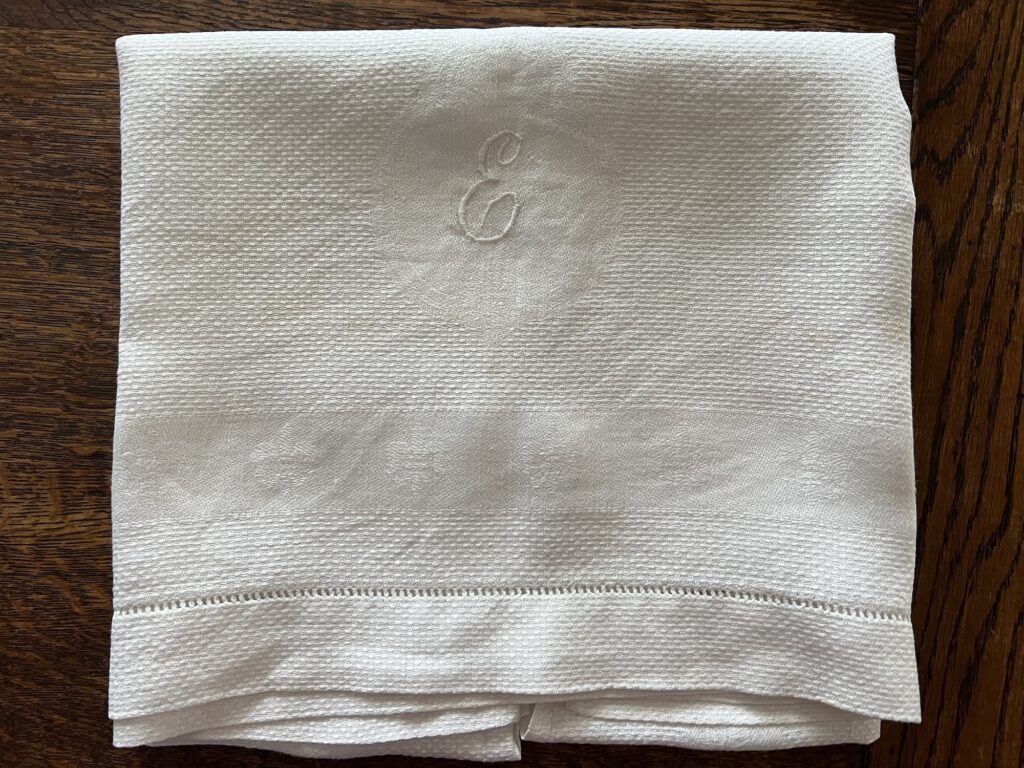
Huck towels feature a tightly woven waffle like pattern that can feel pebble like. They can be embroidered or left plain. This style of dish towel is utilitarian. Often found in white, these were also made in colors. They tend to not leave lint and are very absorbent. You can still buy huck towels today, they’re most often used commercially now for janitorial use, car washes, etc.
Linen Towels:
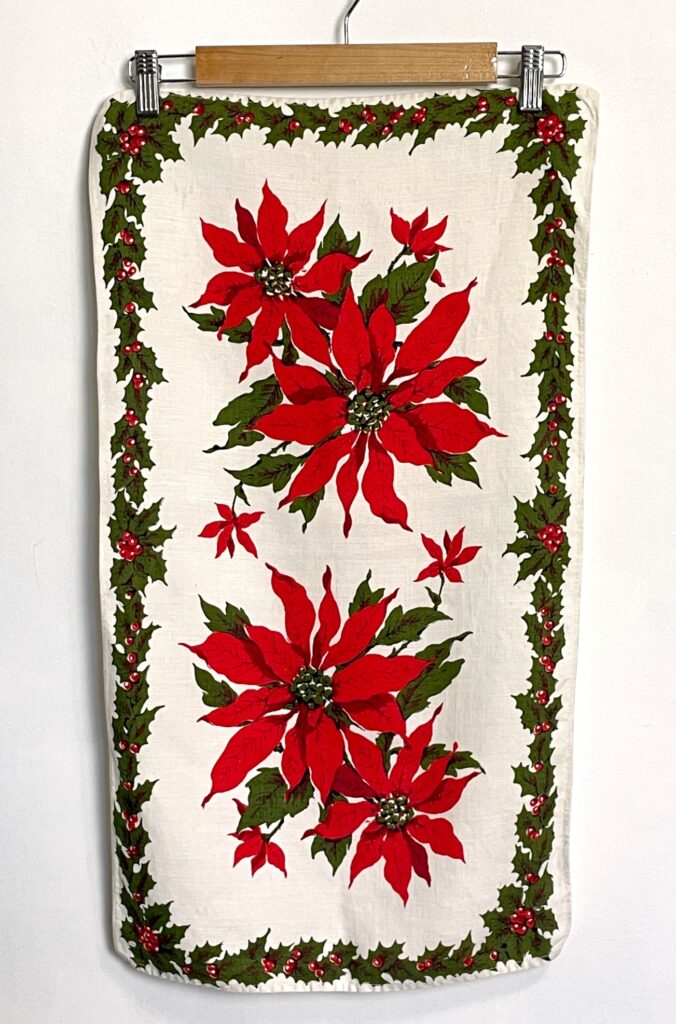
Made from flax, these towels tend to be stiffer when new but soften with age and use. They are often printed such as many dish towels sold as souvenirs or made with woven patterns such as Damask linen which usually has both a shiny and matte surface which includes the woven pattern often in reverse colors.
Metis Towels:
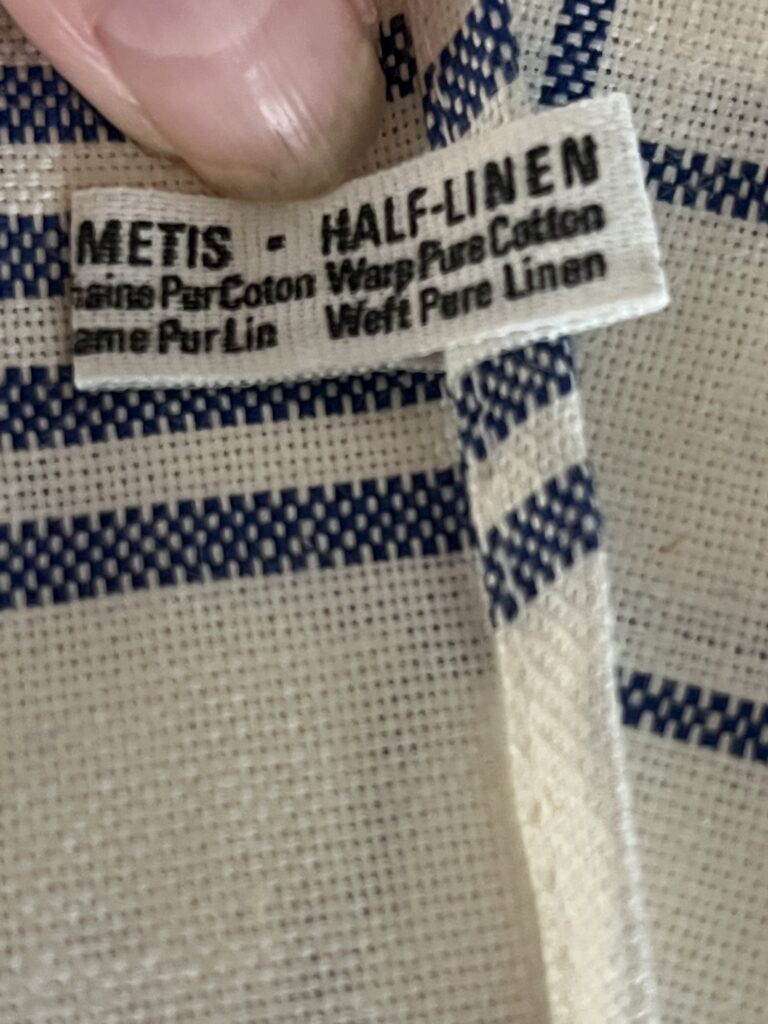
Metis is a fabric that is part linen and part cotton. It usually is softer than cotton, with the feel of linen, making it stronger and longer lasting. Metis can be purchased in bolts and is often also used to make bed linens. It’s a lower cost alternative to pure linen, and wears well.
Cotton Towels:
Cotton towels can be made from various types of cotton including sack cloth, muslin, jacquard, or terrycloth. Printed terrycloth towels were very popular starting in the mid 1960s and are common today. Often terrycloth towels will be fringed on the ends. During the 1970s and 80s it was popular to cut these in half and crochet a hanging top with a button to attach it to a stove, refrigerator, or cabinet.
Printed Towels:
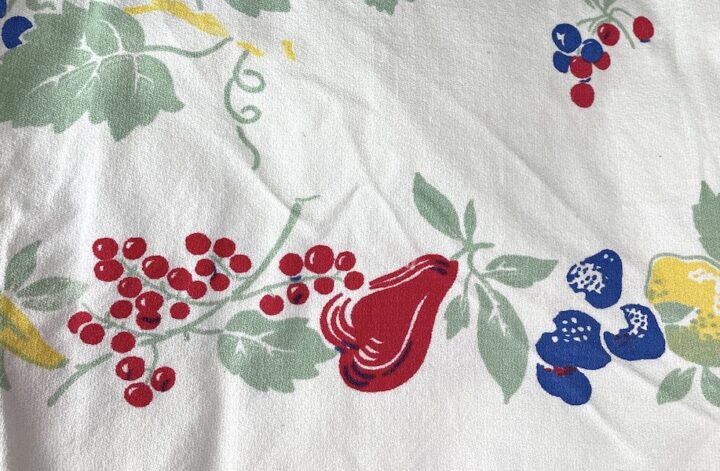
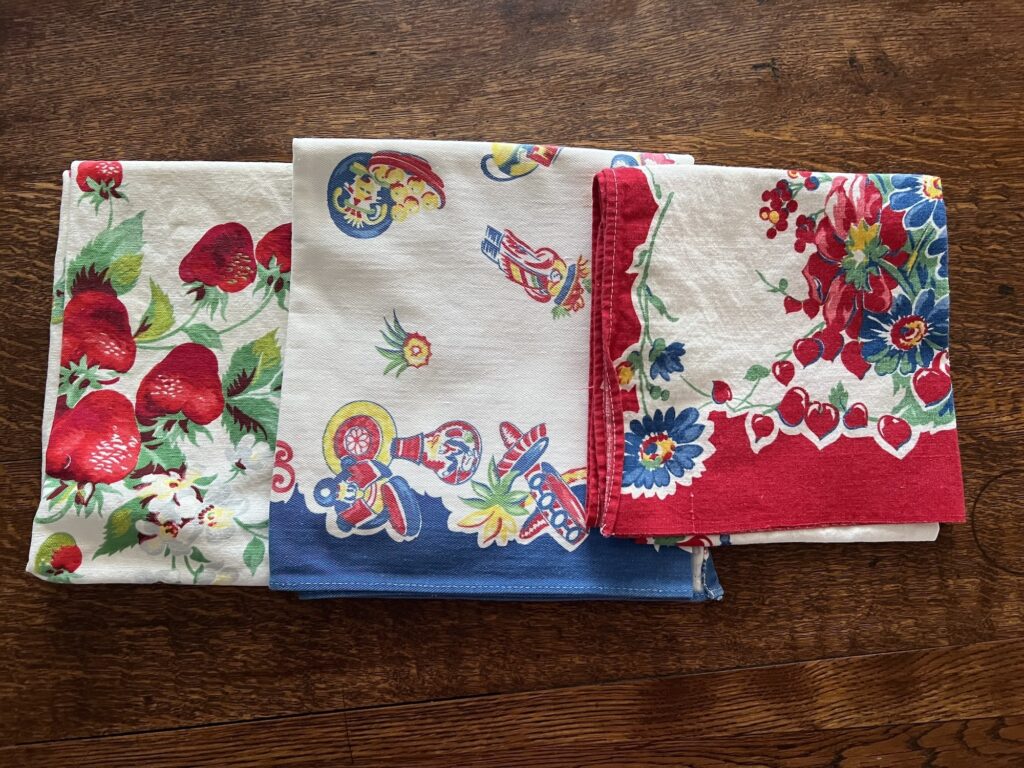
Printed towels include both cotton and linen that have patterns printed on the face. The printing can be anything from a one off screen print to an industrial all over print of the fabric itself. Printed towels include souvenirs, calendars, recipes and many other subjects. There are collectors of printed towel who may collect specific artists, subjects, or even locations, such as only towels from Italy, or depicting fruit.
Embroidered Towels:
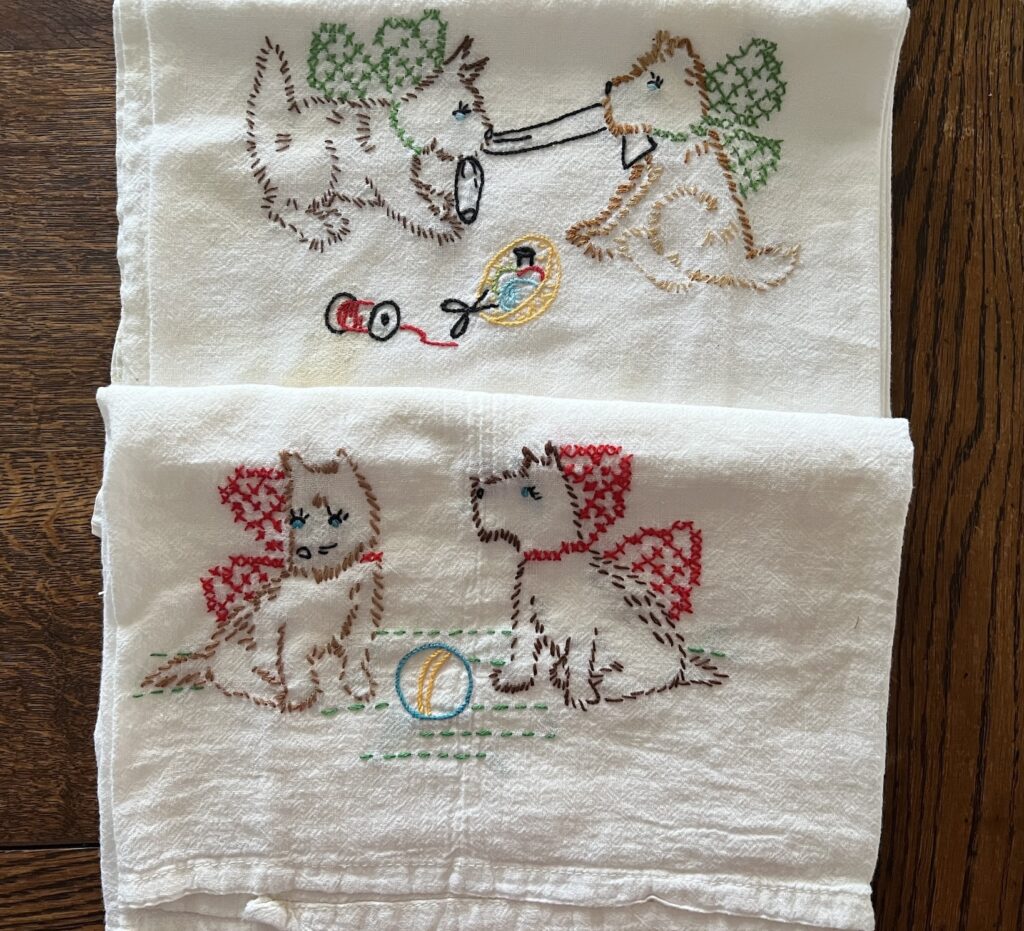
Embroidered towels are most often made from cotton, huck towels were used as the patterned weave lends itself to counted stitching. Muslin, or flower sack cloth was also common. Most often older towels were hand embroidered often based on an iron on pattern. Patterns were available at fabric stores and craft magazines that could be easily followed. Newer towels tend to be machine embroidered. Creating a set of embroidered towels for each day of the week was popular in the 1940s and 50s. If your’e lucky you can still find a complete set at a local estate sale.
Appliquéd Towels:
Appliquéd towels often include embroidery along with the cut out and overlaid fabric appliqué. These towels were more often used for show rather than daily use. They took a bit more time and effort to create and could be used to show off the sewers skill. Patterns for these towels could also be found in fabric shops alongside embroidery patterns.
Flour Sack Towels:
These were literally made from old flour sacks originally. As companies learned that folks were reusing these bags, they began to print all over floral patterns on them making them popular for turning into clothing, pillows, and other household necessities during the years following the Great Depression. You can now buy the fabric by the bolt and make your own.
Crochet Towels:
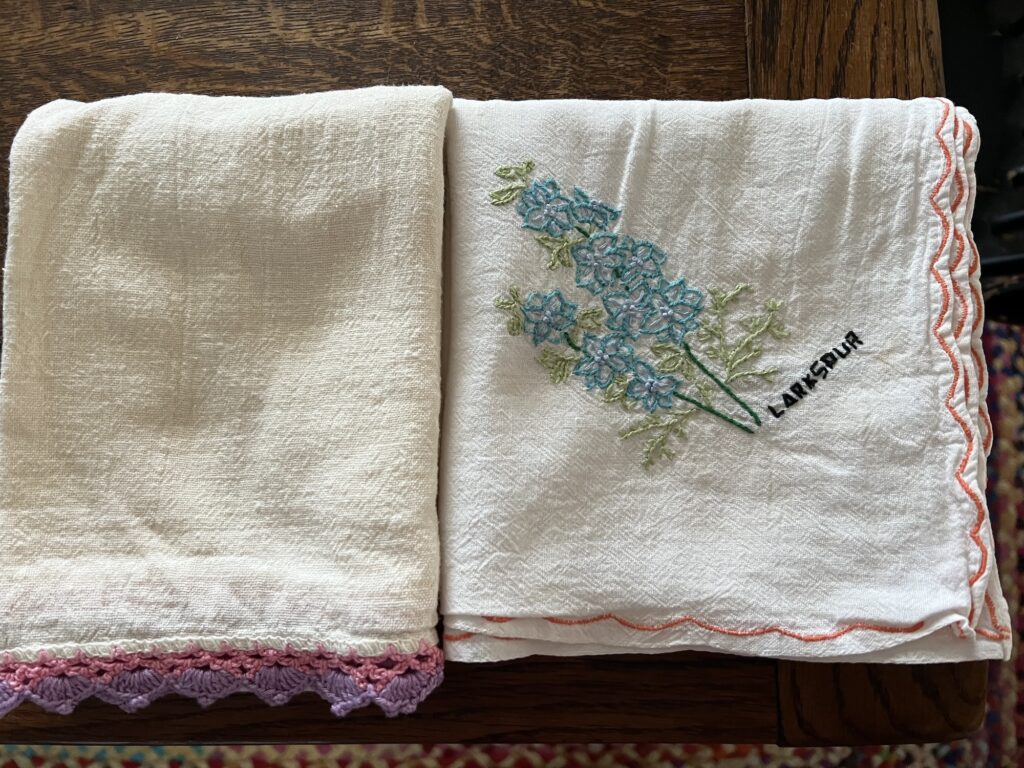
Many a plain huck towel was embellished by a row or two of crochet work along the edges to brighten up a kitchen. Sometimes a simple contrasting color was added. Often a row of more elaborate crochet lace was added to each end of a plain towel as a way to elevate it from simple to elegant.
Tatted Towels:
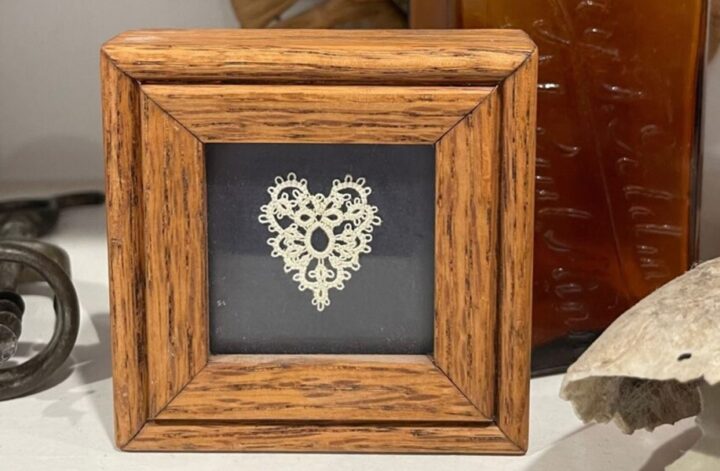
Tatting is a much more intensive version of embellishment than crochet and takes more skill and time. It’s often much more detailed in design as well. Tatting involves lots of small pins strategically placed with bobbins wound with thin silk or cotton thread. It involves creating knots and loops which make up delicate designs. Think of those delicate doilies Grandma had.
Woven Towels:
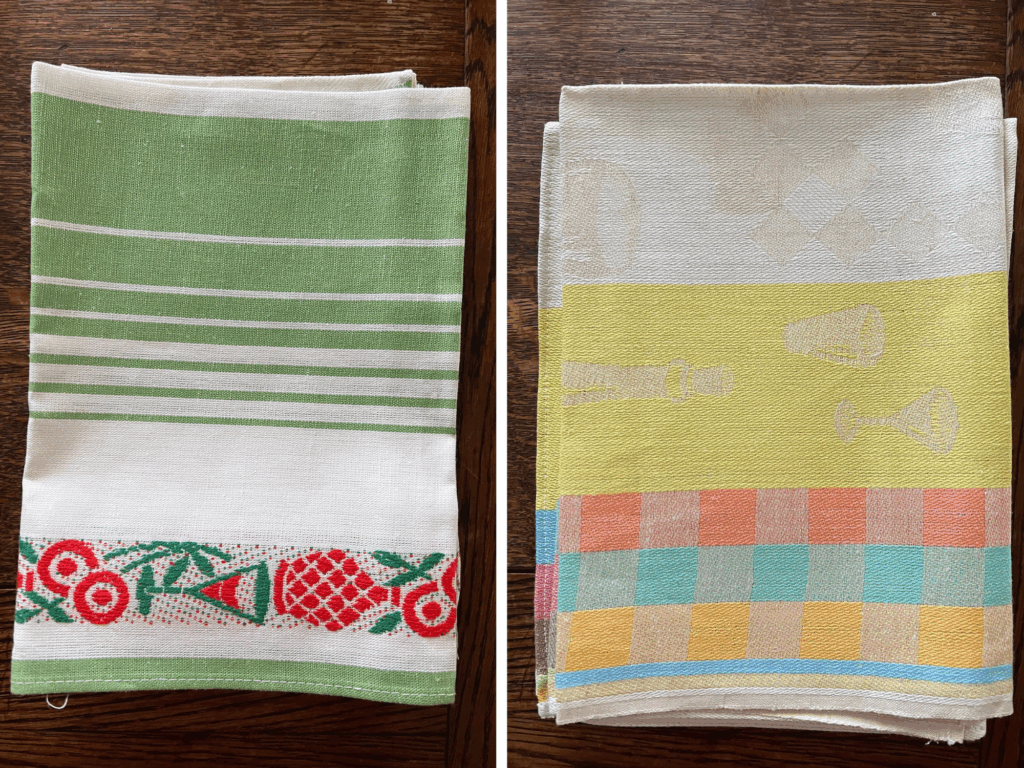
Towels made from heavy linen, metis, or cotton with patterns woven into the fabric. The patterns are made using different colored threads rather than dyeing or stamping the pattern non top of the fabric. These often feature geometric patterns such as stripes or plaids.
Cutwork Towels:
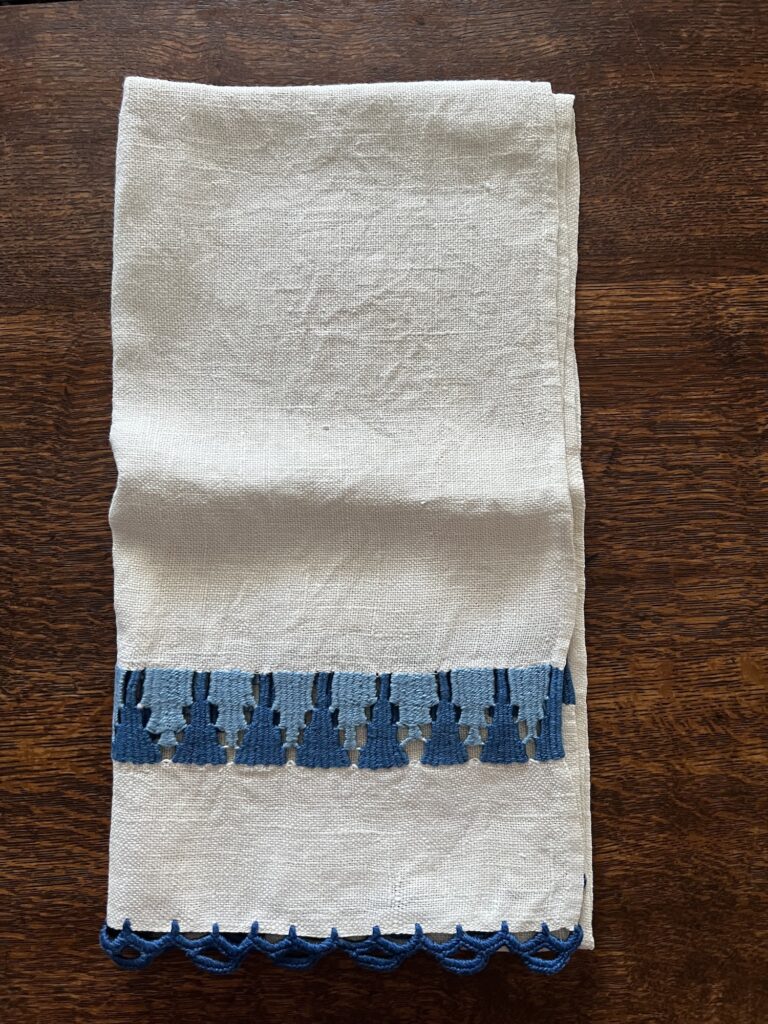
Most often reserved for bathrooms rather than kitchens, cutwork towels feature designs that have been cut into the fabric with the edges of the openings stitched over so as not to unravel. The more delicate nature makes these much more difficult to find for kitchen use. Another item produced more for show than use.
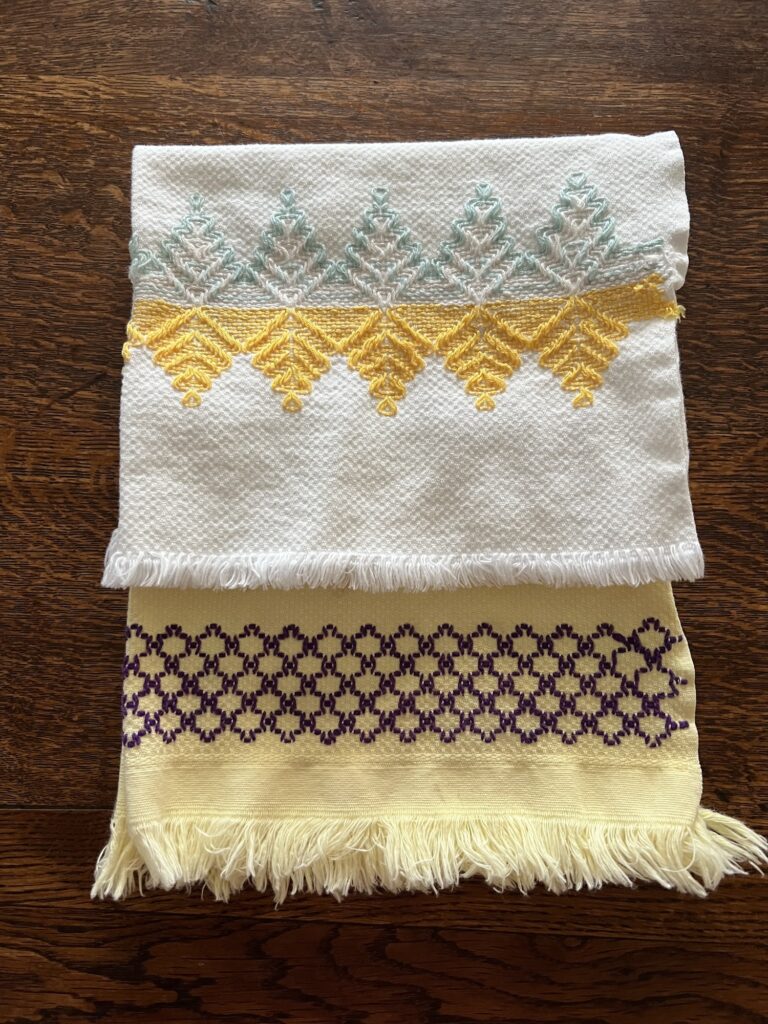
Pulled Thread or Counted Cross Stitch Embroidery Towels:
These are patterns that are created by using the weave of the fabric to create a design by either counting threads between stitches or pulling threads out and stitching around the lost threads to create an openwork pattern.
Ballpoint Embroidery Painted (liquid embroidery)Towels:
The late 1960s brought about a flood of new ways to decorate items quickly. Liquid embroidery paint was often used to simulate the look of stitching a design on fabric quickly. The paint does not readily wash off or fade and creates a similar look to hand embroidery. You can still purchase liquid embroidery paint today.
Now let’s look at the different uses for kitchen towels. These uses more often affect the size and shape of a towel than the look.
Tea Towels:
Tea towels tend to be more decorative, meant to line a dish, or bowl, to shield food from the elements and add a touch of beauty to the table. They line trays, hang on stoves or cabinets showing off their designs.
Dish Towels:
These are the work horses, made to dry the dishes before the days of dishwashers, they tend to be sturdy, absorbent, and less embellished.
Hand Towels:
Made to dry the hands, these are often found in restrooms rather than kitchens and tend to be of lighter weight fabric. They are usually decorated with lace or embroidery.
Crystal Towels:
Often a form of huck or linen towel made to absorb water and not leave lint on high end crystal. These are rarely embellished with anything other than printing.
Calendar Towels:
Literally tea towels with a calendar printed on the front surrounded by or including a print often depicting a travel location. These often include a dowel for hanging. Calendar towels are purely decorative. They can often be found in souvenir shops.
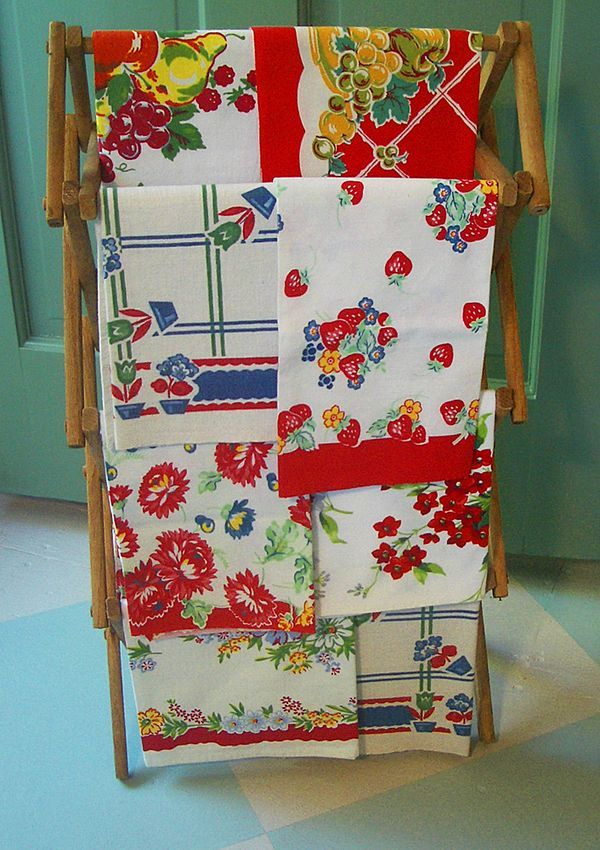
Collectors often display kitchen towels in fun and interesting ways. Colorful ones can be stacked on a shelf, hung on a rack, used as a centerpiece on a table or placed on a tray. I’ve seen them used to make tote bags, pillows, curtains, clothing, clothespin bags, and more. Do you use or collect vintage kitchen towels? If so let us know in the comments and tell us how you use them?
Here are a couple of sites filled with ideas on how to use kitchen towels.
Take a peek at Pillar Box Blue’s article here. Check out Peppermint Magazine’s article here.
For more on collecting vintage, see our other posts on collecting here.