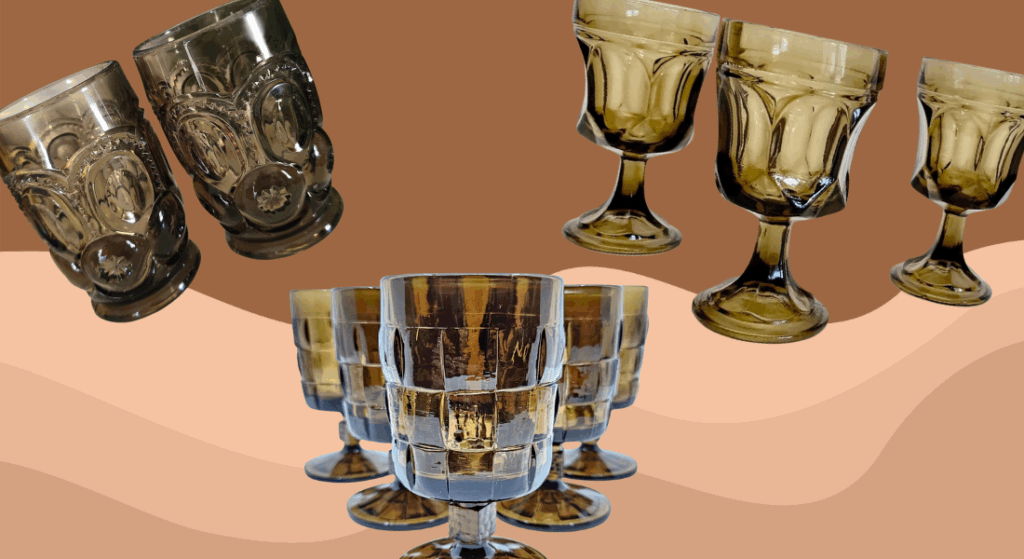
Brown is not the first color you think of when it comes to vintage glassware. Clear glass is obviously the king, but shades of blue, green, red and amber are also first to mind. But what about 70s brown glassware? Brown was the color of the earthtone mad 1970s, brown, harvest gold, avocado green and burnt orange were everywhere, so of course there was brown glassware. There were so many pretty patterns in so many shades of brown that owned the 70s glassware landscape, and to be honest, we don’t think they get the love they should.
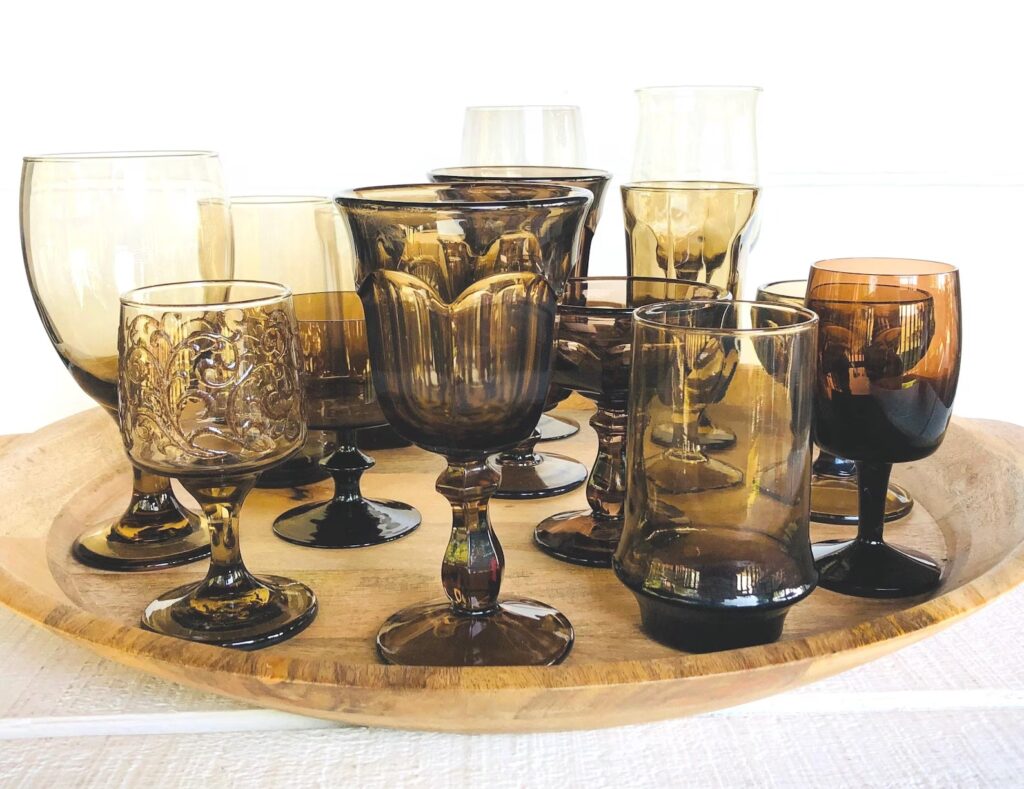
Brown should not be confused with amber, no matter how dark that amber is. Technically, amber is a shade somewhere between red and orange. Brown is made from opposing colors on the color wheel like red and green or blue and orange with a little black added to darken it. Brown is also sometimes considered a dark orange, but on that we politely disagree.
Brown glassware wasn’t really a thing at all until the 1960s. There are a few rare pieces of brown glass for the table from the true Depression glass era (1929-1940s). Jeannette Glass made some pieces of the Homespun pattern in a color called “root beer.” You could find plenty of brown glass in the medicine cabinet, but not on the dinner table. Brown remained in that holding pattern until the 1960s-1970s.
Color names for brown include the aforementioned root beer, as well as smoke, nutmeg and taupe. Shades range from deep dark brown to a lighter, grayer taupe.
The traditional Depression glass colors get all the colored glassware love, and while they deserve it, it’s time for brown to shine. So we’ve rounded up some popular patterns, mostly from the 1970s, for you to enjoy.
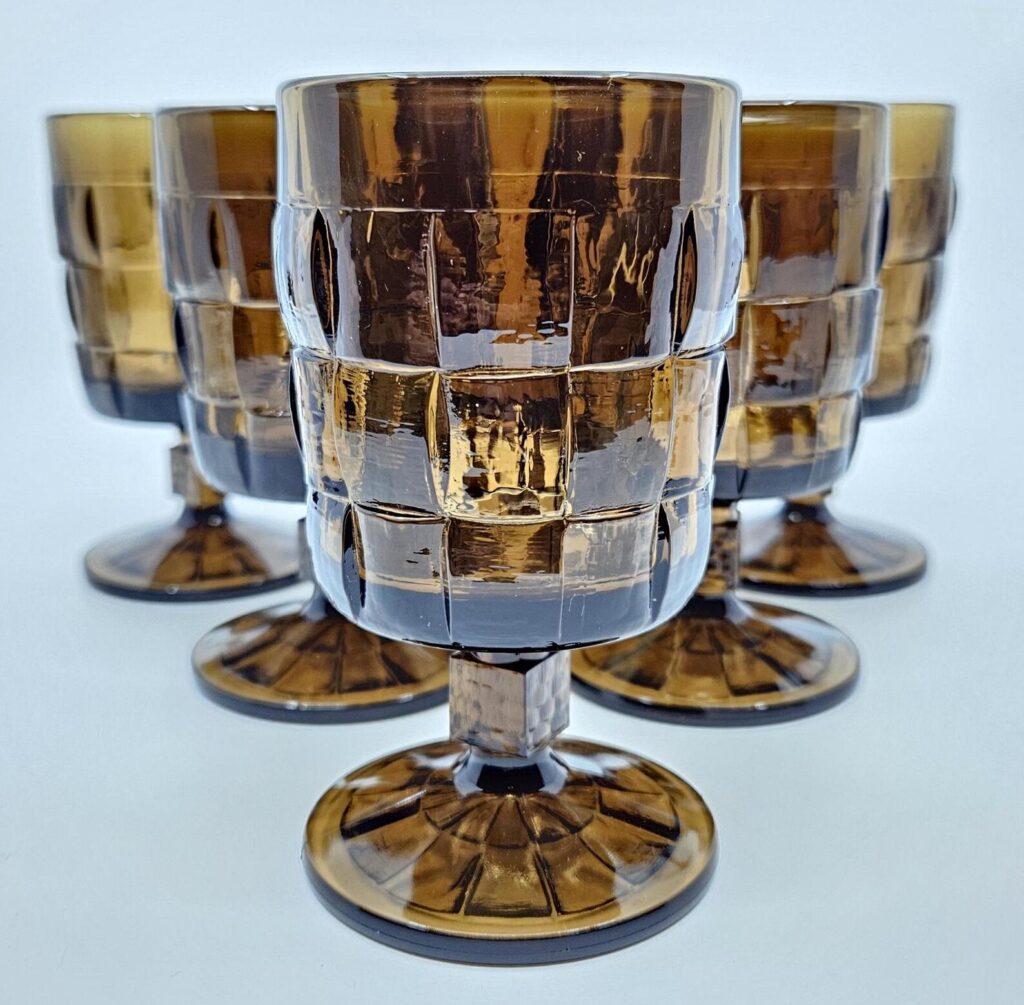
The Viking Ashley line of glassware came in 11 colors, including this beautiful brown. The clear version was made from 1974-1996. The colors were likely made for shorter periods of time. The line included glassware in different sizes and other accessory pieces. This set of four is available from DrinkingOurWords, $52.
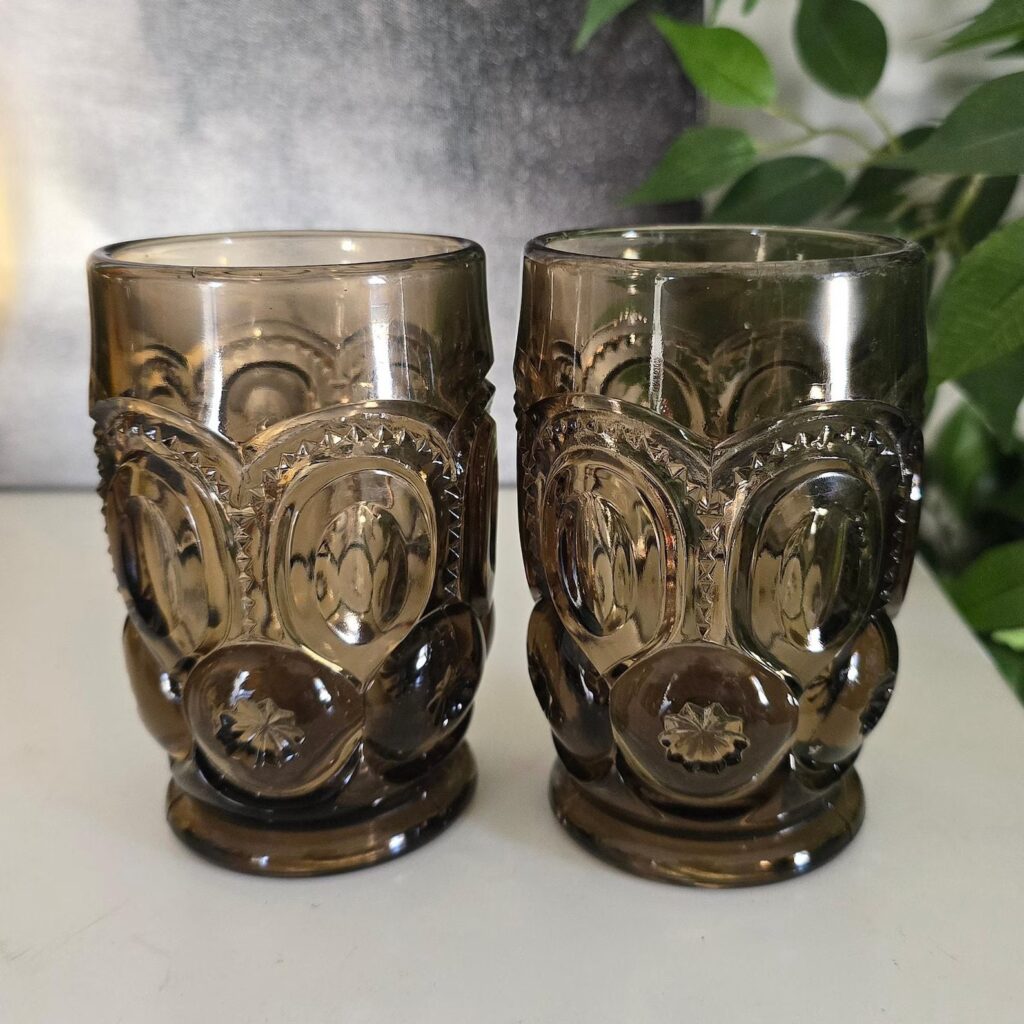
Vintage Unscripted should write an entire post about the history of the Moon and Star pressed glass pattern. The pattern’s DNA comes from the mid 1800s, but the pattern as we know it comes from the 1960s. The L.E. Smith Glass Co. was the modern originator of the pattern, launching it in 1962. People in the 1960s were mad for the antique look of the glassware. Moon and Star was also made by L.G. Wright using L.E. Smith molds until the mid 1980s, when the molds went to Imperial Glass. Imperial stopped production in 1984. Brown colors included chocolate, root beer and smoke brown.
This pair of Moon and Stars smoke brown tumblers are available from FancyFransVintage, $68.
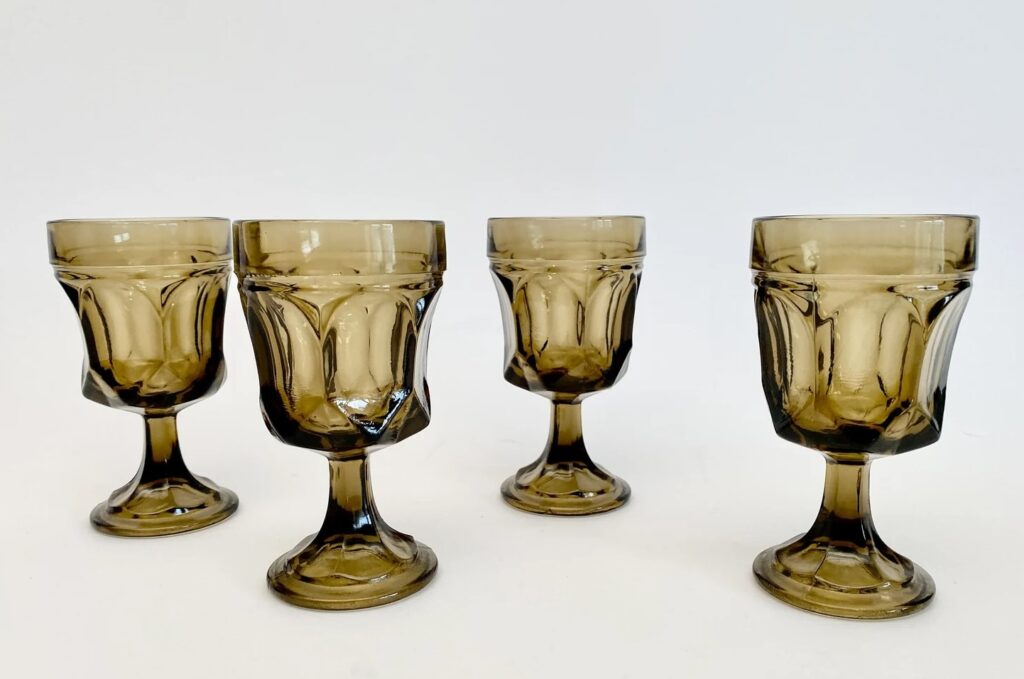
A popular and affordable pattern, Anchor Hocking Fairfield was made in 10 colors from 1972-1977, including this Tawny Brown that was made early in production from 1972-1973. This set of four wine glasses is available from RobertJoyceVintage, $22.
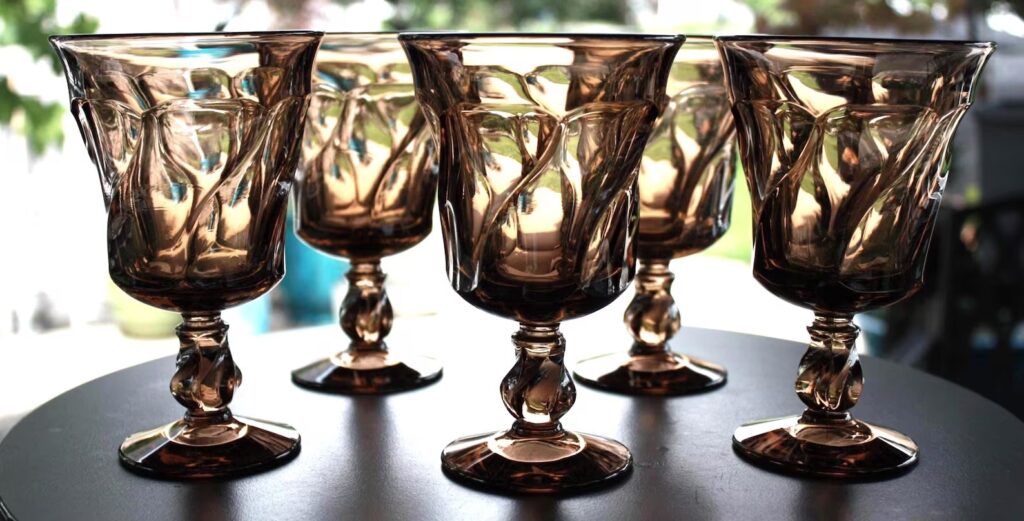
Fostoria made their Jamestown pattern from 1958-1982. A 24 year run is a long time for a glassware pattern. Not all of the ten colors were made over the whole run, colors came and went. The brown color was made from 1961-1982. This set of five goblets is available from HouseofStrause, $58.
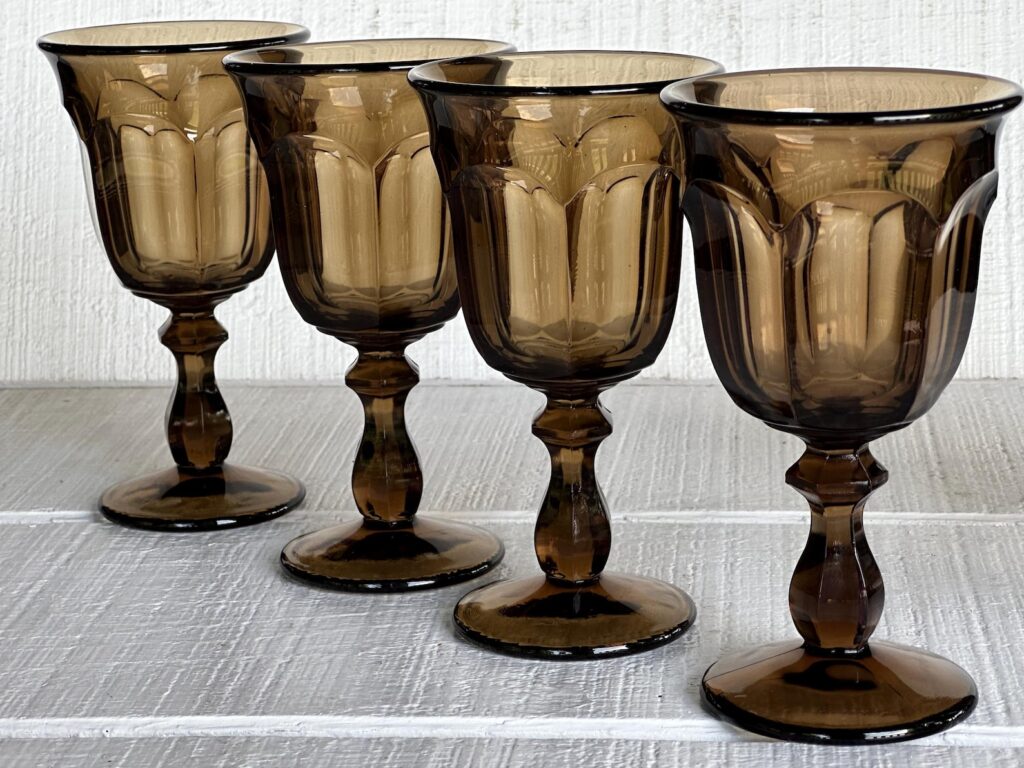
Imperial Old Williamsburg glassware is another pattern with a long run. Originated by Heisey, the pattern was called Puritan in 1904, but renamed Old Williamsburg later. Imperial bought the molds in 1958, with production lasting until 1982. This nut brown color was made from 1969-1980. This set of four water glasses are available from 1350Northvintage, $30.
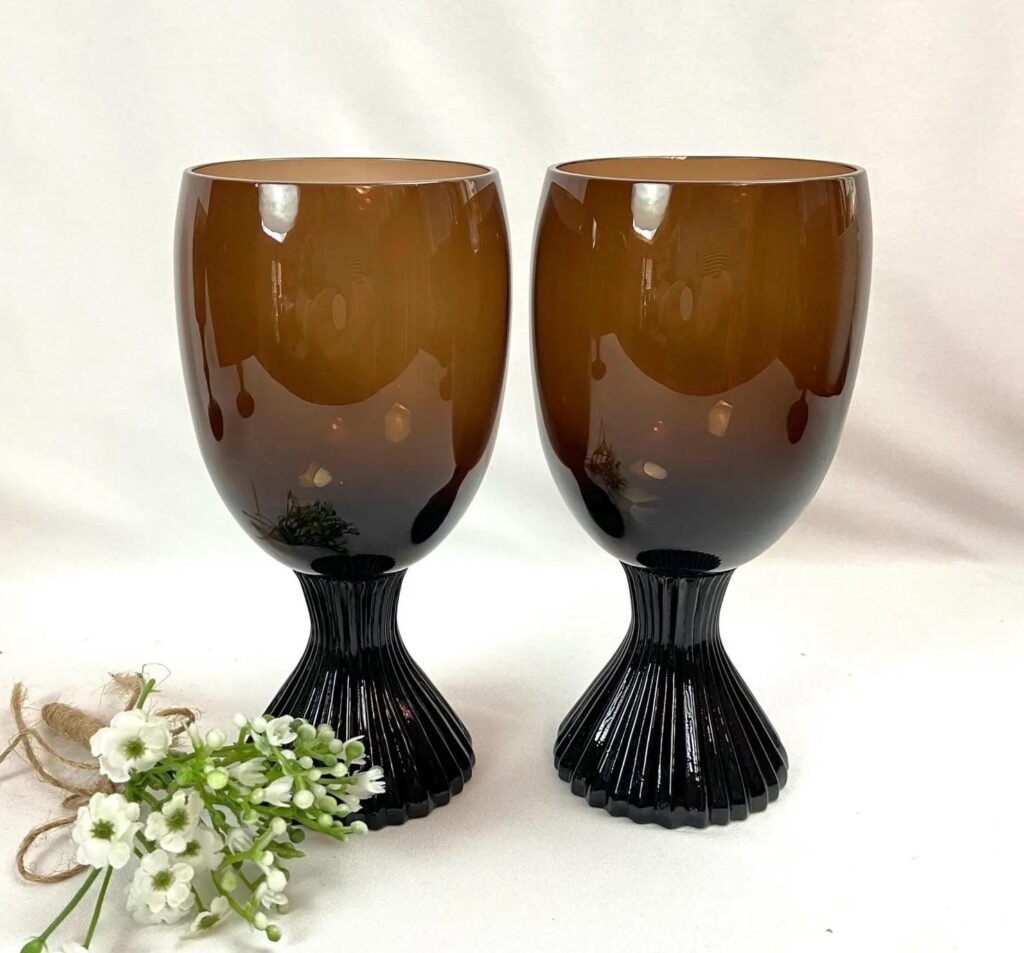
Lenox Tempo crystal was made from 1976-1983. The nutmeg brown with the distinctive stem is stunning. This pair of glasses is available from AtomicStarTreasures, $20.
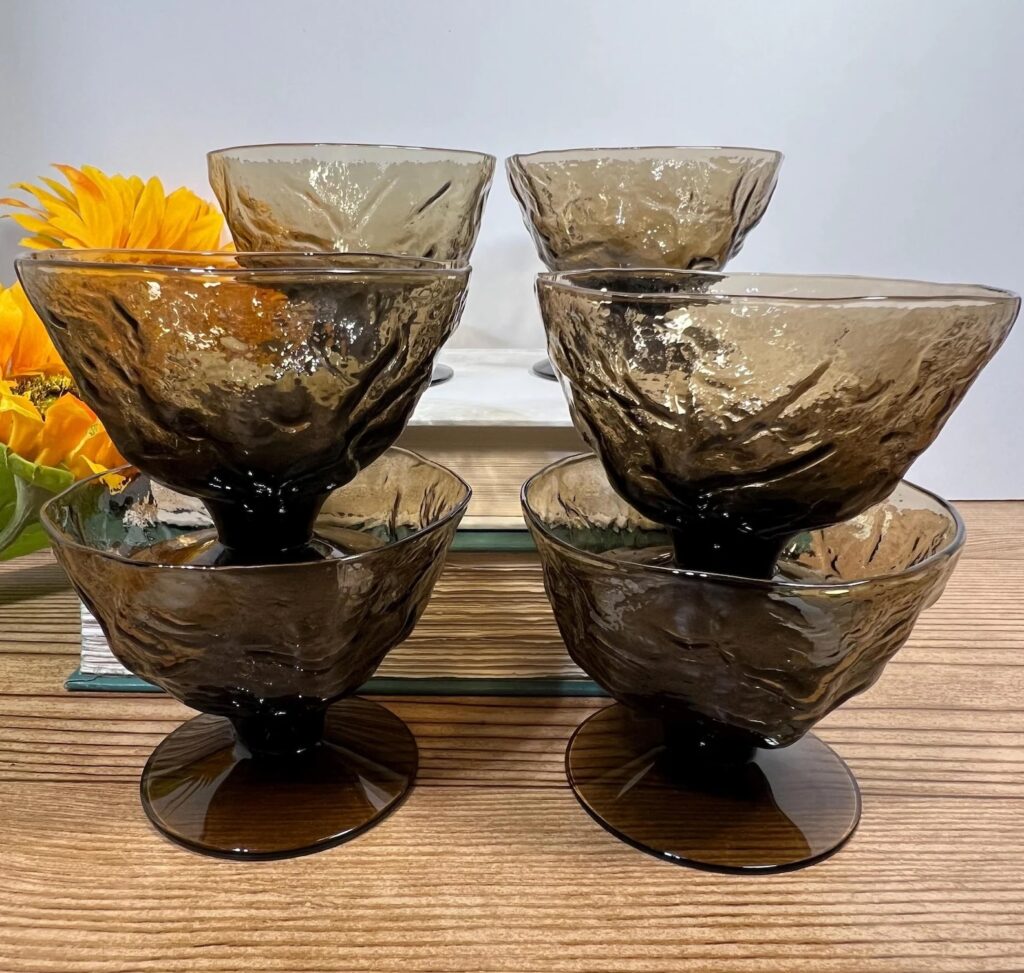
If you’re looking for a long lived line of glassware, you have give the nod to Seneca Driftwood, which was made from 1953-1983 when the company closed. It was made in an astonishing 23 colors, including three browns: brown, smoke and cinnamon. These sherbet dishes/champagne coupes are stunning, and are available from TheSunflowerSoulshop, $50.
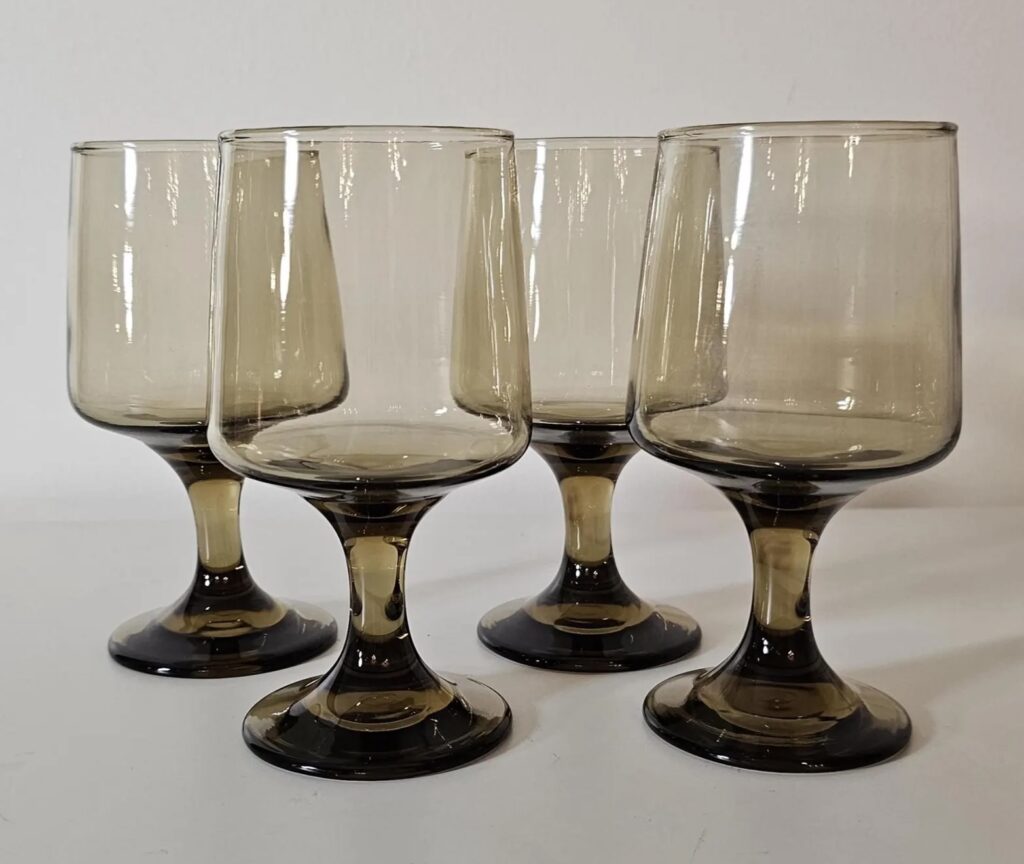
The brown glassware most instantly identifiable to anyone who lived through the 1970s is Libbey Tawny Accent. Made for the entire decade in 15 forms of tumblers and stemware, it was everywhere. It was given out as a premium at Shell Gas stations. It was enormously popular because it had sleek Scandi styling, was affordable and was available everywhere. Pieces were also produced with printed designs. If you are collecting brown glassware for your bar, there’s no question that Libbey Tawny Accent is the way to go. This set of four water goblets is available from TwoSchnauzersVintage, $39.50.

2 comments
Bought 8 goblet and 8 wines in the 70s. I need a water goblet but the prices they’re asking are a little out of my range. When I bought them I guess they were pricey for the day, but good grief $70 +! Are you kidding me? Add some shipping to that and it breaks grandma’s bank.
First of all, congrats on your good taste–you chose glasses back then that are in demand today. Vintage prices are based on scarcity + demand + condition. There may not be many of your glass pattern out there, which will drive up the price. Also, us sellers have to price to help cover the non-revenue generating costs of doing business. And shipping costs keep rising, with a new USPS increase expected in January. Shop around, set up an alert on eBay perhaps. A seller may come across a big lot of your glasses and sell them individually as replacement pieces. Also, one of the nice things about doing business person-to-person is that you can try making a reasonable offer. The worst that can happen is the seller says no. And they might say yes!