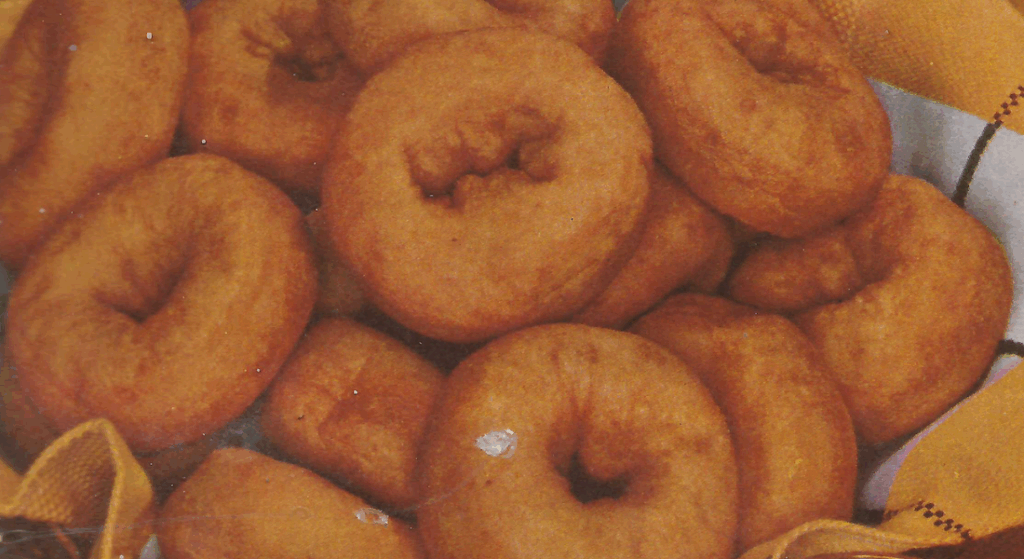
Baking fads come and go, but doughnuts are eternal. And they are also deeply rooted in American culture, with a history of reaching back to the colonial days. After some doughnut history, we’ll get to the actionable doughnut item, three 1950s vintage doughnut recipes. If you’ve never made doughnuts at home, the gratification from eating them is 10x greater than the amount of work that goes in to making them. In other words, don’t worry, be doughnutty.
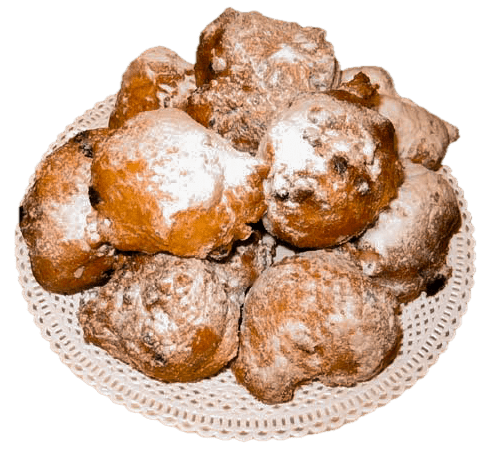 The ancestor of the modern American doughnut emigrated to New York from the Netherlands before the United States were united or states. The Dutch called them olykoeks, or oily cakes, which is accurate if not appetizing. Washington Irving mentions “dough-nuts” in his History of New York (1809) describing them the way we would today describe a doughnut hole or Munchkin. The word “nut” was used to describe a little round cookie or baked item. Hence the name: they are made of dough and they have a nut shape.
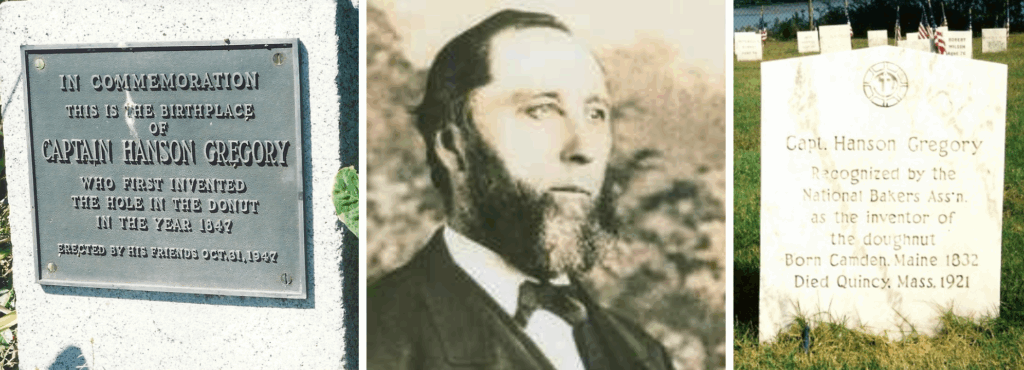
The legend of how doughnuts got their ring shape is that Captain Hanson Gregrory, master of a trading vessel, was either 1) displeased that the dough was often uncooked in the center of his doughnuts or 2) sought to cheap on on ingredients, so he punched a hole in the middle of the cake to use less dough. His mother also figures into the story. She supplied his ship with fried dough filled with spices and lemon rind for voyages. So third story has it that the hole came about because the captain (shown below) spiked one of his mother’s cakes over a spoke on the ship’s wheel. This Smithsonian article has more details, you can judge for yourself how apocryphal the story is.
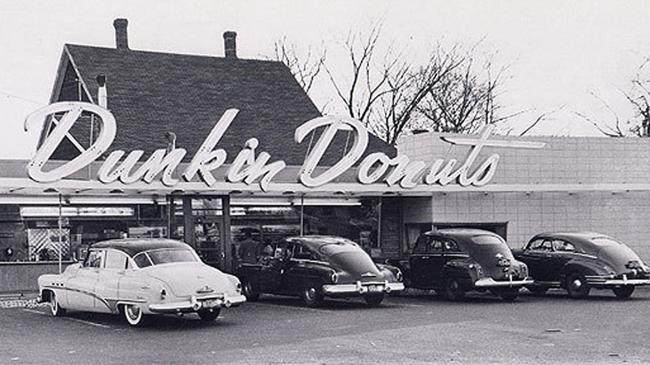
You may have noticed that this post uses the “doughnut” spelling, not the “donut” spelling. “Donut” crept into our language in the 1920s when a doughnut making machine manufacturer simplified the spelling to make it more intuitively pronounceable for people who did not speak English to boost overseas sales. It became more common in the 1950s, and was used by a small startup, Dunkin’ Donuts (original Quincy, MA location shown below). Both spellings are now considered proper.
Over the past decade, doughnuts have become culinary spectaculars, with flavors, fillings, frostings and toppings that the original Dutch olykoek makers would never have envisioned, mostly because 3/4 of them didn’t exist until the 20th century. These doughnuts are a treat for both the eye and the taste buds. But we’re going to dial things back with some vintage doughnut recipes that may never elicit gasps at first sight like the fancy ones, but hold a place like nothing else next to a glass of milk or cup of coffee or tea.
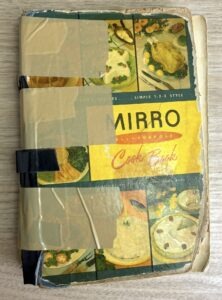 The first two vintage doughnut recipes come from the printed pages of the Mirro All-Purpose Cook Book (fourth edition, 1954). Vintage Mirro aluminum cookware continues to be prized for kitchen use, it always sells fast when I get around to listing it in my online shop. I scooped up the cookbook at an estate sale, attracted to it because of the Mirro connection and the extremely well loved condition. It is my policy to always look for the cookbooks that have been used so much they couldn’t even be charitably described as “reading copies” in an online listing. (Also, always look for the pages where the books fall open from use and the pages with the most spatters and stains).
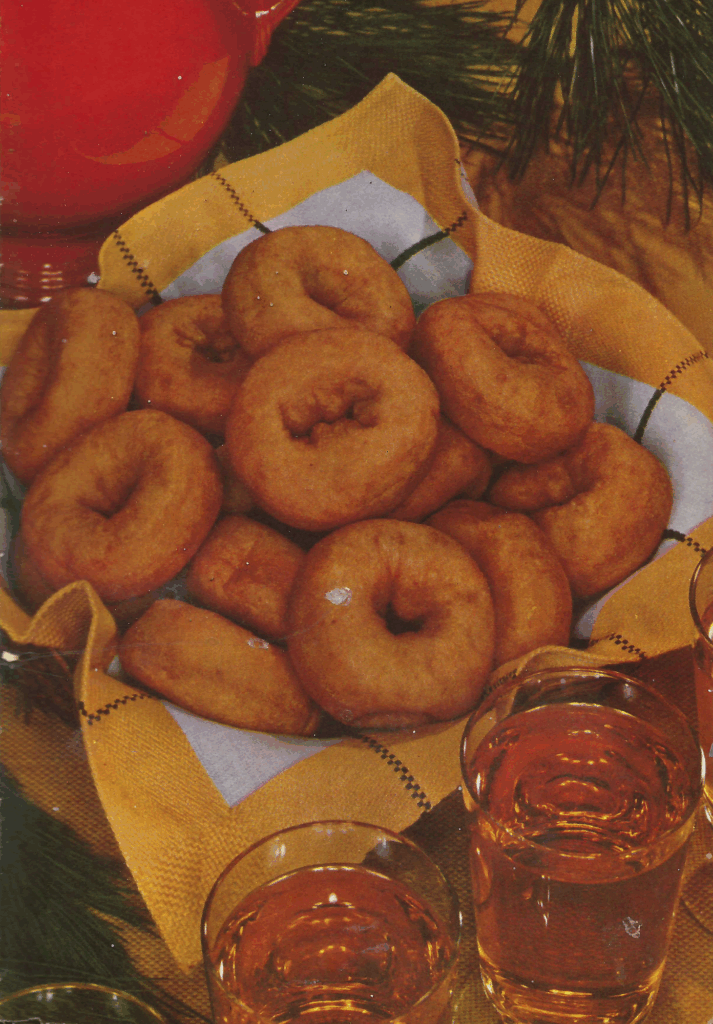
It so happens that one of the few color illustrations in the book is the doughnuts. The authors could surely have chosen something fancier, but they chose doughnuts because they are now and have always been an awesome comfort food. Behold the crisp on the outside, tender on the inside masterpieces.
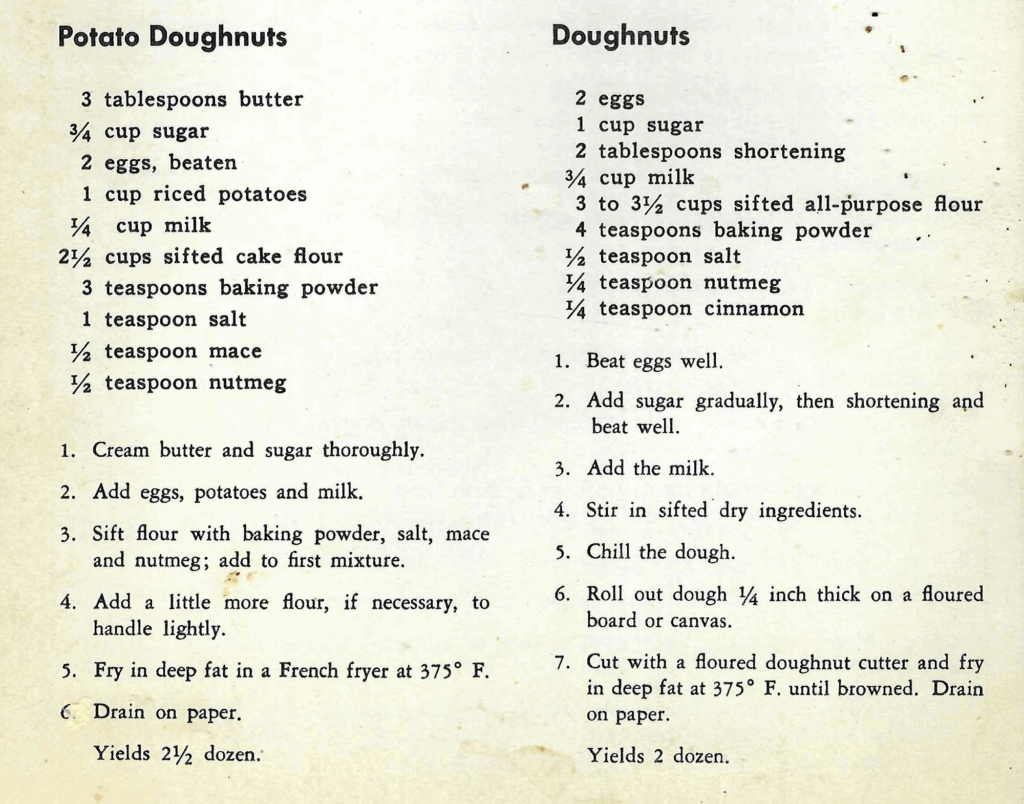
I’ve never made Potato Doughnuts, although I know potatoes have many off label uses in cakes and candy. The regular doughnut recipe is straight forward, and made from pantry basics.
The third vintage doughnut recipe also comes from the Mirro All-Purpose Cook Book, in that it was tucked inside the front cover. It takes a little work to decipher the handwriting, but it’s an absolute delight. Hard to date something like this, but my tiny brain suspects it might have been given to a new mother by an older family member or acquaintance, so it might be a good deal older than the book, specifically because of the mention of the “enamel table.”
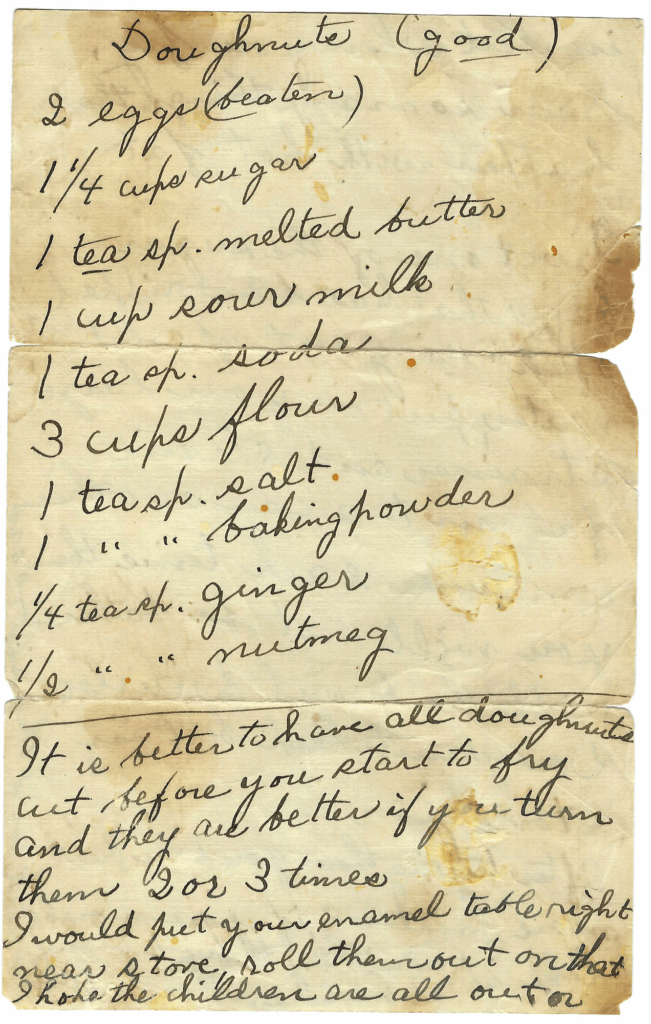
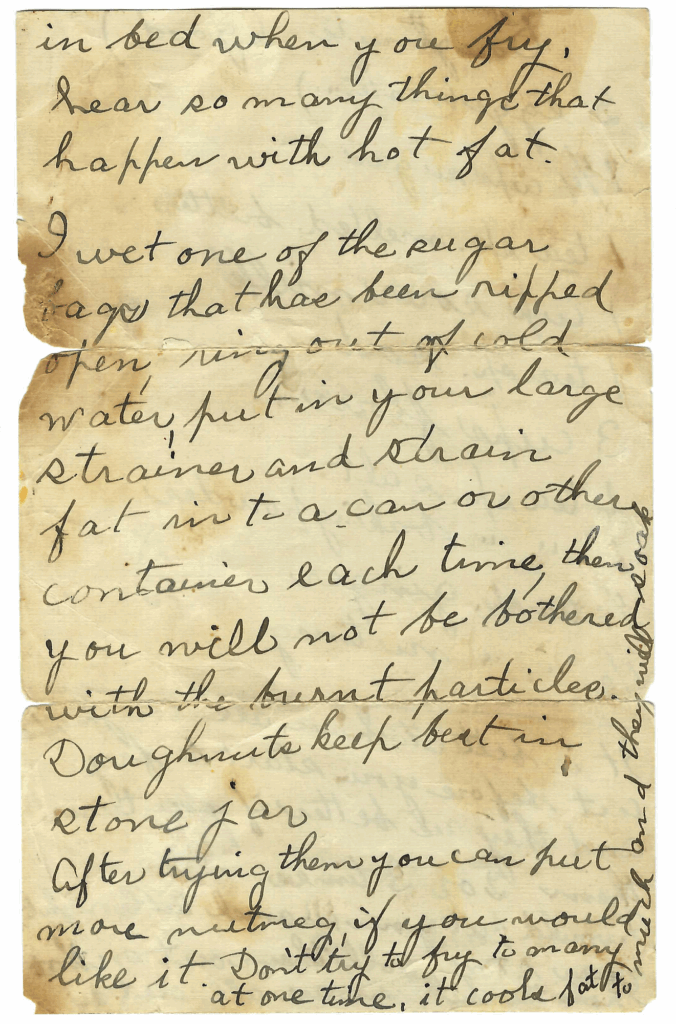
Do yourself a favor, and on a lazy Sunday morning, treat yourself to some homemade doughnuts from one of these vintage doughnut recipes. There are few things that taste as good as a doughnut hot out of the fat, as aficionados of cider doughnuts served up hot at farm stands will tell you.
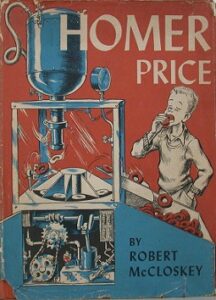 We could never write a post about doughnuts without mentioning a classic children’s story “The Doughnuts,” by Robert McCloskey from his book Homer Price (1943). No spoilers from me, you’ll have to read it yourself. If the author/illustrator’s name sounds familiar, you might know him from his two immortal books, Make Way for Ducklings and Blueberries for Sal.
If you’d like to time travel with some Dutch olykoeks or oliebollen, Allrecipes.com has you covered with this recipe.


3 comments
These doughnut recipes look next level! May have to try them out 🙂 Thank you!
I have found a vintage mirro donut press and I am looking for the recipe. Do any of these work for it, or do you have a recipe specifically for the press? Thank you!
Thanks for asking Julie. Your donut press sounds cool. I don’t know if these recipes would work. There is a purported Mirro recipe that turns up in a Google search, but I would suggest contacting the pros at the King Arthur Flour Baker’s Hotline, https://www.kingarthurbaking.com/bakers-hotline