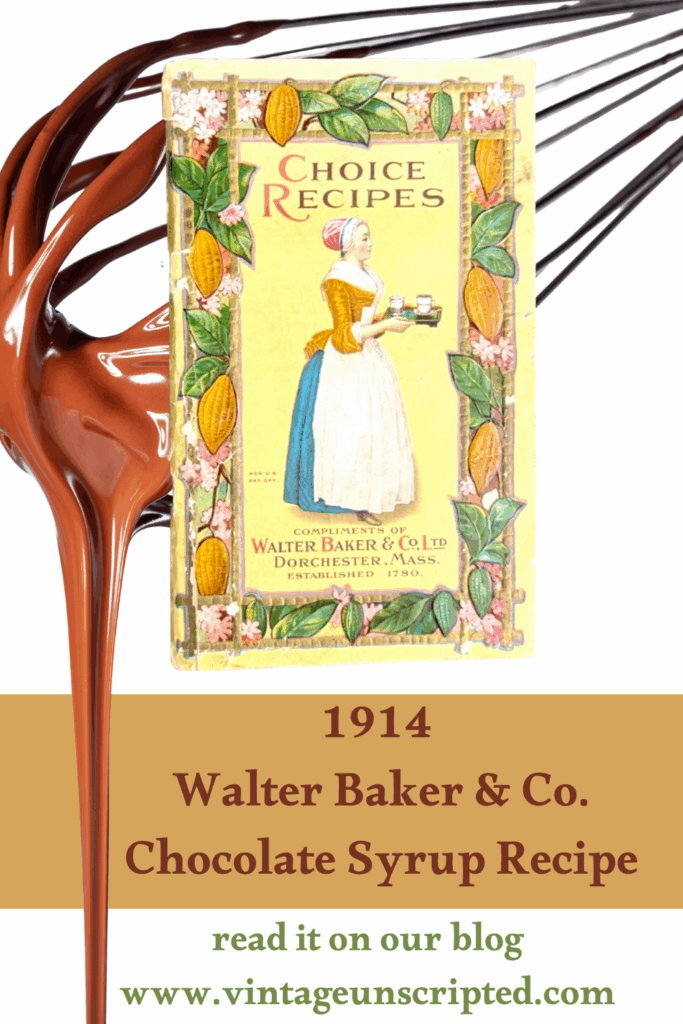
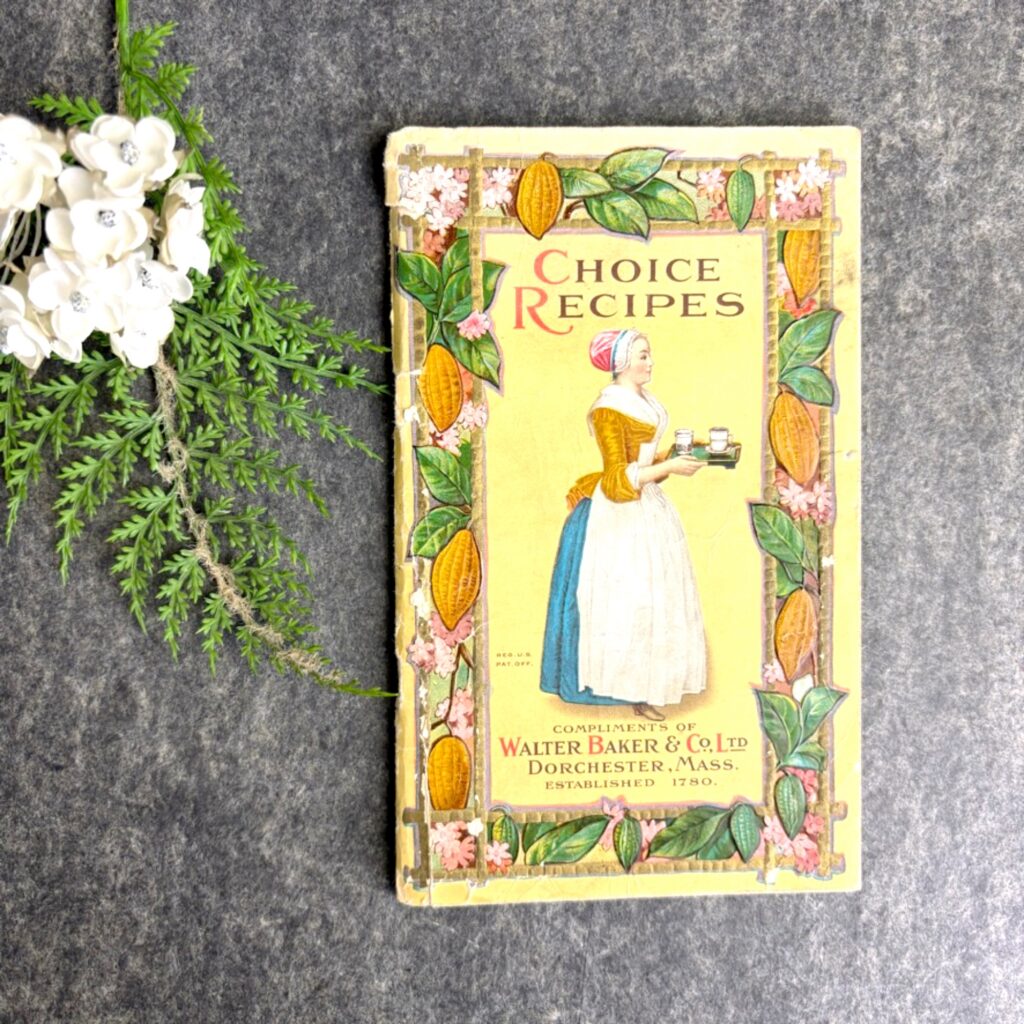
It’s fair to assume that a company that started making chocolate in America 260 years ago would have a good depth of institutional chocolate knowledge. That leads us to believe that their slender cookbooklet from 1914, Choice Recipes, with Chocolate and Cocoa Recipes by Miss Maria Parloa and Homemade Candy Recipes by Mrs. Janet McKenzie Hill, is probably pretty reliable. It further follows that since a good chocolate syrup is the basis for worthy ice cream drinks, the recipe from this book must indeed be one that would make delicious shakes and sodas.
Before the recipe, we must have a story with a pinch of gossip. It starts simply enough, with the founding of the first chocolate mill in America in Dorchester, MA in 1765 by Irish chocolatier John Hannon, with funding from merchant Dr. James Baker. Things were going swimmingly. Hannon even took on an apprentice. All was well until 1779, when Hannon was lost at sea.
Two theories survive about his demise. One, that he was lost during a West Indies trip to buy cacao beans. And two, that he scarpered off to England to escape from his wife. Either way, he was never seen again.
Elizabeth, his wife, attempted to continue the chocolate business with the apprentice, but the scuttlebutt is she was very difficult, so the apprentice abandoned her and started working with James Baker. Baker bought out Elizabeth’s interests in 1780 and the company was renamed the Baker Chocolate Company. The company continued under direct family ownership until 1895, when it was sold to the Forbes Syndicate for $4.75 million. (That would be more than $174 million today.)
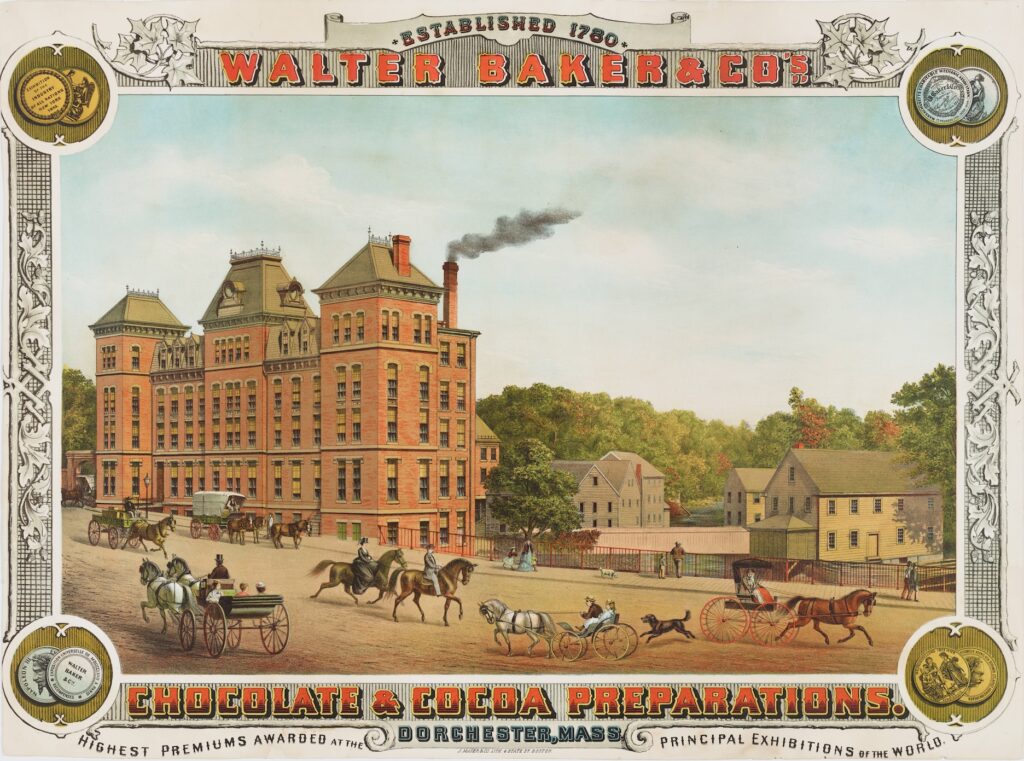
The Forbes Syndicate was a consortium of Boston money men, led by J. Murray Forbes. From 1902-1919, Forbes enlarged the Walter Baker & Co campus and began advertising in magazines, publishing pamphlets and offering coupons that could be redeemed for lovely things like china and flatware. This recipe booklet comes from the era of their ownership.
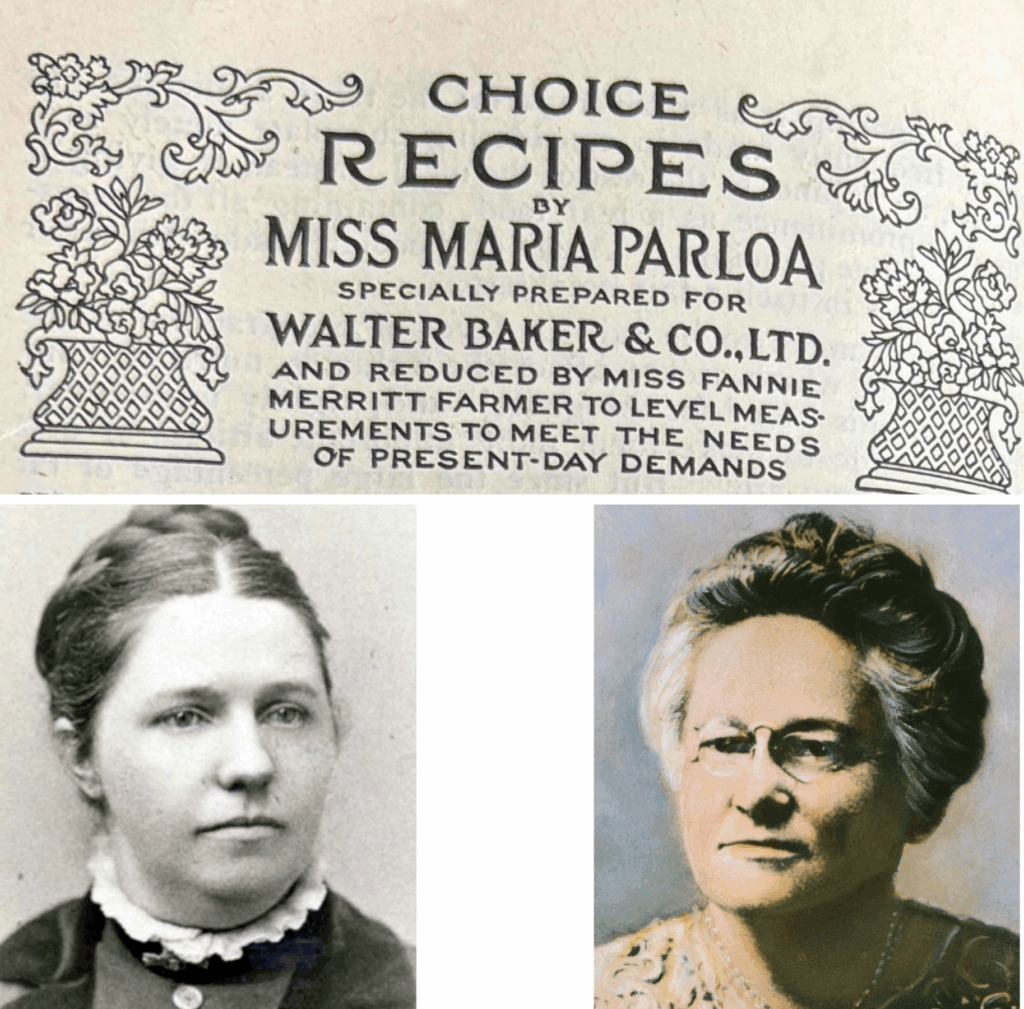
The chocolate syrup recipe and the other chocolate and cocoa recipes in the booklet are by Miss Maria Parloa, a prestigious New England cookbook author, home economics innovator and educator, who would be considered an influencer today. It was quite the coup for the Baker Co. to have her recipes.
The recipes were reduced to “level measurements” by another cookbook author and education icon of the day, Fannie Merritt Farmer. In The Boston Cooking-School Cook Book (1896), Miss Farmer introduced standardized measurements, like one cup or one level teaspoon. Prior to that, cookbooks might specify “scant” or “a pinch,” increments that relied on cooking experience and intuition. With standardized measures, even novice cooks could turn out things worth eating.
Bottom line, this cookbooklet is the work of two superstars of the era.
The recipe specifies Walter Baker & Co.’s Breakfast Cocoa. If the internet is to be believed, that was 100% pure unsweetened ground cacao, nothing more, nothing less. It may have been “alkalized” or “Dutched,” meaning it is processed with alkali to reduce the acid. There are lots of comparable products available today, like Hershey’s Natural Unsweetened Cocoa, Ghirardelli Unsweetened 100% Cocoa and two alkalized cocoas, Valrhona Pure Cocoa Powder from France and Droste Cocoa Powder from the Netherlands. If you want to be historically accurate, Droste was a competitor of Baker’s back in the day.
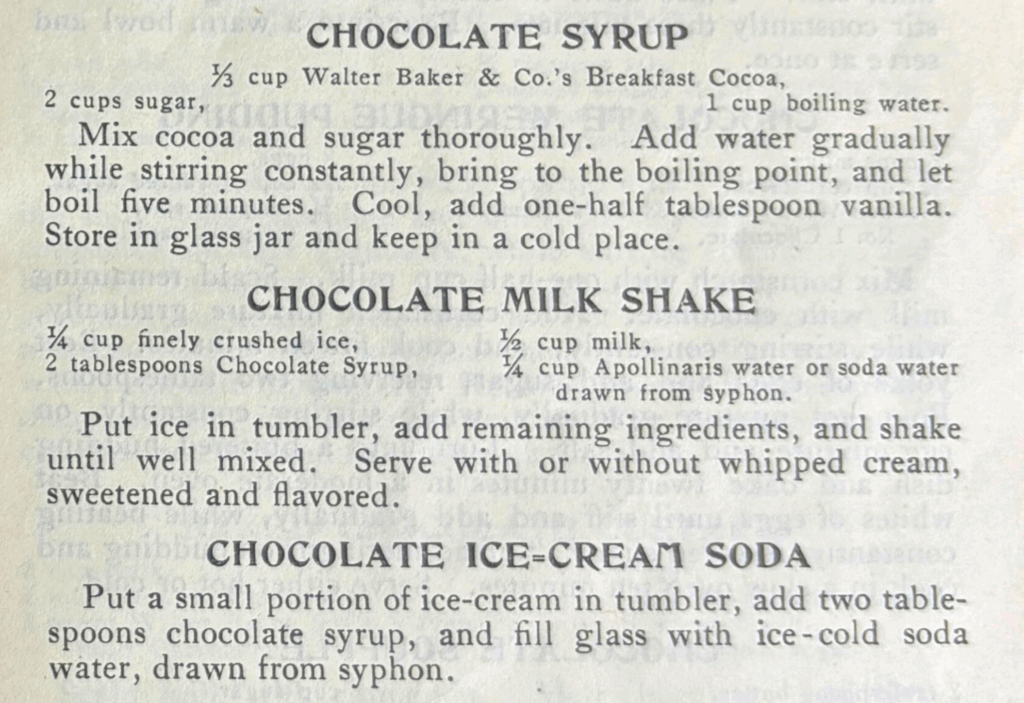
Don’t miss the vanilla extract addition that is hidden in the text!
Not surprisingly, modern recipes for chocolate syrup are pretty much the same, with the addition of a pinch of salt. (Fannie Merritt Farmer would give that measurement the side eye.)
The recipe for a Chocolate Milk Shake is slightly different than a modern milk shake. It is a wild diversion to dive into the difference between a milk shake and a frappe here in New England, but since this cookbook is from New England, dive we must. In most of the country, a milk shake is milk, ice cream and syrup frazzled up. In New England, that may be called a frappe and a milk shake is something that has NO ice cream, like the recipe above, although I have never known it to have seltzer. FYI, the Apollinaris water listed as an option is a natural sparkling water from Bad Neuenahr, Germany. Discovered in 1852, it grew to be the most popular table water in Europe until WWII.
In addition to shakes and sodas, you could also use homemade chocolate syrup to make a New York egg cream, a fountain drink that includes neither eggs or cream.
Let us know if you try this antique Chocolate Syrup recipe from an antique cookbook, written by two cooking rock stars from the turn of the century.
These sources were helpful in writing this post:
For a very detailed history of Baker & Co, check out Sweet History: Dorchester and the Chocolate Factory.
The Baker Chocolate Company buildings are historic landmarks and part of the Baker Square condos.
Read about all the amazing work of Maria Parloa.