As many adults can tell you, Halloween candy is for everyone. It may be the kids who go trick or treating, but they have to either go to school or nap at some point, and none of them are as good at hiding their cache as they think they are. As it is now, so it has been for generations.
Since it’s October 31, we thought we would share some facts about Halloween candy.
1 Reese’s Peanut Butter Cups are the top Halloween dog…
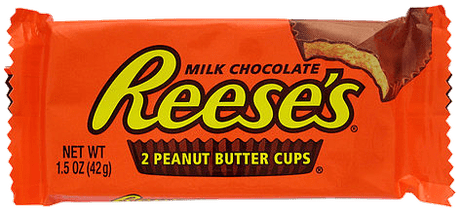 H.B. Reese was a shipping foreman for Milton S. Hershey. After he was laid off from his job because the facility he managed closed, he started his own candy company. The Reese’s Cup was introduced in 1928. After Papa Reese died in 1956, his six sons managed the company, which merged with Hershey in 1963. Not only are Reese’s Peanut Butter Cups the best selling Halloween candy, they are the overall best selling candy in the US and have been for a really long time.
2 …but sour candies are catching up.
Sour Patch Kids (1985), Skittles (1974) and Starburst (1968) all make the top 10 list of best selling Halloween candies.
3 Candy corn is the most controversial Halloween candy.
Either you are Team Candy Corn or you are Team I Would Rather Eat A Handful Slugs than One Piece of Candy Corn. There is no middle ground. Candy analysts say this is because candy corn has a one note flavor of pure sugar with nothing else to offset it and a waxy texture that can be off-putting. Additionally, there’s this little morsel of new-to-us news about candy corn: it’s covered in confectioner’s glaze which is made from the secretions of lac bugs.
What?
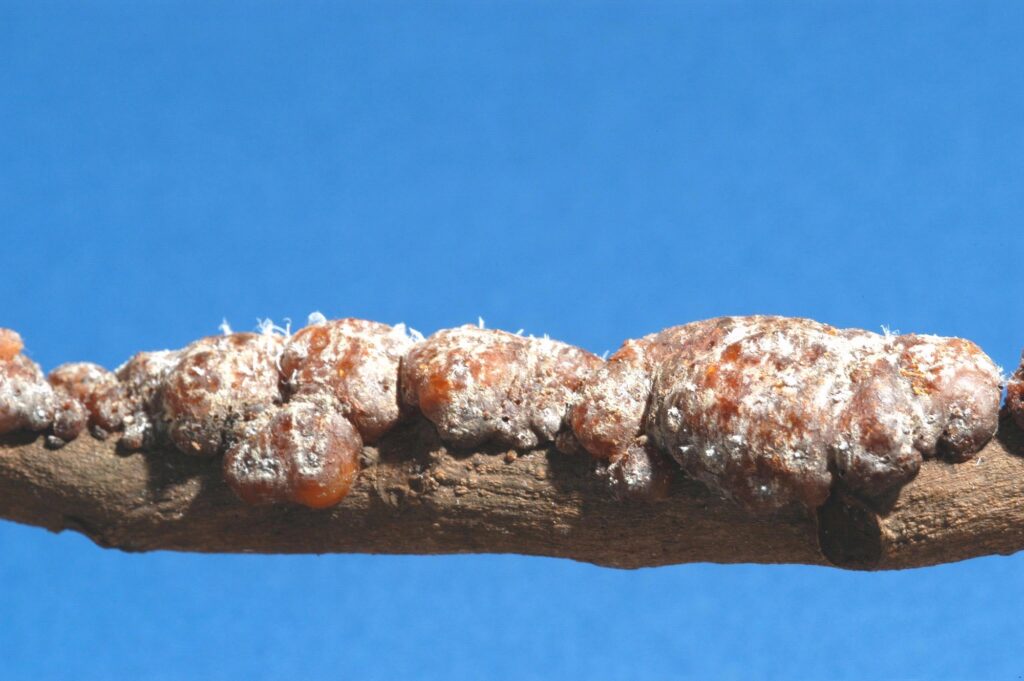
Candy corn covered in lac bug secretions. Lac bugs live in warm climates. The girl bugs feed on trees and secrete a hard resin that encases them. The resin is scraped off the trees is used to make shellac and confectioner’s glaze.
Two questions: 1) is secretion another word for poop? And 2) if the bug is encased, does that mean there potentially are bug parts in confectioner’s glaze?
A detail for our readers who enjoy entomology: the lac bug that makes shellac and confectioner’s glaze is the Kerria Iacca and should not be confused with the invasive species found in Florida and Hawaii, the lobate lac scale.
4 $3.9 billion will be spent on Halloween candy in 2025.
Total Halloween spending is $13.1 billion, much of which is directly deposited at Spirit Halloween stores, we assume. Prices for chocolate candies are higher this year because of the increased cost of cocoa, which is mostly grown outside the US. It can be grown in Hawaii, and a California company is working on lab grown cocoa.
5 Baby Ruth candy bars had a legal beef over their name.
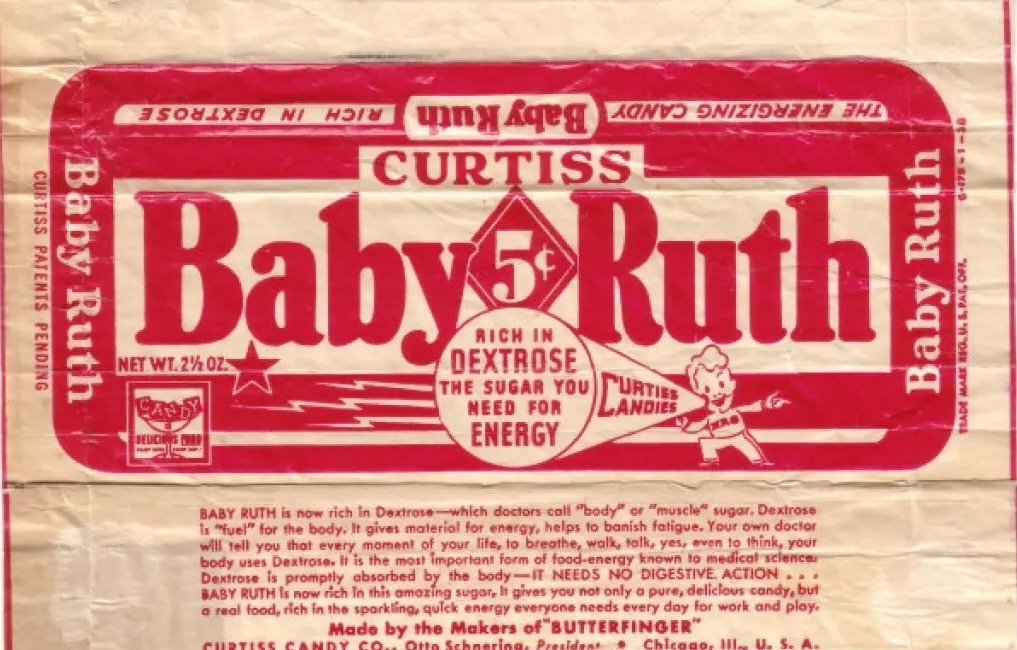
Baby Ruth bars started life as something called a Kandy Kake and were renamed in 1921. The Curtiss Candy Company said it was named to honor President Grover Cleveland’s eldest daughter, Baby Ruth Cleveland, who died of diptheria in 1904 at the age of 12. The human Baby Ruth was a national sensation when she was born and during her short life. How sweet that they kept the poor child’s memory alive.
Coincidentally, at the same time the Baby Ruth candy bar got its name change, Babe Ruth the baseball player, the Sultan of Swat, the Bambino, was a nationally known superstar, well established in his career.
Ruth founded his own candy company and made his own candy bar, Ruth’s Home Run Bar. Curtiss was unamused and sued the Babe in 1926. Finally, in 1931, the court decided in favor of the Curtiss Candy Company and the Babe was forced to stop production.
Did we mention that the Curtiss Candy Company was on the same street as Wrigley Field?
6 Halloween is the holiday with the most candy sales.
It’s followed by Easter and then Valentine’s Day.
7 Halloween Peeps Pumpkins were introduced in the 1950s or 1960s.
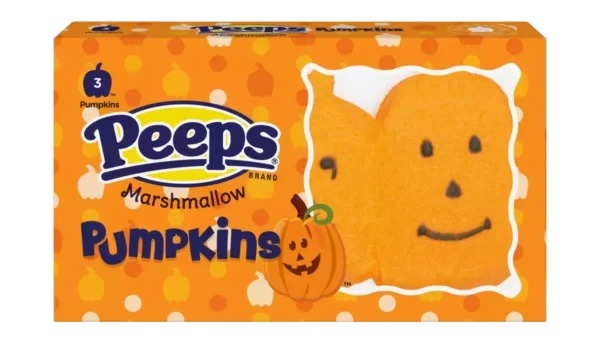
No one knows exactly when or why.
8 Many vintage Halloween candies would be unknown to Millenials and younger.
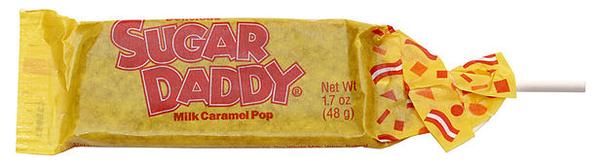
We miss BB Bats, Mary Janes, Pixy Sticks, Kits, Nik-L-Nips, Bit-O-Honey, Squirrel Nuts, Jawbreakers, Atomic Fire Balls, Boston Baked Beans, Pom Poms and Candy Buttons. We do not miss Milk Duds, Chuckles, Sugar Daddies, Sugar Babies, Jujubes or Dots. We have horrible memories of pulling out loose baby teeth on a Sugar Daddy. In days of yore, many of these would have been assorted and bagged up in small paper Halloween treat bags to be tossed into children’s plastic pumpkin buckets. We realize that some of these are still made, but you have to search them out.
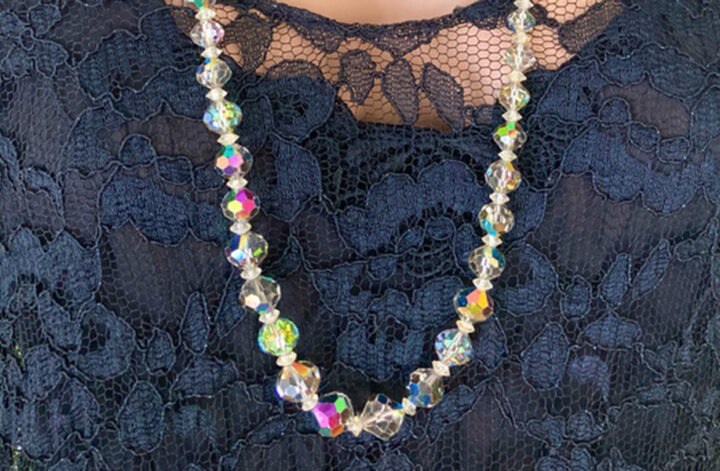
9 Candy necklaces were invented in 1958.
When candy necklaces and bracelets were introduced is known, who invented them is not. How is that possible?
10 Candy cigarettes were invented in the 1890s.
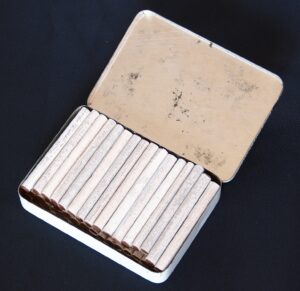
The earliest candy cigarettes were chocolate, followed in the 1920s by white sugar and bubble gum varieties. By the 1930s, they were packaged with labeling much like real cigarettes and marketed towards children. The 1964 Surgeon General’s report on smoking pointed a finger at candy cigarettes as priming children to be smokers. Two more recent studies found that there was some correlation between eating candy cigarettes as a child and smoking actual cigarettes. Candy cigarettes can no longer be called “candy cigarettes” in the US, however they are not banned as they have been in many countries.
11 Necco Wafers are delicious.
It is a heresy to say they taste like chalk.


2 comments
Sugar Daddy and Milk Duds are awesome, caramelly goodness! I will accept no argument to the contrary. 😘
And I REFUSE to believe the candy corn expose!!
Who knew Halloween candy was so controversial??